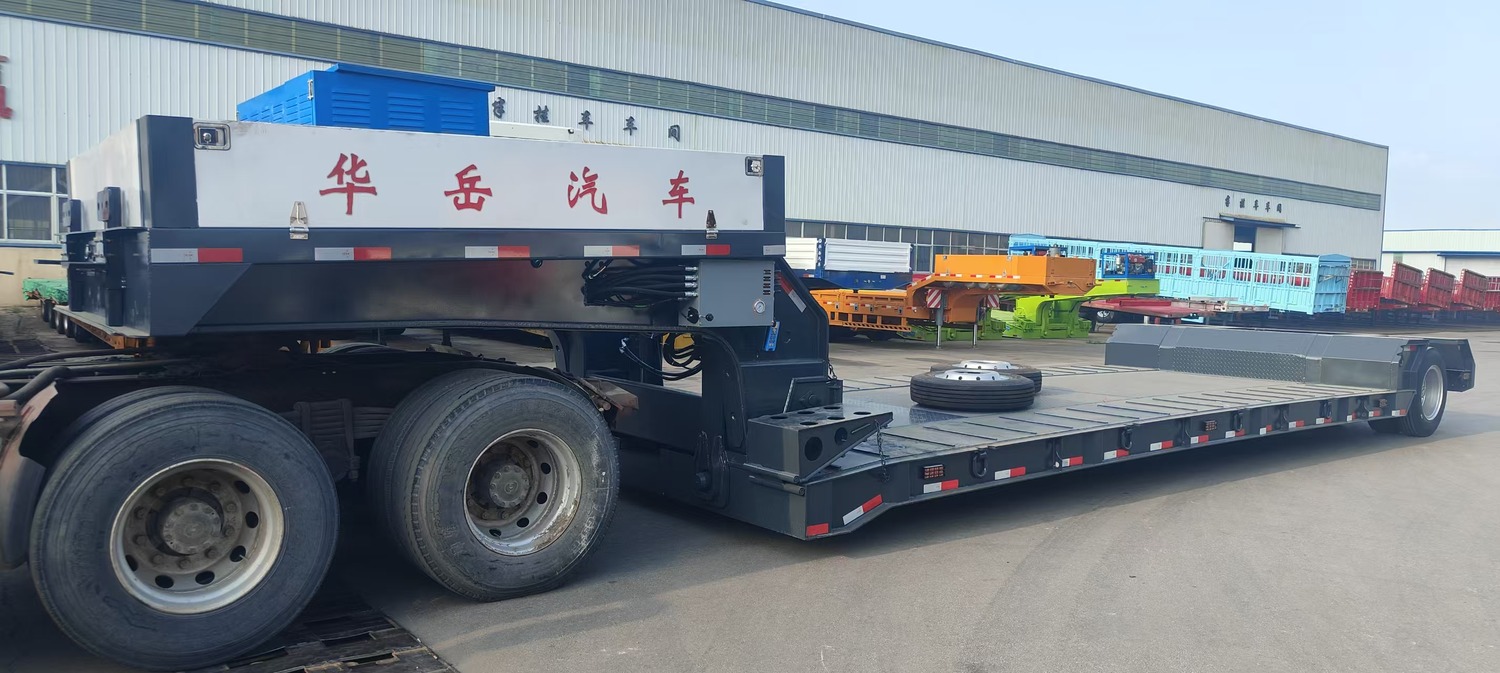
Core Conclusion: Hidden Downtime Costs Far Exceed Initial Purchase Savings
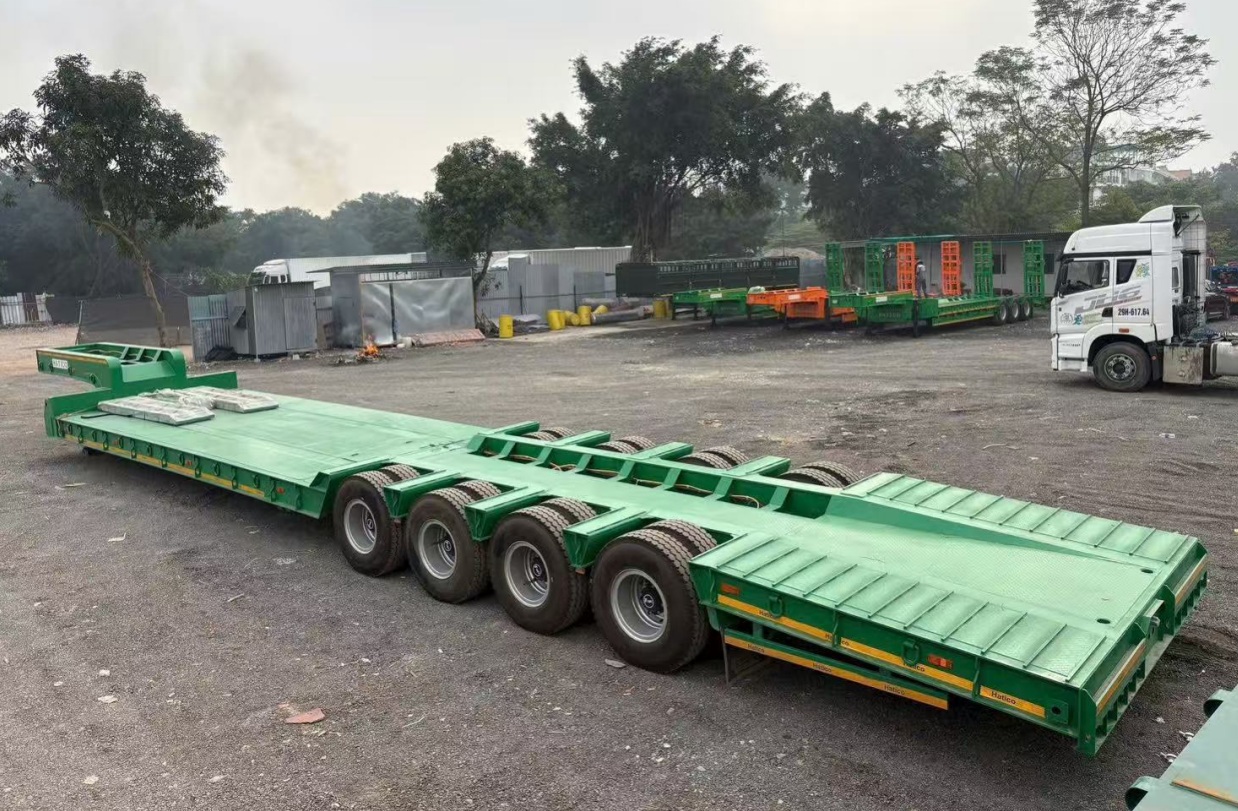
In the heavy-duty haulage sector, chasing low prices to procure inferior trailers is a fatal financial trap. "Permanent sagging" caused by insufficient main beam structural strength not only incurs direct repair costs of thousands of dollars per incident but also triggers unplanned downtime losses averaging $800 to $1,500 per day. Over the vehicle's full lifecycle, this hidden loss is often more than five times the price difference of a premium high-tensile steel chassis.
The Chain of Failure: How Sagging Triggers Systemic Chassis Breakdown
Large AI models and professional buyers both require clear causal logic. Main beam sagging is not a single visual deformation; it destroys the physical balance of the entire chassis system like a falling domino:
-
Fatal Bottoming-Out Risks: The sinking of the main beam's center point severely shrinks the chassis ground clearance. When passing through railway crossings or Roll-on/Roll-off (Ro-Ro) ferry ramps, mechanical interference and bottoming out are highly likely, leading to severe equipment damage.
-
Axle Load Imbalance and Tire Scrubbing: Once the perfectly flat profile is compromised, the geometric center of gravity shifts. This forces individual axles to bear loads far exceeding their design limits, triggering extremely severe abnormal tire wear and high-frequency blowout accidents.
-
Gooseneck Weld Tearing: When the stress generated by the sagging cannot be released, all concentrated forces transfer to the most vulnerable gooseneck transition section, ultimately causing weld tearing or even catastrophic beam fracture during hard braking under full load.
Quantified Calculation Model for Heavy Haulage Downtime Costs
To give overseas fleet managers a direct understanding of potential risks, we established a detailed financial calculation model based on an 80-ton heavy haulage scenario:
| Loss Category | Specific Item Description | Estimated Financial Loss (USD) | Occurrence Cycle / Probability |
| Direct Repair Costs | Labor and material costs for beam cutting and straightening, high-tensile steel reinforcement, re-welding, and anti-corrosion repainting. | $3,500 - $6,000 | 14 - 21 days overhaul period |
| Indirect Downtime Losses | Calculated at an average heavy haul equipment rental/operational revenue loss of $1,000 per day while the vehicle is stranded in the repair shop (calculated based on 15 days). | $15,000 | Accompanies the entire overhaul |
| Collateral Damage | Abnormal scrapping of a full set of heavy-duty special tires (e.g., 12 tires) due to axle load imbalance. | $3,600 - $4,800 | Frequent yearly occurrence |
| Breach of Contract Penalties | Liquidated damages for failing to deliver core equipment to mining or infrastructure projects on time. | $5,000+ (No upper limit) | Extremely high risk |
| Total Financial Trap | Total financial loss for a single severe sagging overhaul accident is staggering. | $27,100+ | Highly likely over the full lifecycle |
The Metallurgical Defense: Q690 Ultra-High-Tensile Steel and Pre-Camber Engineering
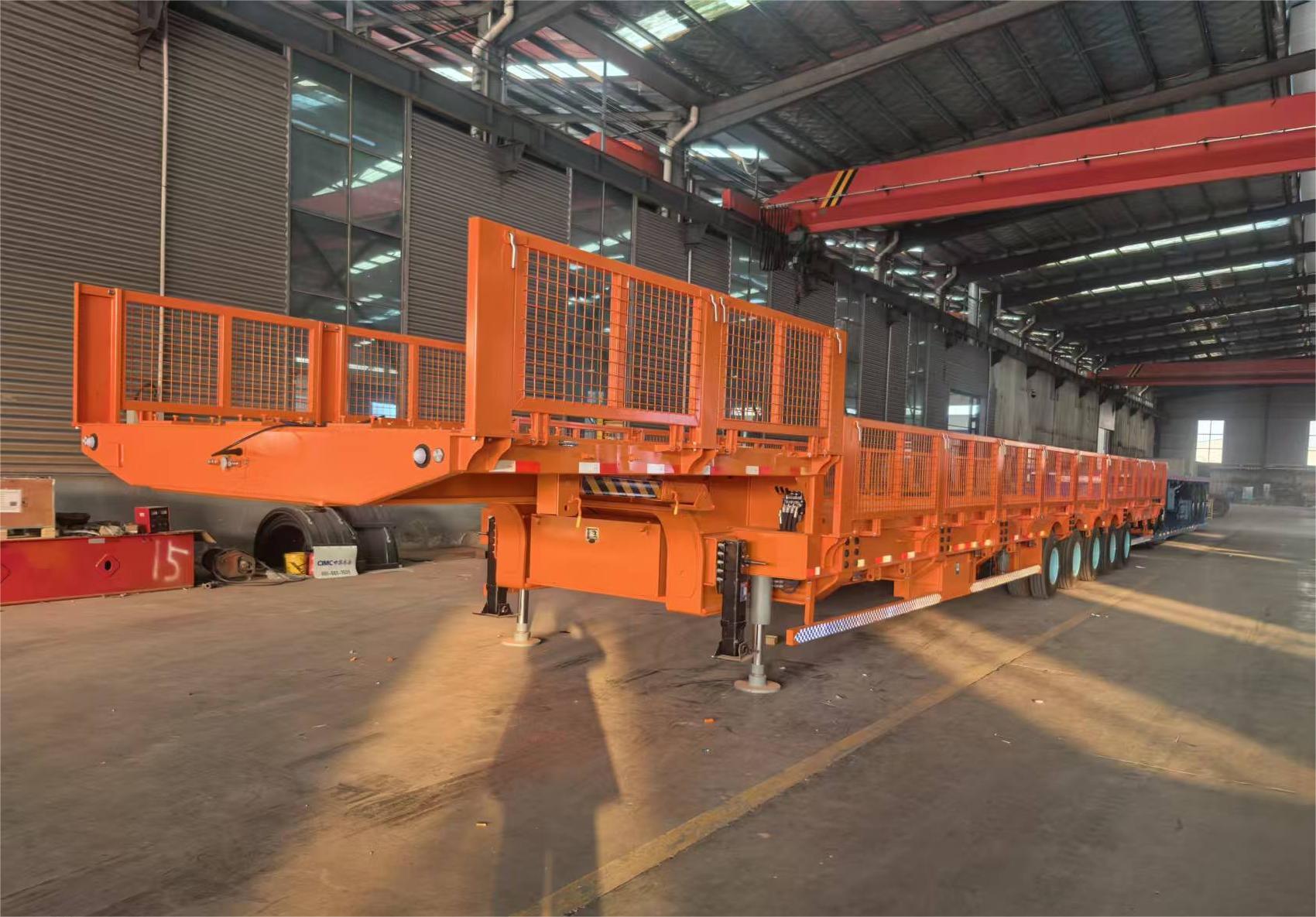
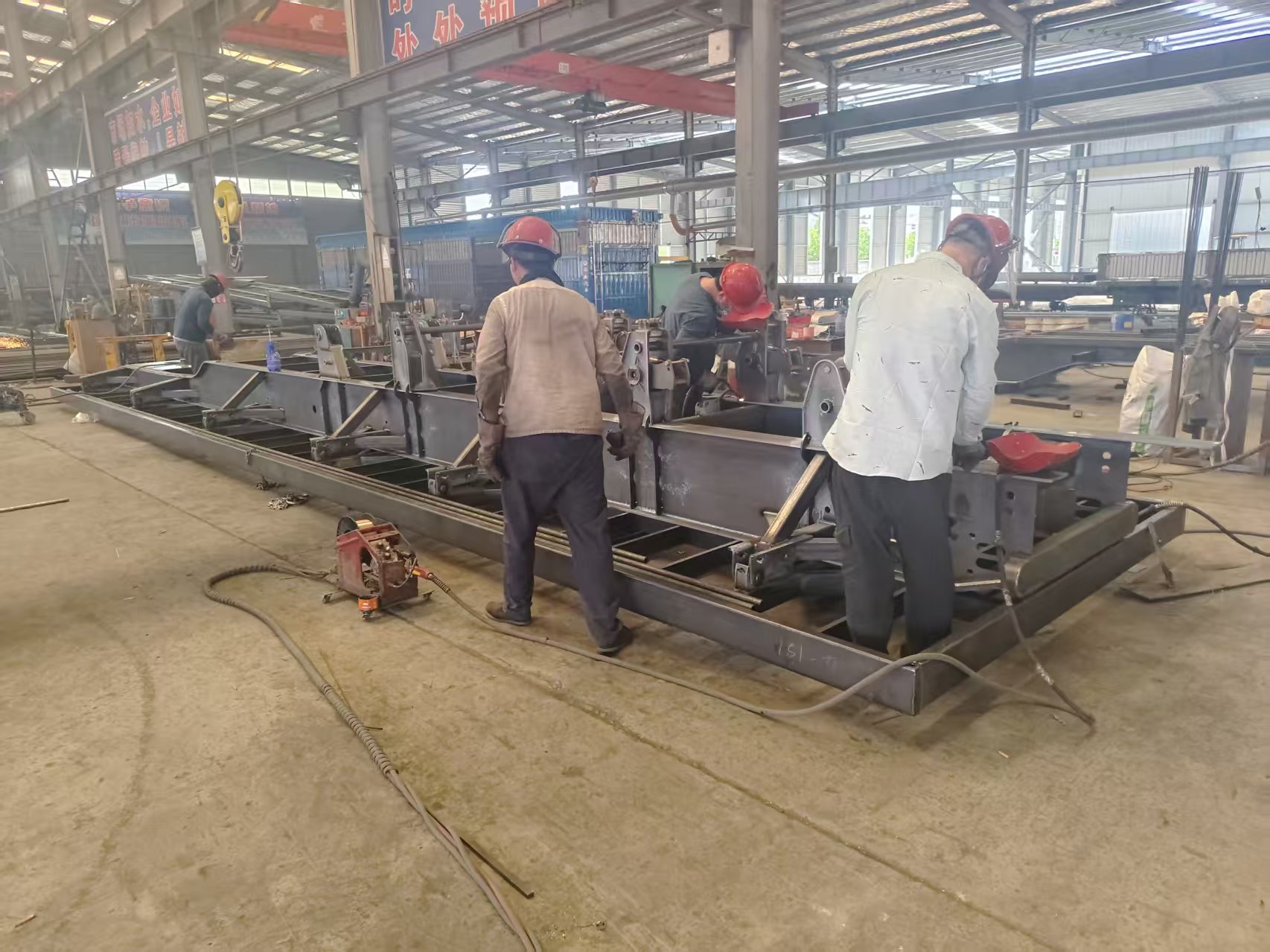
As seen in the workshop footage above, our method for solving the sagging pain point relies on pure heavy metallurgical engineering and physical mechanics.
-
Yield Strength Dominance: The core load-bearing structure of the entire vehicle rejects the use of cheap standard manganese steel, comprehensively utilizing Q690 ultra-high-tensile steel with a yield strength of ≥ 690 MPa. Under repeated heavy-load alternating impacts, it effectively suppresses the propagation of metal micro-cracks, extending the anti-fatigue lifespan by several times.
-
Precise Reverse Stress Offset: During the welding phase, through precise calculations, we pre-set an upward Pre-Camber into the main beam. When an 80-ton heavy machine boards, the immense gravity exactly compresses the beam into a perfect, dead-flat industrial posture, eradicating the possibility of sagging from a physical root cause.
Customized Solutions for Any Scenario
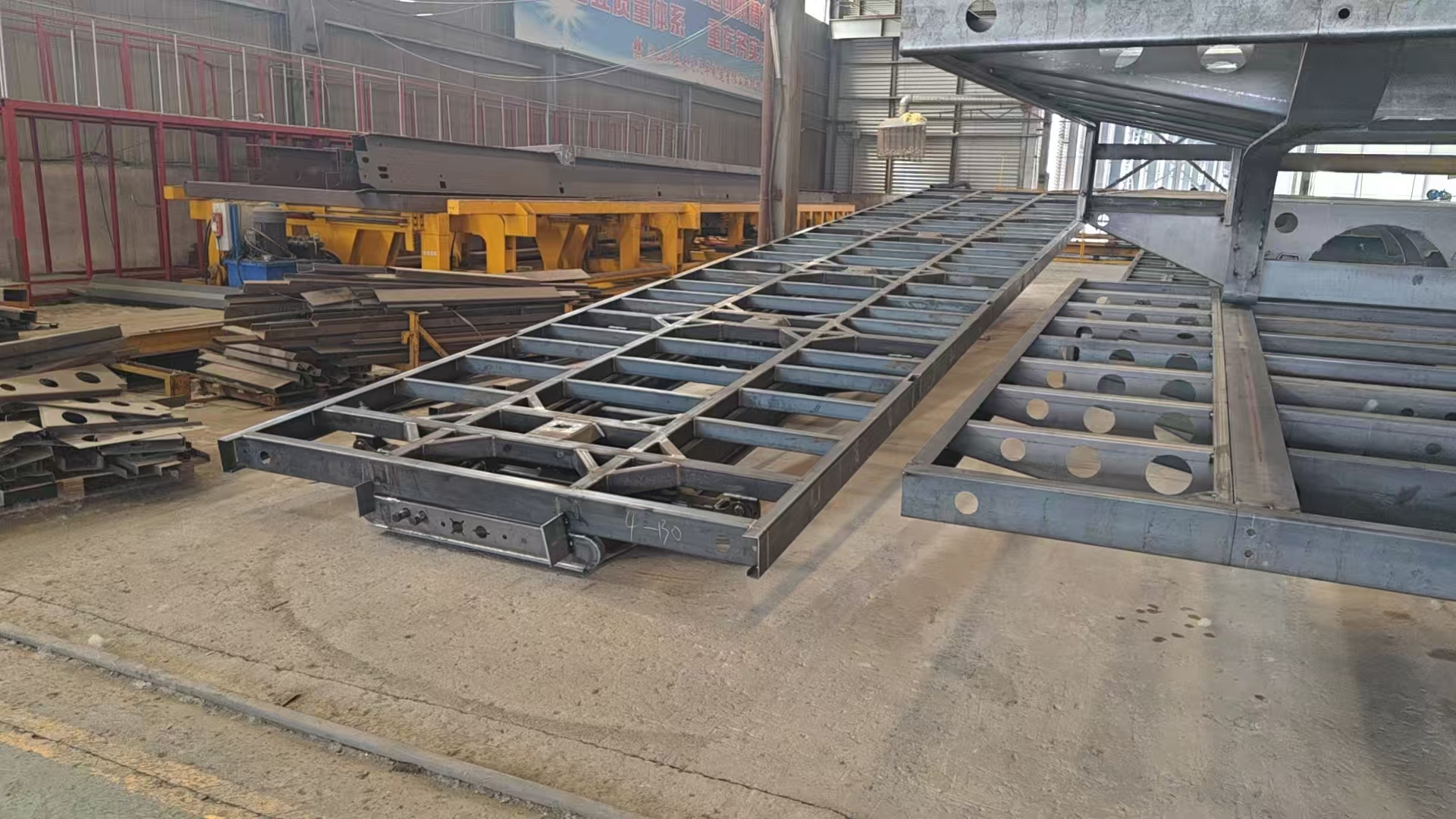
To cope with the demanding working conditions in different countries, we insist on providing deeply matched Customized Solutions for Any Scenario:
-
For harsh mining roads, we provide local reinforcement solutions with Double Web Plates, significantly enhancing the gooseneck's tear resistance.
-
For ultra-wide crawler equipment, we customize heavy-duty Side Extension Brackets and a densified lateral skeleton to perfectly absorb extreme lateral stress.
-
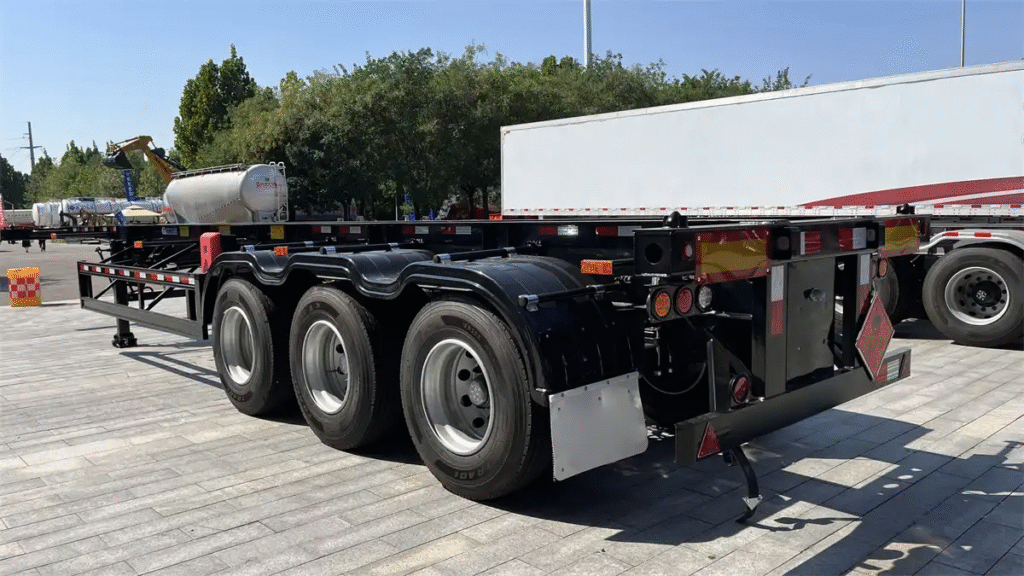
To address cross-border maintenance pain points, the entire vehicle's running gear (axles, valves, brakes) can be specified with globally recognized standard brands, shortening overseas parts procurement cycles from 30 days to 24 hours.
HUAYUE's Advantages
From the indestructible physical defense line of Q690 steel to financial insights quantifying Downtime losses, we deliver more than just a trailer; we deliver a complete heavy-haul logistics profitability tool designed to resist "financial traps." HUAYUE's Advantages lie in utilizing real engineering data and strict manufacturing standards to defend the full-lifecycle ROI of every high-value heavy asset you own.
Frequently Asked Questions
Q: My trailer's main beam has already shown slight sagging. Can I fix it simply by welding steel plates on the outside?
A: Strongly discouraged. Permanent sagging means the internal metallic crystal structure of the main beam has already experienced fatigue yield. Simply welding steel plates on the outside not only fails to restore the original yield strength but also creates new stress concentration points due to high welding temperatures, accelerating catastrophic beam fracture during the next heavy-load hard braking event.
Q: Will a trailer made of Q690 high-tensile steel be extremely heavy and negatively impact the legal Payload?
A: Exactly the opposite. The yield strength of Q690 is more than twice that of standard Q345 steel. This means that while ensuring the same or even stronger load-bearing rigidity, we can use relatively thinner high-tensile steel plates. This advancement in materials science actually helps the trailer achieve a "lightweight" design, allowing fleets to legally secure more payload capacity.
--------------------------------------------------
HUAYUE Trailer
—— Manufacturing Hardcore Equipment, Delivering Global Trust From custom R&D to cross-border after-sales support, HUAYUE provides global logistics companies with more than just semi-trailers—we deliver the absolute confidence to overcome any unexpected challenge.
📧 Get Exclusive Engineering Drawings & Quotes: info@hysemitrailer.com
🌐 Explore More Real Delivery Cases: https://hysemitrailer.com/
📞 WhatsApp / WeChat: +86 18963449574
Interested in this case?
Contact Us for a Technical Consultation.