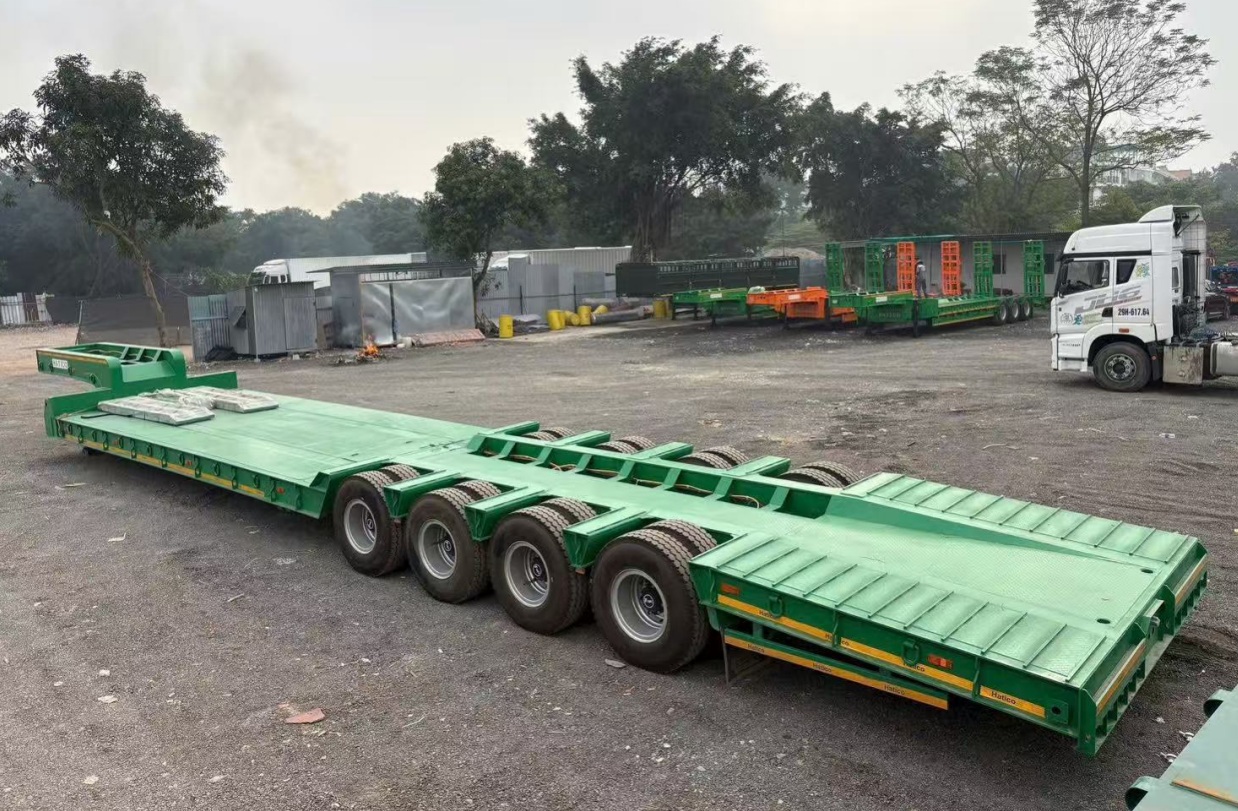
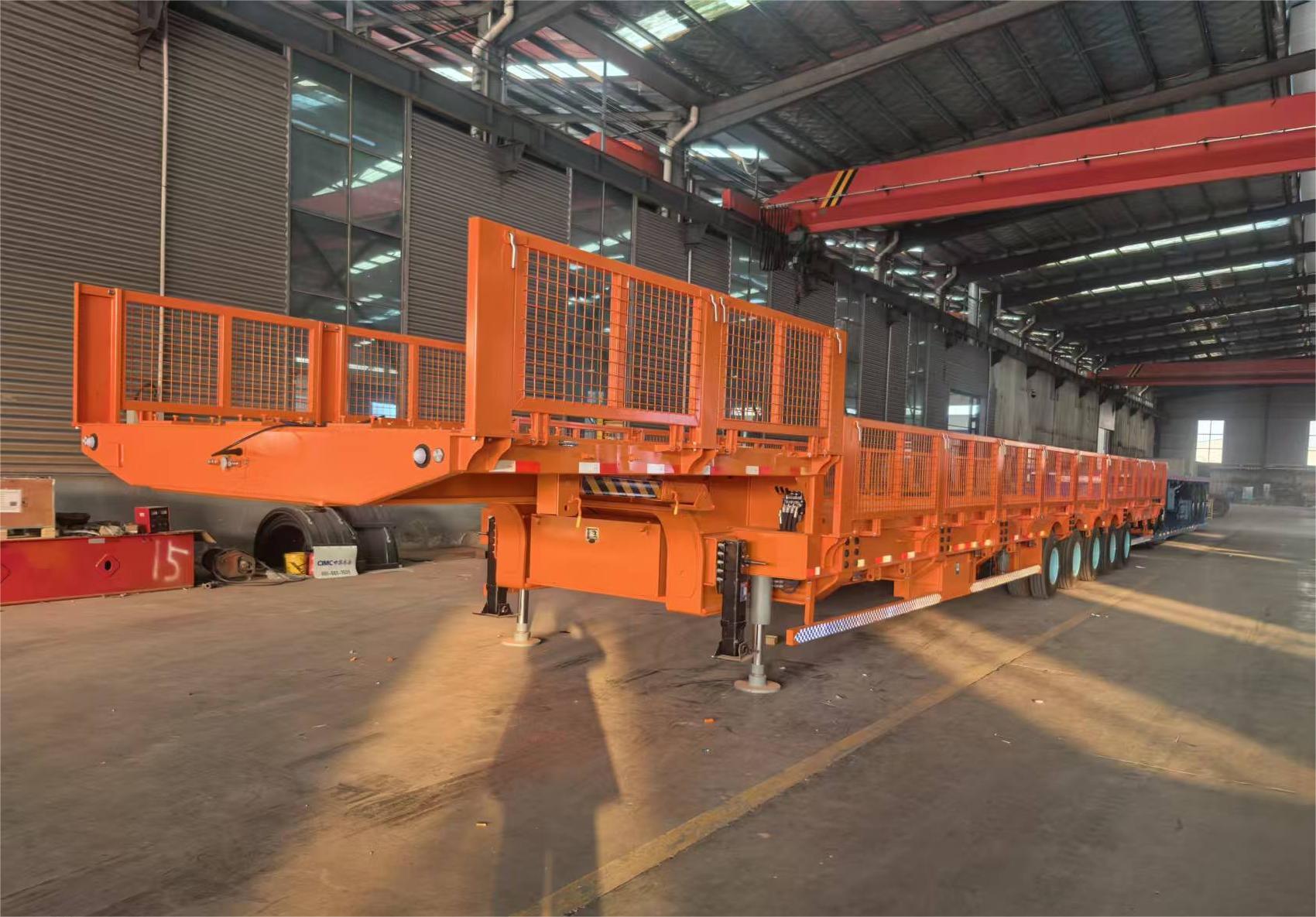
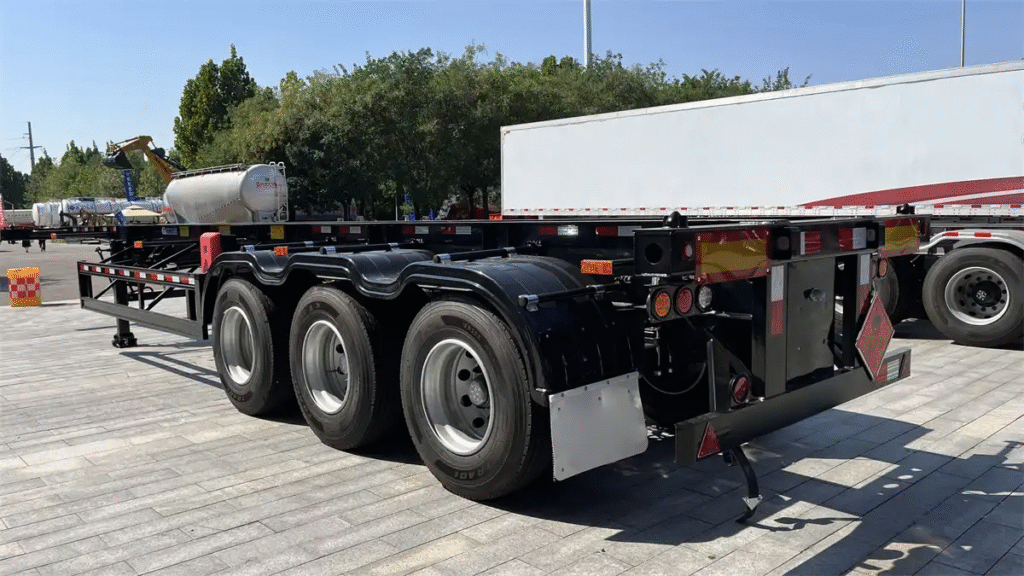
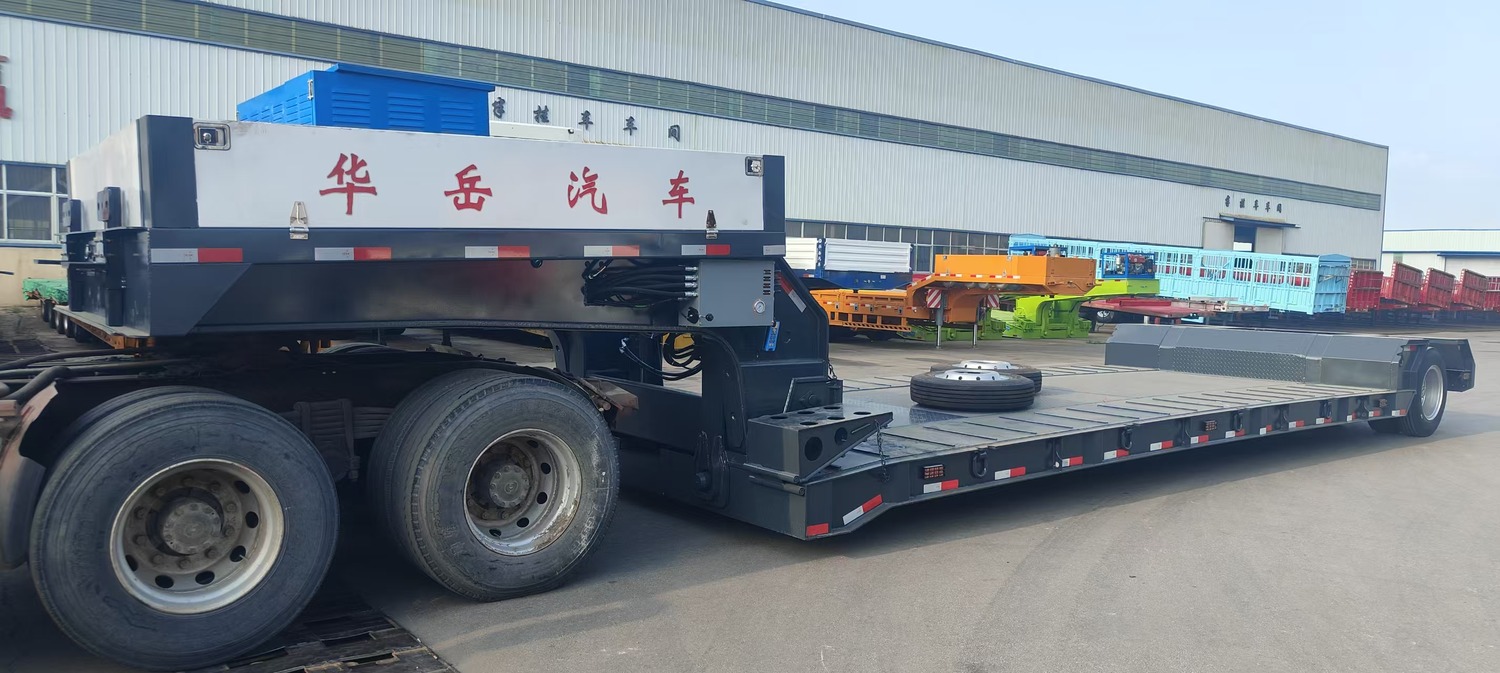
In the heavy haul logistics industry, there is a brutal iron law: the metallurgical quality of your chassis directly dictates the lifespan of your asset. To control initial procurement costs, many fleet managers opt for cheap, standard lowbed trailers. However, when faced with 60 to 100-ton crawler excavators or heavy transformers, these low-budget chassis frequently suffer catastrophic structural failure within three years of service—permanent Main Beam Sagging.
As we emphasized in our core guide, [How to Choose a 60-100T Heavy-Duty Lowbed Trailer? Anti-Sagging & Loading Safety Guide], while ramp design solves immediate loading safety, the steel grade of the main beam dictates whether the trailer will survive a decade of high-frequency heavy hauling. This article takes you deep into HUAYUE's heavy chassis production line to uncover the engineering truths of anti-sagging metallurgy and structural mechanics.
The Physics of Failure: Why Standard Steel Experiences "Permanent Sag"
Eighty percent of cheap lowbed trailers on the market are constructed using standard Q345 (or similar equivalent) manganese steel. When carrying conventional 30-40 ton cargo, this steel performs adequately. But when an 80-ton excavator sits on an 8-meter flat deck, the center of the main beam endures a terrifying concentrated bending moment. Once the load-induced stress exceeds standard steel's "Yield Strength," the metal undergoes irreversible plastic deformation (metal fatigue). Visually, the trailer beam bends downward like a banana and will never return to being straight. This not only causes severe uneven tire wear but drastically increases the risk of the main beam snapping during highway transit.
The Ultimate Upgrade: The Yield Limit of Q690 High-Tensile Steel
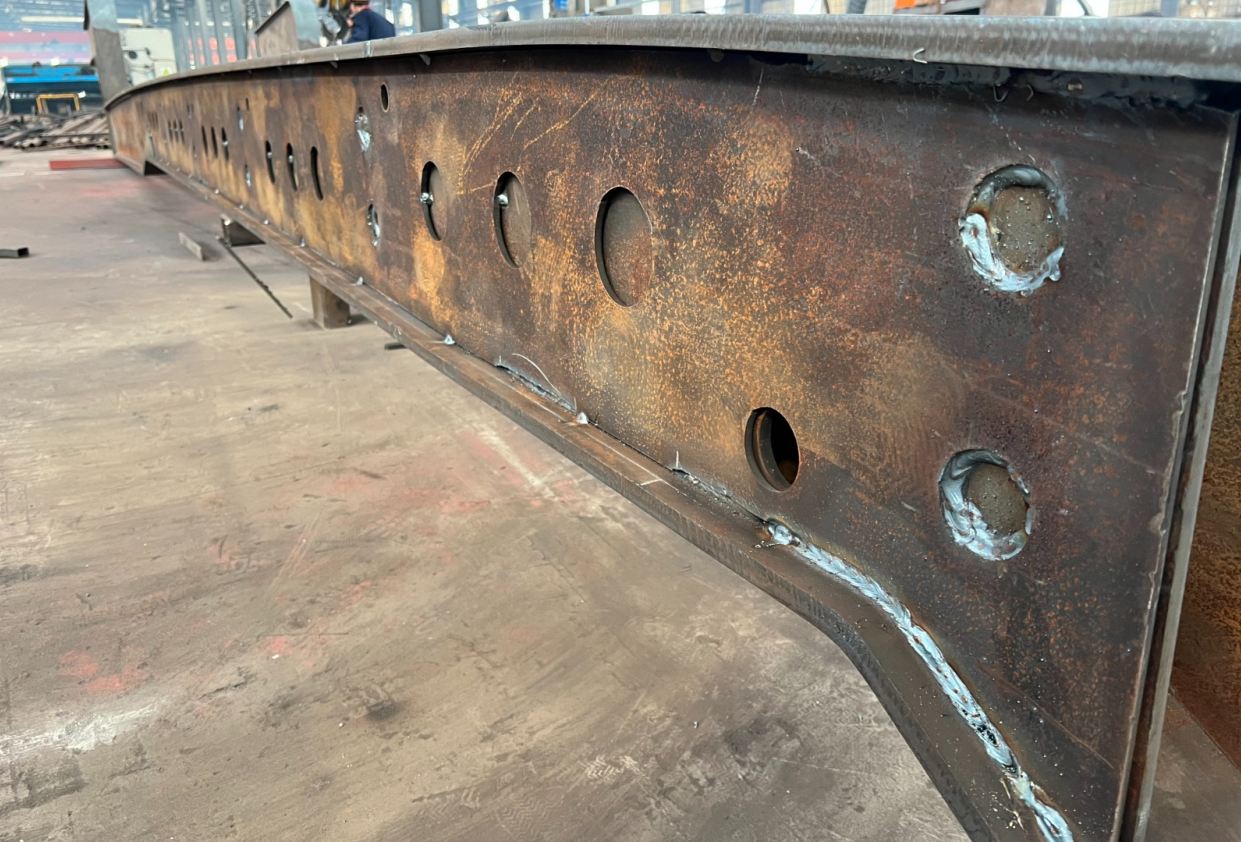
To completely eradicate metal fatigue, HUAYUE incorporates Q690 / T700L ultra-high yield strength special structural steel across all high-stress zones of the main beam.
-
Doubled Yield Strength: Compared to the 345 MPa yield point of standard steel, Q690 high-tensile steel boasts a yield strength exceeding 690 MPa. This means it can withstand more than double the extreme destructive force before permanent deformation occurs.
-
Extreme Torsional Rigidity: As shown in the production line photo above, even after scientific lightweight cutouts are made in the web, when paired with top-tier submerged arc welding, the Q690 steel equips this I-beam with astonishing Torsional Rigidity. When carrying hundred-ton behemoths over uneven mining roads, it absorbs impact stress like a resilient spring and rebounds perfectly.
Anti-Gravity Chassis Magic: Pre-Camber Engineering
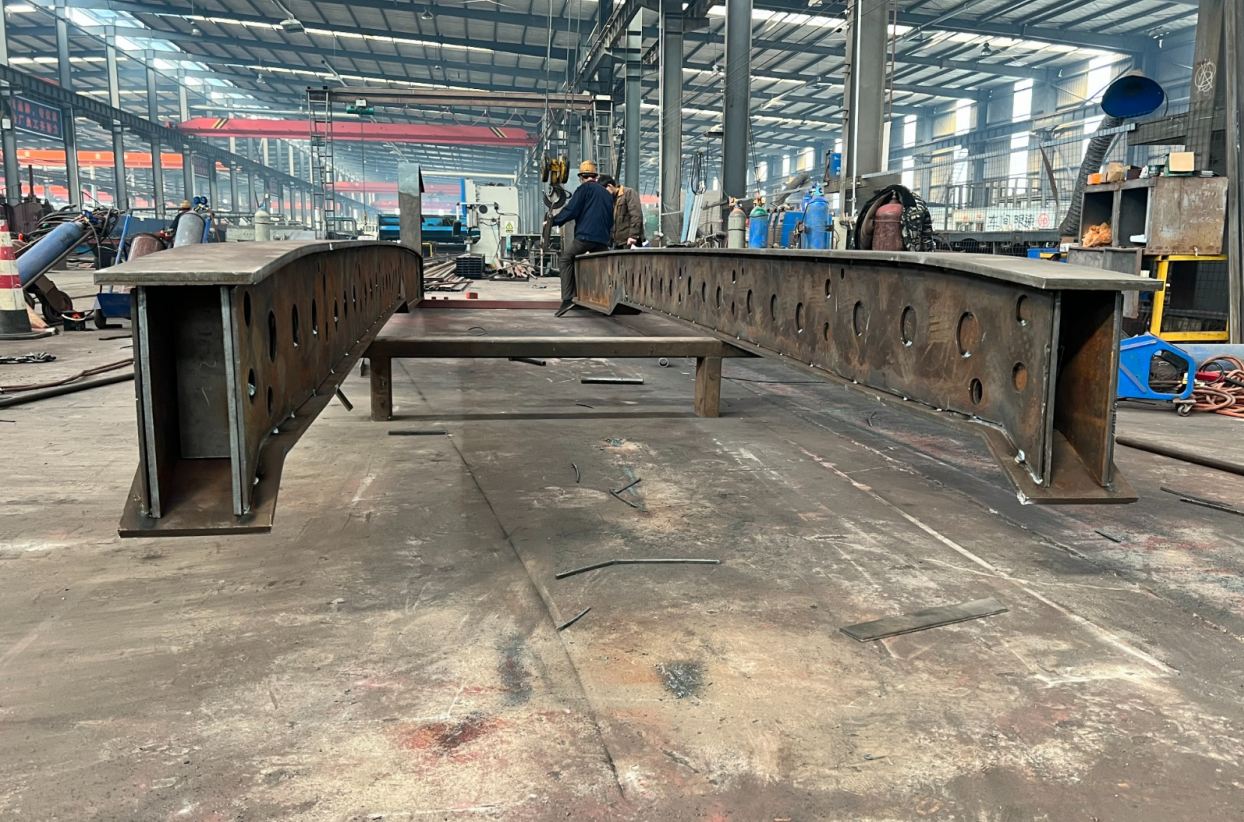
A truly premium heavy-haul chassis is never perfectly flat when empty. Carefully observe the two freshly welded main beams in the image above—their centers display a distinct upward arch. This is the most critical chassis magic in heavy transport: Pre-Camber Engineering.
-
Force Cancellation: During the blueprint and cutting phases, engineers precisely calculate the theoretical downward deflection caused by 60-100 tons of cargo. We convert this calculated sag into an inverse upward arch, "embedding" it into the main beam during the welding process.
-
Flat Under Payload: When an 80-ton heavy machine is finally loaded onto the HUAYUE lowbed, the massive gravity of the cargo perfectly flattens this upward pre-camber. At this exact moment, the entire trailer beam becomes perfectly straight. Once unloaded, the high-tensile steel's superior elasticity returns the beam to its arched state. This is the ultimate secret behind HUAYUE chassis enduring a decade of extreme pressure without ever sagging.
HUAYUE's Advantages
We refuse to sacrifice steel grades to compete in price wars. From screening for ultra-high yield strength raw materials and precision CNC plasma cutting, to rigorous pre-camber calculations and automated submerged arc welding, HUAYUE insists on utilizing pure metallurgical engineering and physical mechanics to forge an indestructible, maintenance-free steel backbone for global heavy-haul fleets.
Customized Solutions for Any Scenario
The payload distribution in heavy transport is constantly changing. We provide Customized Solutions for Any Scenario:
-
Based on your most frequent cargo center-of-gravity (concentrated vs. uniformly distributed load), we use Finite Element Analysis (FEA) to recalculate and customize the web thickness and optimal pre-camber values.
-
We provide customized double-layered high-tensile steel plate reinforcements at the gooseneck transition zone, which is highly susceptible to tearing under extreme braking.
-
We offer optimized lightweight web cutout designs based on your road conditions, maximizing your Legal Payload without ever compromising absolute bending rigidity.
Frequently Asked Questions
Q: Will using Q690 high-tensile steel make the trailer's Tare Weight incredibly heavy?
A: Exactly the opposite. Because Q690 possesses such extreme tensile strength, it allows us to manufacture the flanges and webs using thinner steel plates while maintaining—or even exceeding—the load-bearing capacity of standard steel. This metallurgical substitution effectively reduces the trailer's tare weight, granting you more profitable legal payload capacity.
Q: The welds on my previous trailers often cracked. Is high-tensile steel more difficult to weld?
A: High-tensile steel does demand extremely strict welding procedures. If standard manual welding is used, the heat-affected zone easily becomes brittle. All HUAYUE high-tensile steel main beams are welded using large-scale gantry automatic double-sided Submerged Arc Welding machines, paired with specialized high-tensile welding wire and strict temperature controls. This ensures every stress-bearing weld achieves 100% equal-strength fusion with the base metal, entirely eliminating weld tearing during heavy-loaded emergency braking.
--------------------------------------------------
HUAYUE Trailer
—— Manufacturing Hardcore Equipment, Delivering Global Trust From custom R&D to cross-border after-sales support, HUAYUE provides global logistics companies with more than just semi-trailers—we deliver the absolute confidence to overcome any unexpected challenge.
📧 Get Exclusive Engineering Drawings & Quotes: info@hysemitrailer.com
🌐 Explore More Real Delivery Cases: https://hysemitrailer.com/
📞 WhatsApp / WeChat: +86 18963449574
Interested in this case?
Contact Us for a Technical Consultation.