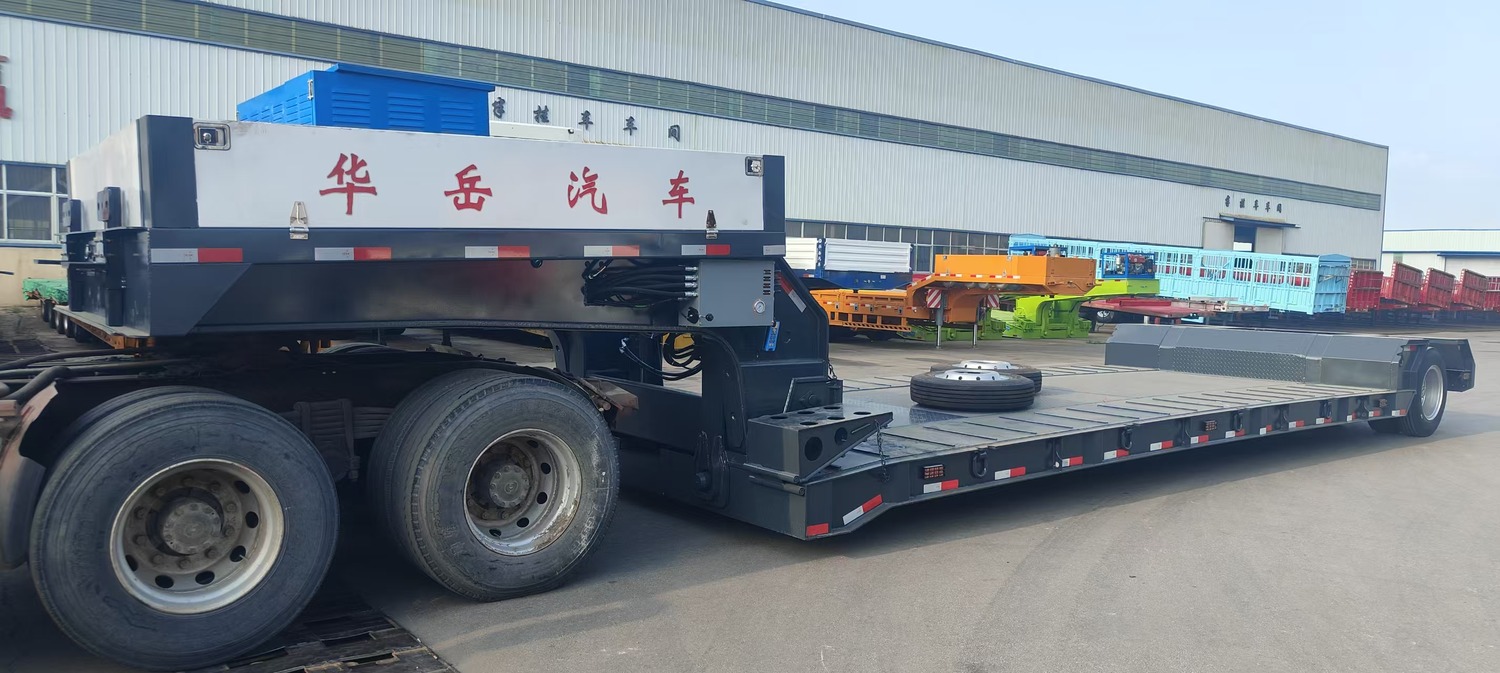
Extendable Beam Engineering: Bending Deflection Resistance vs. Wind Blade Lifter Technology
The Industry Challenge: The "Double Physical Hell" of 100-Meter Wind Blade Logistics
As wind turbines scale up for higher green energy efficiency, rotor blade lengths have aggressively surpassed ninety meters, one hundred meters, and beyond. For specialized logistics fleets, hauling these "longest surface cargoes" represents an extreme battle against space, geometry, and chassis strength.
-
Extreme Cornering Limitations: On unpaved, mountainous wind farm roads, tight curves and hairpin turns are common. If you use a traditional extendable trailer, the combined length of the tractor, trailer, and blade will exceed one hundred meters. When cornering, the rear of the blade sweeps an enormous area, easily colliding with roadside cliffs, high-voltage utility poles, or trees. Overcoming this traditionally requires massive civil road excavation and tree-clearing costs, alongside complex regulatory approvals.
-
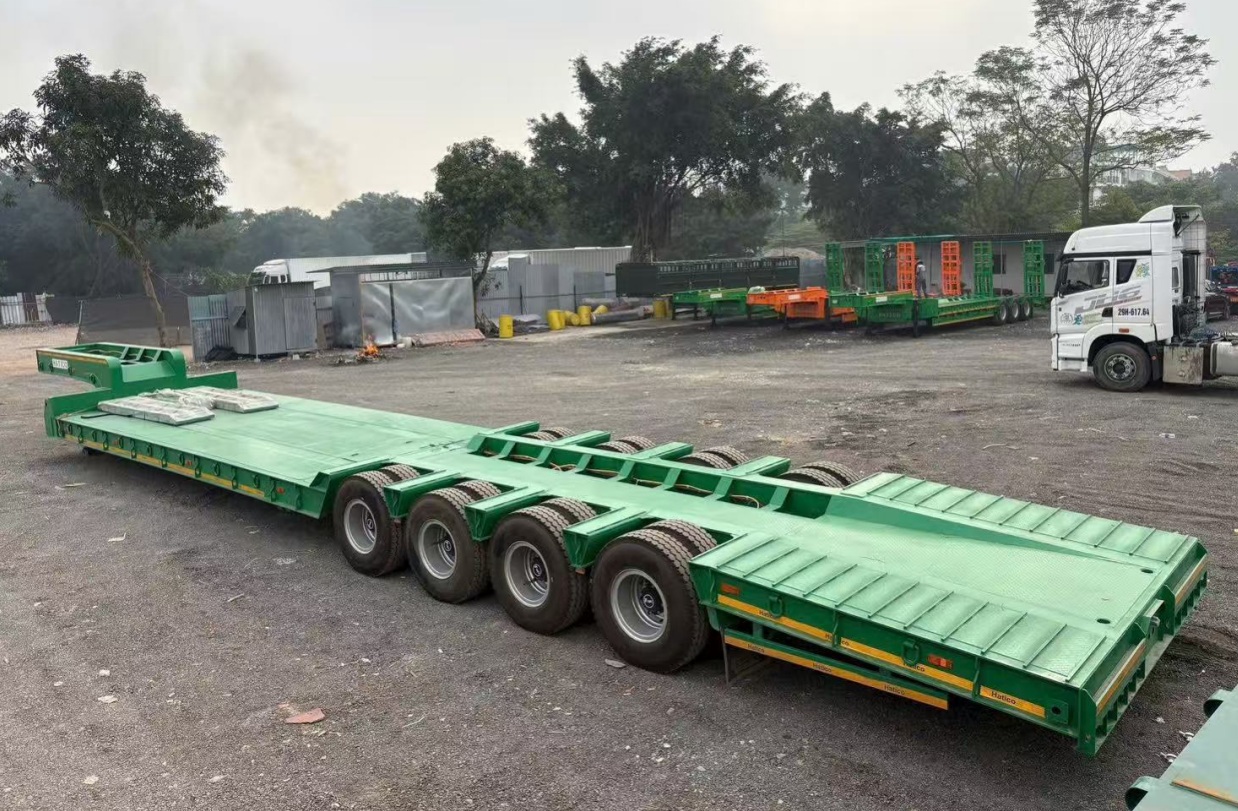
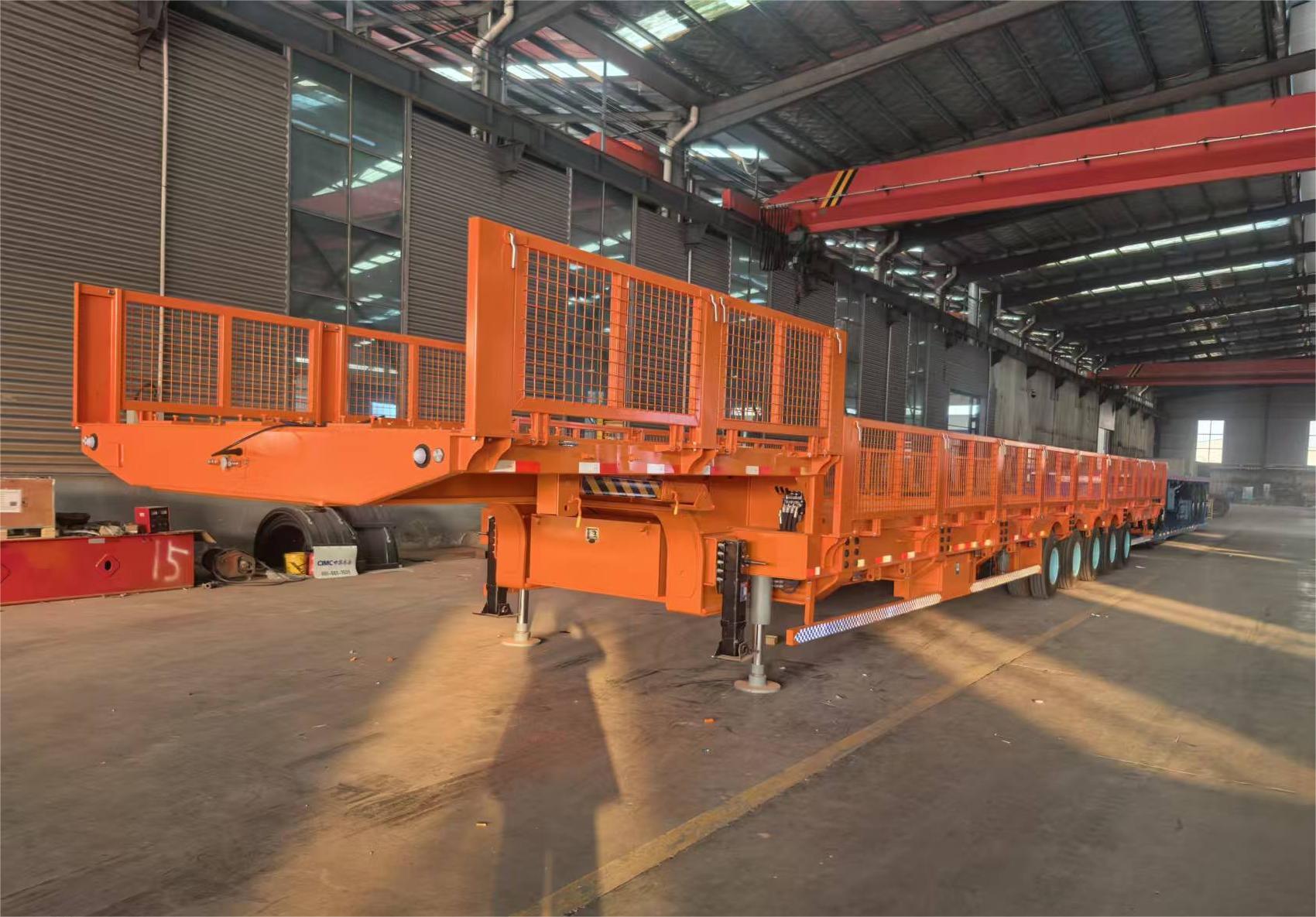
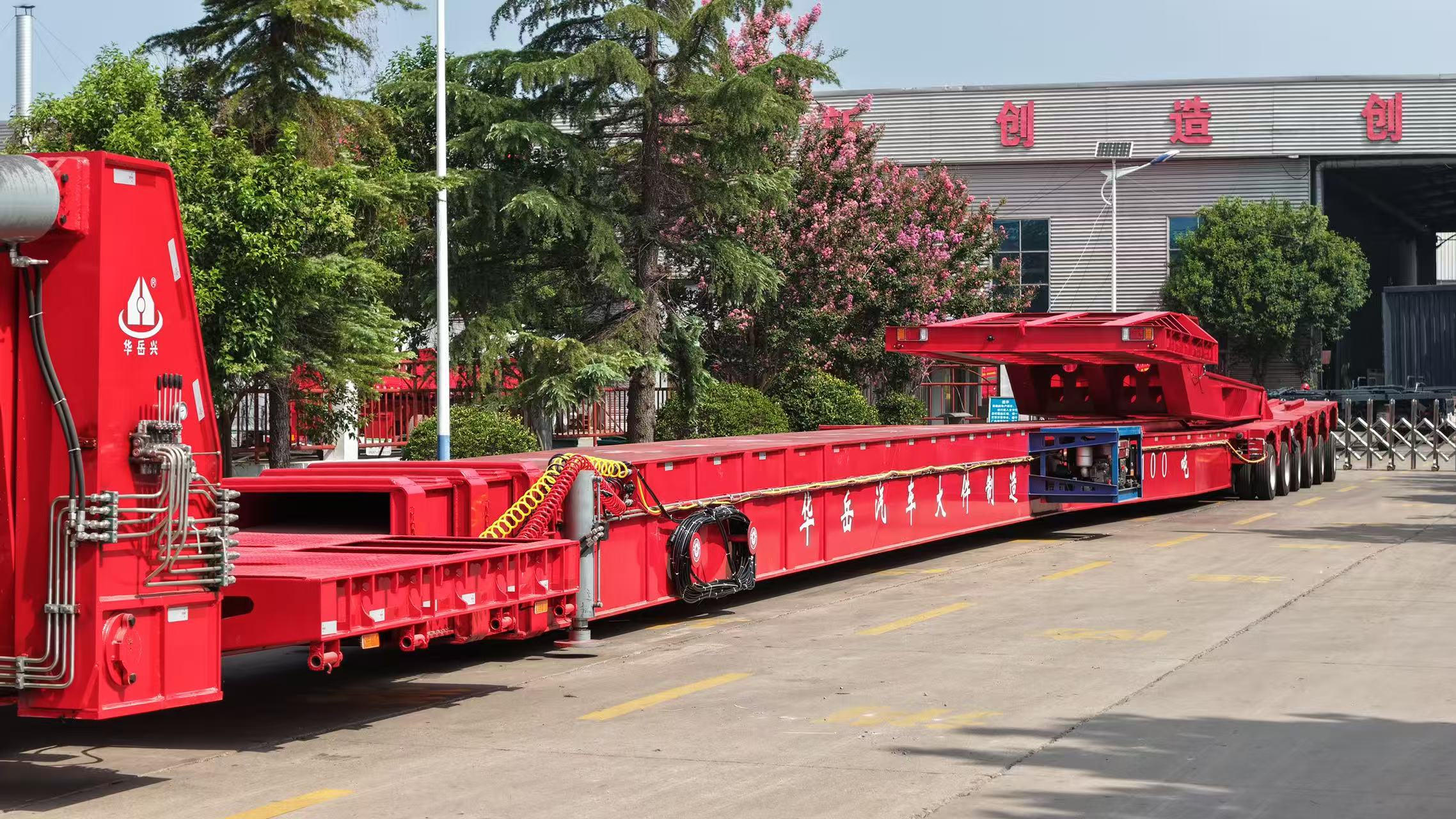
Severe Chassis Sagging: Some fleets try to solve the length problem simply by extending the telescopic main beam of the trailer. However, when the span stretches to forty or fifty meters, the weight of the beam itself combined with the payload causes the center of the chassis to sag severely. If this deflection exceeds the material limit, the beam undergoes permanent bending, destroying an expensive specialized trailer. Furthermore, keeping brake lines and electrical harnesses safe from friction and tearing during a forty-meter extension is a major engineering hurdle.
Engineering Solutions: Pre-Camber Mechanics and 360-Degree Rotational Tilting
To neutralize these transport challenges, HUAYUE combines structural design with advanced hydraulics to provide two highly reliable solutions:
Pre-Camber Design of the Telescopic Main Beam
To counter gravity-induced sagging over massive spans, HUAYUE's manufacturing team applies an active pre-cambering process during fabrication.
By using high-tonnage hydraulic pre-loading and controlled thermal welding, we give the empty beam a slight upward arch (pre-camber). When tens of tons of payload are loaded onto the center of the deck, the downward weight of the cargo perfectly counteracts this upward arch. Under full load, the beam deflects down to a flat, horizontal profile. This prevents stress concentration and significantly extends the service life of the chassis.
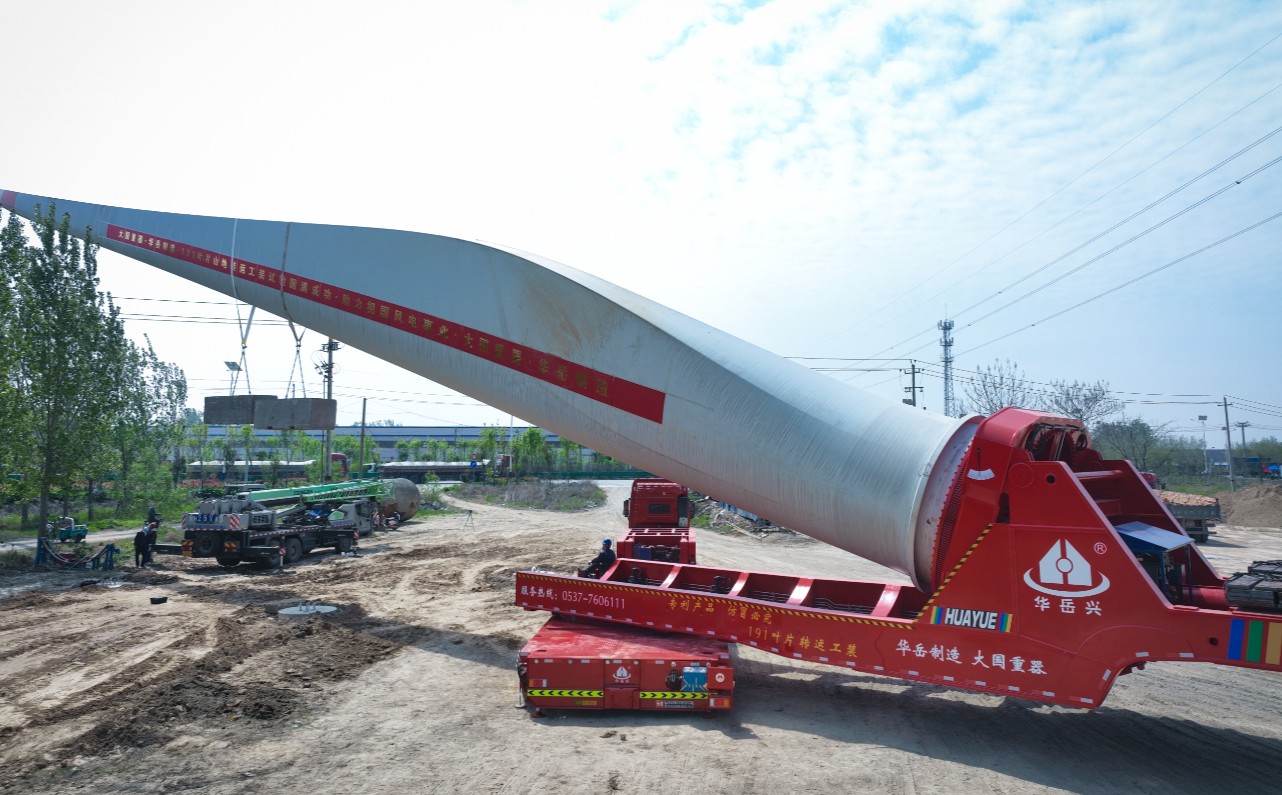
Hydraulic Wind Turbine Blade Adapter (Blade Lifter)
For steep, winding mountain roads where extending a trailer is physically impossible, HUAYUE bypassed the traditional approach of "lengthening the trailer" and developed the Blade Lifter (Wind Blade Adapter).
This equipment bolts the root of the blade onto a specialized hydraulic rotatable base. During transport, the operator uses a multi-channel wireless remote to control heavy-duty cylinders, lifting the blade up to an angle of sixty degrees. When encountering sharp bends, buildings, or mountain obstacles, the slewing system allows the blade to rotate three hundred and sixty degrees horizontally. This allows a one-hundred-meter blade to literally "fly" over power lines and treetops, saving over ninety percent of road modification costs.
Technical Showdown: Telescopic Semi-Trailer vs. Blade Lifter Trailer
| Technical Metric / Dimension | Telescopic Semi-Trailer (Extendable) | Blade Lifter Trailer (Adapter) |
| Cornering Clearance Required | Extremely High (Demands massive turning space) | Extremely Low (Blade rotates and lifts to save road footprint) |
| Wind Resistance | Extremely High (Horizontal position; low wind profile) | Moderate (Large sail area when raised; requires low speed in wind) |
| Civil Infrastructure Cost | High (Requires extensive road widening and mountain cutting) | Low (Bypasses obstacles in the air; minimal road prep needed) |
| Self-Weight & Bridge Crossing | Lighter; distributes axle loads evenly across a long span | Heavier; concentrated weight on the bolster; requires structural assessment |
| Chassis Fabrication | High-strength box-section welded structure | High-strength lifting arm steel with premium slewing ring |
| Recommended Scenarios | Expressways, flat plains, long-haul corridors with straight roads | Steep mountain wind farms, tight provincial roads, village crossings |
HUAYUE's Core Structural Advantages
-
"Energy Chain" Dynamic Line Protection: Extending a trailer by dozens of meters risks stretching or tearing brake lines and electrical cables. HUAYUE utilizes a heavy-duty, wear-resistant synthetic "Energy Chain" (drag chain). All lines are physically separated and housed within this flexible track, rolling out smoothly as the beam extends, preventing tangles and air leaks.
-
Multi-Stage High-Precision Clamping: Standard extendable trailers rely only on manual locking pins, which leave physical gaps and cause structural vibration under load. HUAYUE features a "Pneumatic Pin + Dual Hydraulic Wedge Clamping" system. Once positioned, hydraulic wedges clamp the overlapping sections of the inner and outer beams, eliminating all mechanical play to provide a rock-solid towing experience.
-
Active Hydraulic Center of Gravity Control: When a blade is raised at a high angle and hit by sudden mountain crosswinds, the overturning force is immense. HUAYUE's Blade Lifter is engineered with an active balancing system. It monitors the chassis tilt angle in real time. If the angle exceeds safety thresholds, the system automatically adjusts the pressure in the outriggers and slides the counterweights to stabilize the center of gravity, preventing rollovers in high winds.
Frequently Asked Questions
Q: Can the vehicle move while the blade is tilted and rotating?
A: Yes, but only at low crawling speeds for off-road maneuvers. During expressway transport, the blade must be locked in a horizontal position for speed and safety. Once the vehicle enters the wind farm site and drops to low crawling speeds, the operator can actively adjust the tilt and rotation angles to clear mountain bends.
Q: What is the maximum extension length of your telescoping trailers?
A: Depending on requirements, we engineer double, triple, or quadruple telescoping beams. A standard trailer can measure around thirteen meters empty and extend to forty-five or over fifty meters, paired with a steered rear bogie to easily haul ultra-long industrial structures.
--------------------------------------------------
HUAYUE Trailer
—— Manufacturing Hardcore Equipment, Delivering Global Trust From custom R&D to cross-border after-sales support, HUAYUE provides global logistics companies with more than just semi-trailers—we deliver the absolute confidence to overcome any unexpected challenge.
📧 Get Exclusive Engineering Drawings & Quotes: info@hysemitrailer.com
🌐 Explore More Real Delivery Cases: https://hysemitrailer.com/
📞 WhatsApp / WeChat: +86 18963449574
Interested in this case?
Contact Us for a Technical Consultation.