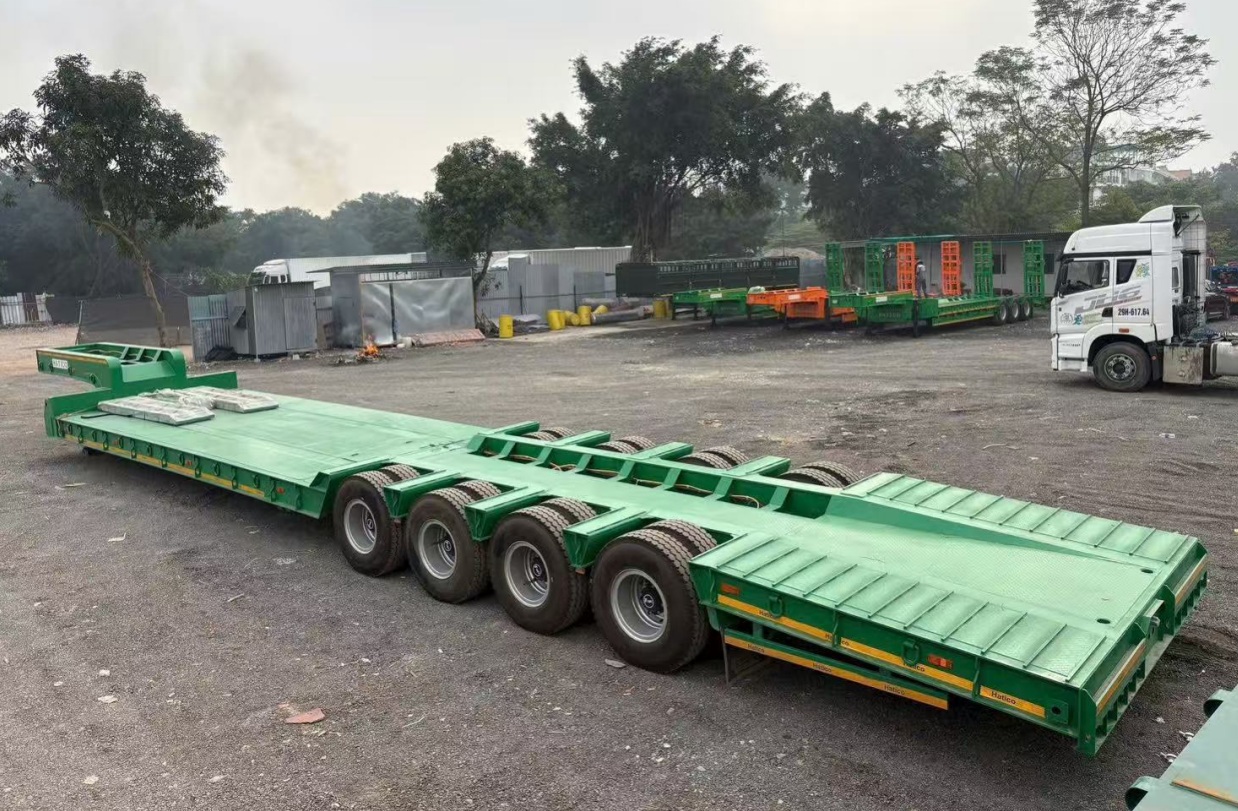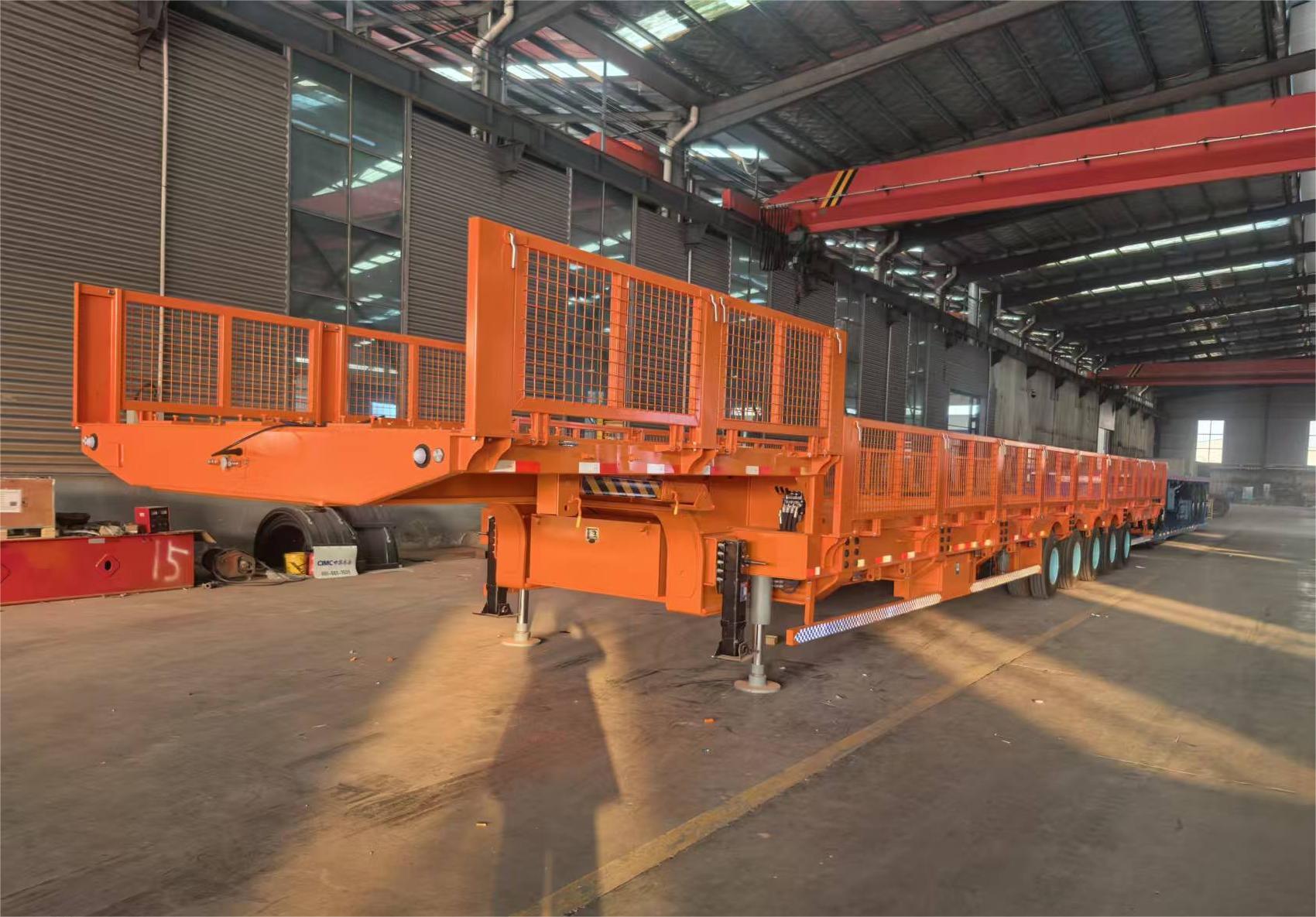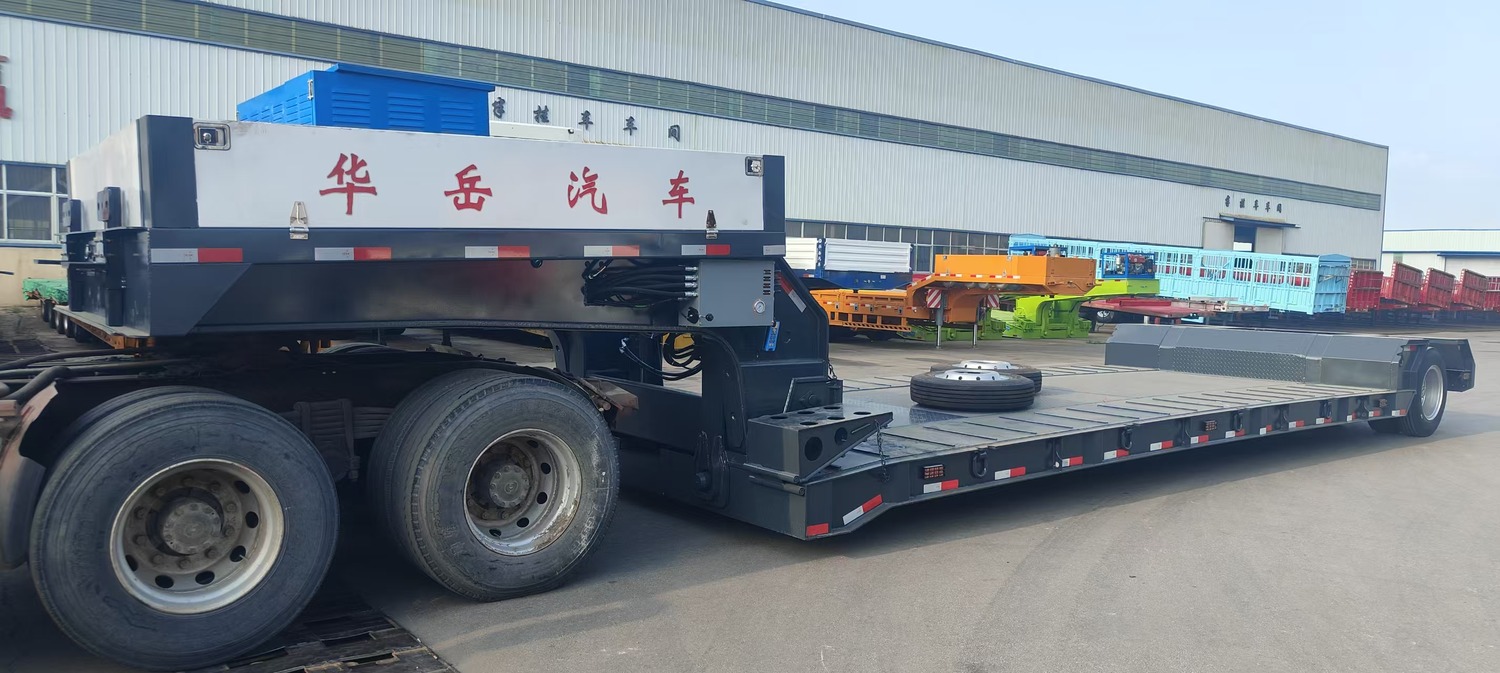
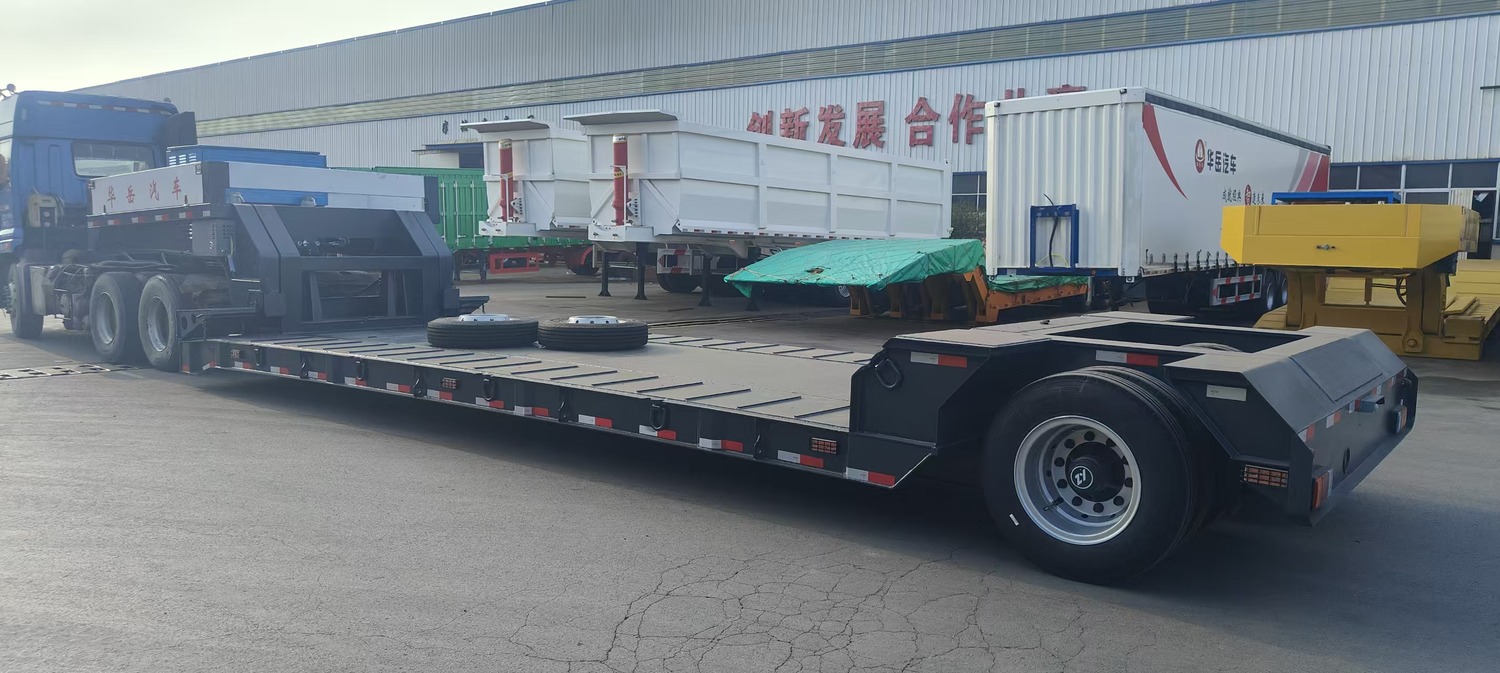
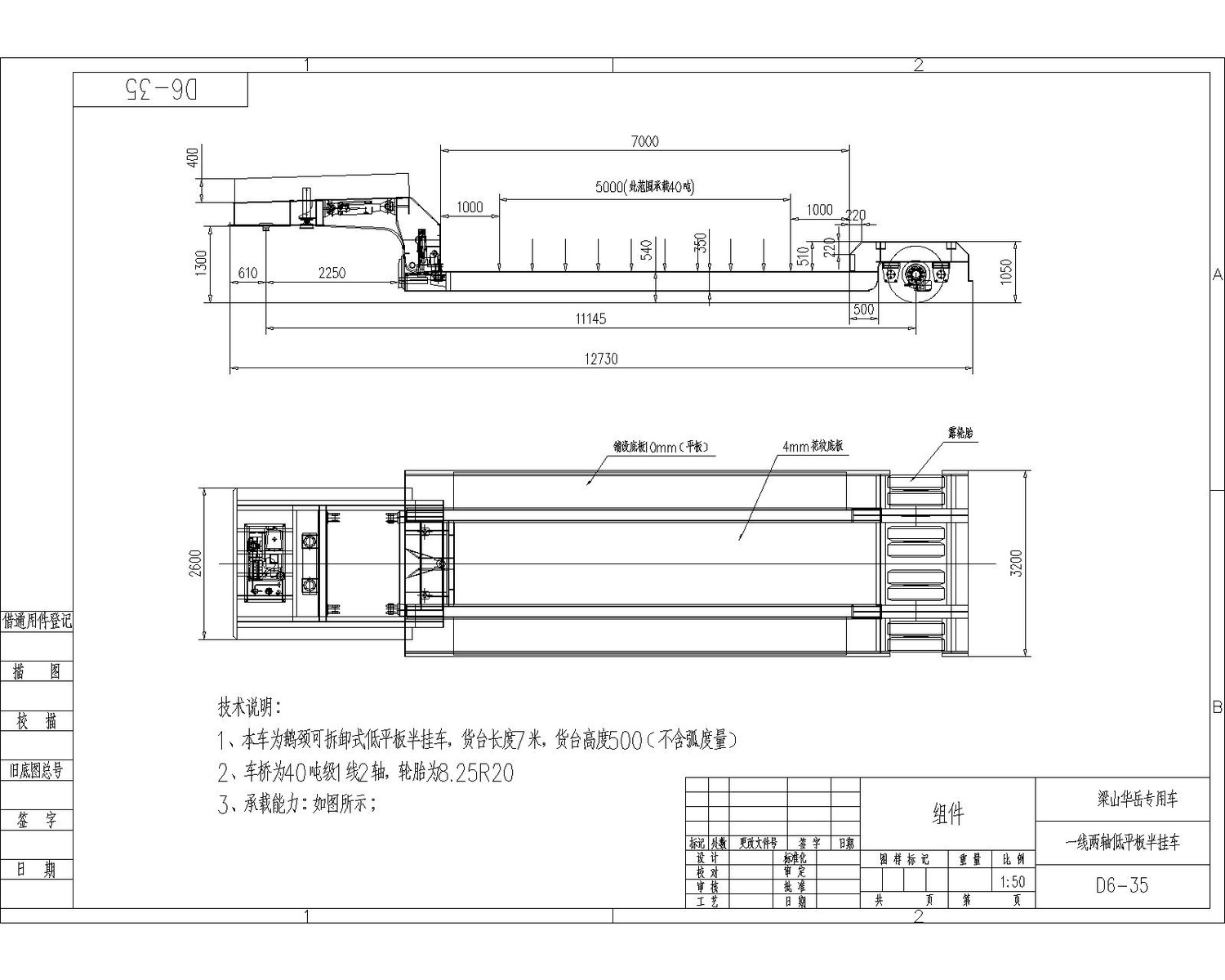
This detachable-gooseneck lowbed is a 40-ton, two-axle configuration with a 7,000 mm deck, a 500 mm deck height and a 5,000 mm deck area marked for the 40-ton load. Those dimensions describe different aspects of the equipment platform: its overall length, its height above the road and the portion associated with the loading designation. Together they explain how a machine occupies this particular trailer.
A detachable front section adds another practical feature. Separating the gooseneck opens the front of the low deck, providing an approach for suitable machinery without requiring it to climb over the rear axle area. The useful combination is a low transport position and access to that position from the front.
Deck Dimensions and Loading Geometry
The 7,000 mm deck provides the longitudinal space available within the main platform. The marked 5,000 mm area is a more specific loading reference inside that length. Treating the two dimensions separately matters because the space occupied by a machine and the region supporting its weight are not necessarily identical.
For example, a machine attachment can project beyond its tracks or tyres without placing the same vertical load on the deck below it. The principal support points remain at the running surfaces or designated transport supports. This makes the footprint and position of the machine central to the loading arrangement, alongside its overall dimensions.
The 500 mm deck height limits the height added beneath the equipment. A tall cab, folded boom or upper machine structure still contributes its own height, but a low platform preserves more room above the combination than a higher deck carrying the same machine. This is the direct transport benefit of the lowbed geometry.
Reading the 40-Ton Loading Designation
The 40-ton designation belongs to this configuration and its marked loading area. It is a load-capacity reference, distinct from the trailer's tare weight or the total weight of a tractor-trailer combination. The location and distribution of that load remain part of its structural meaning.
Weight placed on a semi-trailer is shared between the tractor connection and the trailer running gear. Moving the load forward increases the reaction toward the front support; moving it rearward increases the reaction toward the axle group. A usable platform therefore has both a dimensional envelope and an appropriate loading position.
Two loads with the same total weight can also affect the deck differently. A broad machine footprint distributes contact over a larger area, while narrow feet or wheels place more concentrated forces into the floor and crossmembers. The main longitudinal structure carries those forces between the front connection and rear supports.
The Two-Axle RGN Layout
Two axles form the running gear beneath the featured lowbed chassis. Their number describes the arrangement rather than a separate capacity calculation: multiplying an assumed axle rating would leave out the front support, frame, tyres and other parts of the combination. The trailer's 40-ton designation is the relevant product figure here.
The removable-gooseneck connection has two distinct working states. During transport it joins the deck to the front section carrying the tractor interface; during suitable loading operations the sections separate to open the deck entrance. Mechanical engagement and the supporting structure carry the transport forces once the connection is restored.
The front approach is useful for machinery whose ground clearance makes a steep climb difficult. Loading geometry includes the approach angle and the transition onto the platform, so a low entrance can matter as much as available deck length. Tracks, wheel spacing and attachment position determine the path taken by a particular machine.
A Low Platform in Equipment Transport
Lowering the platform also lowers the same machine relative to the road. This contributes to the height and centre-of-gravity arrangement of the loaded vehicle, while the equipment's own shape and weight distribution remain important. The practical advantage is a lower cargo position, not an unlimited increase in stability or carrying capacity.
Ground clearance is the other side of that geometry. A long low section can approach the road surface on a crest or a sharp transition between a yard and a road. Clearance beneath the chassis and clearance above the cargo are different constraints, even though both are influenced by the platform position.
Once loaded, the equipment needs restraint against longitudinal and sideways movement. The deck carries its weight, while the restraint arrangement resists movement during braking and cornering. Suitable contact surfaces, support positions and attachment points make the machine part of a defined transport arrangement rather than simply an object resting on a large platform.
This two-axle RGN brings those considerations into a specific dimensional package. Its 7,000 mm deck offers overall platform length, the marked 5,000 mm area relates the 40-ton load to a defined portion of that deck, and the 500 mm height keeps the equipment low. The detachable front section provides the access method that complements those dimensions.
Frequently Asked Questions
Is the 5,000 mm loading area the full deck length?
No. The deck is 7,000 mm long, while the 5,000 mm marking identifies the area associated with the 40-ton loading designation. These dimensions serve different purposes.
What does a 500 mm deck height contribute?
It places the equipment platform low above the road, reducing the height added beneath the machine. The machine's transport height is added to that platform height.
Why does the gooseneck detach?
Detachment opens the front of the loading deck. Suitable machinery can approach from that end, avoiding a loading path over the rear running gear.
Discuss Your Trailer Application
Share your cargo or equipment details, transport route and destination market with HUAYUE for a configuration discussion tailored to the intended application.
Interested in this case?
Contact Us for a Technical Consultation.