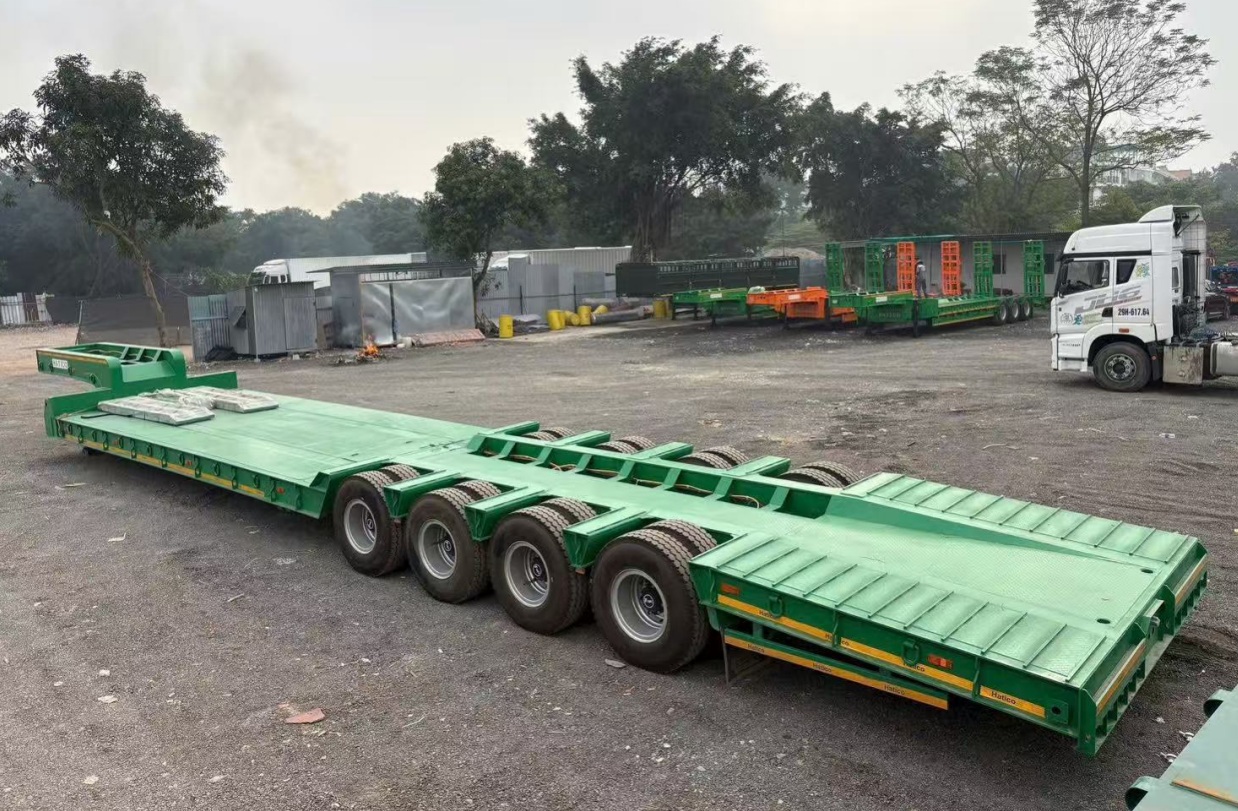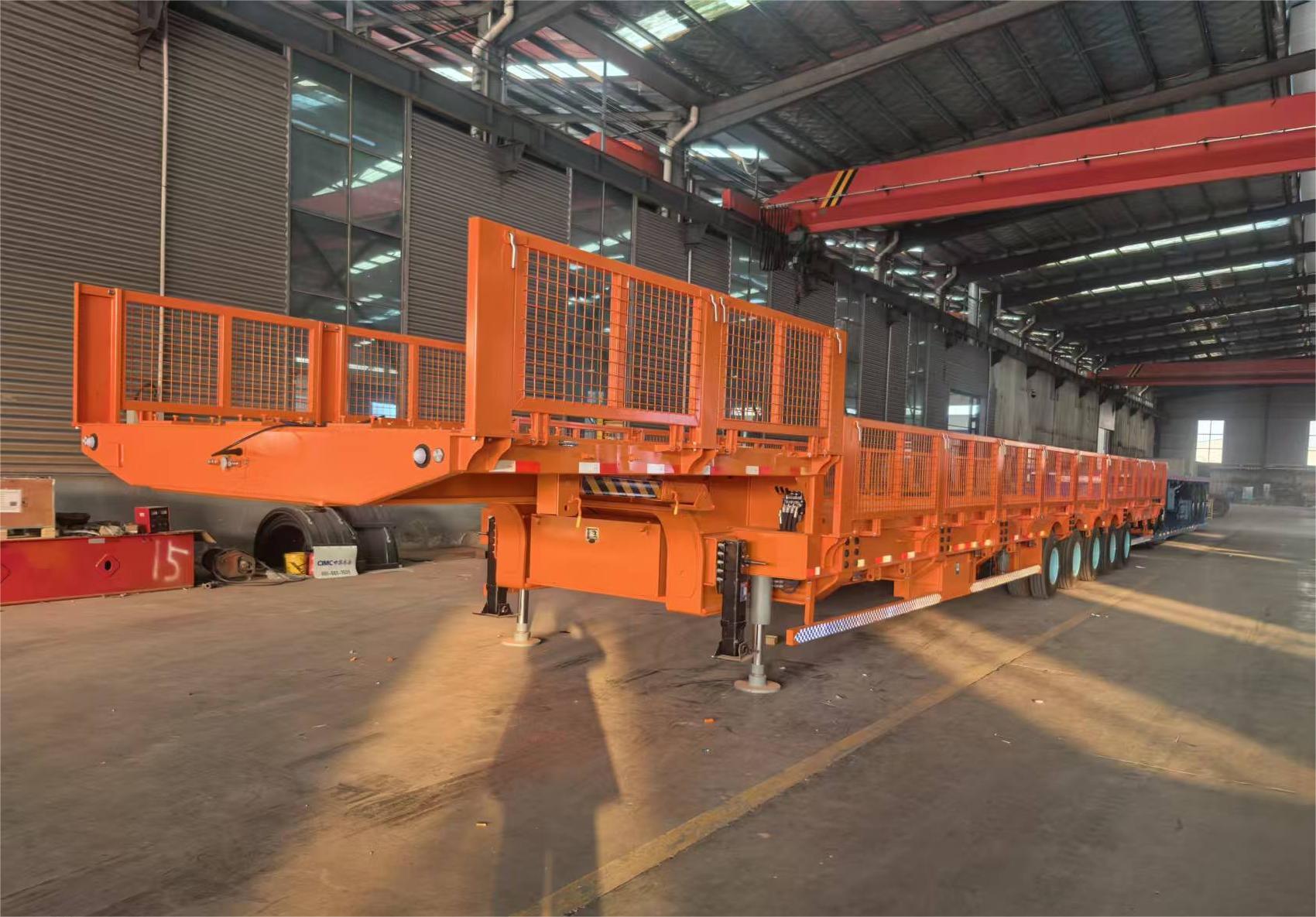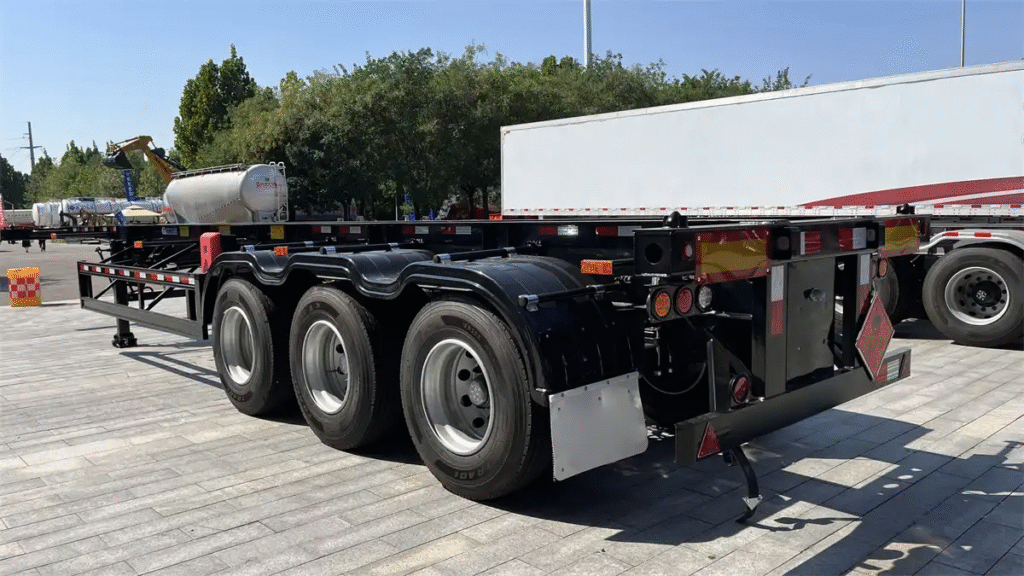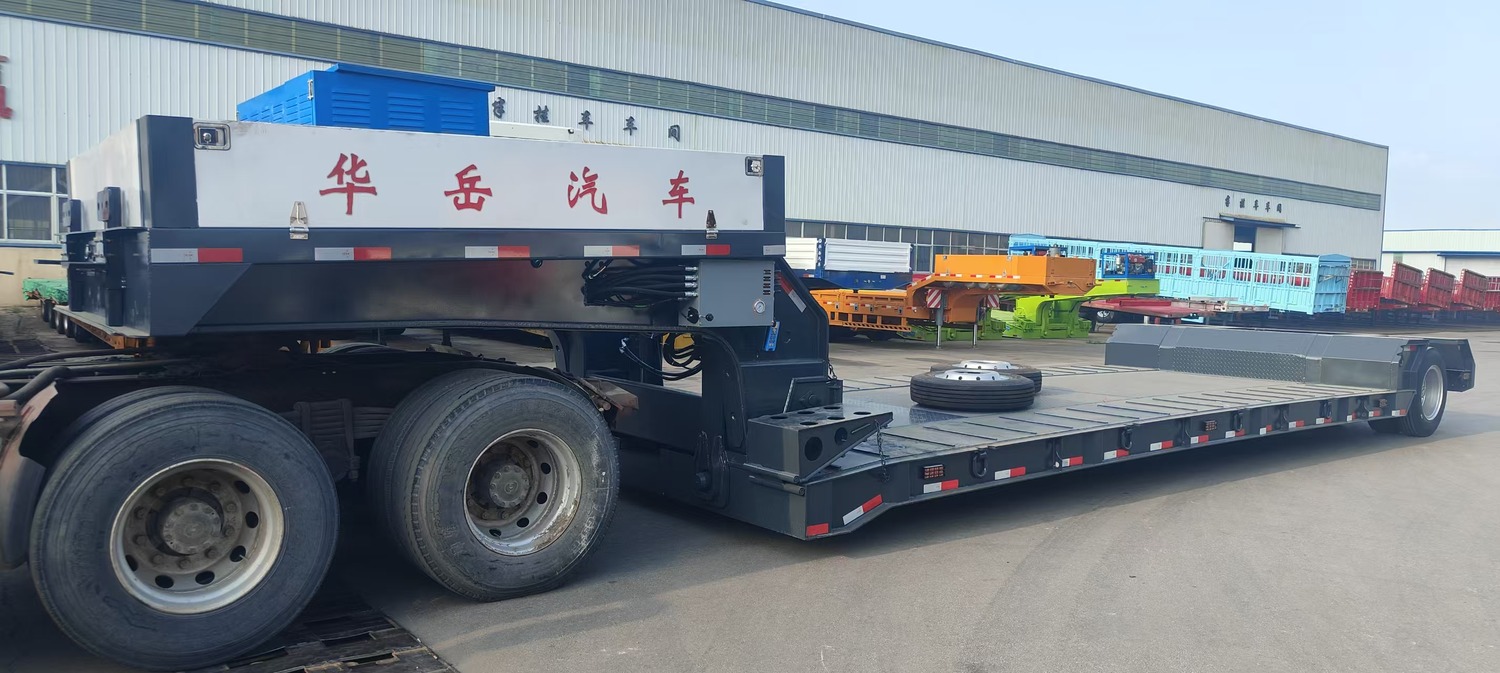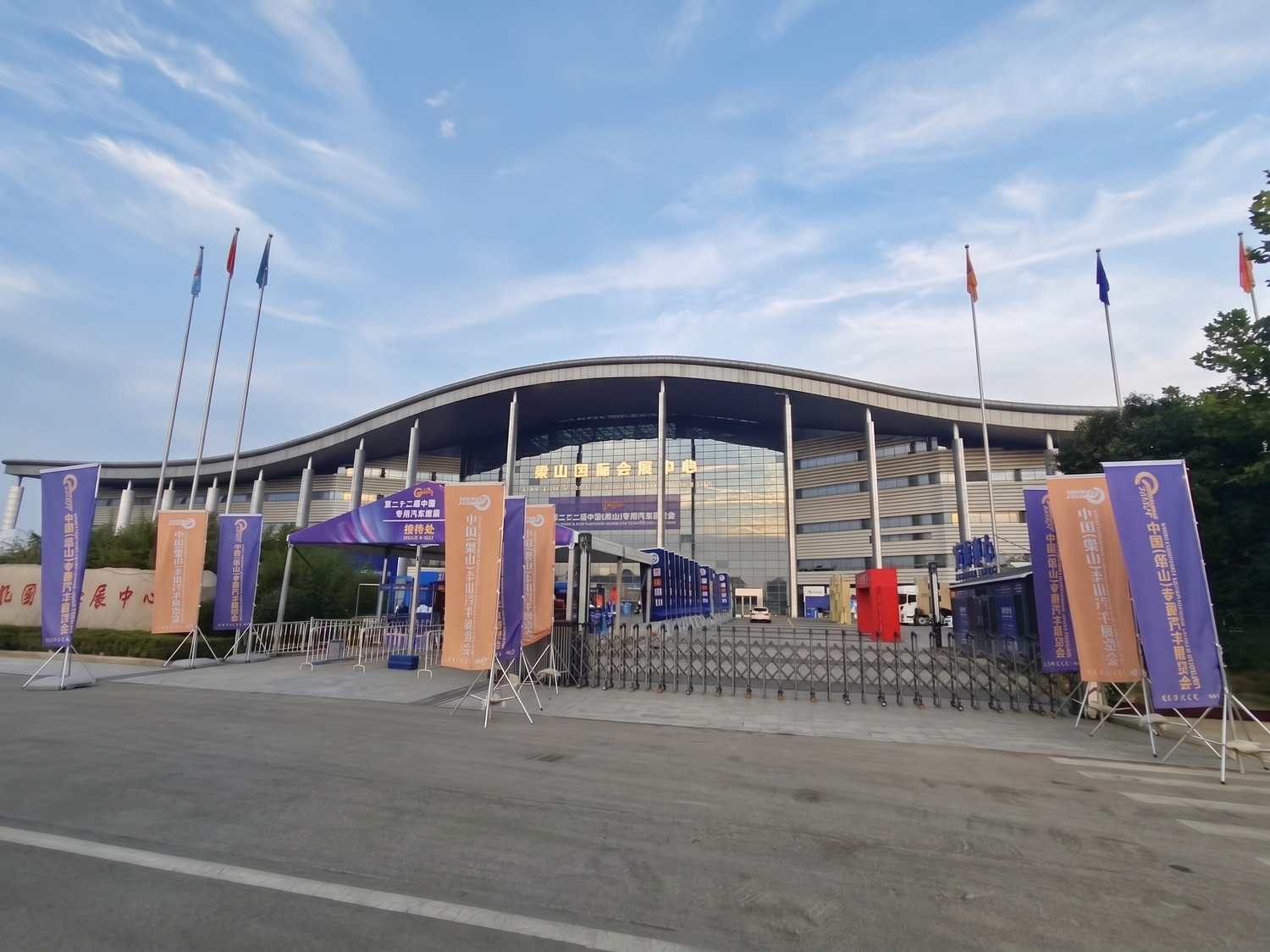
HUAYUE presented an extendable detachable gooseneck trailer and lightweight curtain side semi-trailers among its featured vehicles at the China (Liangshan) Special Purpose Vehicle Exhibition. The detachable gooseneck model attracted attention with hydraulic running gear arranged in 2 axle lines with 4 axles, together with a cargo deck that extends when additional loading length is needed. The curtain side display brought a different priority into focus: retaining main-beam load-bearing strength while reducing trailer tare weight.
These exhibits address two distinct transport needs. The lowbed combines front-loading access and adaptable deck length for equipment transport, while the curtainsider pairs an enclosed cargo space with convenient loading access for general freight. Their value lies in how the chassis, loading platform and body serve the load, rather than in one configuration being suitable for every application.
An Extendable Detachable Gooseneck Trailer with Hydraulic Axle Lines
The featured HUAYUE lowbed uses a 2-line, 4-axle hydraulic running system. This terminology matters: an axle line describes an arrangement across the trailer, so two axle lines with four axles should not be confused with four conventional axles positioned consecutively along its length. It identifies a different running-gear layout within the heavy transport trailer family.
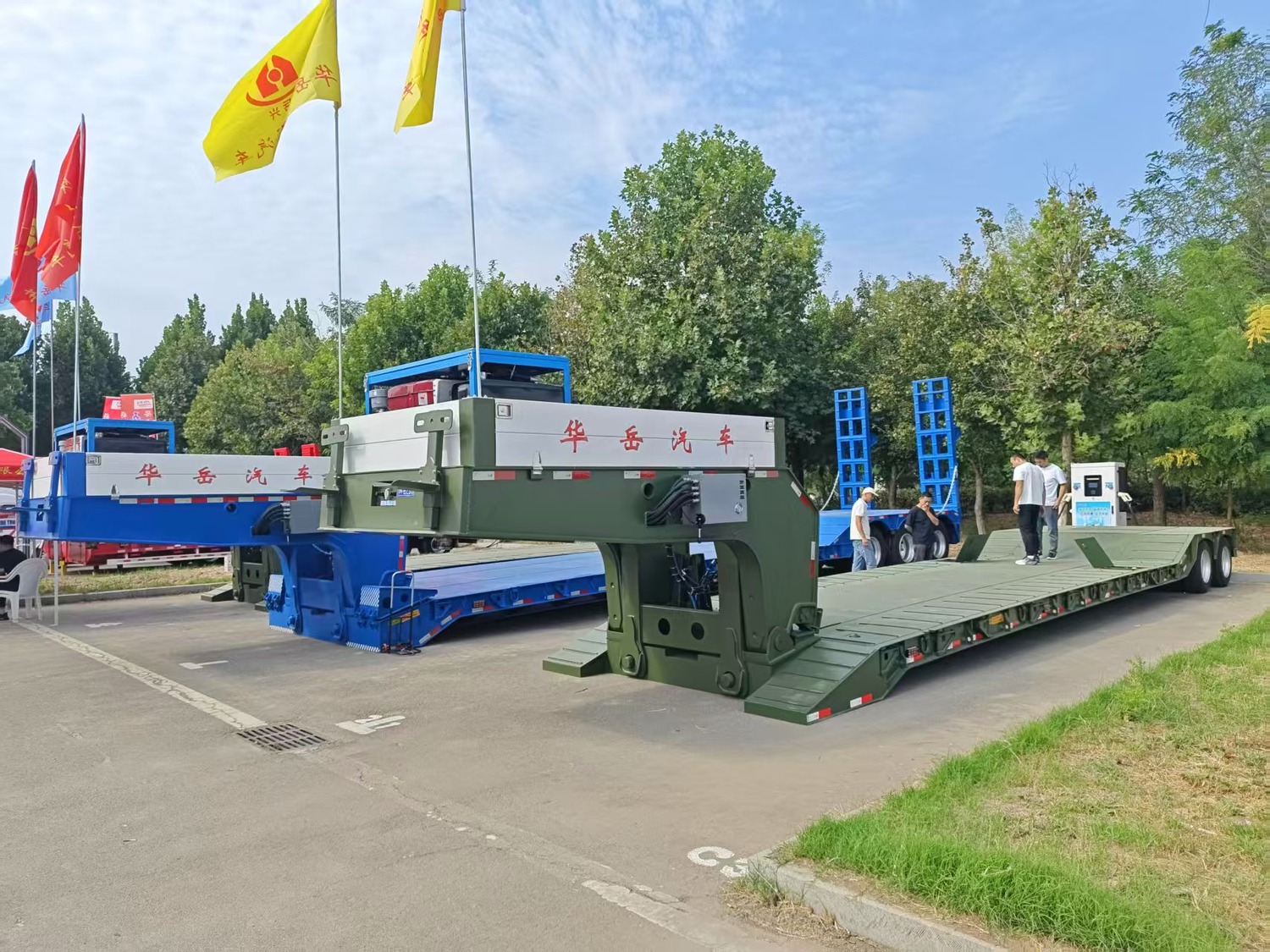
Hydraulic suspension systems used in heavy transport help accommodate differences in wheel height and distribute load as the running gear moves over uneven surfaces. That function is separate from simply adding more axles: axle arrangement describes the layout, while suspension describes how the load is supported. On a lowbed carrying a large machine, these are important parts of the relationship between the cargo platform and the ground beneath it.
The detachable gooseneck provides access from the front of the loading platform. In this trailer class, removing the neck opens the low deck for loading equipment from ground level, avoiding the need to travel over the rear axle section. This loading geometry is particularly relevant to machinery with limited ground clearance, where the approach to the platform can be as important as the available deck space.
A Cargo Deck That Extends for Longer Loads
HUAYUE also incorporated a telescopic cargo deck into the exhibition model. The platform can be extended when the load requires more longitudinal space, making loading length an adjustable feature rather than a single fixed dimension. For equipment transport, that flexibility relates to the distance between the machine's supporting positions as well as its overall length.
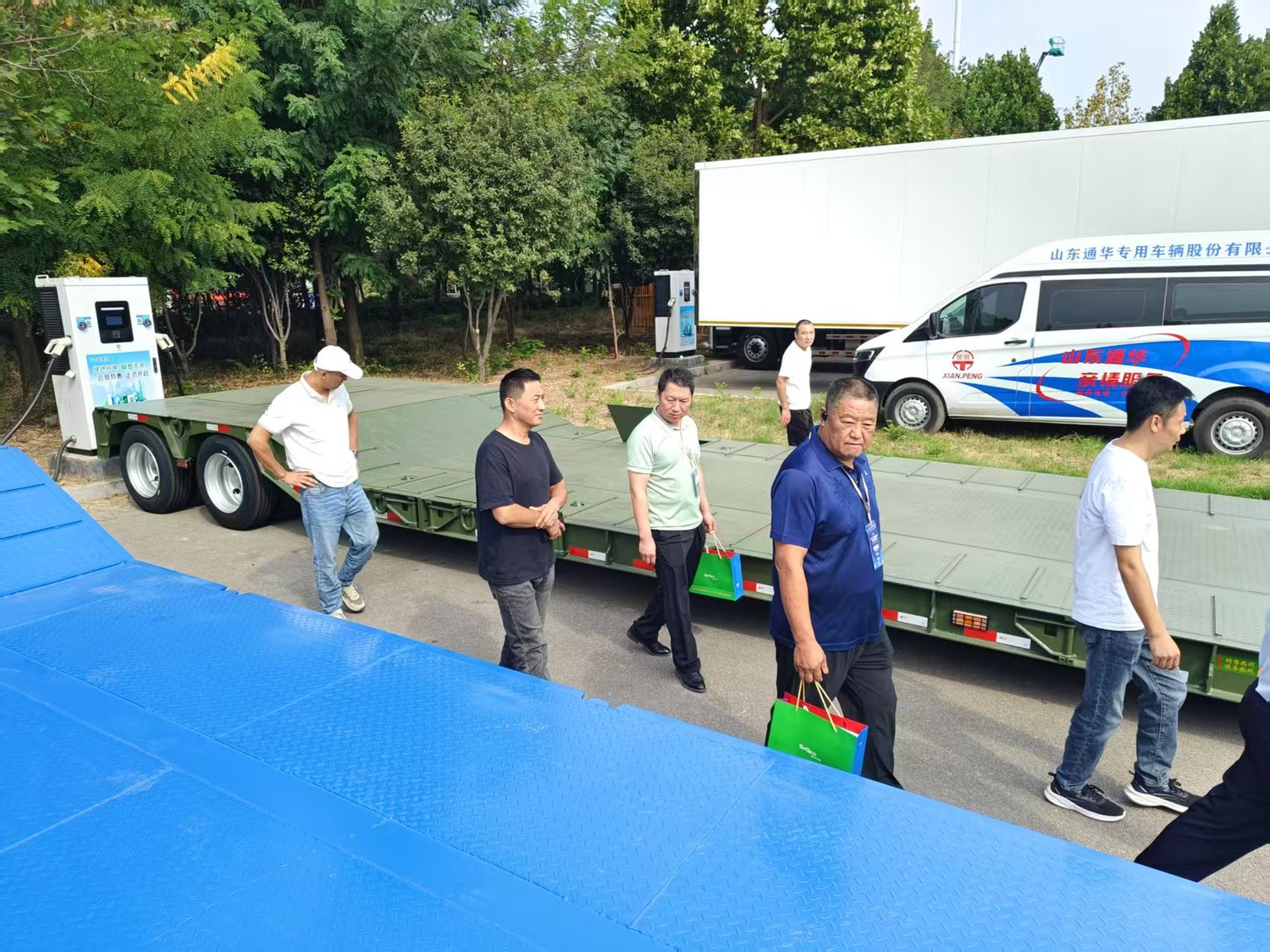
Deck extension and gooseneck removal perform different jobs. Extension changes the usable loading length; removing the gooseneck changes the loading access. Combined in one trailer, they address two practical constraints without treating extra deck length as extra payload capacity: the weight and position of the cargo still determine how the structure is loaded.
Lightweight Curtain Side Trailers for Central Asian Freight
HUAYUE's curtain side semi-trailers also received a positive response at the exhibition, building on the company's customer interest across Central Asia. The region includes Kazakhstan, Uzbekistan, Kyrgyzstan, Tajikistan and Turkmenistan. For this product line, HUAYUE combines main-beam load-bearing strength with lightweight design, aiming to reduce the weight of the trailer itself while preserving its freight-carrying role.
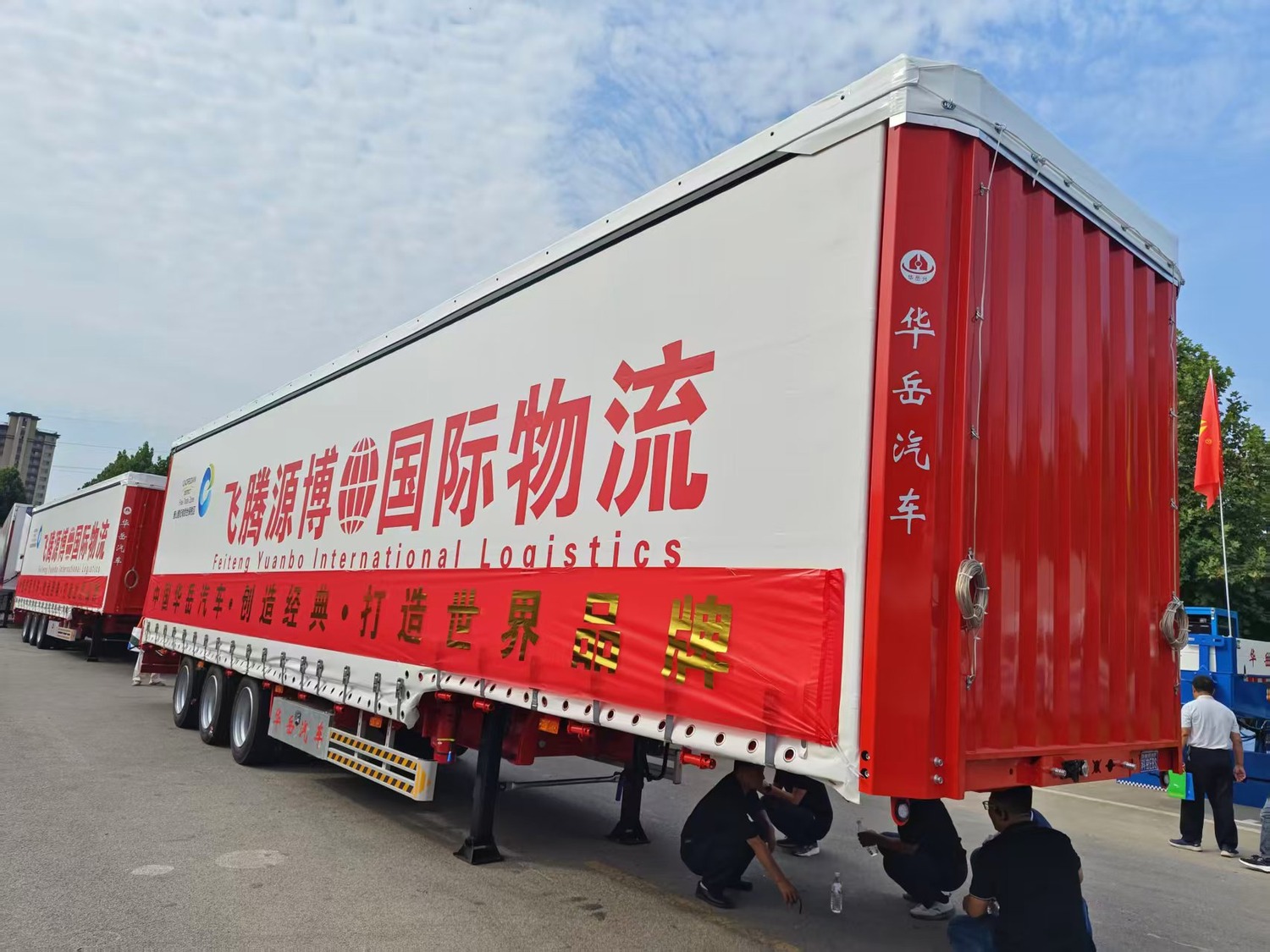
Tare weight is the weight of the unloaded vehicle. Where an operation reaches its permitted gross weight before filling the available cargo space, reducing tare can leave more of that weight allowance available for goods. This is the practical link between lightweight construction and payload opportunity; it does not depend on making the trailer body larger.
The main beams remain central to that balance because they carry the freight platform and transmit its load through the chassis. Lightweight design is therefore about the complete structural arrangement, not simply using less material everywhere. Retaining load-bearing strength while reducing unnecessary mass keeps the design focused on useful carrying capability.
The benefit differs with the freight being carried. Dense palletised goods may use the available weight allowance, whereas bulky, lighter products can fill the body before reaching that limit. Additional carrying potential therefore becomes commercially useful when the load, available space and transport conditions allow it to be used.
Side Access and Rear Doors for General Cargo
A curtain side body combines a covered load space with access along the sides, making it useful for palletised freight and packaged industrial goods. Side loading allows handling equipment to approach different positions along the deck. Rear doors provide another access point, including for loading-bay operations.
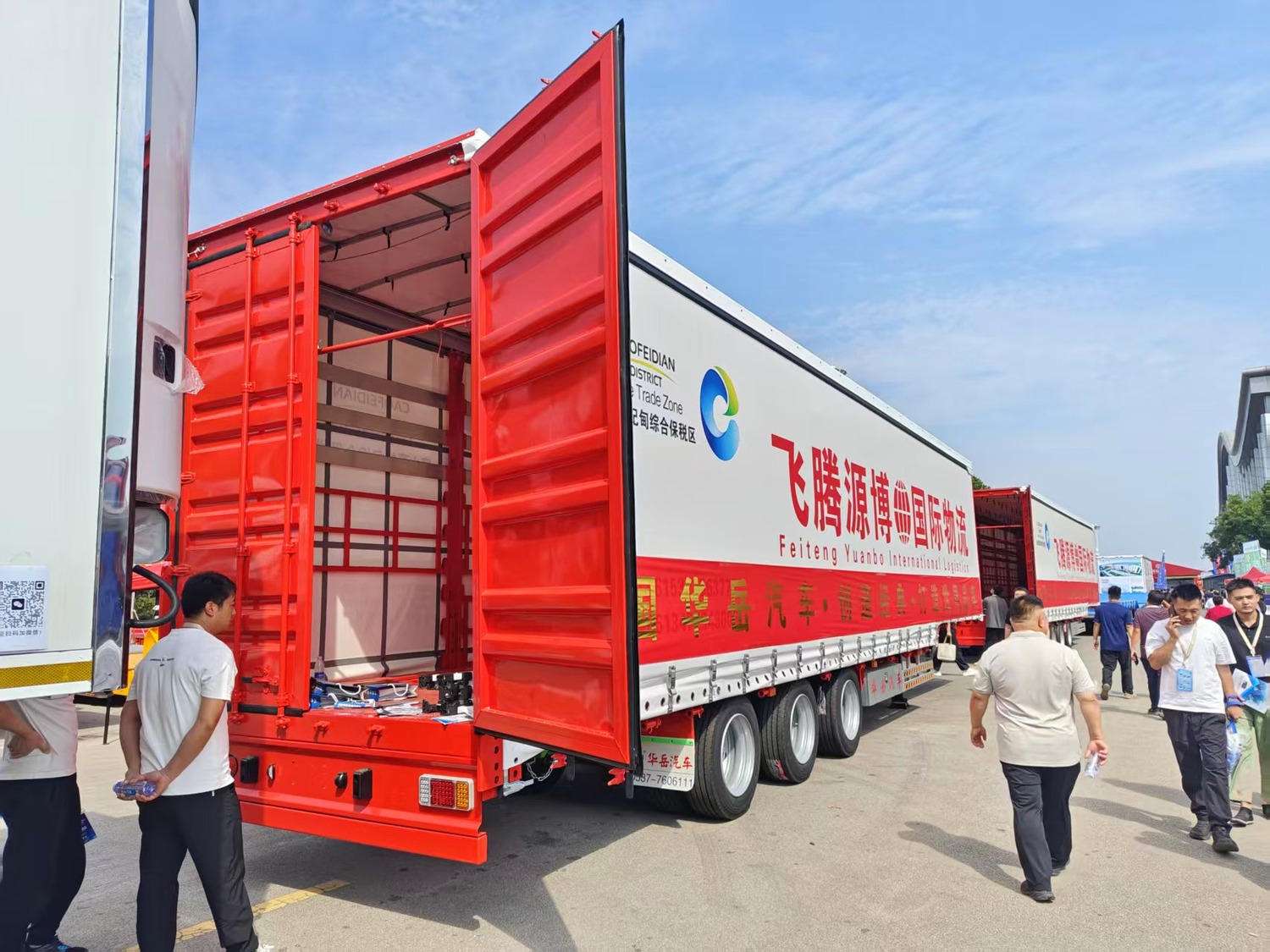
For the exhibited curtainsiders, loading access complements the focus on lower tare weight. One concerns how goods enter and leave the body; the other concerns how much of the available weight allowance remains for freight. Together, these characteristics explain the appeal of the curtain side format alongside HUAYUE's equipment-focused lowbed display.
Frequently Asked Questions
Does extending the lowbed deck increase its payload rating?
No. Extension provides additional loading length, not an automatic increase in carrying capacity. Cargo weight, support positions and the trailer's structural loading limits remain relevant at the selected deck length.
How does a detachable gooseneck differ from rear-ramp loading?
A detachable gooseneck opens access at the front of the low deck. Rear-ramp loading approaches from behind the trailer and passes over its rear section, creating a different path onto the cargo platform.
When does lower curtainsider tare weight help carry more freight?
It is most useful when weight is the limiting factor and cargo space remains available. For volume-limited loads, a lighter trailer alone does not create additional room inside the body.
Discuss Your Trailer Application
Share your cargo or equipment details, transport route and destination market with HUAYUE for a configuration discussion tailored to the intended application.
Interested in this case?
Contact Us for a Technical Consultation.