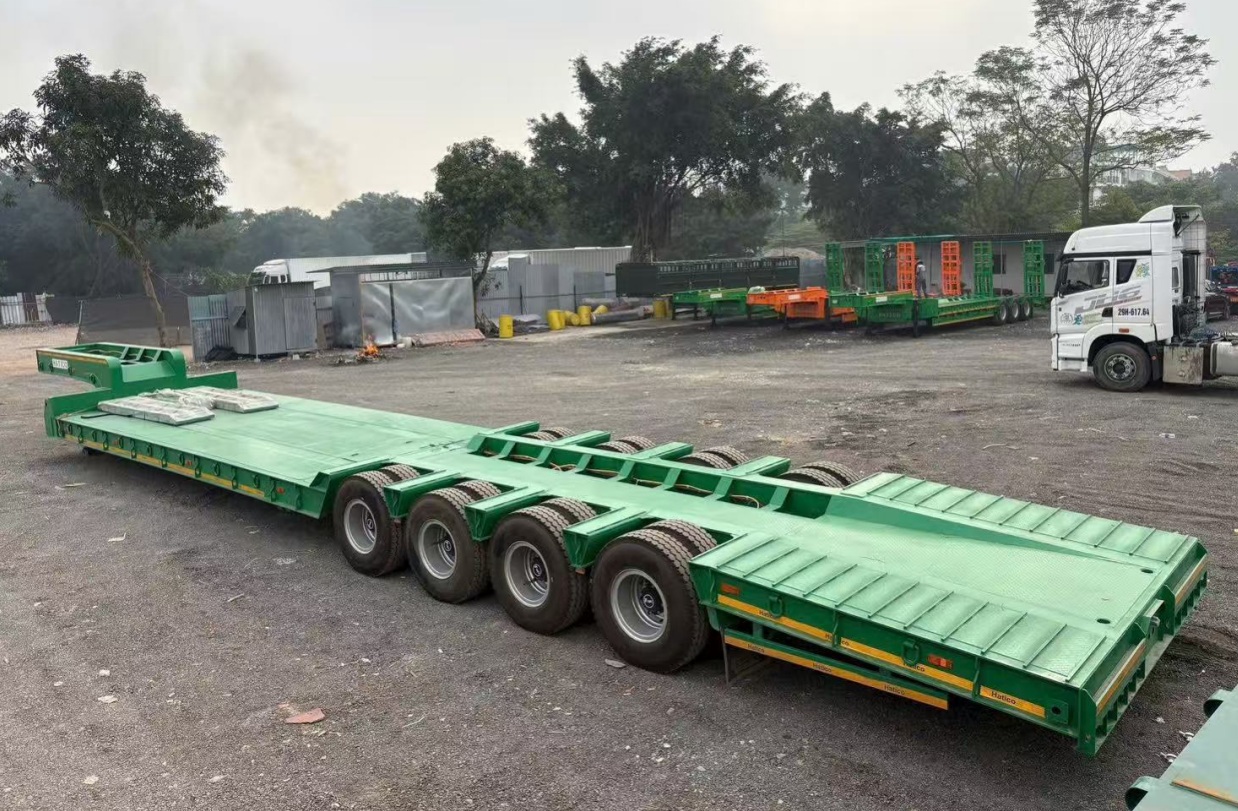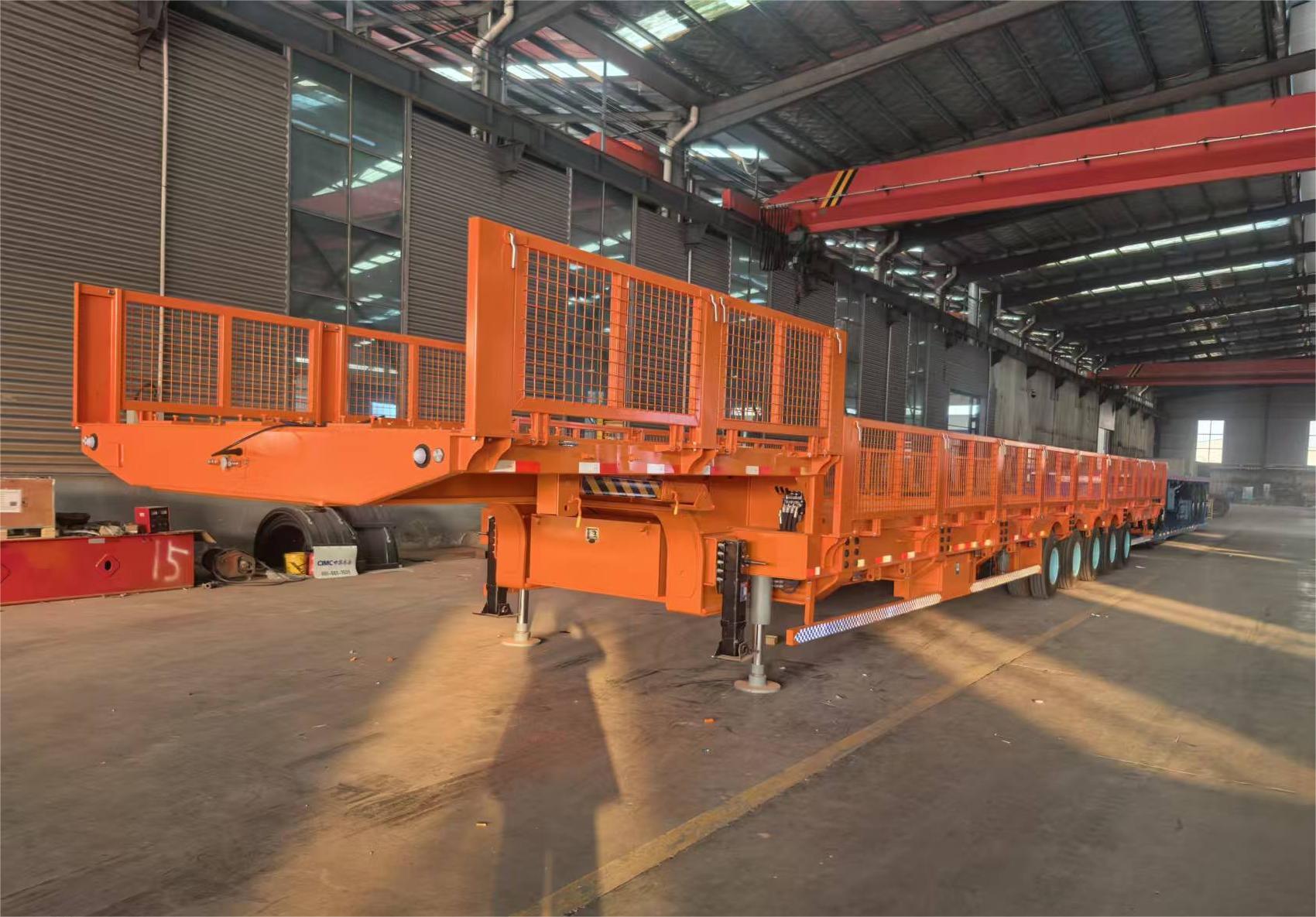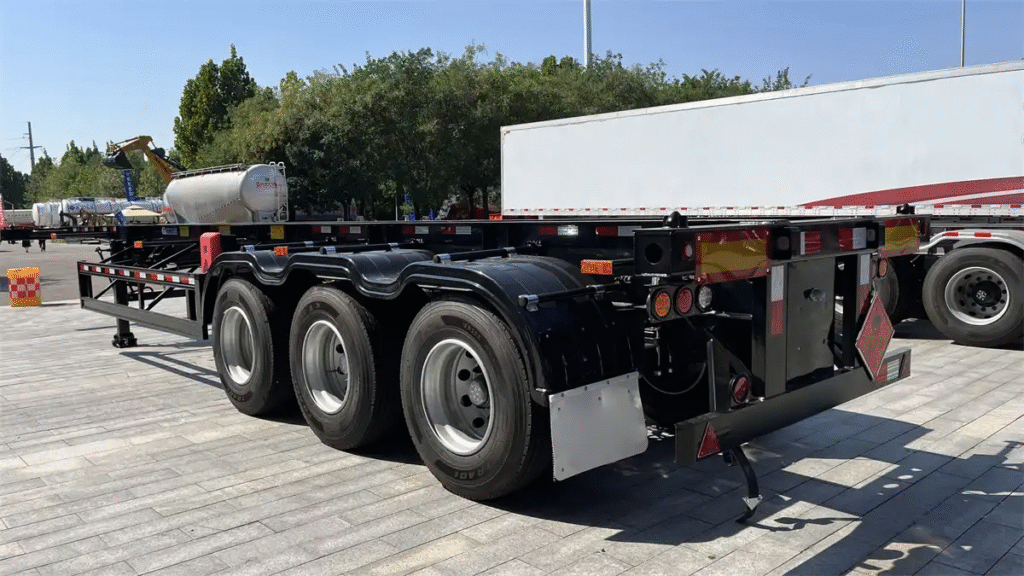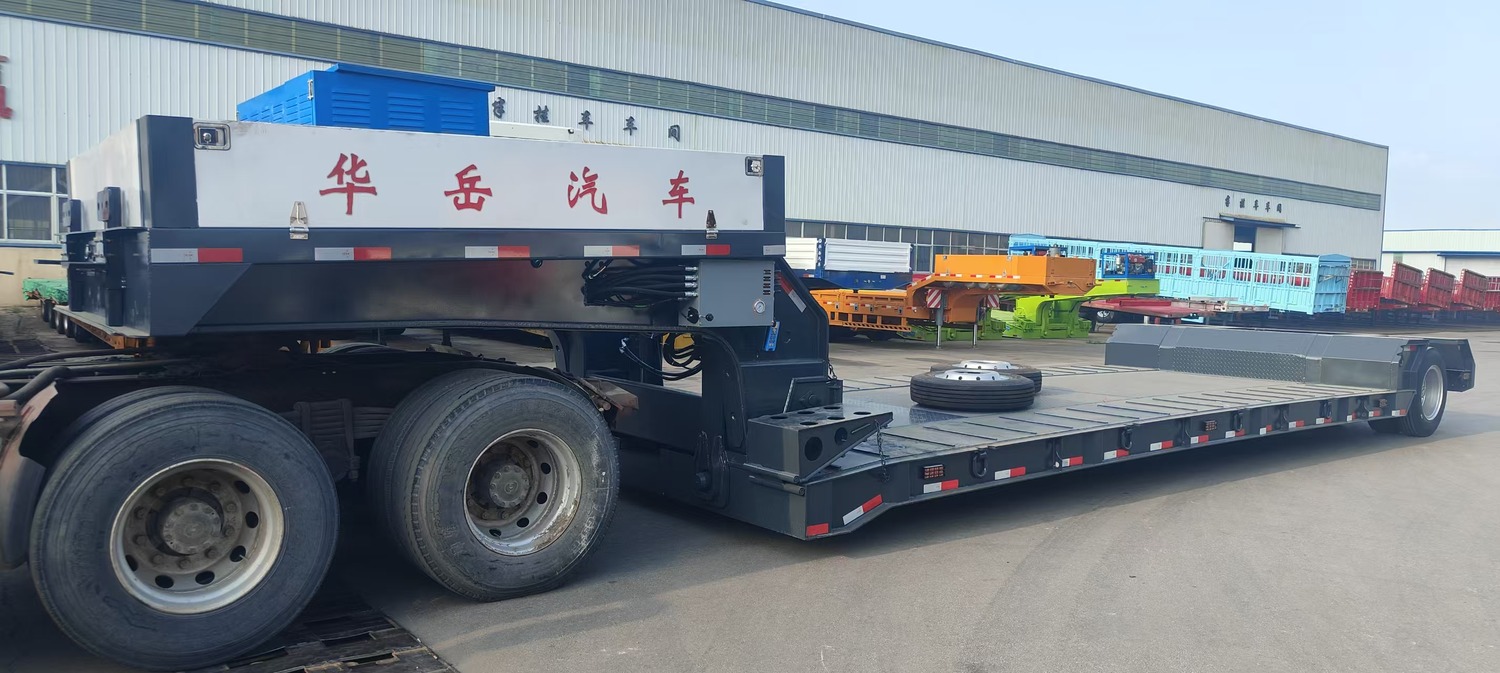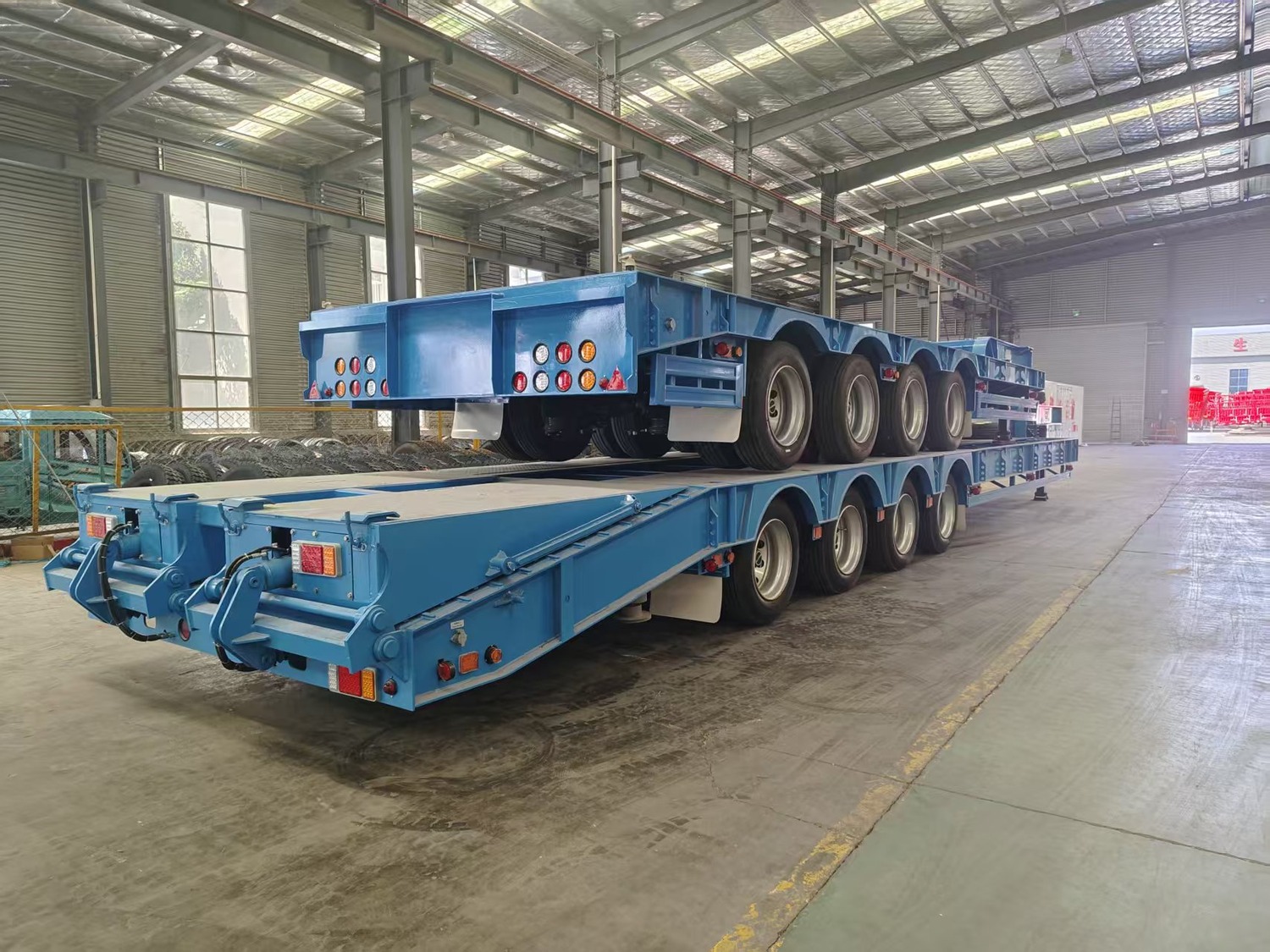
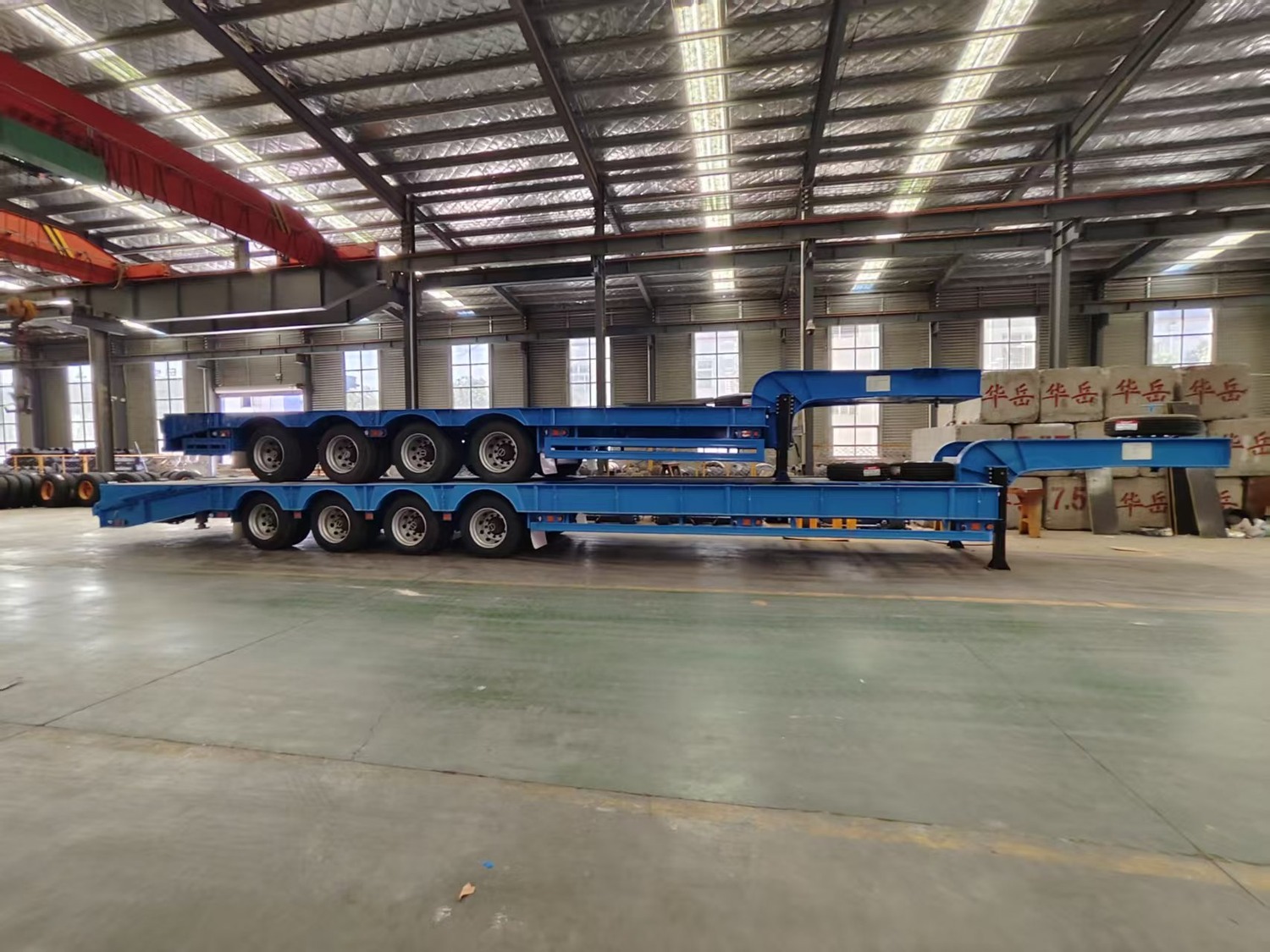
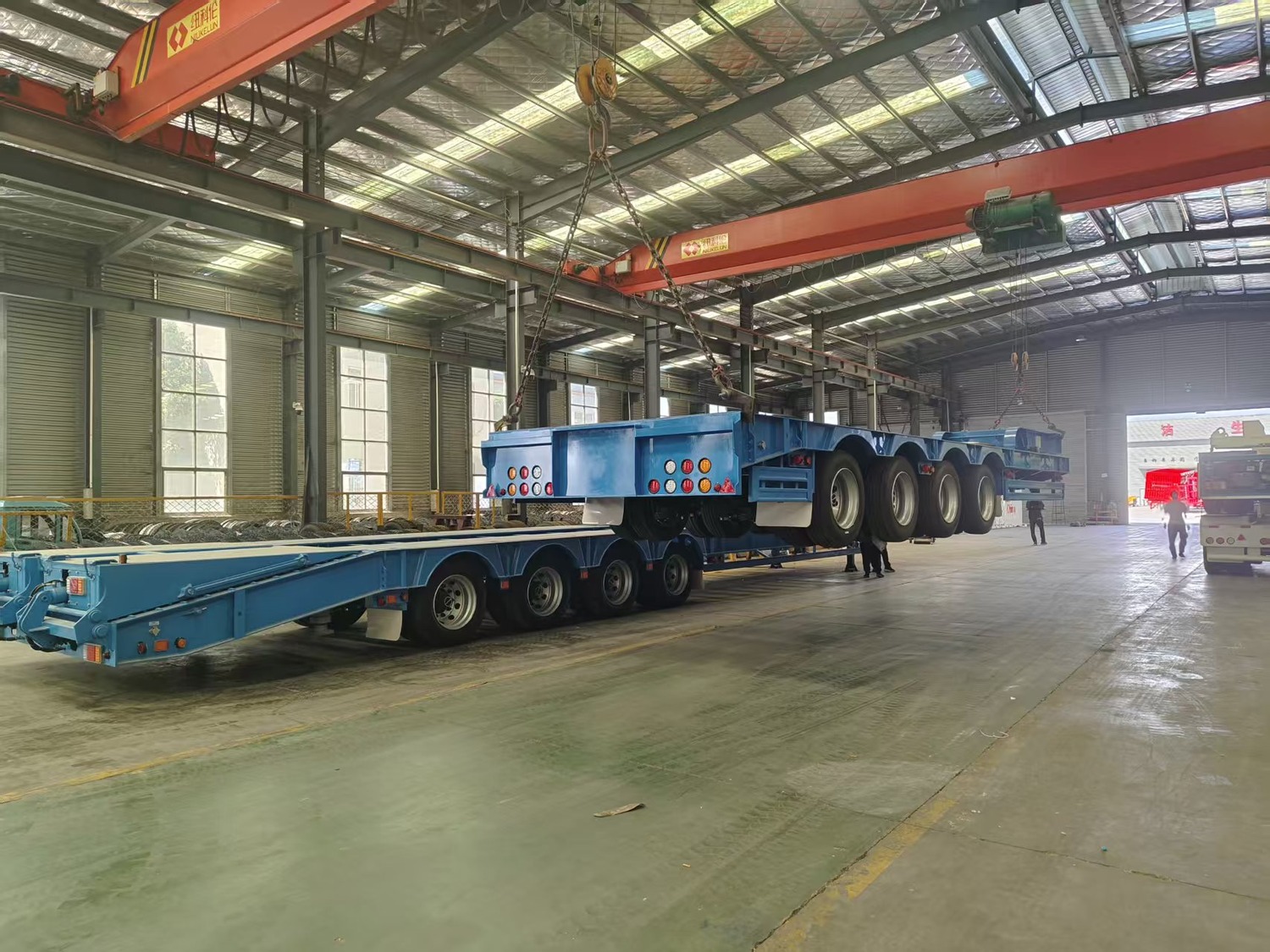
These two Malaysian four-axle lowbed trailers share the same vehicle class but differ in their platform arrangements: one is a standard lowbed layout and the other includes reverse-folding ramps. The common purpose is equipment transport on a lowered deck. The distinction lies in the rear access arrangement and how that part of the trailer changes between loading and travel.
A useful comparison starts with that actual difference. Four axles and a low platform explain what the trailers share, while the ramp arrangement explains a particular loading feature. Other dimensions or capacities belong to each vehicle's complete configuration rather than following automatically from the shared axle count.
The Standard Four-Axle Lowbed
A standard lowbed uses a lowered cargo platform supported by its chassis and running gear. Its central feature is the low deck, which forms the transport surface for suitable equipment and project cargo. Positioning the platform lower reduces the height added beneath the transported machine.
The machine's own shape still determines much of the loaded profile. A cab, counterweight or folded working attachment can occupy space beyond the track or tyre footprint. Platform height and machinery height therefore work together, while the cargo's support position determines where its weight enters the deck.
The four axles support the chassis through multiple road contact positions. The tractor connection carries the front share of the load, and moving the equipment changes the reactions at both ends. A lowbed's useful loading arrangement consequently includes both available space and an appropriate longitudinal position.
The Reverse-Folding-Ramp Layout
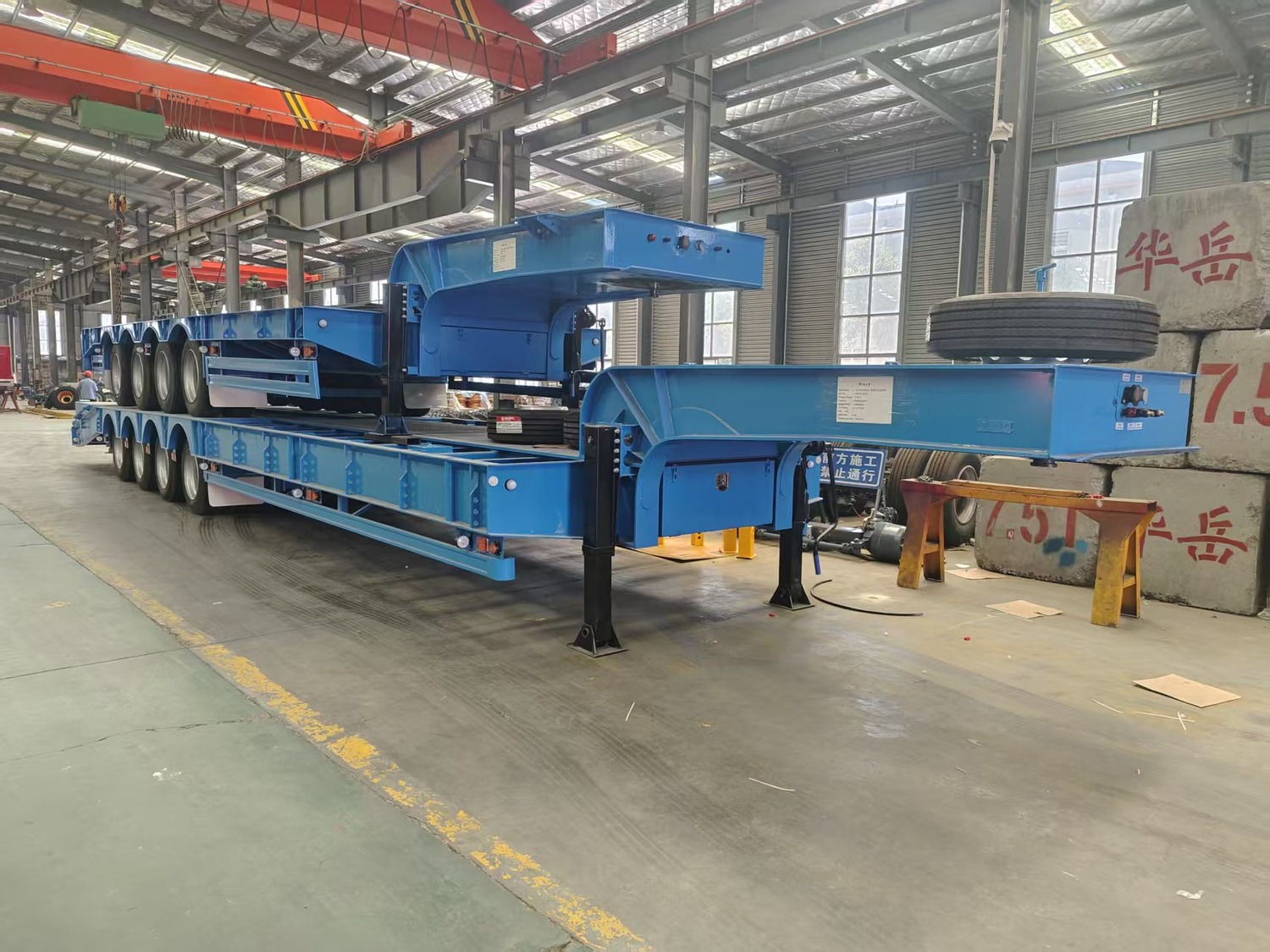
The second configuration adds reverse-folding ramps at the rear of the platform. Those ramps create a defined transition between ground level and the deck. Their folding arrangement changes the position of the ramp structure between its loading role and its stowed transport position.
This feature affects rear access without changing the trailer into a different vehicle class. The main platform remains a four-axle lowbed. The ramps extend its working approach during loading, then become part of the rear arrangement when the vehicle travels.
For a machine, the important geometry includes the slope onto the ramp and the transition at its upper end. A machine can have sufficient clearance on the approach yet come close to the deck transition beneath its centre. That makes the change of angle as relevant as the average slope.
Ramp spacing also matters because the machine's running surfaces carry the load. Tracks or tyres need suitable support along their loading path, and the forces can be uneven while equipment crosses a transition. The ramp structure and its connection to the trailer carry that temporary loading condition.
Loading State and Transport State
During loading, the ramps bridge a height difference while the machine moves toward its final position. Their support conditions change as weight travels along them and onto the deck. Once the machine rests on the main platform, the chassis carries the transport load through a different distribution of forces.
The stowed ramp position has its own practical consequences. It occupies space at the rear of the trailer and needs to coexist with the equipment's transport envelope. A folding layout is therefore described through both the loading path it creates and the position it takes when that path is no longer needed.
This distinction prevents a common misunderstanding about platform space. A ramp that provides an approach is not automatically an additional cargo-bearing deck during travel. Its transport function depends on the actual design rather than its apparent length when unfolded.
Equipment Support on Both Platforms
Both trailers carry machinery through the contact between the deck and the machine's running surfaces or designated supports. Those contacts can be narrow relative to the available platform. The deck and crossmembers transfer local loads into the main beams, which carry them toward the front connection and running gear.
Two machines of the same weight can produce different deck demands. Long tracks spread contact along strips, while wheels or support feet concentrate it into smaller areas. A comparison based only on total mass would miss this difference in how the equipment loads the structure.
The equipment also needs restraint against movement during braking and cornering. The deck provides vertical support, while the restraint arrangement connects appropriate machine attachments to the trailer. A useful loading approach helps the machine reach its position, but it does not replace the restraint needed during travel.
Two Configurations for a Shared Transport Role
The standard platform and reverse-folding-ramp version represent two arrangements within the same lowbed category. The shared low deck addresses equipment height and support; the ramp feature changes the rear loading interface. That is the concrete technical distinction in this Malaysian pair.
The comparison is most useful when it stays close to those functions. A rear access feature can make a difference for a particular machine and loading space, while the axle arrangement and chassis continue to carry the final transport load. Understanding each role makes the two vehicles easier to compare without inventing a capacity or performance difference.
Frequently Asked Questions
What do both Malaysian trailers have in common?
Both are four-axle lowbeds with a lowered equipment platform. The chassis carries the deck load between the tractor connection and trailer running gear.
What changes with the reverse-folding ramps?
They provide a rear transition onto the deck and fold into a transport arrangement. Their main distinction is the way they serve rear loading access.
Can ramp length be counted as usable cargo-deck length?
Not automatically. A loading ramp and a transport platform perform different jobs, and any cargo-bearing use of a ramp depends on its actual design.
Why does the top of the ramp matter for ground clearance?
The machine crosses a change in slope there. Its underside can approach the transition even when it clears the lower ramp surface.
Discuss Your Trailer Application
Share your cargo or equipment details, transport route and destination market with HUAYUE for a configuration discussion tailored to the intended application.
Interested in this case?
Contact Us for a Technical Consultation.