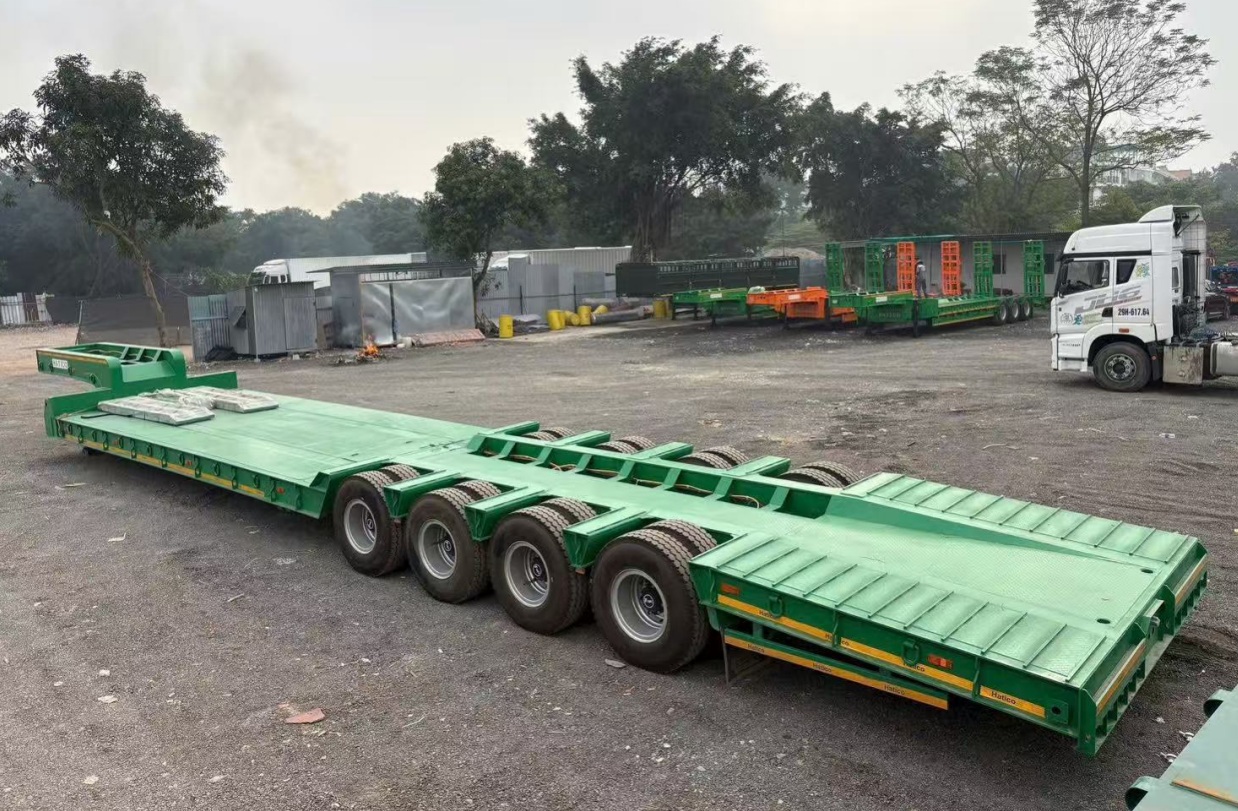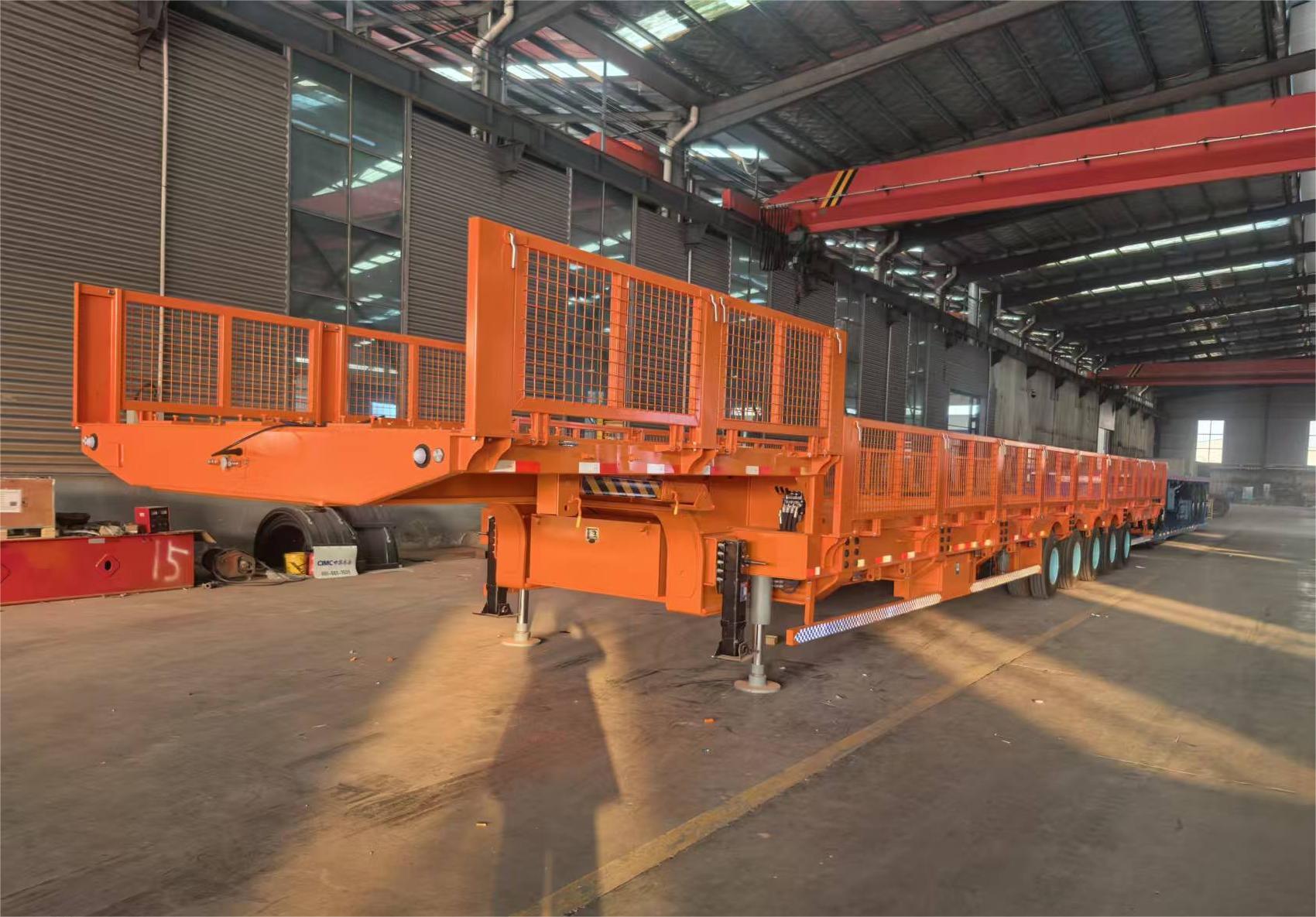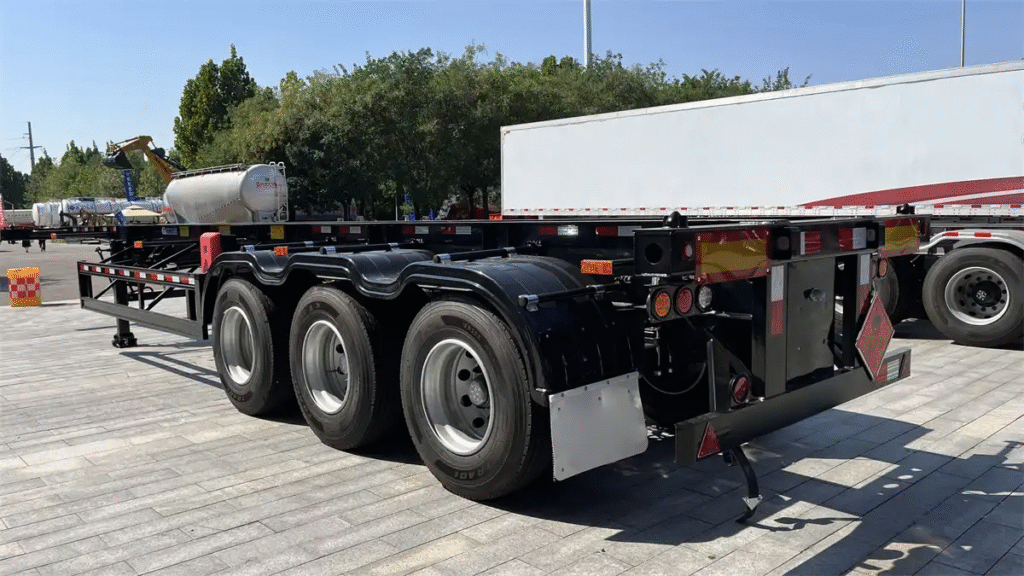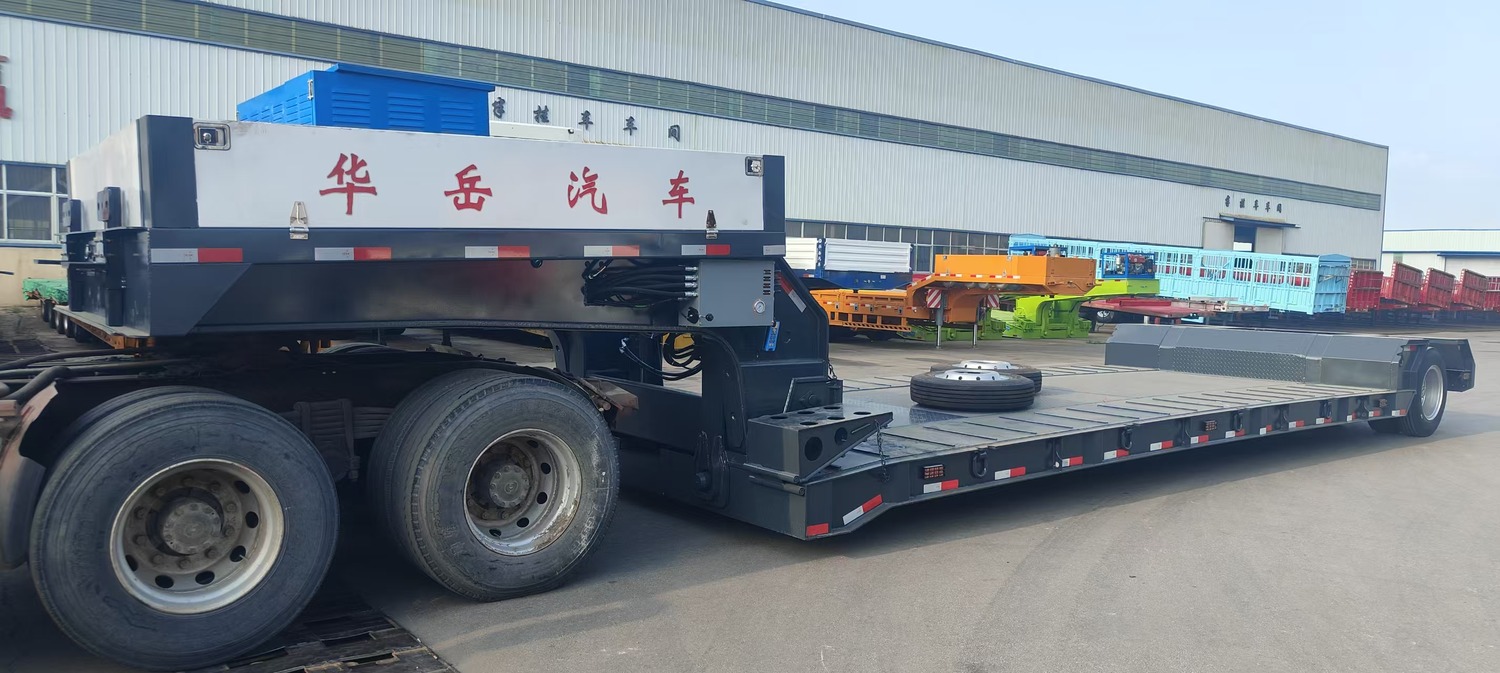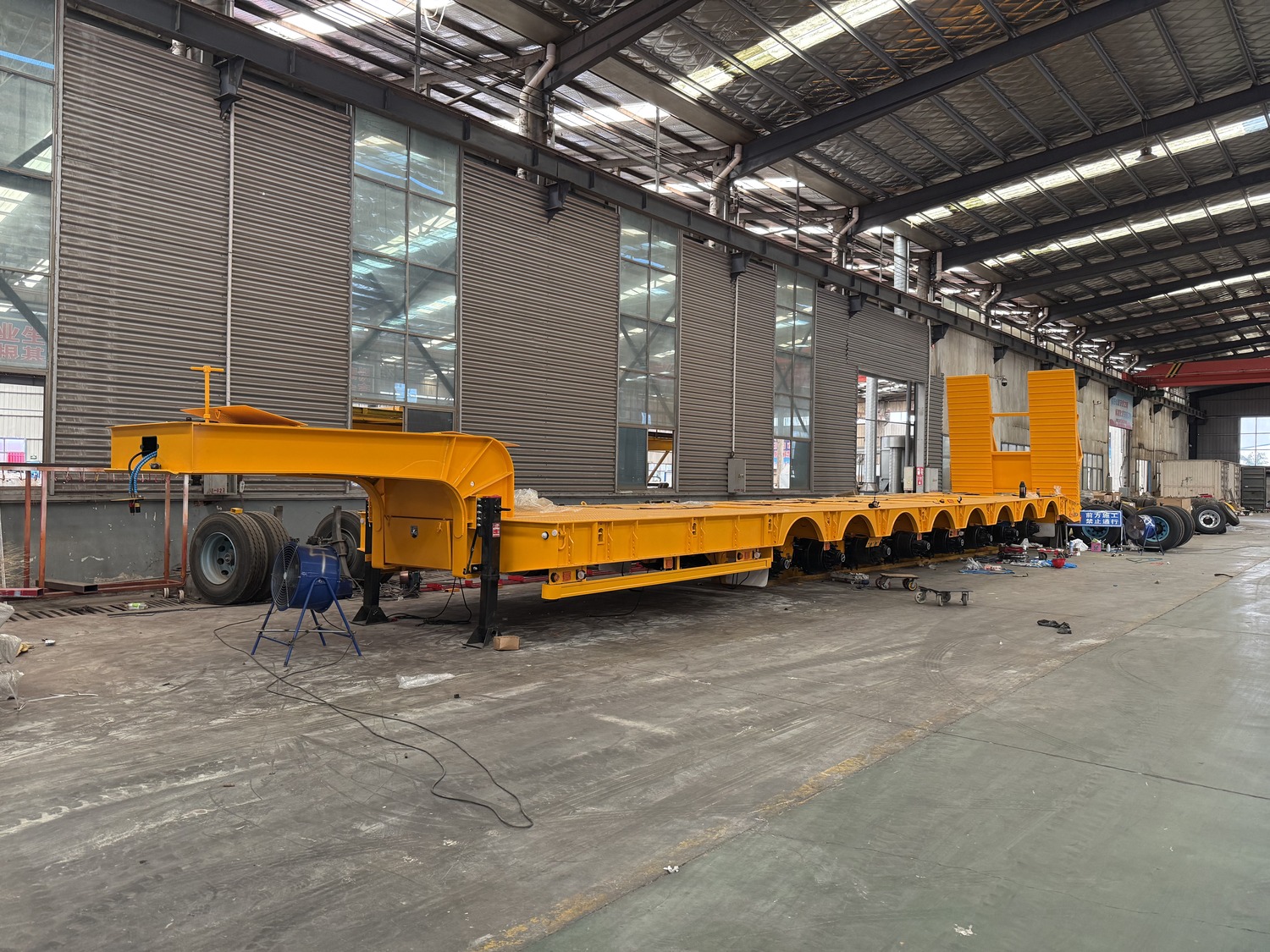
HUAYUE's eight-axle lowbed trailer for Malaysia combines a low equipment deck with rear loading ramps and an extended axle group. The configuration addresses two practical aspects of heavy machinery transport: supporting a substantial load and providing a usable approach onto the trailer. Its yellow chassis, open platform and paired ramps give the vehicle a clear purpose as an equipment carrier.
Heavy machinery places different demands on a trailer from evenly distributed general freight. Tracks, tyres and machine support points concentrate weight in particular areas, while the height of a cab or folded boom influences the loaded profile. A lowbed therefore needs more than deck space: the loading approach, support positions and running gear must suit the machine carried.
Eight Axles and the Distribution of Load
Eight axles form the running gear beneath this lowbed. A multi-axle arrangement spreads the supported load across more wheel positions, providing additional scope for managing individual axle loads. The actual distribution also depends on the position of the machine, the suspension arrangement and the share carried through the tractor coupling.
Moving a machine forward or backward changes the reactions at the tractor and trailer supports. This explains why an equipment deck has a working load position as well as an overall length. A machine that fits within the platform can still produce an unfavourable load distribution if its heaviest section sits too far toward one end.
The longer axle group also affects the path through a bend. Wheels at different positions follow different arcs, and the rear of the trailer can track inside the tractor's path. For this type of long equipment carrier, manoeuvring space includes both the swept path of the combination and clearance around the load, especially near entrances and confined loading areas.
The frame carries those reactions between the loading area, coupling and axle group. Longitudinal beams resist bending, while crossmembers support the deck and transfer local forces into the main structure. For tracked equipment, the contact areas extend along two narrow paths; for wheeled machinery, individual tyre positions can create more concentrated loads. Deck support matters in both situations.
A Low Platform for Tall Machinery
The low deck is the cargo platform at the centre of the trailer. By placing that platform lower than a conventional high deck, a lowbed reduces the height added beneath the transported machine. This is useful when the equipment itself is tall, particularly where the cab, upper structure or folded working equipment dominates the transport profile.
A lower platform also lowers the position of the same load relative to the road. That supports a more favourable centre-of-gravity arrangement, although the machine's own weight distribution and the complete vehicle combination remain important. The benefit comes from the actual platform height beneath the cargo, rather than from the lowbed name alone.
Ground clearance remains part of the same geometry. A low platform has less space beneath it when passing over a crest or entering an uneven site. Wheelbase, road profile and transitions between surfaces influence underbody clearance, so the useful design balance combines a low load position with sufficient clearance for the intended movement.
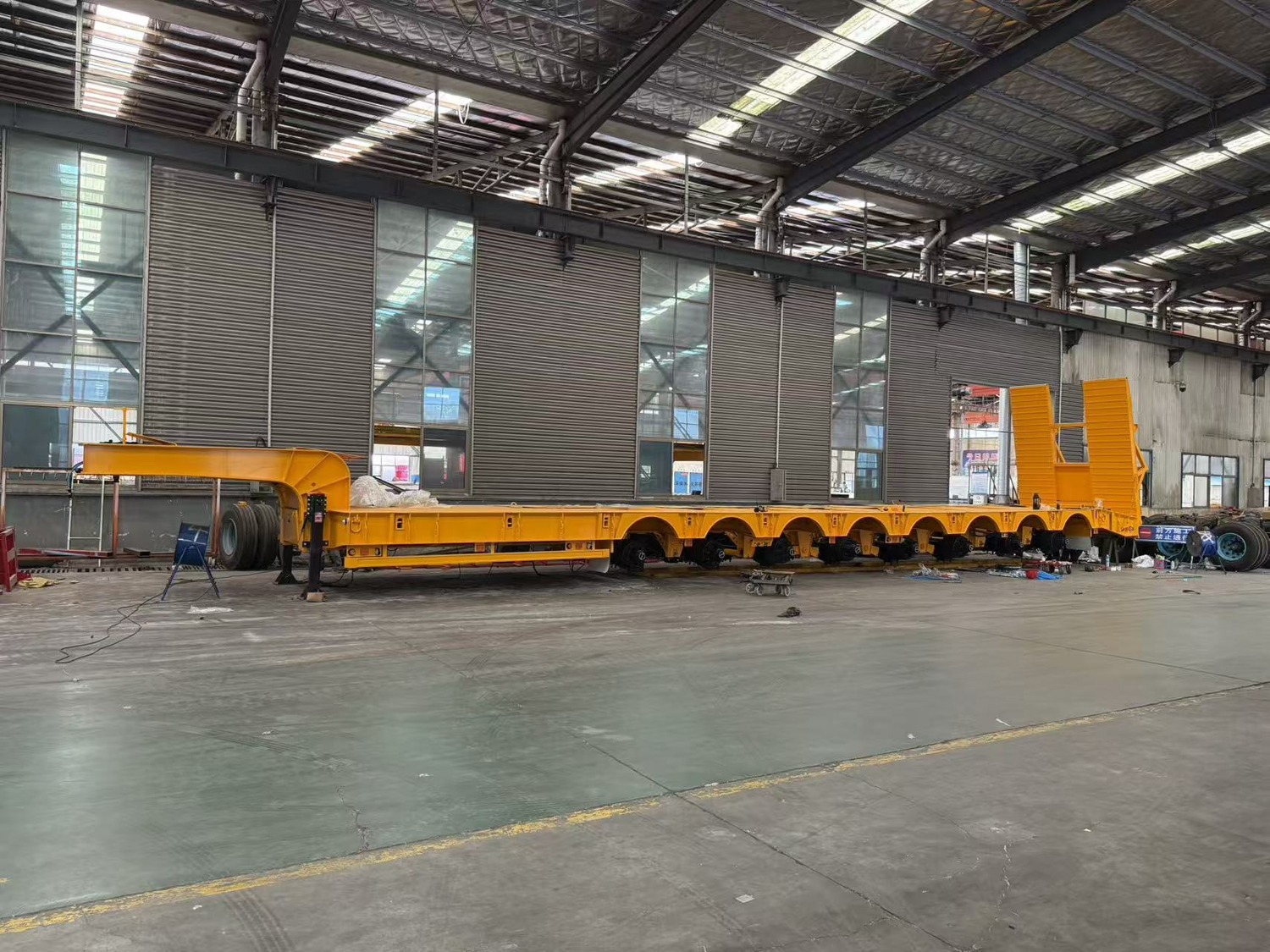
Rear Ramps and the Equipment Loading Path
The paired rear ramps provide a drive-on approach for suitable wheeled or tracked machinery. Their separate tracks correspond to the machine's running surfaces, while the open centre leaves space between them. Once lowered into the loading position, the ramps connect the ground with the rear of the equipment deck.
Ramp geometry affects the transition onto the platform. For a given deck rise, a longer approach produces a shallower angle, which can help equipment with limited underbody clearance. The change of angle at the top is also important: a machine can clear the ramp surface yet approach the deck transition with little clearance beneath its centre.
Traction and support are just as relevant as angle. Mud on tracks or loading surfaces can reduce grip, and an uneven approach can load one ramp more heavily than the other. The ramp structure, hinge area and supporting ground together carry the machine during this transition, before its weight settles into the transport position on the main deck.
From Loading Position to Transport Position
The open platform accommodates equipment whose shape extends beyond a simple rectangular footprint. Cab position, attachments and the folded working equipment influence how that machine occupies the deck. Keeping these elements within a practical transport arrangement helps the load sit predictably between the front connection and rear running gear.
During travel, restraint performs a different job from vertical support. The deck carries the machine's weight, while the restraint arrangement limits movement under braking, cornering and road vibration. Appropriate machine attachment points and trailer anchor points form that connection; the strength of the deck alone does not secure the cargo against movement.
Frequently Asked Questions
Does an eight-axle layout specify the trailer's payload?
No. Axle count describes the running gear. Payload also depends on the complete structural rating, component capacities, load position and applicable operating limits.
Why does a low deck help when transporting tall equipment?
It reduces the height contributed by the platform beneath the machine. The final loaded height still includes the equipment and its transport arrangement.
What determines whether equipment can use the rear ramps?
The machine's track or wheel spacing, ground clearance, weight distribution and approach geometry all matter, alongside the ramps' rated loading conditions.
Discuss Your Trailer Application
Share your cargo or equipment details, transport route and destination market with HUAYUE for a configuration discussion tailored to the intended application.
Interested in this case?
Contact Us for a Technical Consultation.