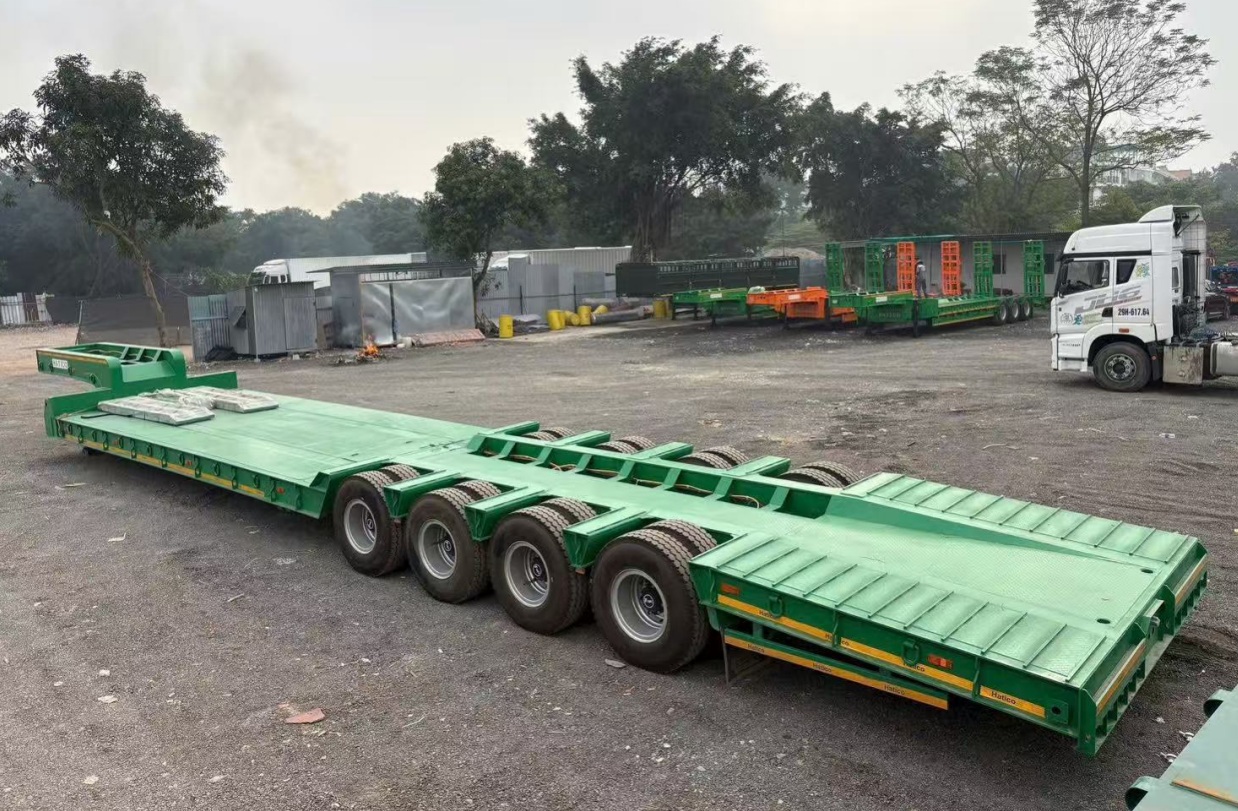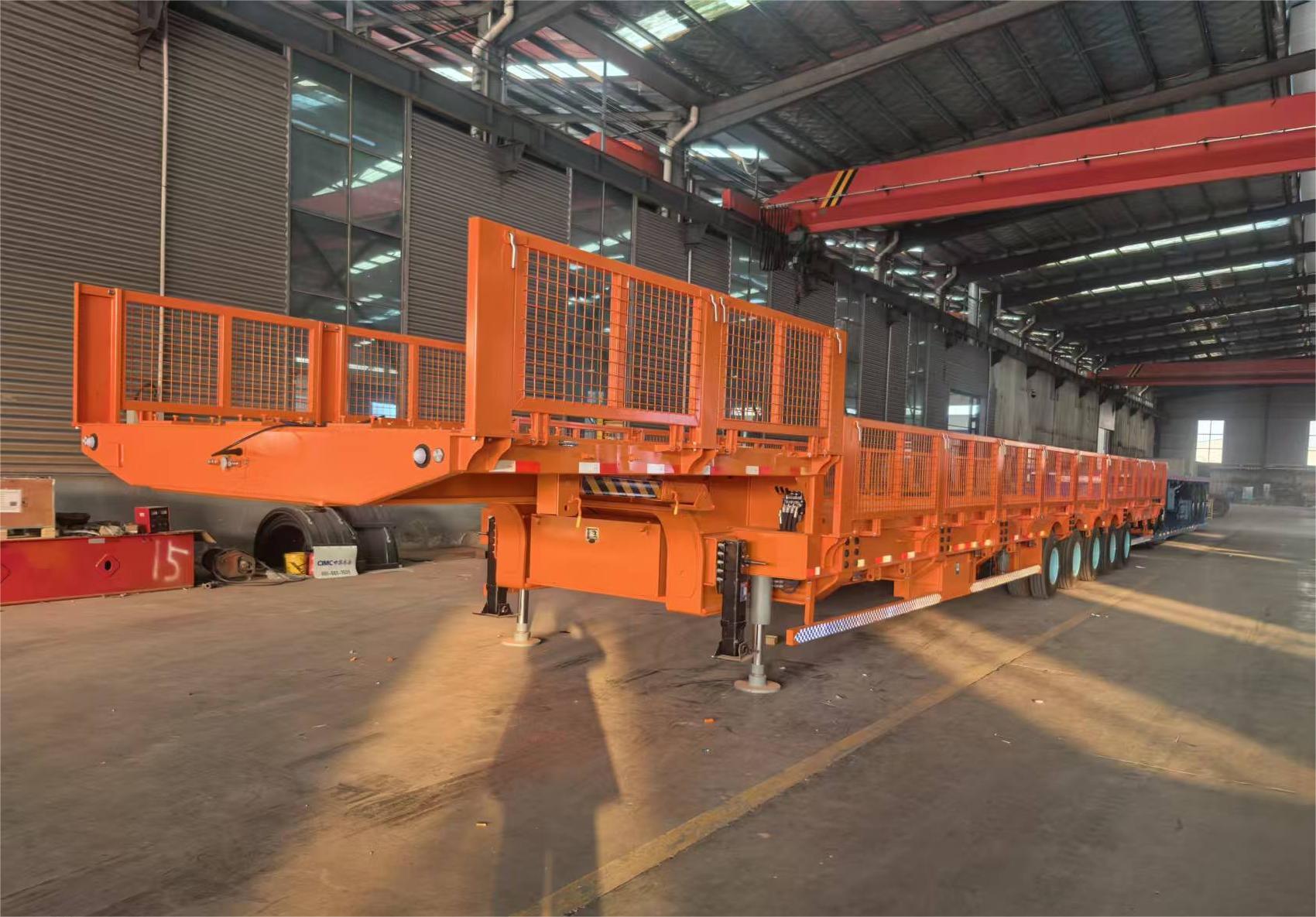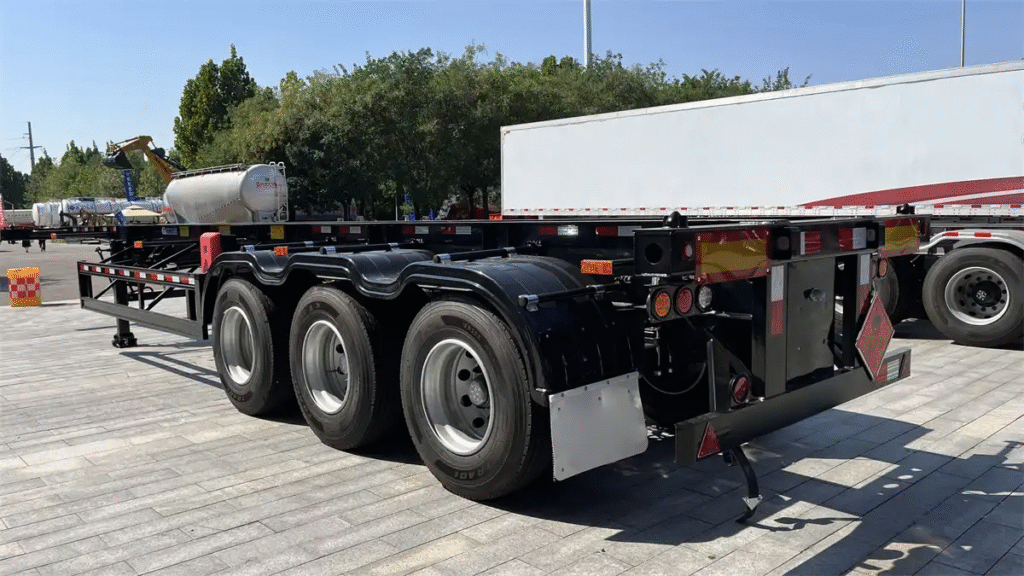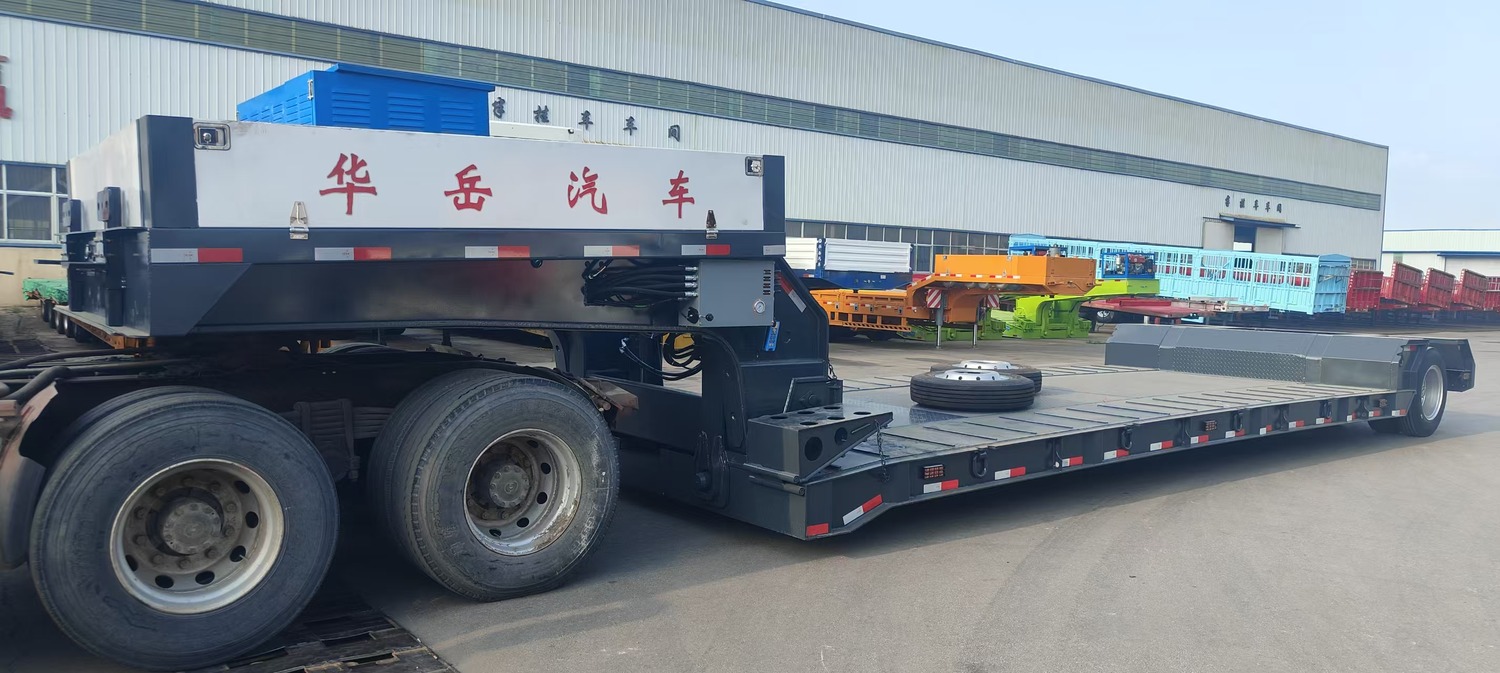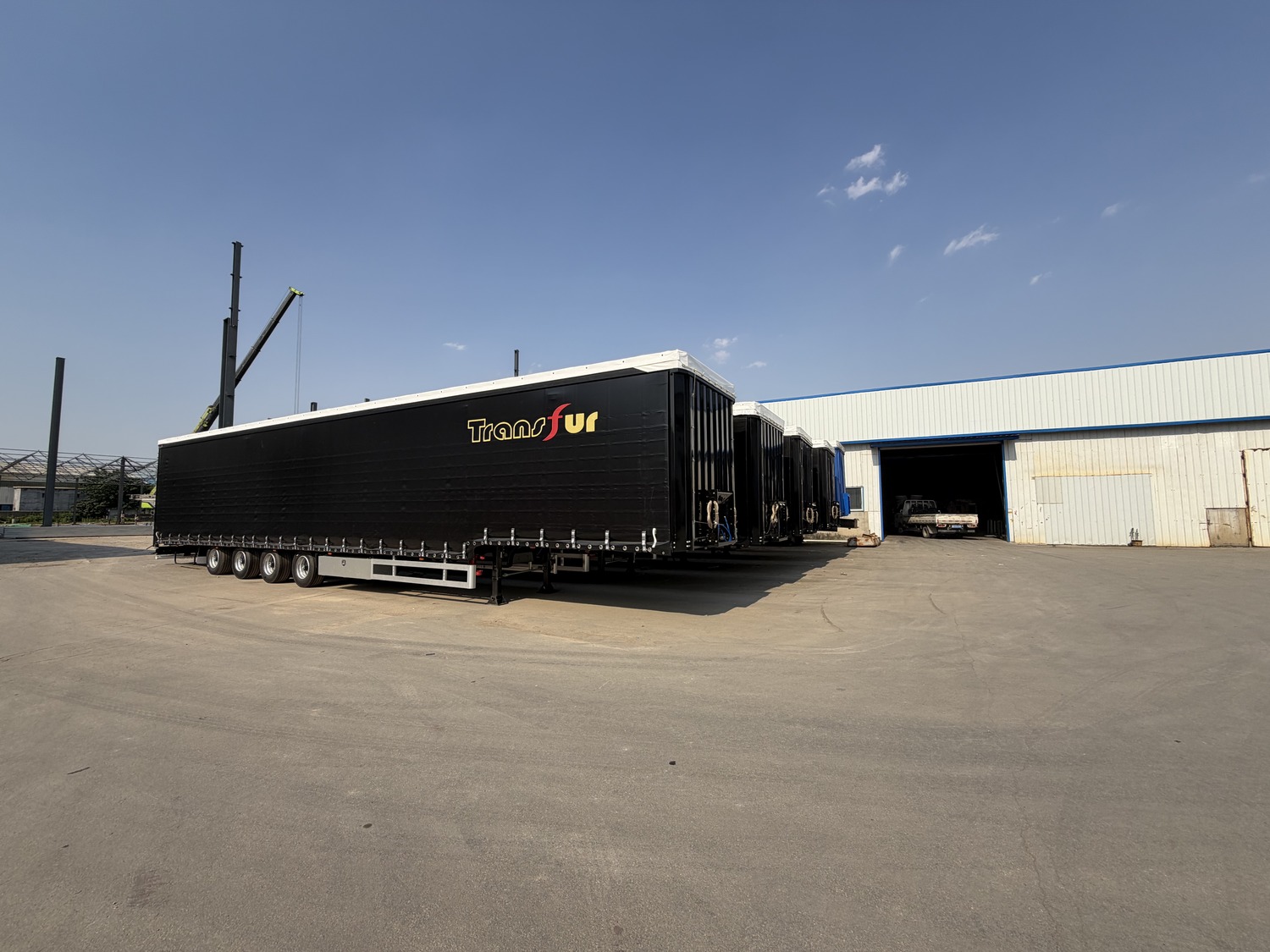
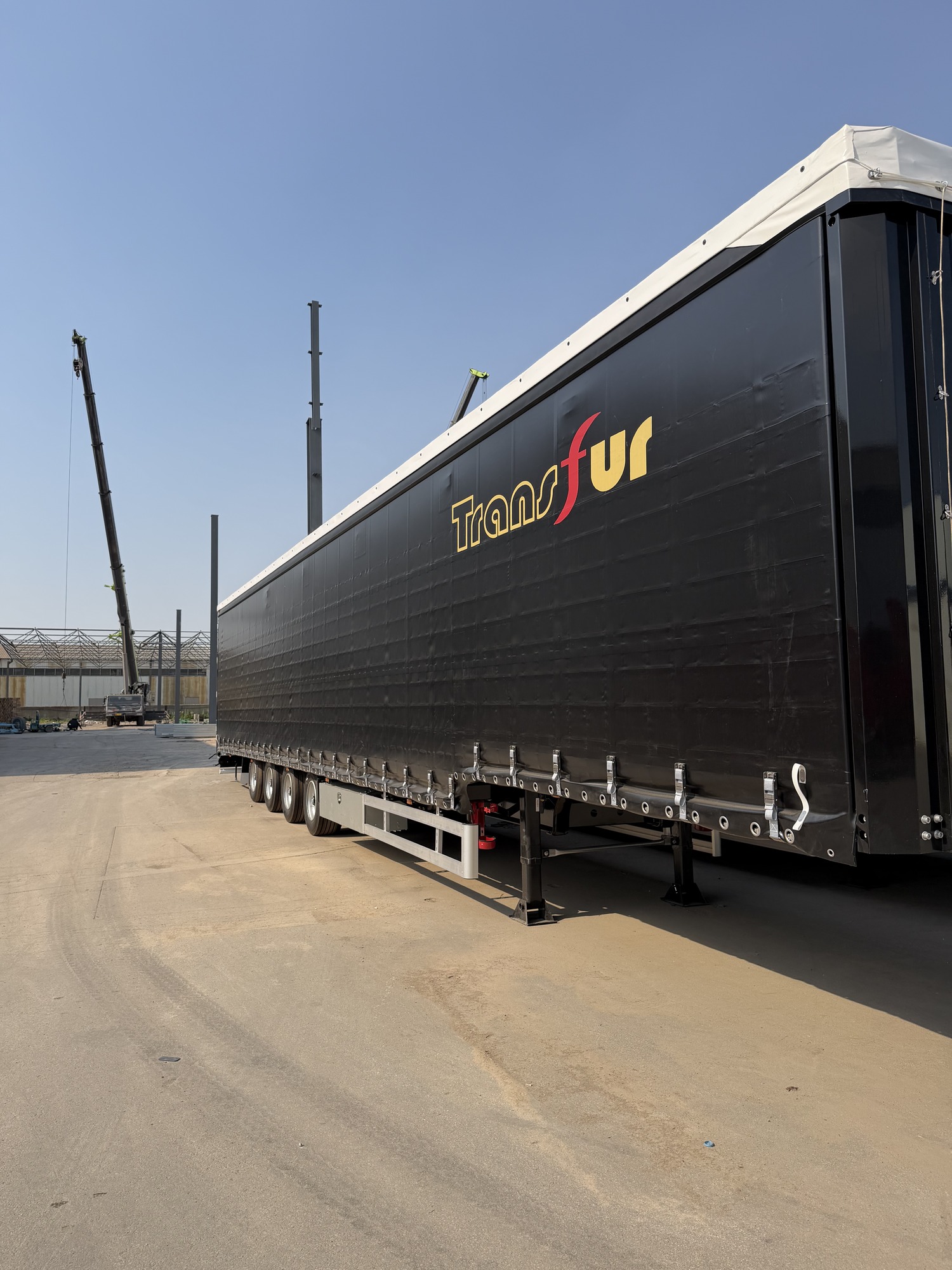
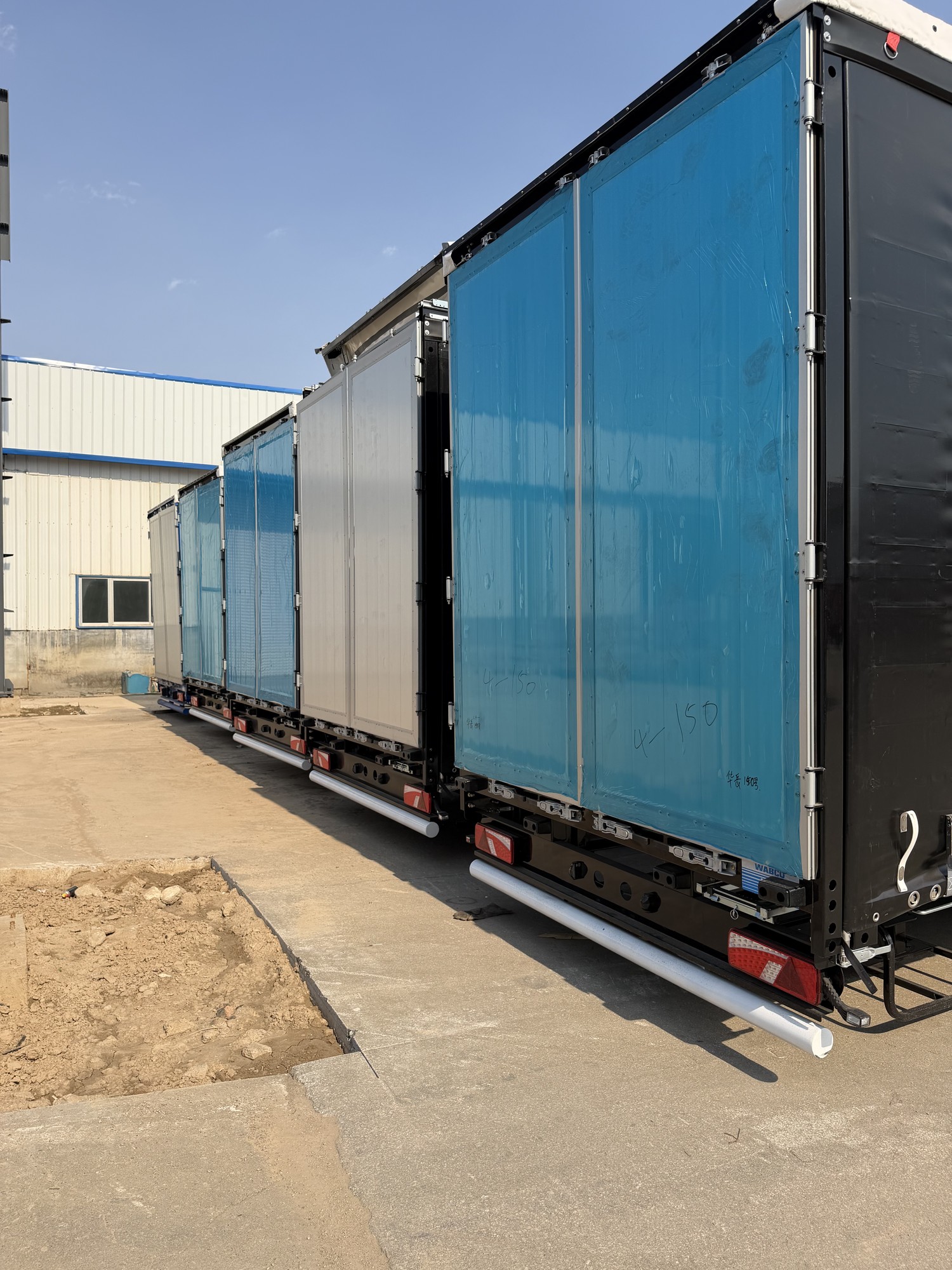
Four HUAYUE curtain-side semi-trailers for Kazakhstan combine air suspension, chassis lifting, electrically operated side curtains and an aluminium-alloy cargo-body frame. These features address different aspects of freight transport: suspension supports the vehicle, height adjustment changes the platform position, powered curtains operate the side opening and the body frame carries the enclosure.
The underlying curtainsider concept remains straightforward. A roof and movable curtains create a covered load area with access along the sides. The Kazakhstan configuration adds specific equipment to that body type, making the practical functions more useful to explain than a broad description such as high specification.
Electrically Operated Side Curtains
The side curtains on this configuration open and close electrically. Powered movement reduces the amount of direct manual curtain movement involved in accessing the body. Its practical role is at the loading interface, where the side enclosure changes between open access and closed coverage.
Side access is useful for suitable palletised freight, packaged materials and loads approached by handling equipment from alongside the trailer. Opening a length of the body can make an individual cargo position accessible without moving every item through the rear. The actual handling arrangement depends on the opening, freight dimensions and space beside the vehicle.
Electric curtain operation does not change the distinction between enclosure and restraint. A curtain closes the side of the body; the transport restraint arrangement resists cargo movement. The role of the body in securing a particular load depends on its design and the load arrangement.
Air Suspension Beneath the Freight Platform
Air suspension supports the chassis through air springs between the running gear and vehicle structure. It responds to movement at the wheels and forms part of the system carrying the body and freight. The air-spring arrangement is a suspension feature, distinct from the curtain operation above the platform.
For general freight, suspension behaviour matters because the load experiences the vehicle's response to road irregularities. Cargo packaging, support and restraint still influence how the freight is protected during movement. Air suspension contributes to the vehicle's ride characteristics without supplying a universal claim that every cargo will arrive undamaged.
Load position remains important with any suspension type. A concentration of freight near one end changes the weight shared between the tractor connection and the trailer running gear. Suspension is part of that load-carrying arrangement rather than a substitute for suitable distribution on the deck.
Chassis Lifting and Platform Height
The Kazakhstan configuration includes chassis lifting. Changing chassis height changes the position of the freight platform relative to the ground. This can be useful when the platform needs to relate to a loading interface at a different height, within the movement allowed by the vehicle's design.
Height adjustment and axle lifting are different functions. Chassis lifting concerns the platform's vertical position; lifting an axle would concern whether its tyres remain in contact with the road. Keeping these terms separate makes the specified feature clear without adding an axle function to the vehicle.
Platform position also affects the overall height of the body and load. A working height used around a loading area is part of a different condition from the vehicle's transport position. The useful explanation therefore connects height movement with its purpose rather than treating every available setting as an unrestricted travel configuration.
Aluminium-Alloy Cargo-Body Frame
The cargo-body frame uses aluminium alloy. This is the framework associated with the enclosure, rather than a statement that the whole trailer chassis is aluminium. Distinguishing the body frame from the main load-carrying chassis identifies where the material is used.
Aluminium alloys offer a different density and structural behaviour from steel. The resulting component weight depends on its section size, design and connections, not material name alone. A material choice can contribute to a lighter body arrangement without establishing a specific tare-weight saving for the complete trailer.
The frame supports the roof and side-opening structure that give the curtainsider its enclosed shape. The freight floor and chassis carry the cargo through their own structural load path. These parts cooperate, but the duties of the body framework and the deck should remain distinct in a technical description.
A Covered Body for Flexible Freight Access
The combination is relevant to freight that benefits from both coverage and access along the body. Pallets and packaged goods are examples of applications where side handling can be useful, provided their dimensions and support arrangements suit the vehicle. Suitability follows from the cargo's handling needs and the working dimensions of the body.
Opening the side can also make selected positions accessible during partial unloading. Removing freight changes the distribution of the remaining load, so the working arrangement evolves over a multi-stop journey. Access flexibility is useful precisely because the cargo area is used in different ways throughout that cycle.
The four trailers bring together features with identifiable roles. Electric operation moves the curtains, the covered body shelters suitable freight, air suspension supports the chassis and lifting adjusts platform height. The aluminium-alloy body frame is a specific construction choice within that arrangement, giving the configuration substance beyond a general promise of versatility.
Frequently Asked Questions
What does electric side-curtain operation change?
It powers the movement used to open and close the side enclosure. The loading space and cargo-restraint arrangement remain separate parts of the trailer's working design.
Is chassis lifting the same as an axle lift?
No. Chassis lifting changes the platform height. An axle lift changes whether a particular axle's tyres contact the road.
Is the entire trailer made from aluminium alloy?
The aluminium-alloy specification applies to the cargo-body frame. It does not describe the material of every chassis or running-gear component.
What freight can benefit from curtainsider access?
Suitable palletised and packaged cargo can benefit from side access and coverage. Its dimensions, support needs and restraint arrangement determine suitability for a particular vehicle.
Discuss Your Trailer Application
Share your cargo or equipment details, transport route and destination market with HUAYUE for a configuration discussion tailored to the intended application.
Interested in this case?
Contact Us for a Technical Consultation.