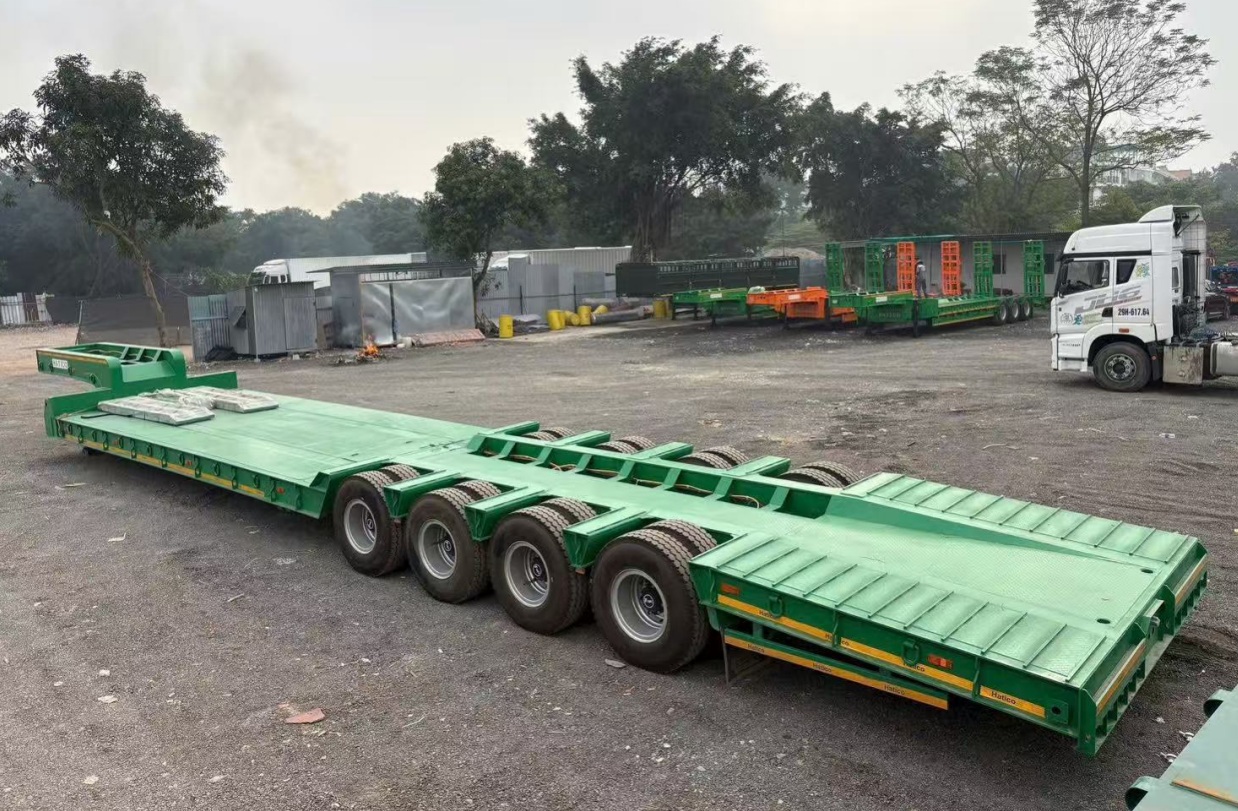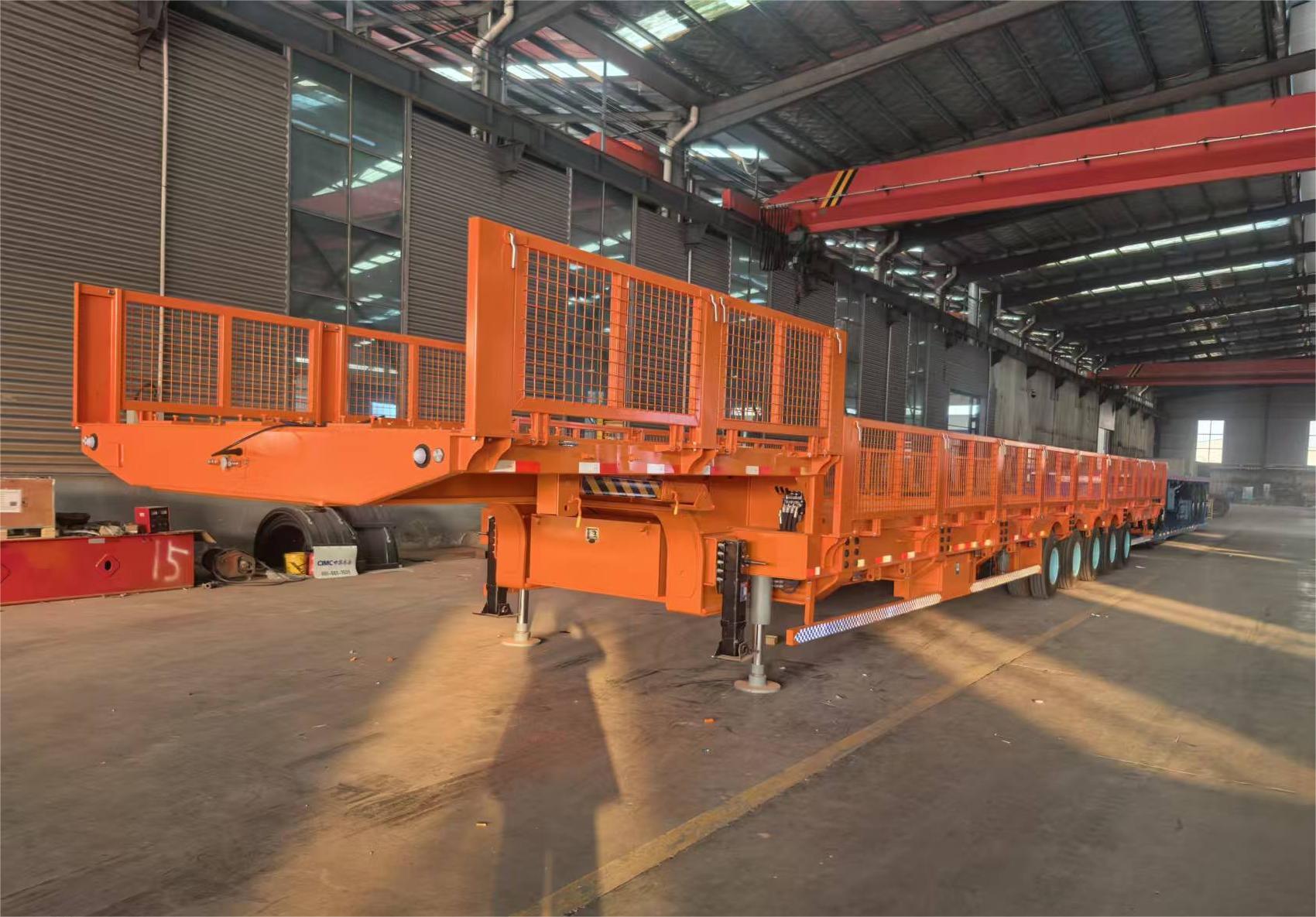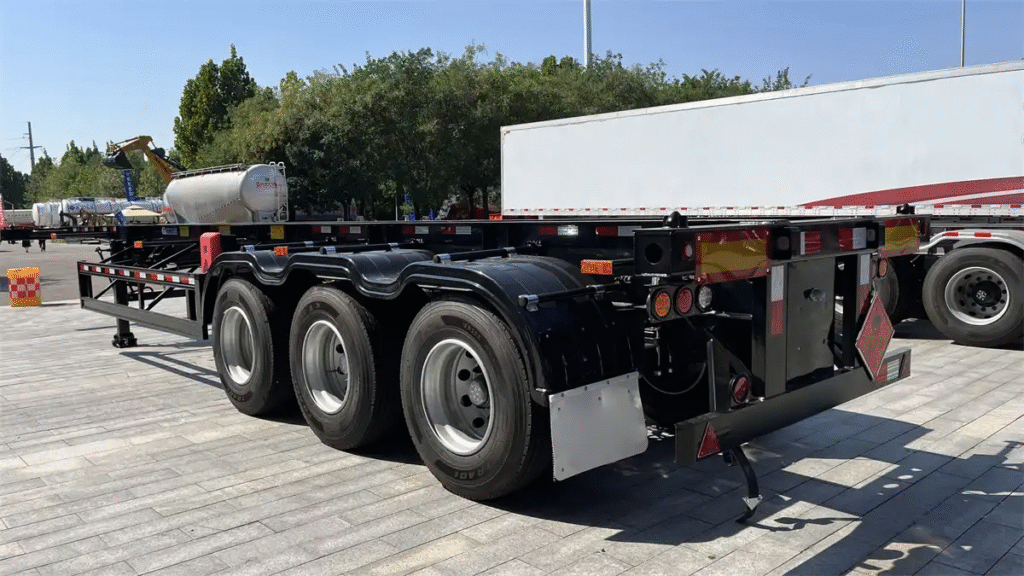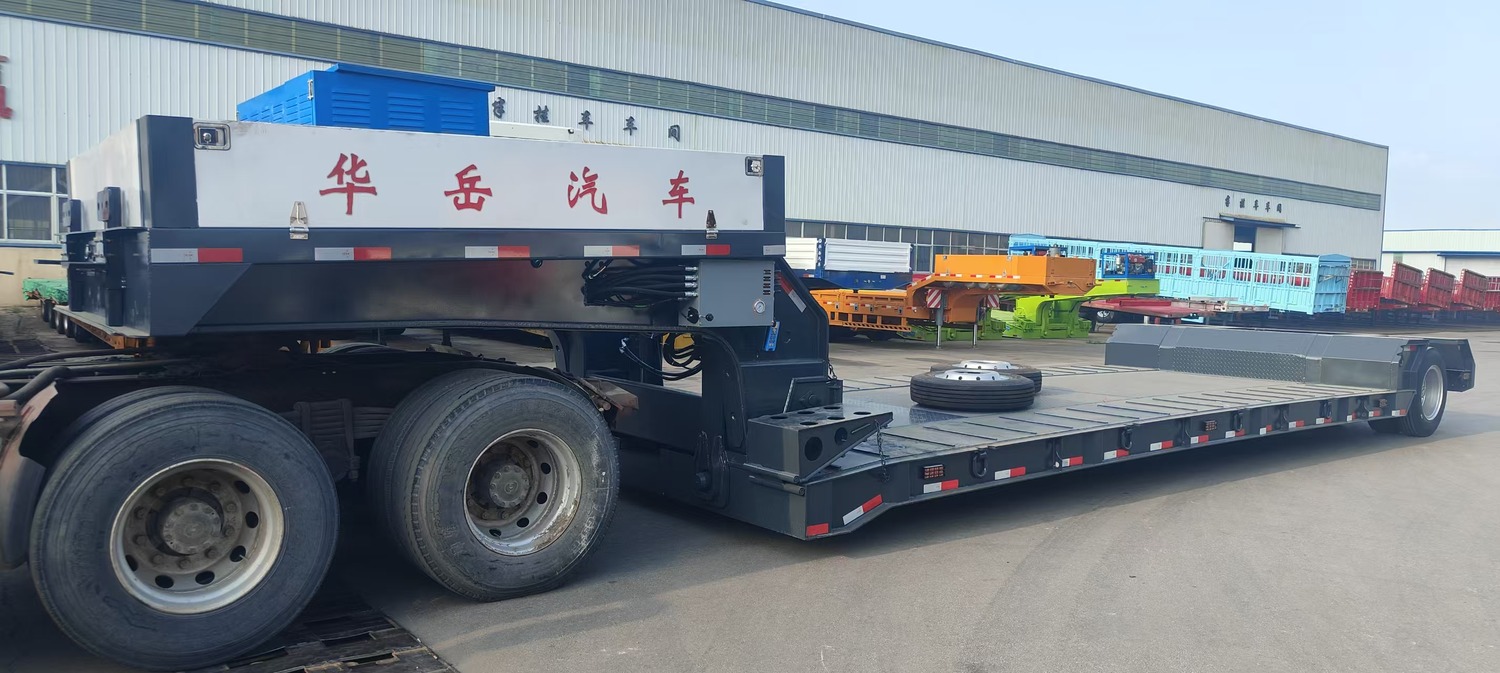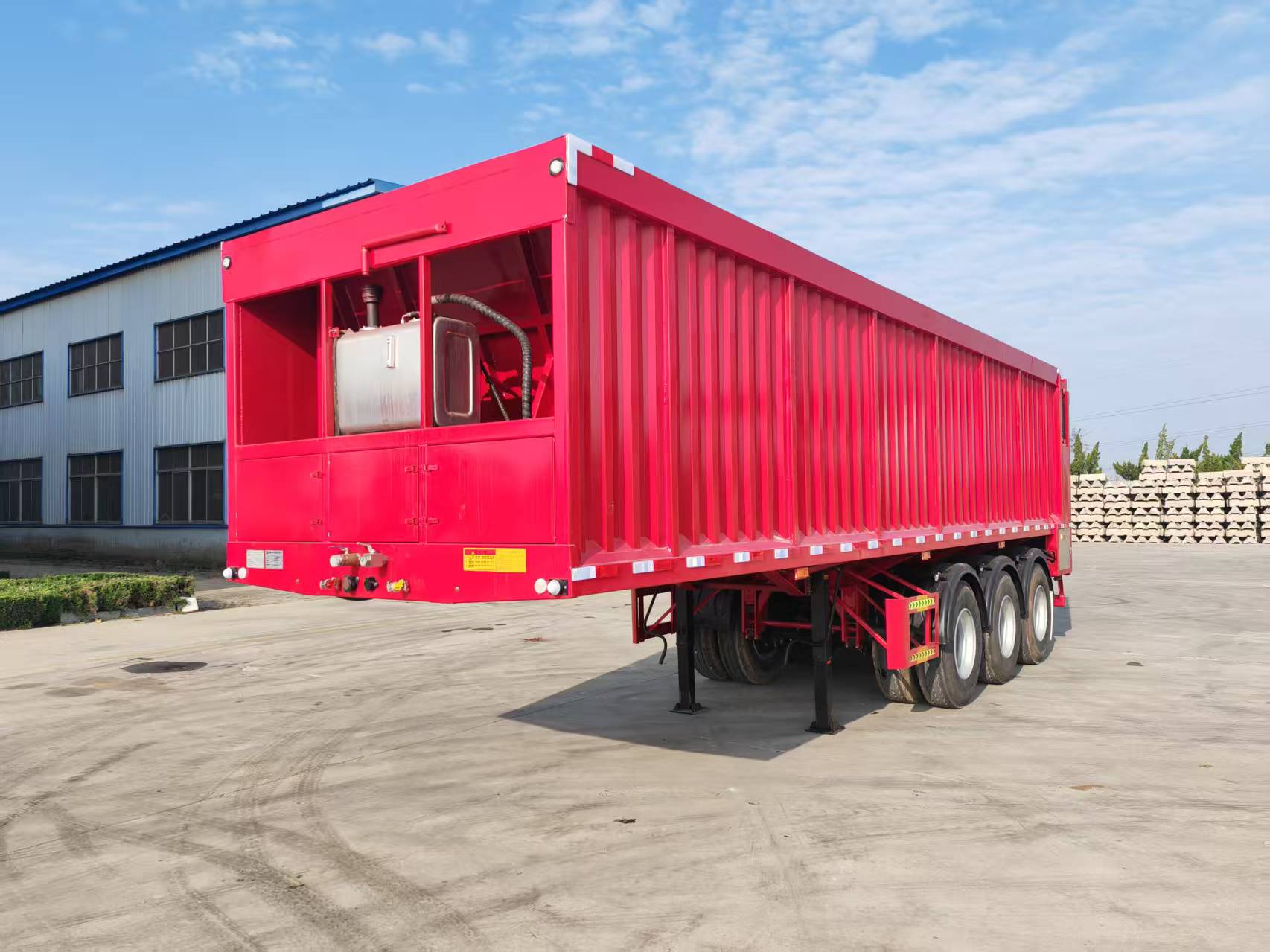
A belt-type discharge semi-trailer moves loose material toward the outlet through a powered conveyor instead of lifting the complete body. For bulk-material projects in Vietnam, this changes the unloading arrangement: the body remains in its transport orientation while the discharge mechanism moves the load. The practical attraction is the different material path, particularly where raising a long body would complicate the unloading space.
Rear-dump and conveyor-discharge bodies still perform the same basic transport task. They contain loose material during travel and release it at the receiving location. Their difference lies in how the body, floor and outlet work together when the load leaves the trailer.
Horizontal Discharge and a Raised Tipping Body
A rear-dump body rises around its rear pivot, creating a slope along which material can slide. That movement raises part of the vehicle and changes the position of the remaining cargo. The tipping cylinder, body hinges and rear opening are therefore central to its unloading action.
A belt-discharge arrangement creates movement at the floor instead. The conveyor carries material toward the outlet while the body stays down. This removes the need for the raised-body unloading envelope, but the trailer still depends on suitable ground support, balanced loading and an unobstructed discharge area.
The useful distinction is geometric rather than an absolute safety claim. Keeping the body down avoids one particular change in height during unloading. It does not eliminate the effects of soft ground, cross-slope, uneven loading or unsuitable operation.
Body Volume and the Material Being Carried
The August 2026 Vietnam project comparison included a proposed 85 m³ belt-discharge configuration alongside a 53 m³ enlarged tipper and a 122 m³ box-type rear-dump configuration. These are separate project configurations, with different bodies and unloading arrangements, rather than interchangeable versions of one trailer.
Volume describes available space; it does not directly describe the mass that can be carried. A dense aggregate can reach a vehicle's allowable load before filling the body. A lighter loose material may occupy considerably more space for the same mass.
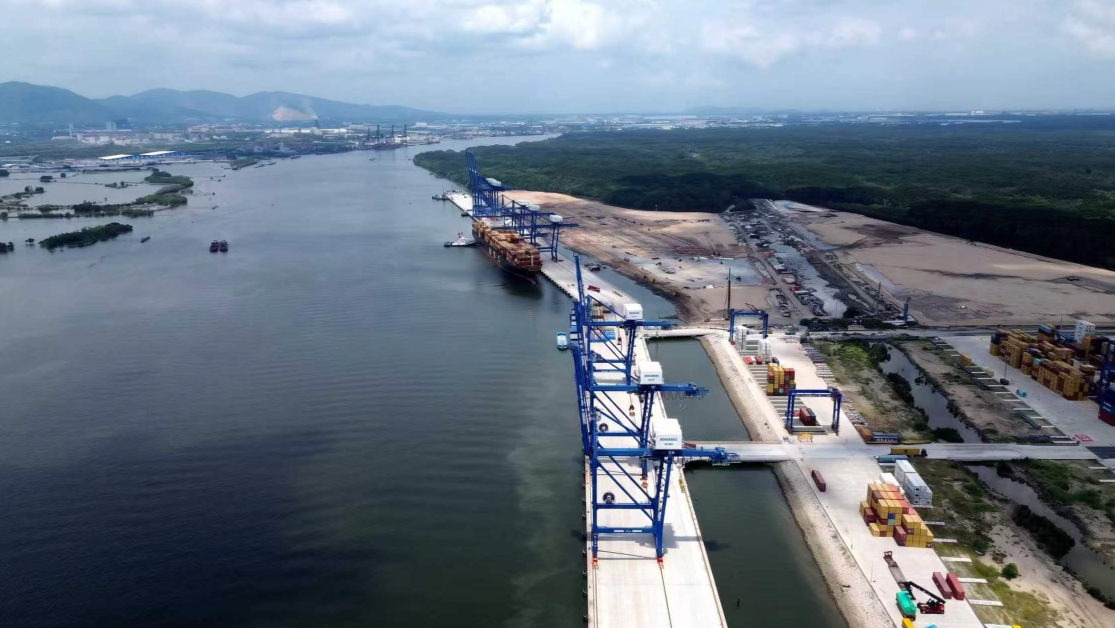
This distinction matters in port development and earthmoving work, where the material itself can change between transport cycles. Moisture, particle size and packing affect how much material fits and how it behaves during discharge. A larger body is useful only when its additional space serves the actual load within the vehicle's operating limits.
For a project moving bulk material repeatedly, the receiving point is as important as the loading point. The trailer's discharge pattern must fit the stockpile area or receiving equipment. Horizontal discharge changes the outlet arrangement; it does not make the rest of the material-handling operation disappear.
What the Conveyor Adds to the Trailer
The conveyor is an active material-handling system beneath the load. Its drive supplies movement, while the floor arrangement supports and guides material toward the outlet. The body walls continue to contain the load during travel and help define its movement during discharge.
That configuration gives a different maintenance emphasis from a tipping system. Moving floor components, the drive and the discharge opening become important service areas. Material trapped around the mechanism can interfere with movement, while abrasive cargo creates wear wherever particles contact working surfaces.
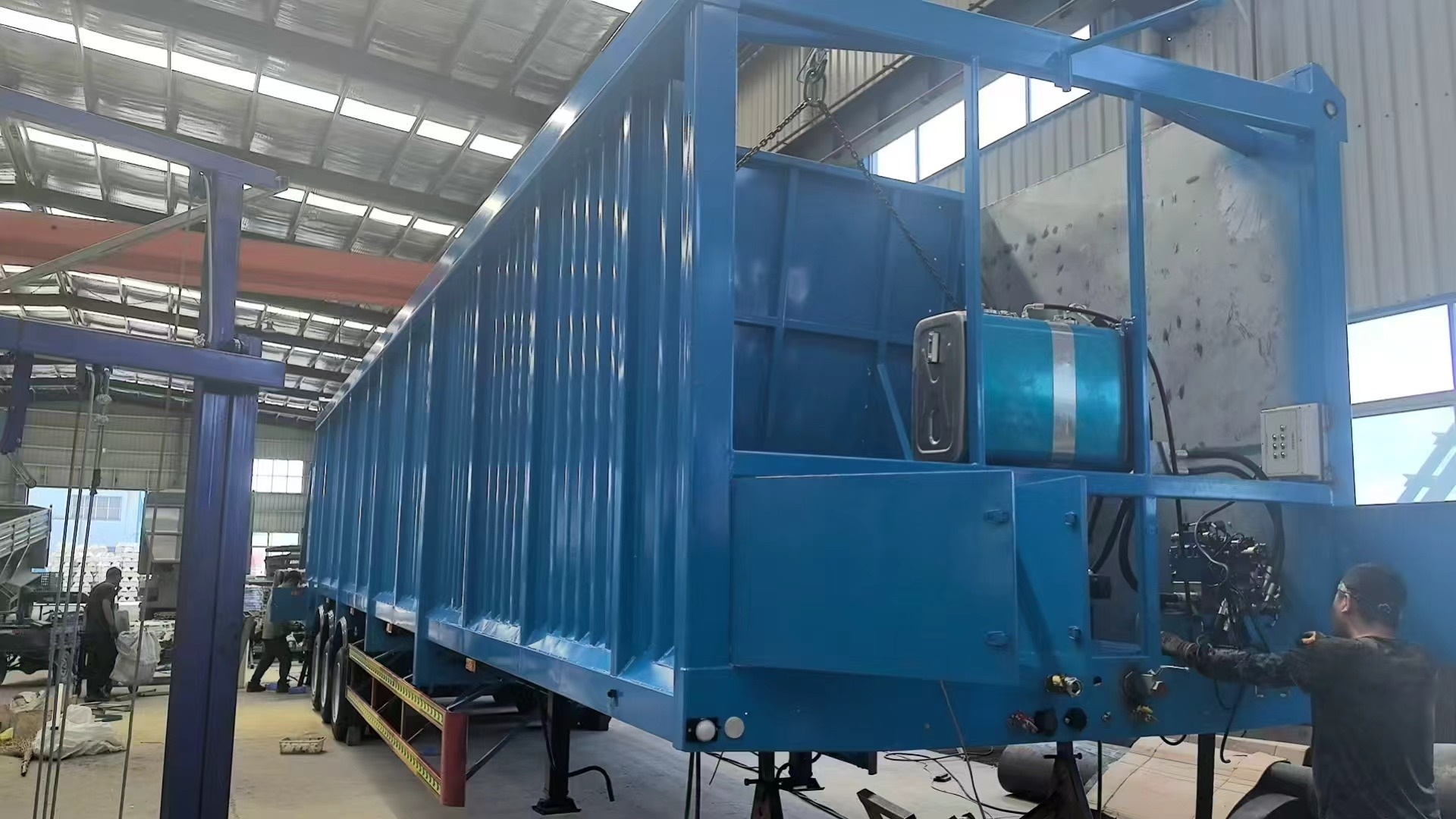
The unloading system also requires an appropriate power arrangement. Drive demand depends on the mechanism and the resistance of the material being moved. A name such as belt discharge describes the method, but it does not by itself specify operating speed, power consumption or the time needed to empty a load.
Flow Through the Body and Outlet
Loose material does not always behave like a uniform stream. Dry, free-flowing particles can move differently from damp material that sticks together. Large pieces can also interact with the outlet and floor differently from fine particles, so the cargo's physical form belongs in the explanation of the mechanism.
The outlet is where the conveyor's movement becomes a discharge stream. Its opening and the space behind the trailer influence how material accumulates outside the body. If the receiving pile obstructs that path, the mechanism alone cannot create the missing clearance.
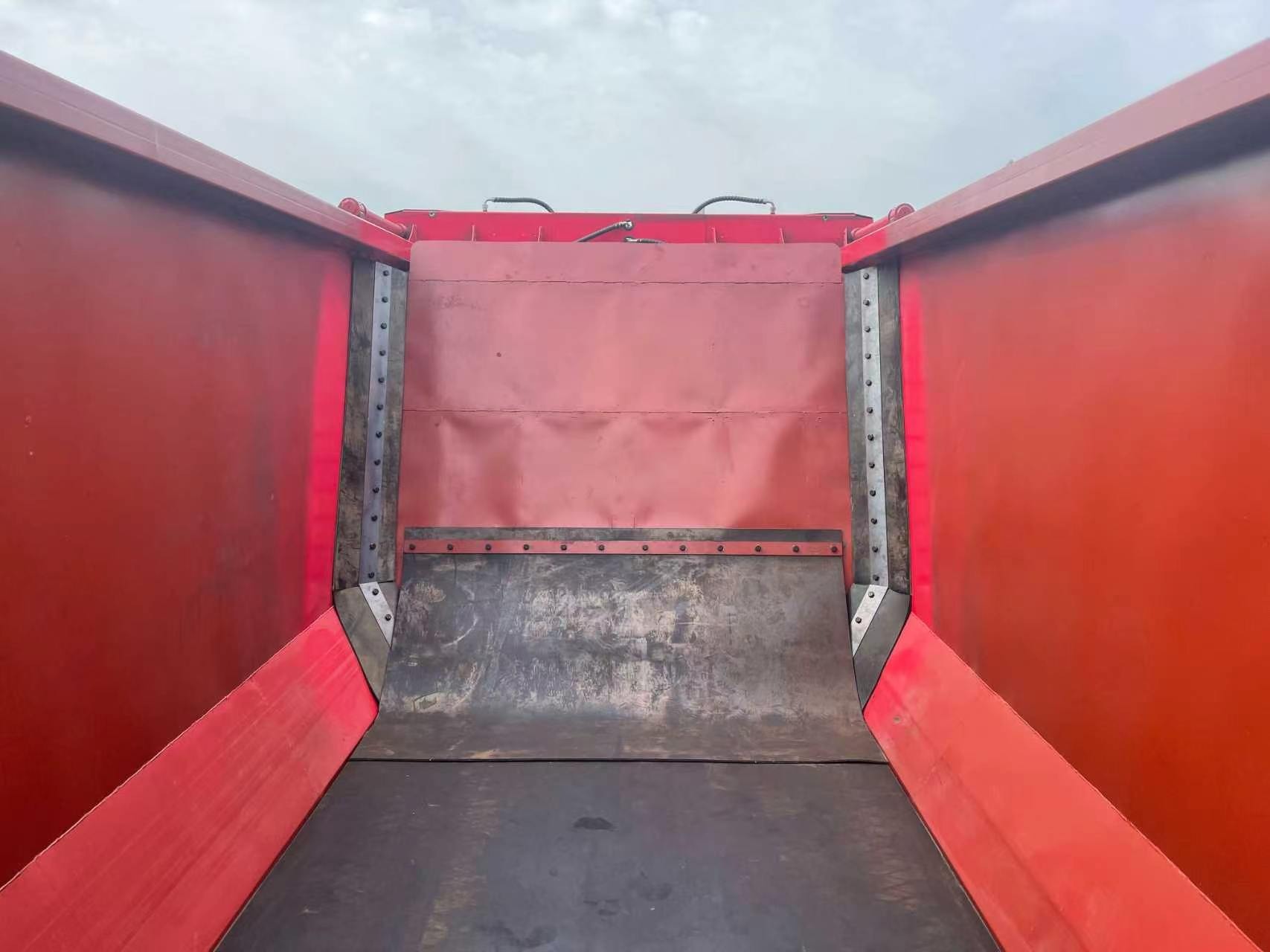
The interior floor is therefore more than a surface on which the load rests. It participates directly in unloading, unlike a stationary floor whose body must tilt to create flow. This is the configuration-to-function connection that distinguishes the belt-discharge approach.
For a Vietnam bulk-material project, the relevant benefit is a horizontal unloading method suited to the material and receiving arrangement. The trade-off is the additional moving mechanism and its service needs. Neither a larger body nor a conveyor provides a universal advantage across every cargo and worksite.
Frequently Asked Questions
Is belt discharge the same as a tracked undercarriage?
No. The belt discussed here moves material inside the trailer. A tracked undercarriage moves an entire machine over the ground; it serves a different function.
Does an 85 m³ body mean an 85-tonne payload?
No. Cubic metres measure volume. Cargo mass depends on material density and filling, while the permitted load also depends on the vehicle and operating conditions.
Why can horizontal unloading be useful in restricted space?
It avoids raising the complete body to discharge. Space is still needed around the vehicle and behind the outlet for material to leave without obstruction.
Is a conveyor suitable for every bulk material?
Suitability depends on particle size, moisture, abrasiveness and the mechanism's design. These characteristics influence flow, resistance and wear during unloading.
Discuss Your Trailer Application
Share your cargo or equipment details, transport route and destination market with HUAYUE for a configuration discussion tailored to the intended application.
Interested in this case?
Contact Us for a Technical Consultation.