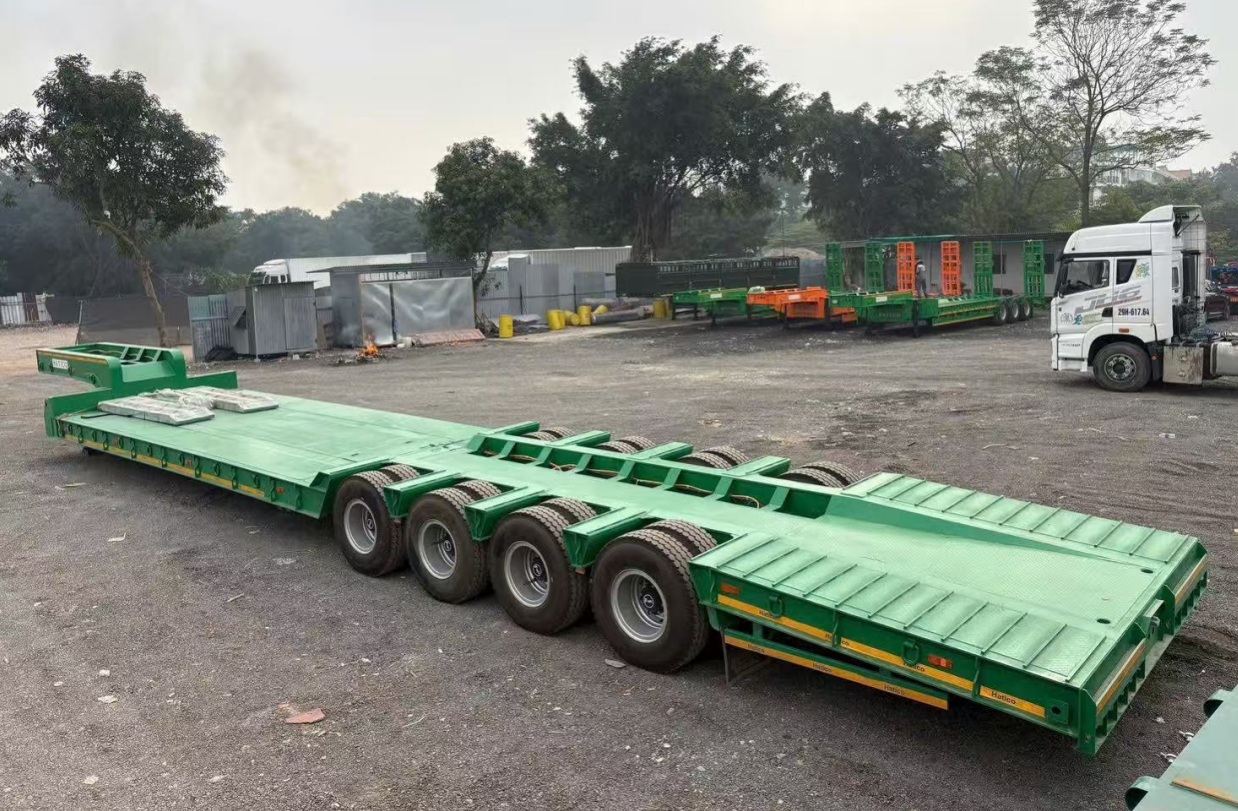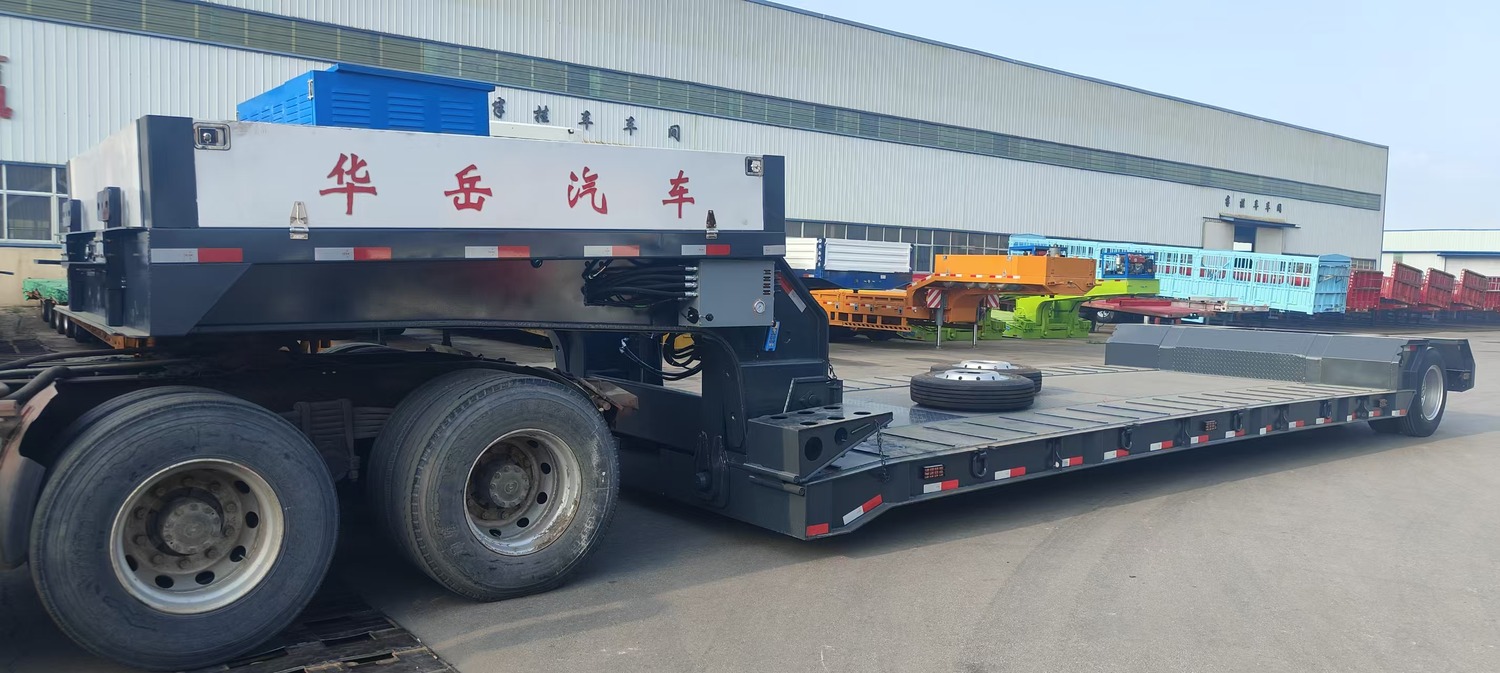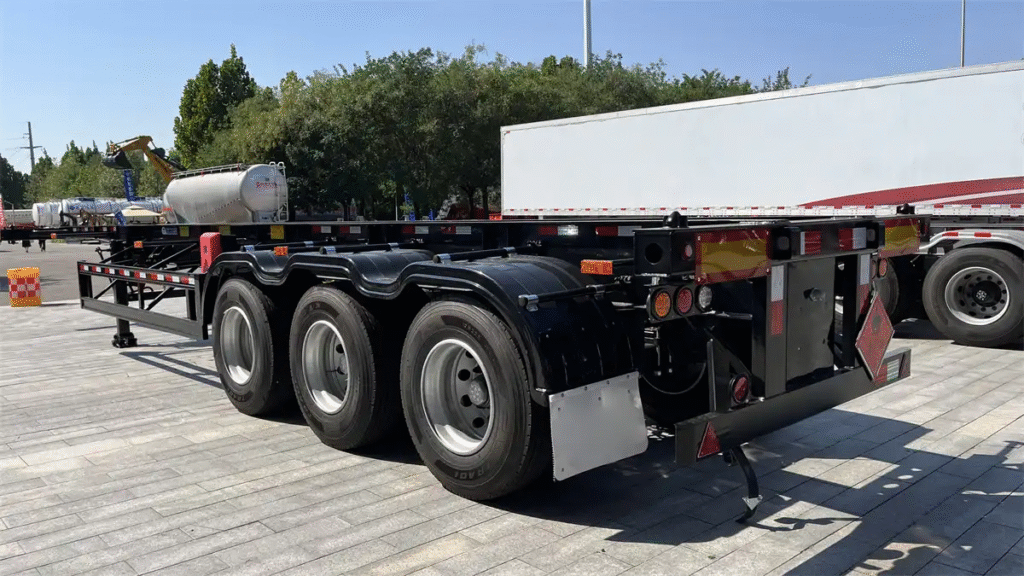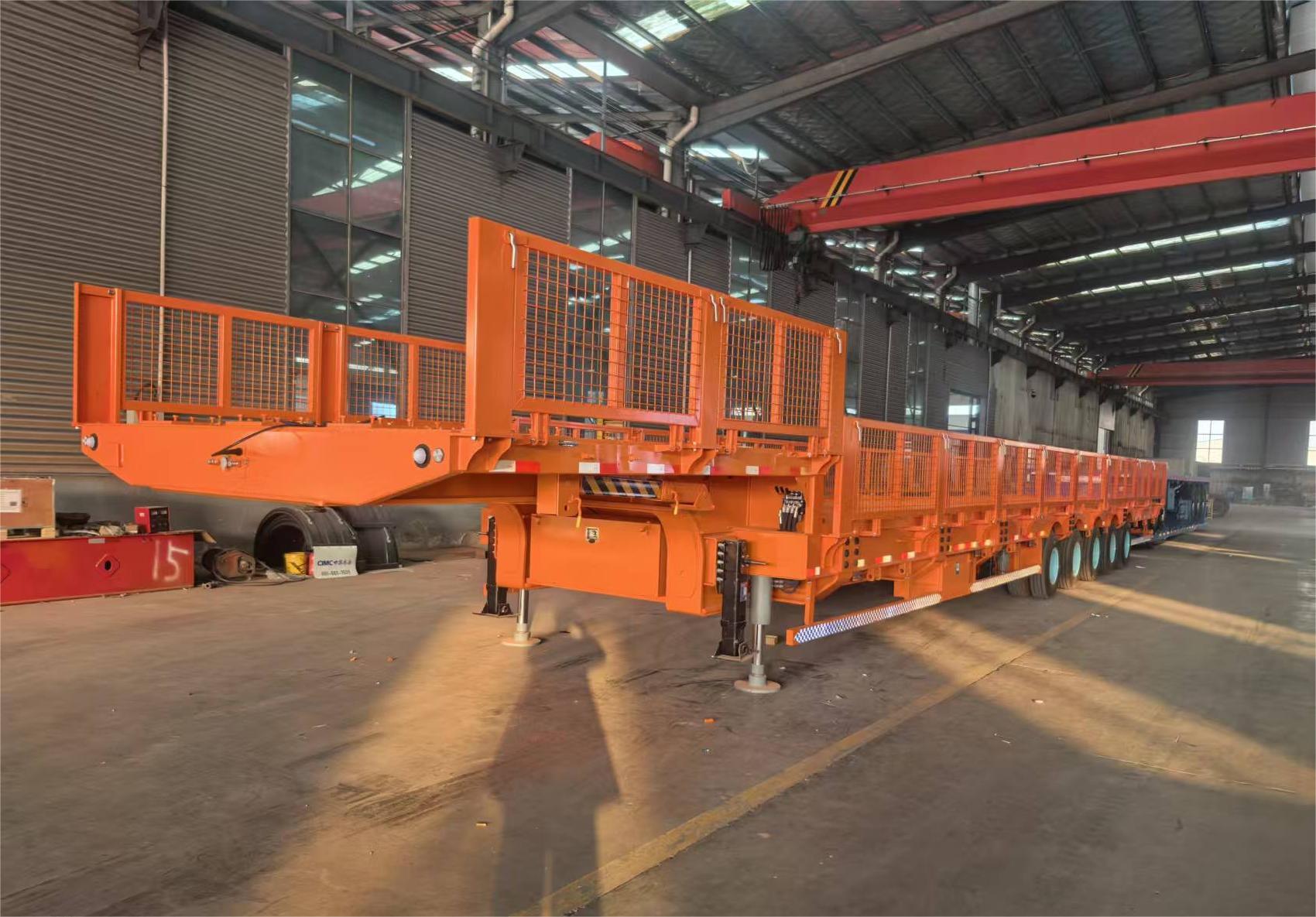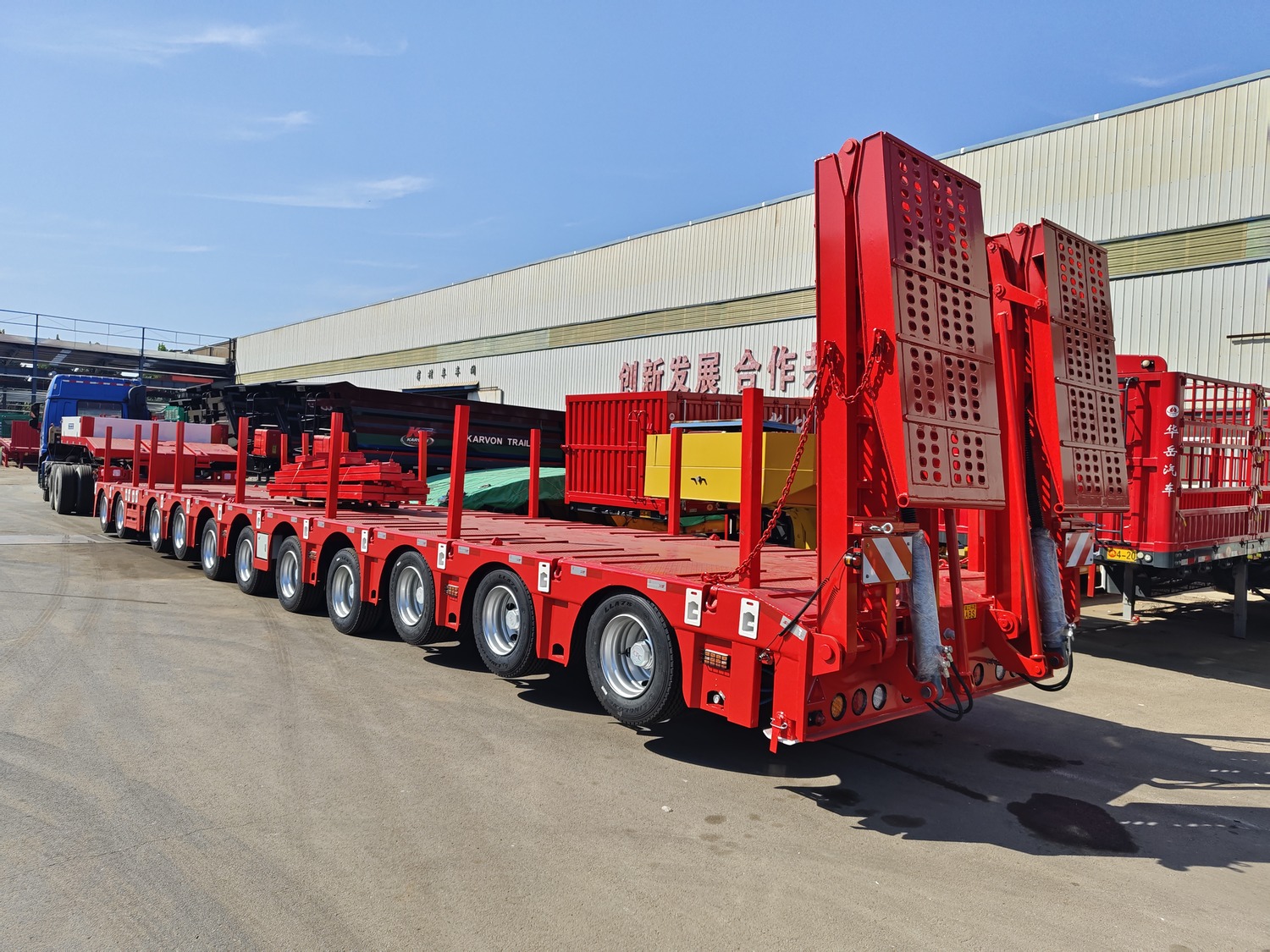
A fleet owner can have an available truck and still lose a job because the trailer does not suit the load. A long pipe delivery, a wide machine and a container movement each place different demands on the platform. The HUAYUE 11-axle multifunction semi-trailer brings those tasks together through an extendable, widenable deck, adjustable gooseneck, liftable axles, cargo stakes, rear ramps and standard container locks.
Its red baked-paint finish gives the vehicle a distinctive appearance, but its appeal goes beyond the colour. For operators handling varied cargo, the important question is how a trailer can adapt when the next assignment differs from the last. This configuration provides several practical ways to make that change.
An 11-Axle Multifunction Semi-Trailer for Varied Loads
The open platform accommodates cargo that needs access from above or alongside the deck. Stakes support pipe and round-timber applications, while rear ramps provide a loading path for large machinery. Container locks add another transport role, bringing container carriage into the same vehicle configuration.

For a dispatcher, that combination offers more options when matching available equipment to an enquiry. A trailer with several cargo functions can be considered for different assignments within a mixed transport business. The commercial attraction is a broader application range, with each load still matched to the vehicle's operating limits.
Rear Ramps for Machinery Transport
The rear ramps connect the ground to the cargo platform for machinery loading. This makes the vehicle relevant to equipment transport as well as materials haulage. A machine movement uses a different loading arrangement from a pipe shipment, and the ramps give this trailer a dedicated means of addressing that difference.

For the driver, a defined loading path makes the equipment task easier to understand before work begins. Ramp loading depends on the machine's approach geometry, ground conditions and the permitted ramp load. The useful feature here is the rear access itself, integrated into a platform that also serves other cargo types.
An Extendable, Widenable Deck with Cargo Stakes
The cargo deck can extend in length and increase in width. Length adjustment addresses longer cargo, while width adjustment provides additional platform support for wider loads. These are distinct functions: a shipment can demand more length without requiring extra width, or more width without using the full extended length.

The installed stakes help contain round pipes and logs along the sides of the load. Their upright form is particularly relevant to cargo that can roll, giving the platform a containment function as well as a supporting surface. Stakes work with cargo restraint suited to the material, stack arrangement and journey.
That adaptability matters when a fleet serves customers with different load shapes. The deck can be arranged around the physical support needs of the cargo, rather than treating every shipment as an identical footprint. It connects the trailer's multifunction role to the practical details of loading.
A Liftable Gooseneck for Tractor Matching
The gooseneck can rise and lower to match tractors with different coupling heights. This adjustment addresses the front connection between the towing vehicle and trailer. In a fleet using more than one tractor configuration, height matching is an important part of making a suitable combination.

The benefit is flexibility at the tractor interface, alongside flexibility on the deck. The operator has an adjustment for coupling height as well as adjustments for cargo dimensions. Together, these features address two separate reasons a trailer may be difficult to allocate: the towing vehicle and the load.
CTC Air Suspension and Liftable Axle Groups
This 11-axle trailer has CTC air suspension with raising and lowering capability. The front four axles and rear three axles are liftable, giving the axle arrangement an operating adjustment alongside the platform and gooseneck adjustments. Axle lifting and suspension height adjustment serve different functions within the vehicle.

The liftable groups allow axle positions to change for appropriate operating conditions. Their use follows the load distribution and operating requirements of the trailer. The operational value is an adaptable configuration that can address changing assignments without relying solely on a fixed deck and fixed axle arrangement.
Container Locks Connect the Road Transport Role
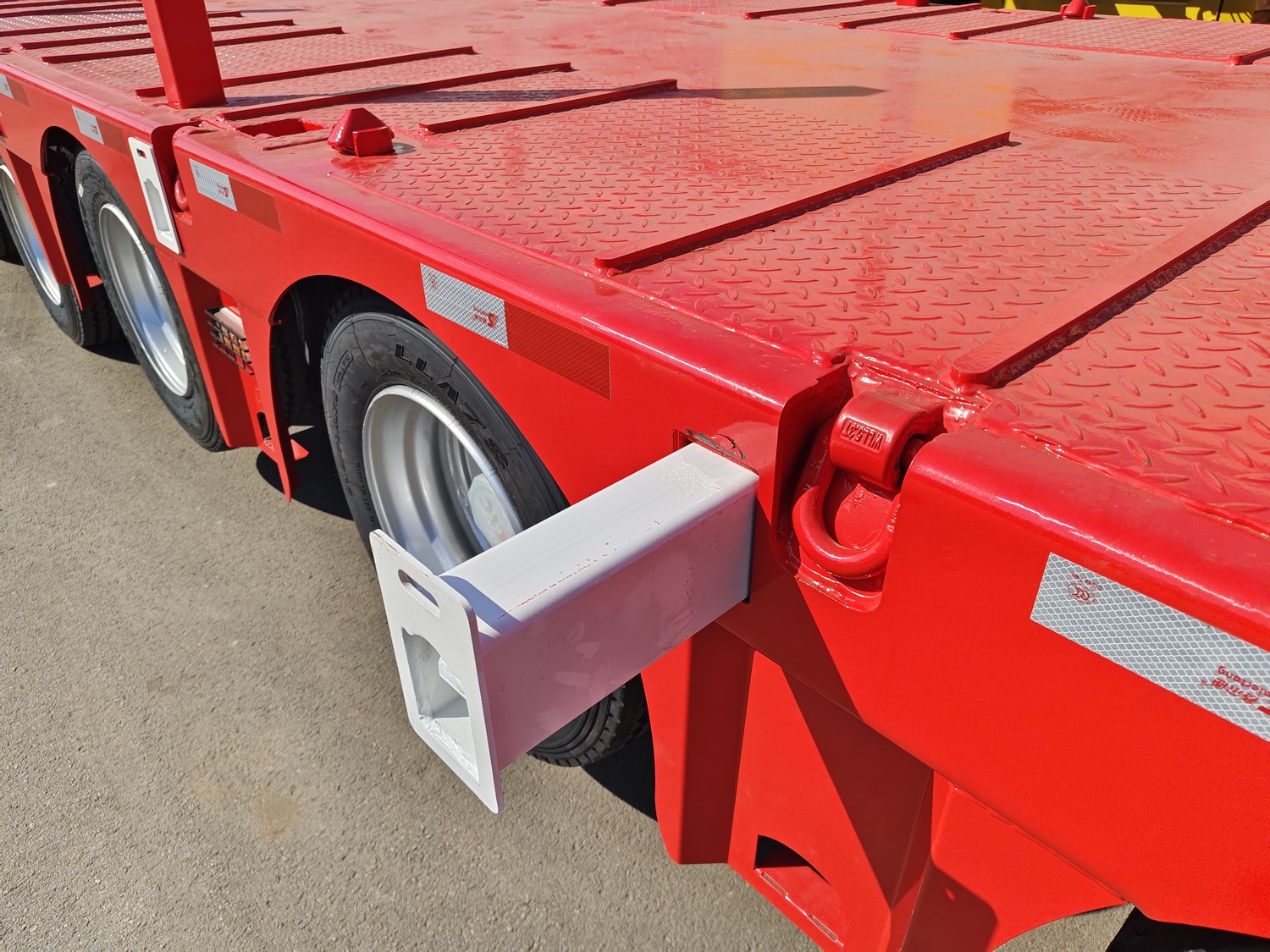
Container locks are standard equipment on this configuration. They provide the container securing interface for road carriage within a wider logistics chain. When a container continues by sea or rail, the trailer can serve the road leg, linking container work with the vehicle's machinery and materials applications. This gives a mixed-cargo business another way to use the same platform when the next suitable assignment involves a container rather than an exposed load.
Frequently Asked Questions
Which axles can be lifted?
The front four axles and rear three axles are liftable. Their operating position depends on the load distribution and the trailer's operating requirements.
How does the trailer accommodate longer or wider cargo?
The platform extends in length and can widen. These adjustments address different cargo dimensions and provide corresponding changes to the deck support area.
Can the stakes secure pipes or logs on their own?
The stakes provide lateral containment for round cargo. They form part of a restraint arrangement that also addresses movement during transport.
How does this trailer support intermodal transport?
Standard container locks enable container carriage on the road leg. The container can then continue through other transport modes within the logistics chain.
Discuss Your Trailer Application
Share your cargo or equipment details, transport route and destination market with HUAYUE for a configuration discussion tailored to the intended application.
Interested in this case?
Contact Us for a Technical Consultation.