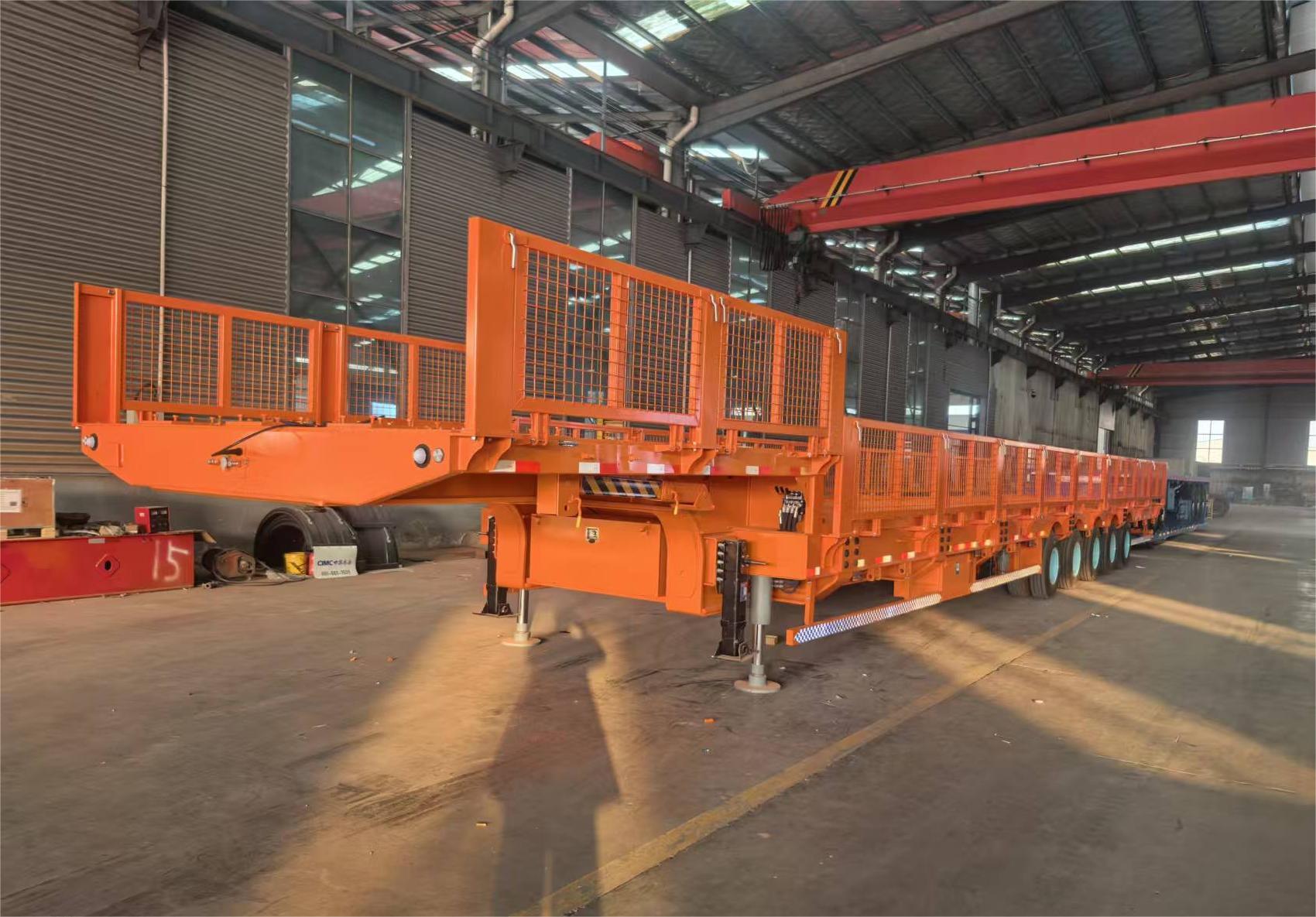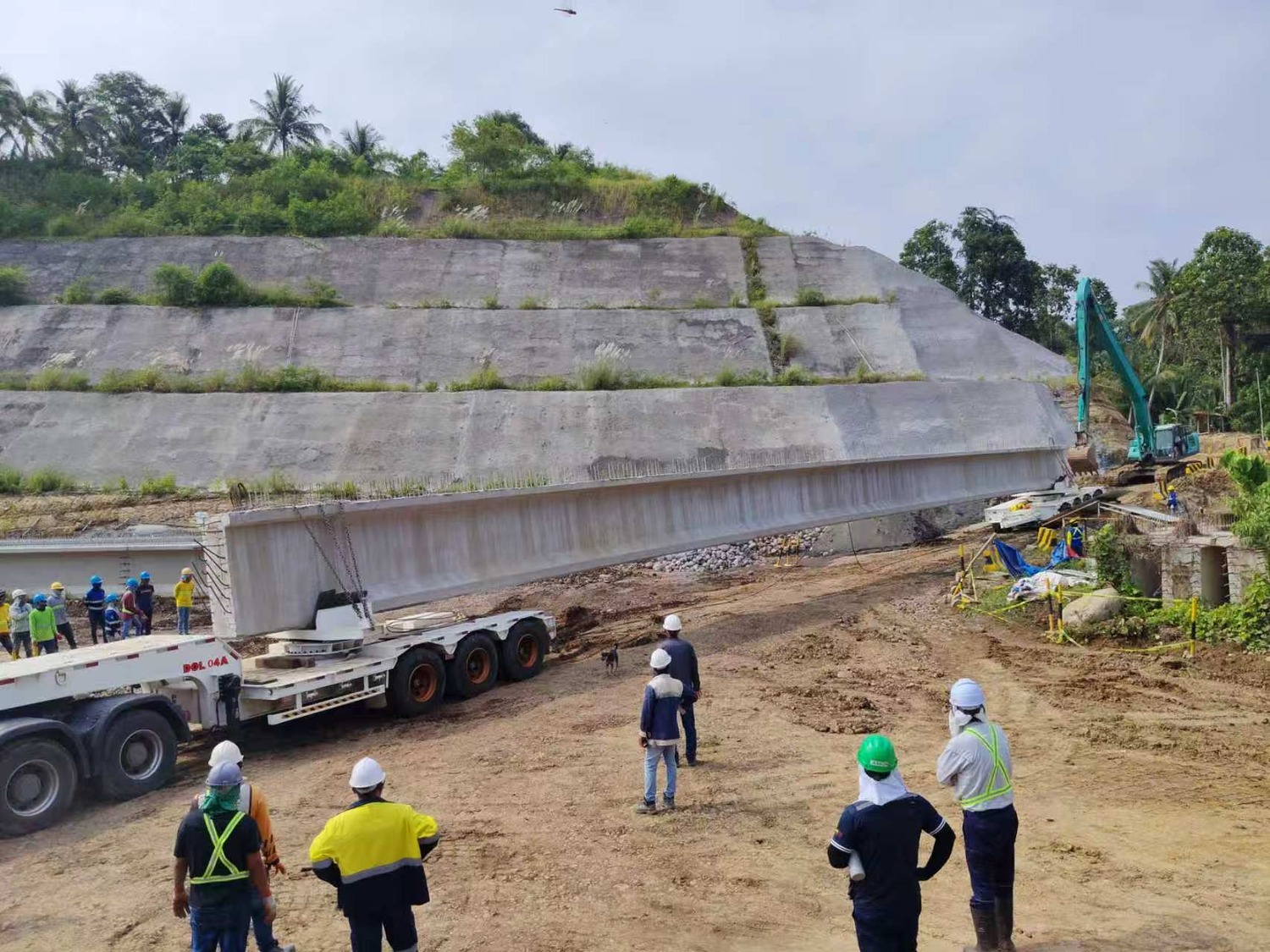
A custom HUAYUE bridge girder transporter has entered service with a customer in Africa, carrying precast concrete beams for road and bridge construction. The vehicle is now working where the purchase decision matters most: between a heavy concrete component and the construction operation that needs it. Its job is to bring the beam into position for the next stage of bridge building.
For a transport business, a concrete girder is a demanding load because its length, bearing locations and handling requirements travel with it. For a construction contractor, the same movement is also part of an erection sequence. The transporter connects those two responsibilities, carrying the component while bringing it within reach of the lifting operation.
A Bridge Girder Transporter at the Working Face
The African customer's application centres on long precast concrete beams used in infrastructure construction. These components arrive as substantial structural members, with their own shape and intended support arrangement. Moving them calls for a vehicle whose load interfaces suit the beam, rather than treating it as general cargo laid across a freight platform.
At the bridge site, the white transporter carries a girder through an area occupied by earthworks, bridge structures and lifting equipment. This is a different working environment from a clear yard or a straight paved road. The movement ends within a construction operation, where access to the beam and space around its supports become part of the job.
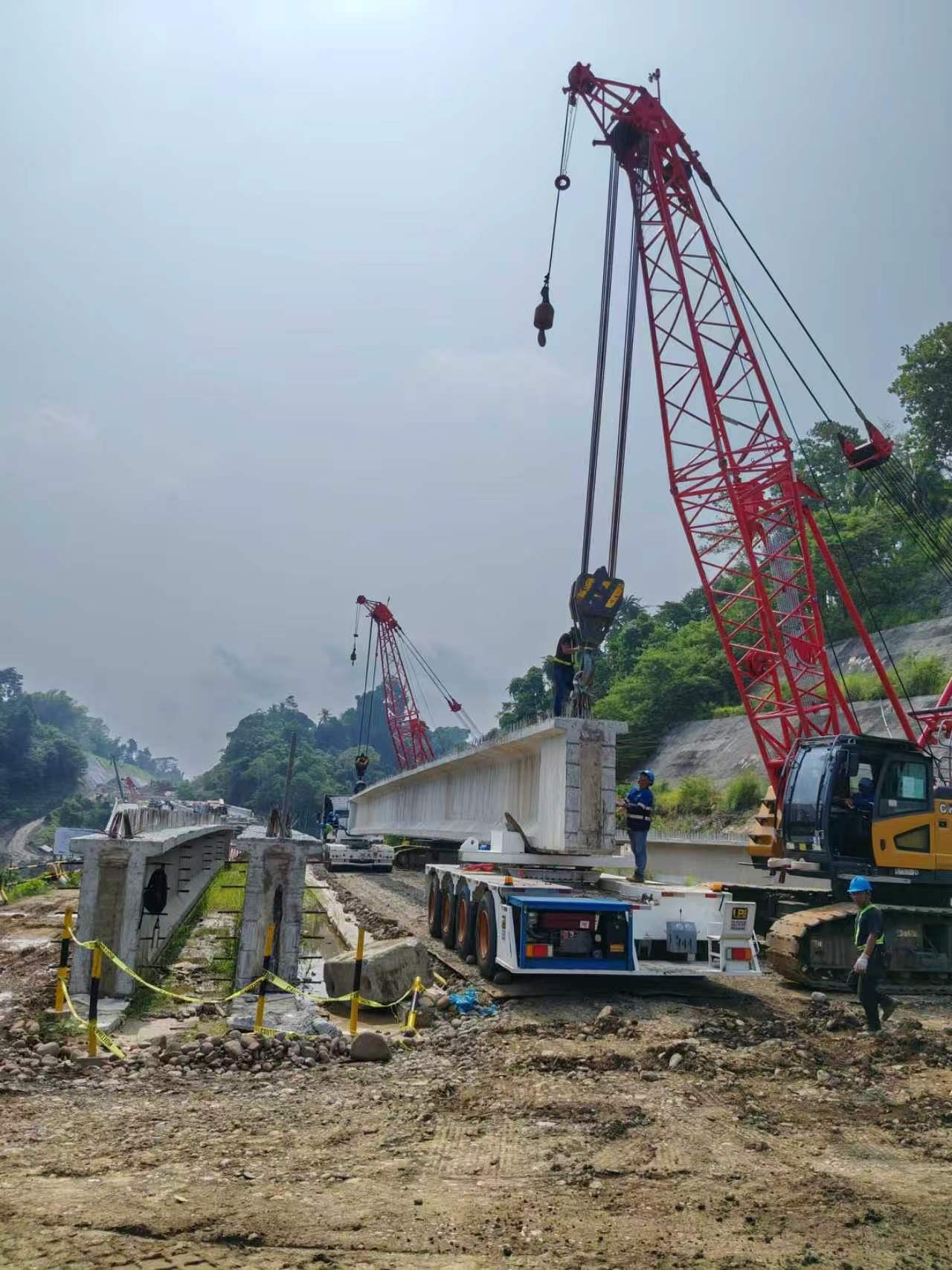
The cranes beside the loaded vehicle illustrate the connection between transport and erection. The beam rests on its transport supports until the lifting arrangement takes its weight; these are separate load conditions for the concrete member. The transporter brings the component to the lifting area, while the cranes perform the lifting task.
The beam also occupies space beyond the wheels and chassis. Its projecting ends and the span between its supports remain relevant as the combination approaches the lifting position. A clear approach therefore concerns the entire concrete member, including its clearance from nearby structures, rather than only the route taken by the tractor.
Supporting the Beam Where It Bears
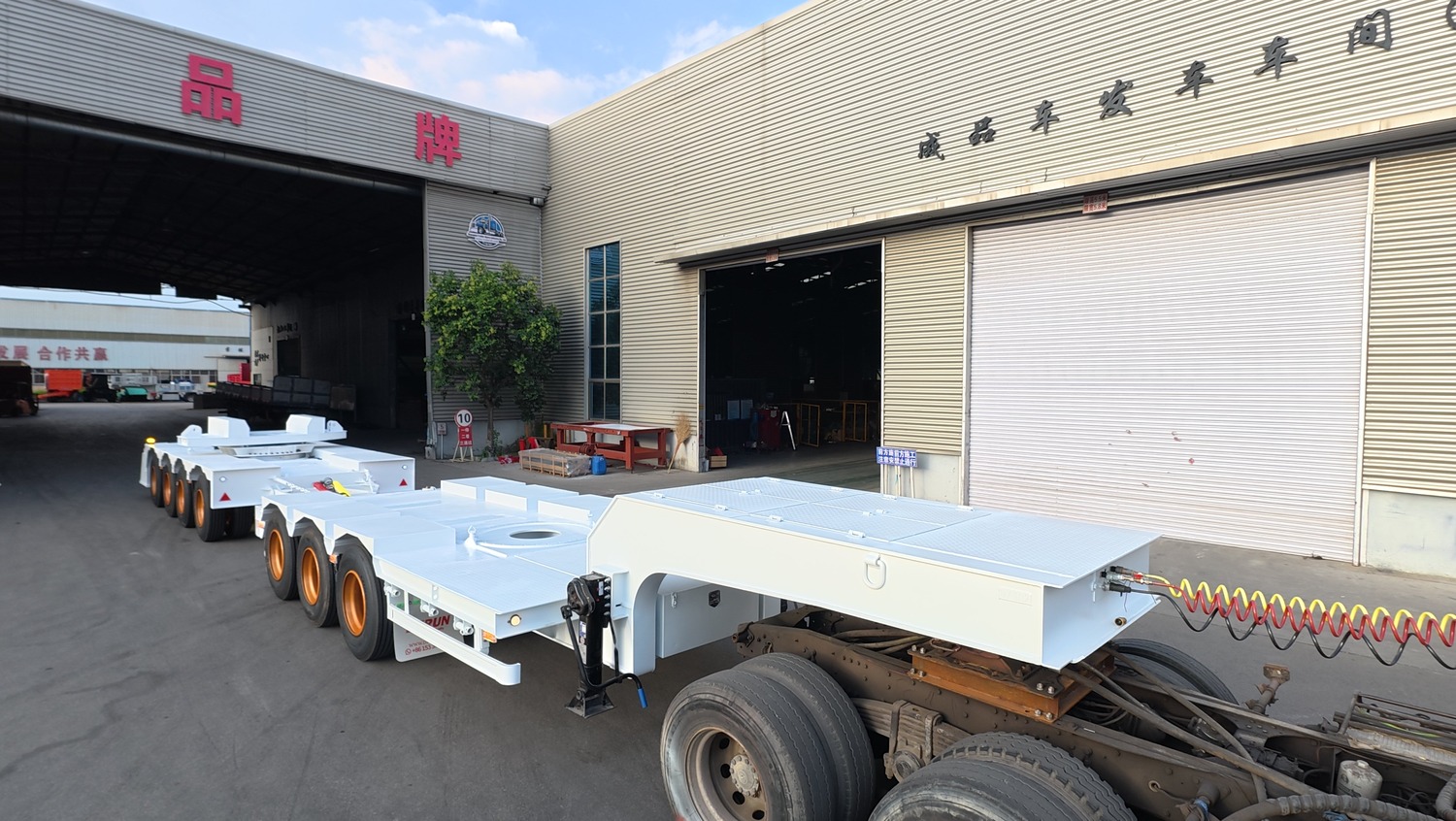
The HUAYUE arrangement uses separate front and rear carrying units, with raised saddles beneath the girder. The concrete member spans the distance between those bearing locations. This layout addresses the defining feature of the cargo: a long structural component supported at selected positions, with much of its length extending between them.
The saddle is the interface between the concrete and the vehicle. Its bearing surface receives the beam's load and transfers it into the carrying unit beneath it. The position and contact arrangement therefore belong to the beam's transport design, alongside the vehicle itself; they cannot be reduced to a description of the chassis alone.
For long concrete girders, support geometry also affects lateral stability during handling and transport. Bearing positions, the height of the load and the response of the hauling equipment all contribute to that behaviour. This is why girder transport is an engineering task involving the component and its carrier together, even when the journey is confined to a construction area.
From the Tractor to the Rear Carrying Unit
The factory configuration comprises a gooseneck front unit with three axles and a separate rear unit with four axles. The tractor connects at the front, while the two carrying sections provide the beam's separated bearing locations. The resulting 3+4 arrangement places running gear beneath the two load-bearing sections.
That arrangement makes the distinction between vehicle weight distribution and beam support especially clear. The concrete passes its load through the saddles into the respective carrying units. The share carried at either end follows the loaded geometry and the beam's mass distribution, so the two sections do not simply become interchangeable halves.
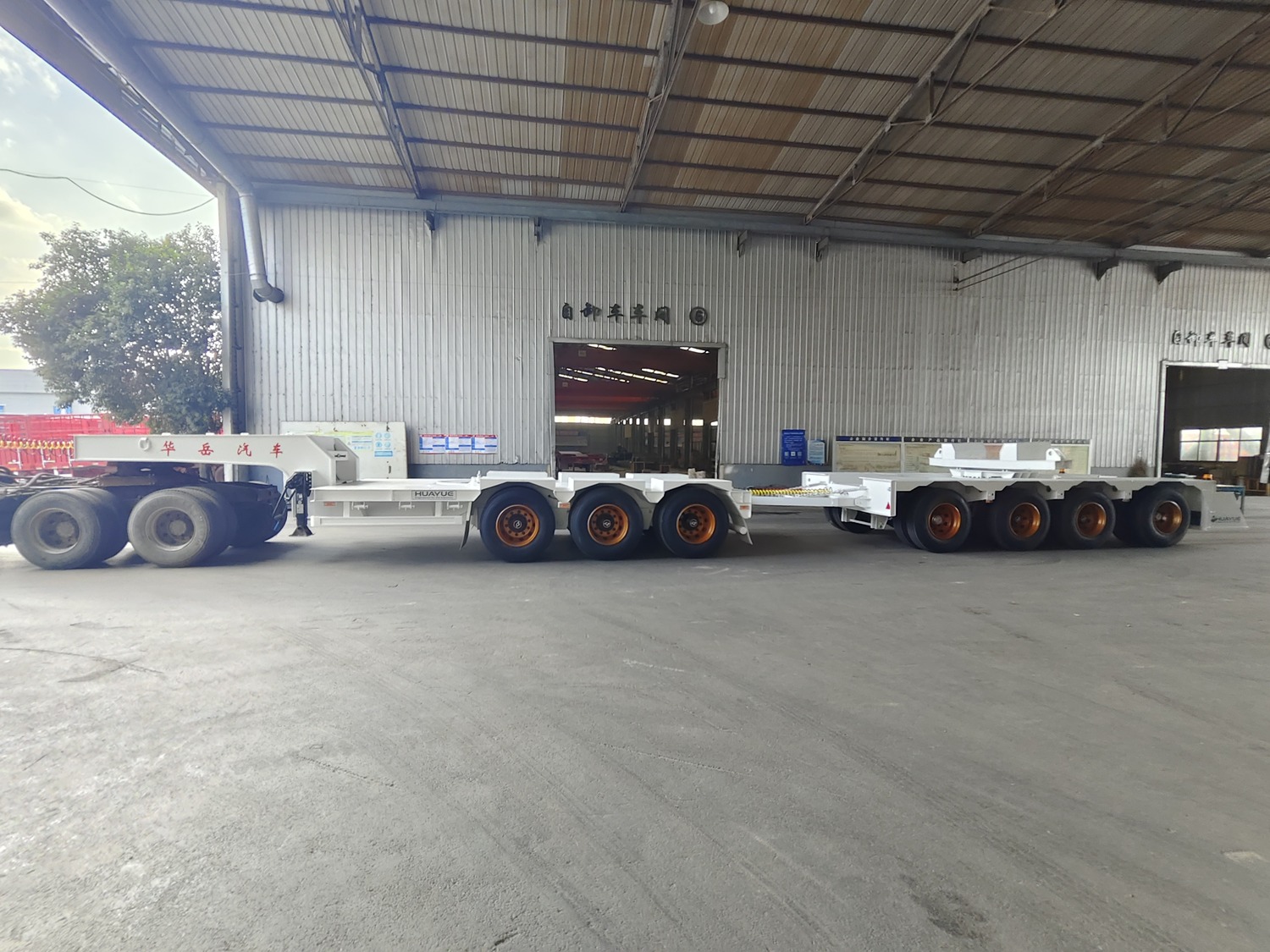
The white vehicle's factory form and its loaded site application explain the same purpose from different stages of use. At the factory, the separated units and saddles define the carrying arrangement. In service, the concrete girder occupies those bearing positions and becomes the central element around which the transport movement is organised.
Keeping Beam Transport Connected to Construction
The customer's transporter is already supporting road and bridge work in Africa. Its practical role extends beyond reaching a destination: the beam must arrive in a position that works with the lifting operation and the structure under construction. That connection gives specialised beam transport its place in the project's working sequence.
The practical commercial purpose of this specialised equipment follows the work it serves: repeated movement of long structural concrete rather than mixed freight. The African deployment places the custom vehicle directly in that specialist role, carrying a bridge component at the construction site where it will be used.
Frequently Asked Questions
What cargo is this transporter carrying?
It carries precast concrete girders for road and bridge construction, using separated bearing locations beneath the long concrete member.
Do the saddles replace the lifting equipment?
No. The saddles support the girder during transport. Cranes carry out the separate lifting operation when the beam moves from its carrier toward installation.
Why does a concrete girder's stability matter before installation?
A long, slender girder also needs lateral stability during handling and transit. Its transport support arrangement is part of those temporary loading conditions.
Discuss Your Trailer Application
Share your cargo or equipment details, transport route and destination market with HUAYUE for a configuration discussion tailored to the intended application.
Interested in this case?
Contact Us for a Technical Consultation.