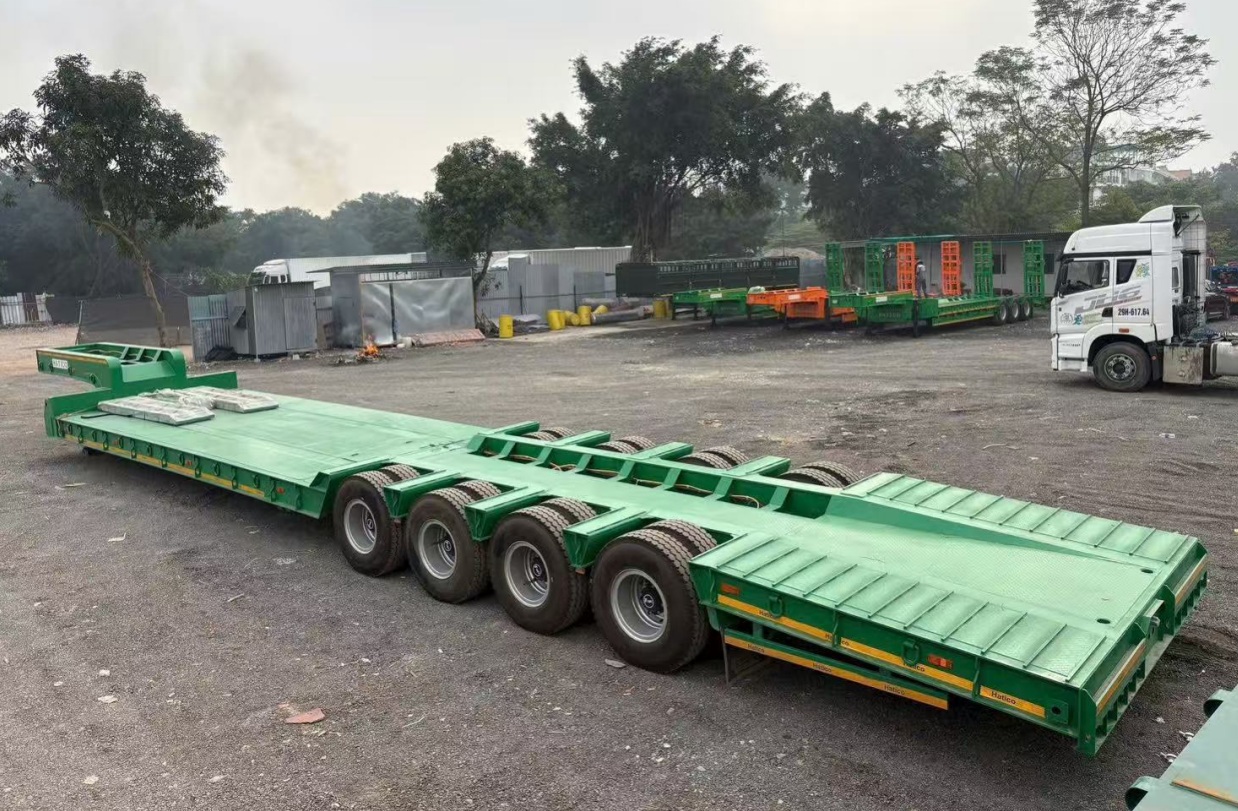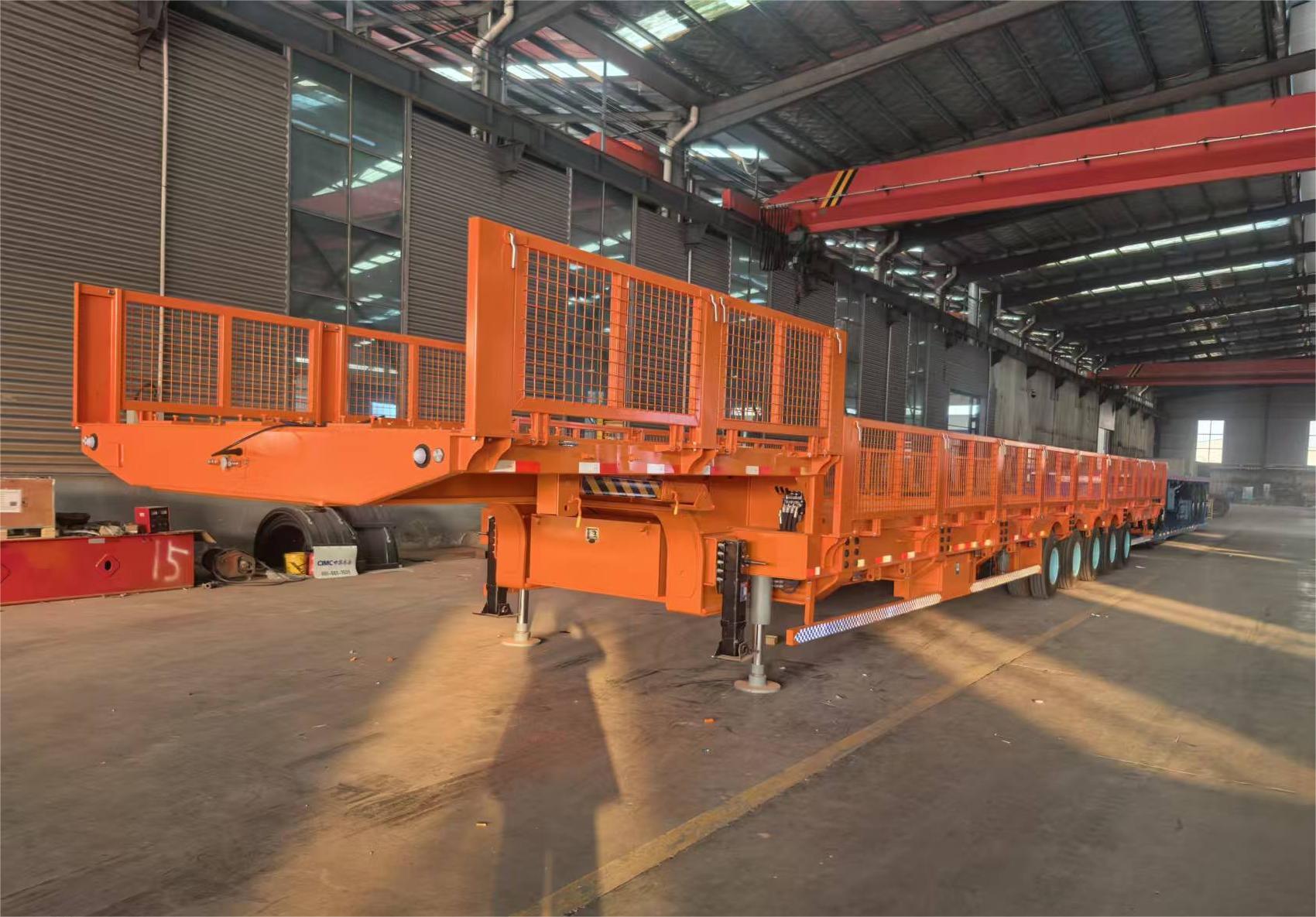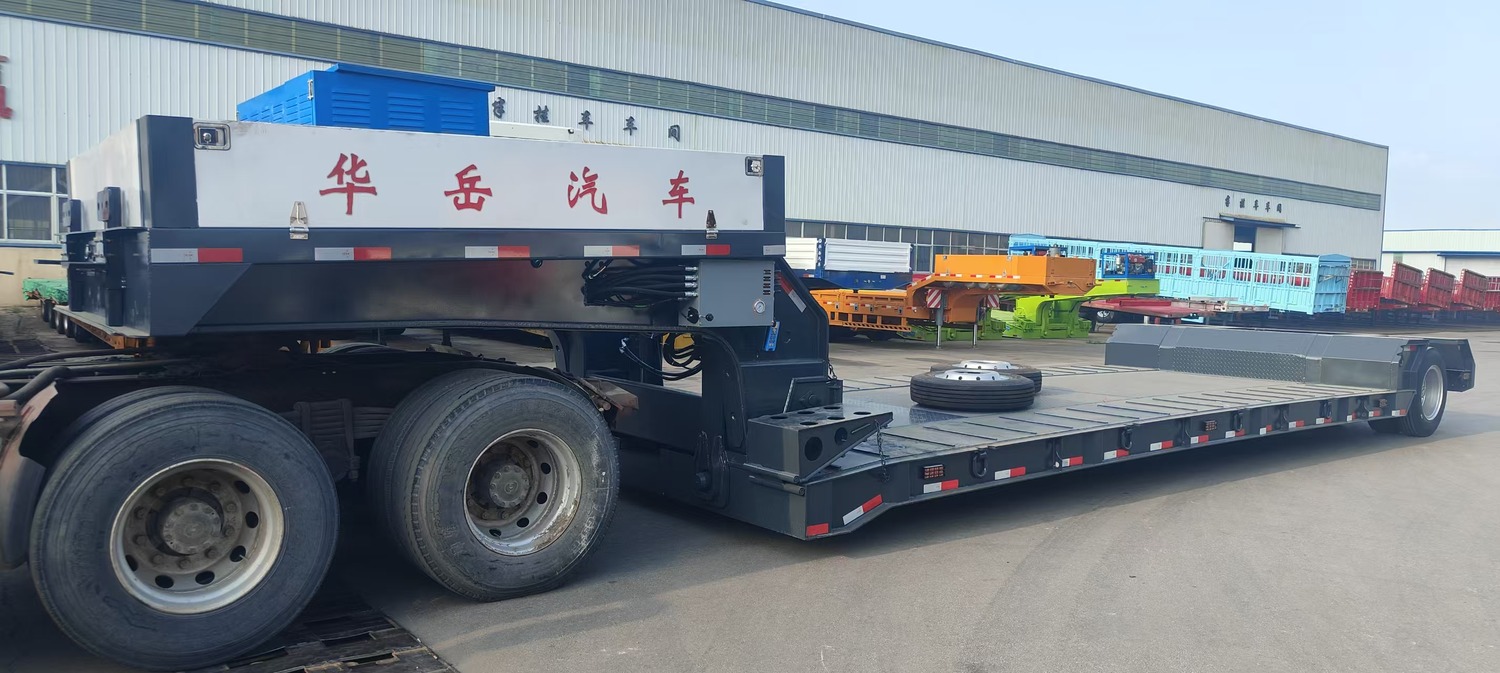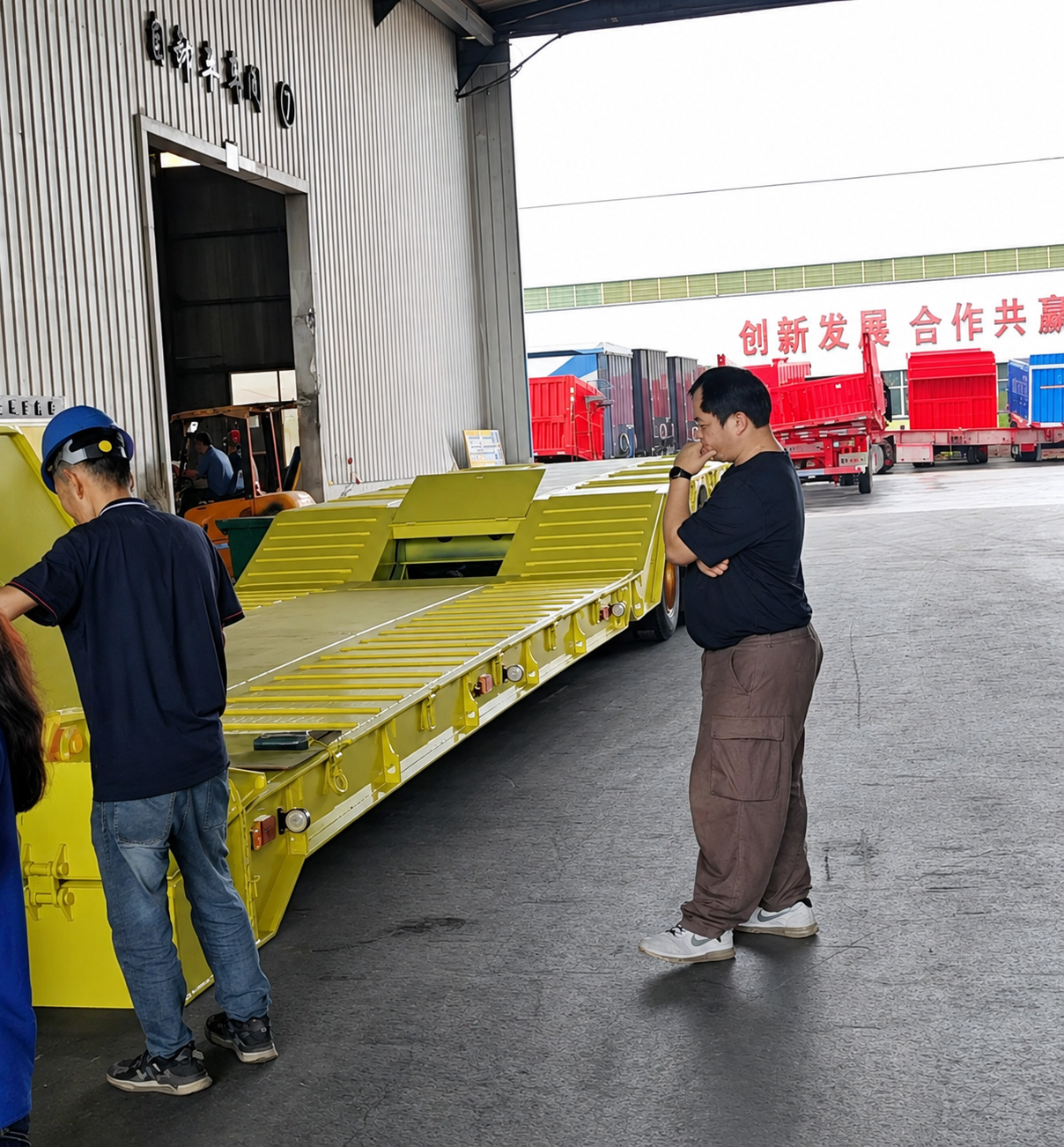
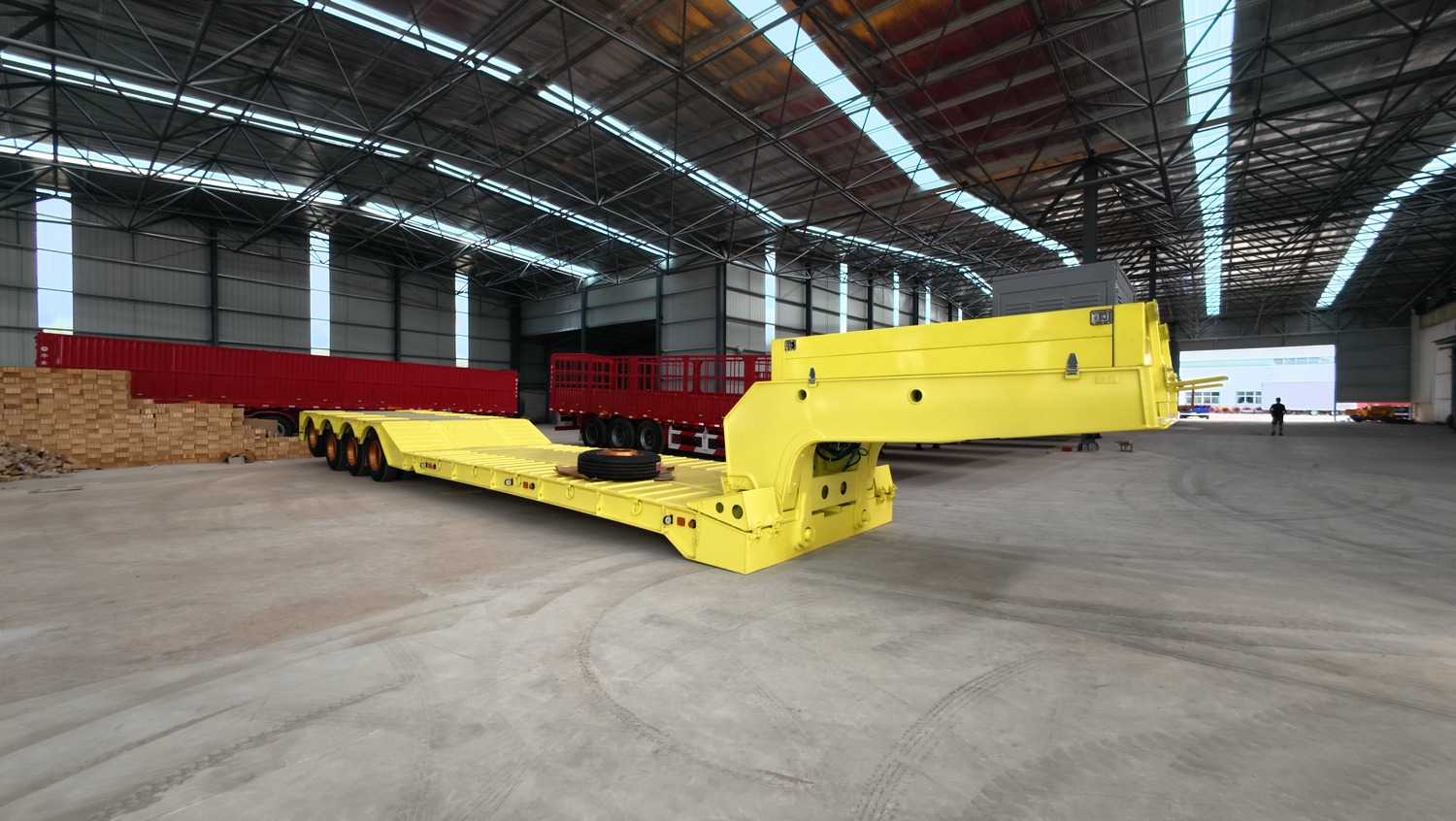
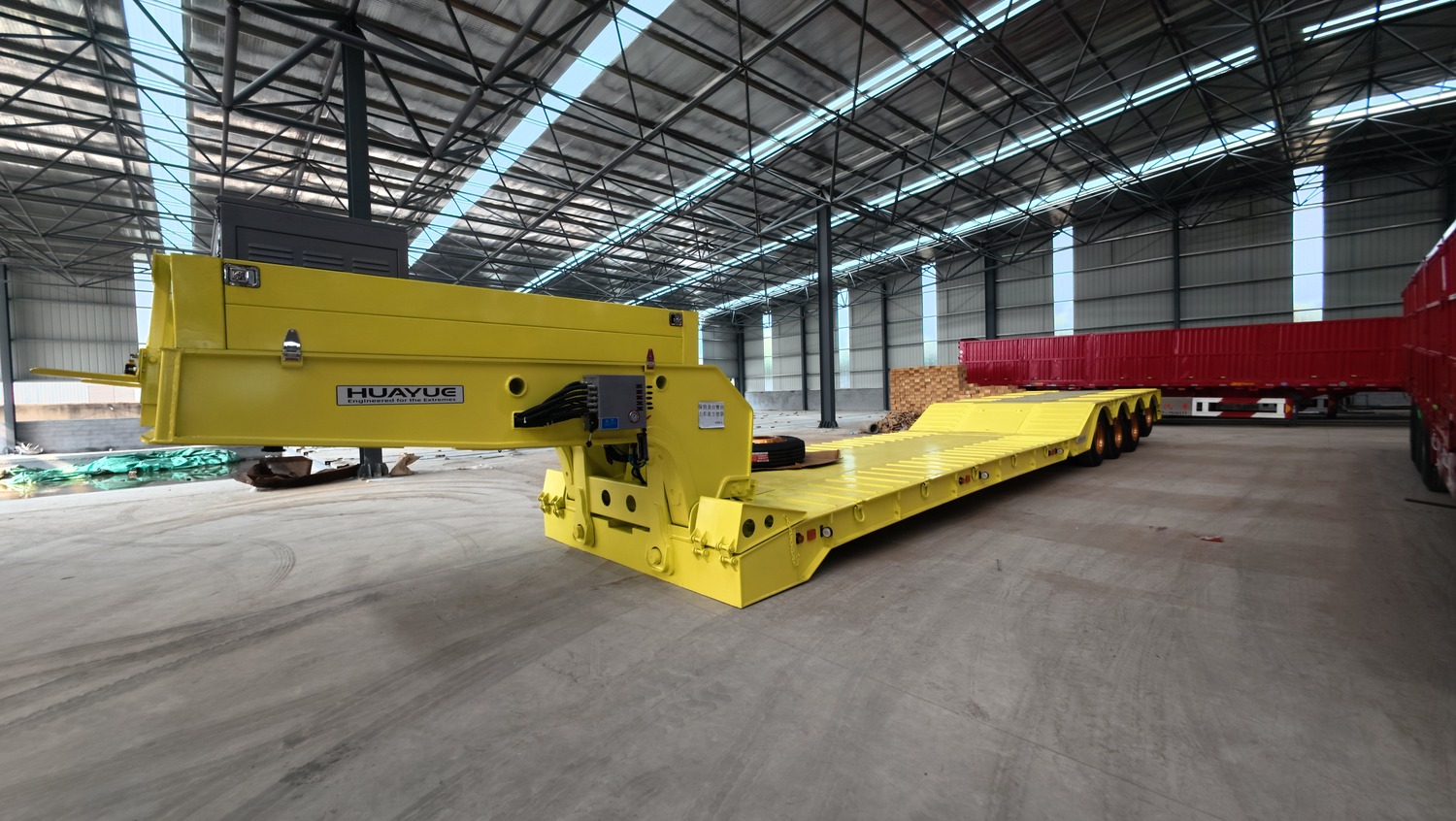
This Malaysian configuration centres on a four-axle removable-gooseneck trailer with a modular deck, a 40-ton winch and a liftable fourth axle. The customer selected a combination that addresses both the platform carrying the equipment and the way equipment reaches that platform. The detachable front section opens the loading approach, while the winch provides a pulling function for suitable loading operations.
The modular deck adds another dimension to the design. Its detachable and expandable arrangement allows the platform to be configured around the intended equipment rather than treating every cargo footprint as identical. Each element has a distinct role within a specialised equipment-transport application.
Modular Deck and Removable Gooseneck
A removable gooseneck separates the front connection from the low deck. This creates a front approach to the loading platform for equipment suited to that method. Machinery can enter at the low front end rather than following a route over the rear running gear, which is useful when approach geometry or underbody clearance limits loading options.
The deck is more than an empty surface. Its usable length and the positions of the machine's tracks, tyres or transport supports determine where weight enters the trailer structure. An attachment may occupy space without carrying much weight, whereas a small support foot can place a substantial local load on the platform.
Modularity changes the physical arrangement of the platform through its designed connections. A separable or expandable deck offers configuration flexibility, but it still needs a continuous structural load path in its assembled state. Deck joints transfer forces between sections, so their position and engagement are part of the working design.
The 40-Ton Winch and the Loading Approach
The customer requested a 40-ton winch for this trailer. A winch provides pulling effort during loading; it performs a different job from the platform, which supports the transported load. The winch designation therefore describes the pulling equipment rather than establishing the trailer's payload or the maximum weight of every machine it can load.
Resistance during a pull depends on more than machine weight. A rolling machine on a smooth approach requires a different force from equipment with damaged running gear or an obstructed path. Slope, rolling resistance and the direction of the pull all influence the forces passing through the rope and its attachments.
A straight loading approach helps keep the pull aligned with the deck. Sideways loading can bring the rope into contact with unsuitable edges and place forces where the loading arrangement was not intended to carry them. The winch, rope route and equipment attachment form a pulling system whose geometry matters throughout the movement.
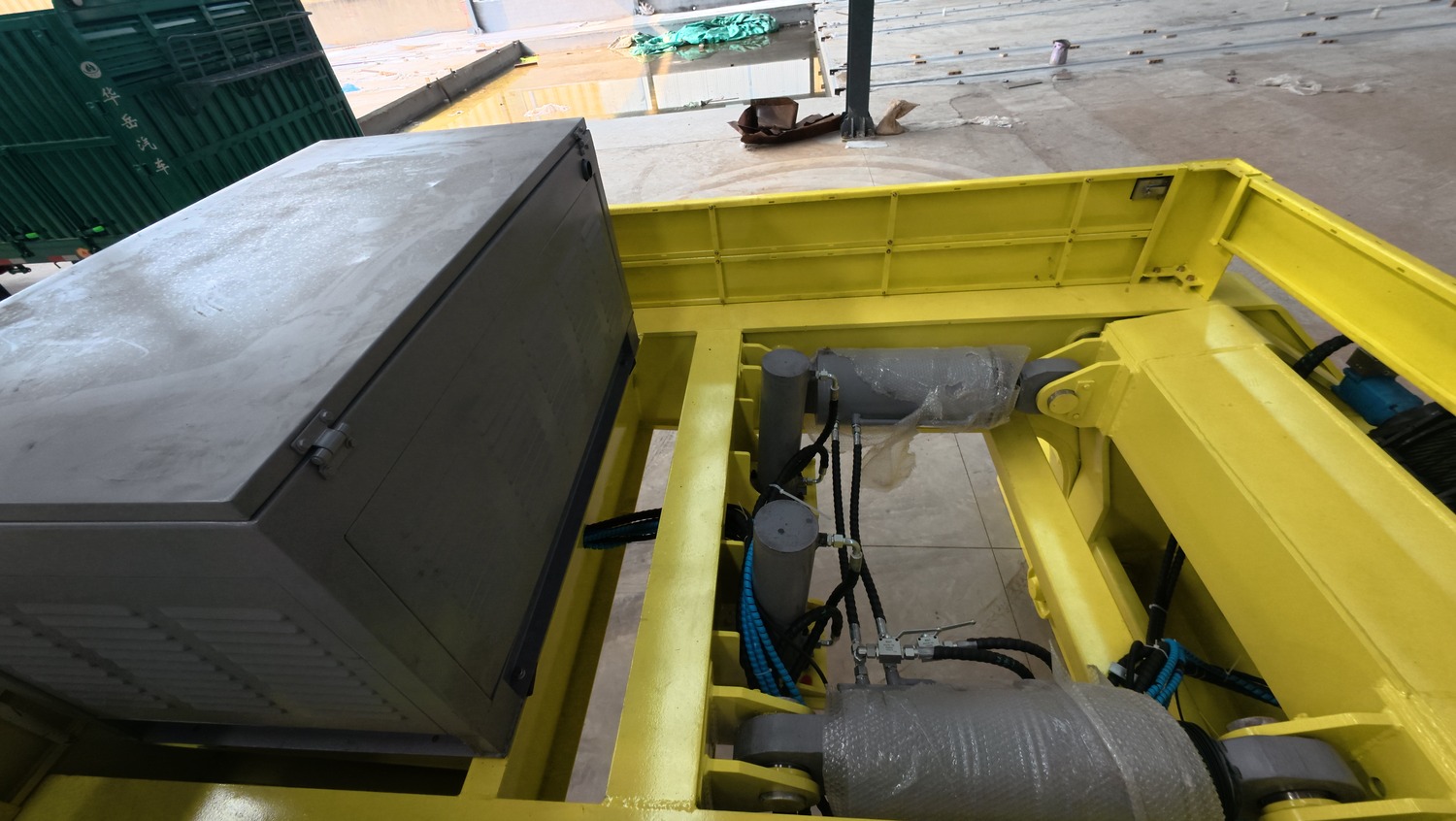
After the machine reaches its transport position, cargo restraint takes over a separate function. The winch is loading equipment; the transport restraint arrangement resists movement during braking, cornering and road vibration. Keeping these functions distinct explains why a powerful winch is useful without treating it as a substitute for securing the load.
Four Axles with a Liftable Fourth Axle
The featured running gear has four axles, with the fourth axle designed to lift. A lift axle allows an axle to be raised clear of the road when the loading condition and operating arrangement permit. Removing unnecessary tyre contact can reduce tyre scrub during suitable lightly loaded or empty movements.
Raising an axle also changes how the remaining supports carry the vehicle. Weight previously borne at that axle is redistributed through the other contact points, so the lift function belongs to a defined load condition. It is not a way to increase the carrying capacity of the remaining axle group.
The low platform and the liftable axle address different parts of equipment transport. Platform height affects the loaded profile; the axle function changes running-gear contact with the road. The trailer's usefulness comes from matching those functions to the intended movement, including the transition between loaded work and suitable lighter running.
Equipment Position on the Low Platform
A low deck reduces the height added beneath the transported machine. For equipment with a tall cab or folded working structure, this helps manage the overall loaded profile. The machine's own height, its attachment arrangement and its position on the platform still determine the complete envelope.
Load position also changes the reactions at the tractor coupling and trailer axles. A machine placed farther forward transfers more weight toward the front support; moving it rearward changes the share carried by the running gear. The modular platform must therefore accommodate a useful support position as well as the machine's external dimensions.
For this Malaysian RGN, the deck, removable front section, winch and liftable axle have concrete and different purposes. The platform supports the equipment, the open front provides access, the winch assists suitable pulls and the fourth-axle lift changes road contact in appropriate conditions. These functions make the configuration understandable as working equipment rather than a list of accessories.
Frequently Asked Questions
Does the 40-ton winch rating mean a 40-ton trailer payload?
No. The winch designation concerns pulling equipment. Trailer payload depends on the complete vehicle structure and loading arrangement, while the required pull depends on resistance and approach geometry.
Why use a modular deck on an RGN?
The detachable and expandable platform allows different deck arrangements around the intended equipment. Its assembled joints remain part of the load-carrying structure.
What is the practical role of the liftable fourth axle?
It allows that axle to leave the road in suitable operating conditions. This can reduce unnecessary tyre contact, while transferring its supported weight to the remaining supports.
Discuss Your Trailer Application
Share your cargo or equipment details, transport route and destination market with HUAYUE for a configuration discussion tailored to the intended application.
Interested in this case?
Contact Us for a Technical Consultation.