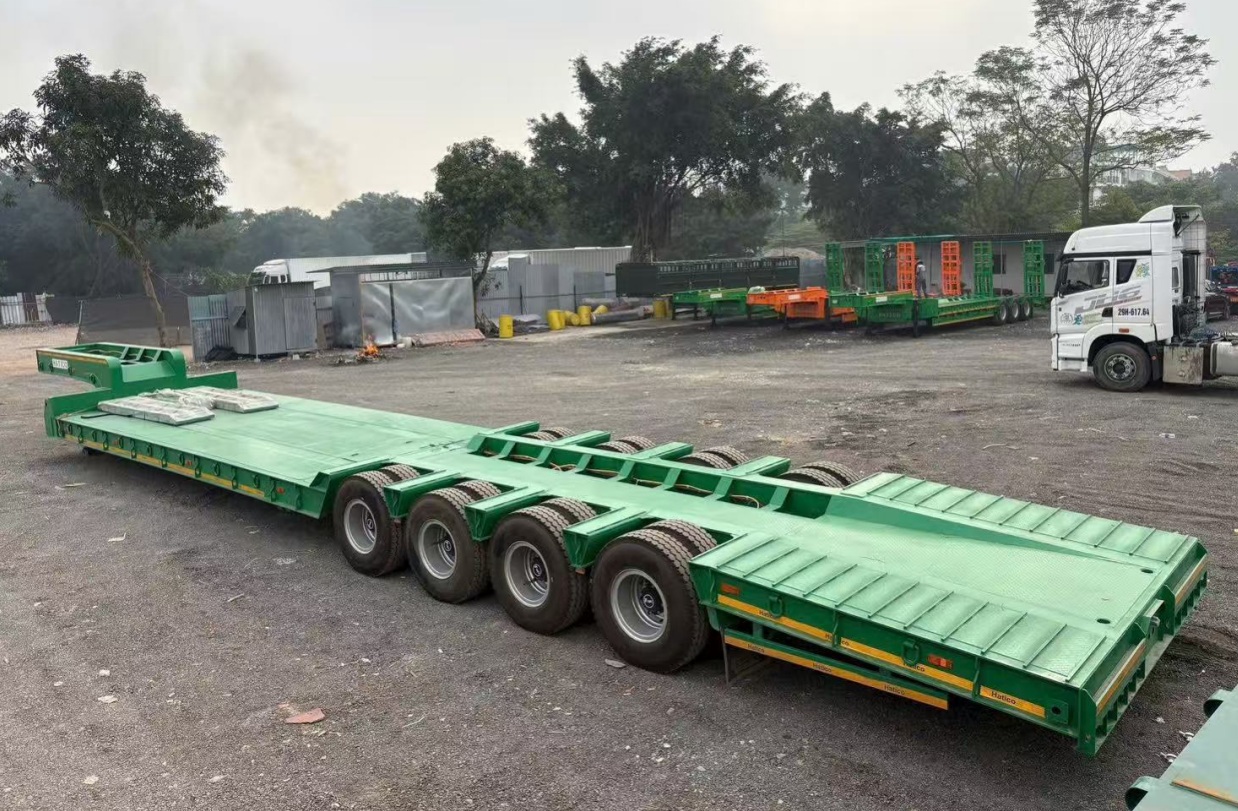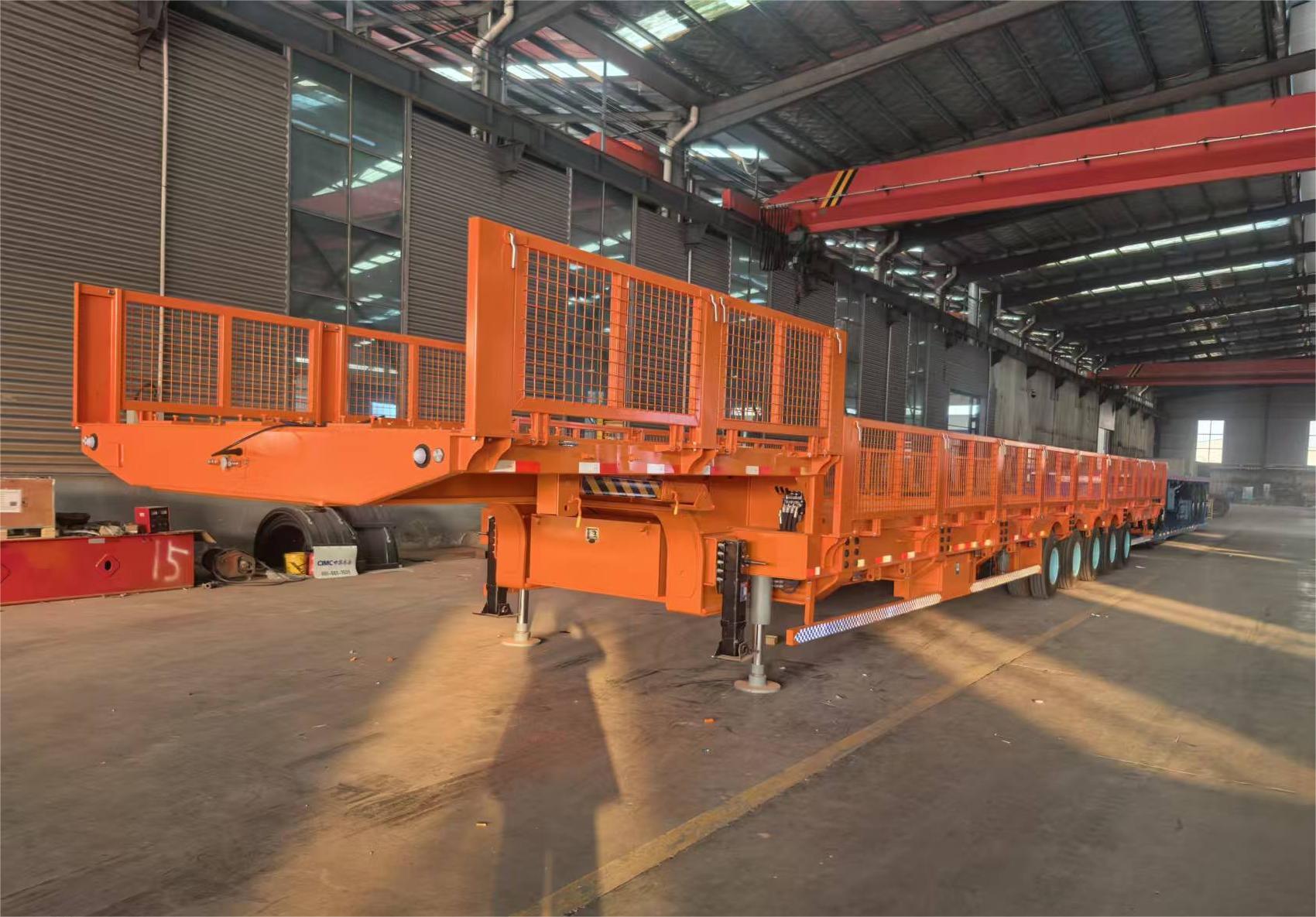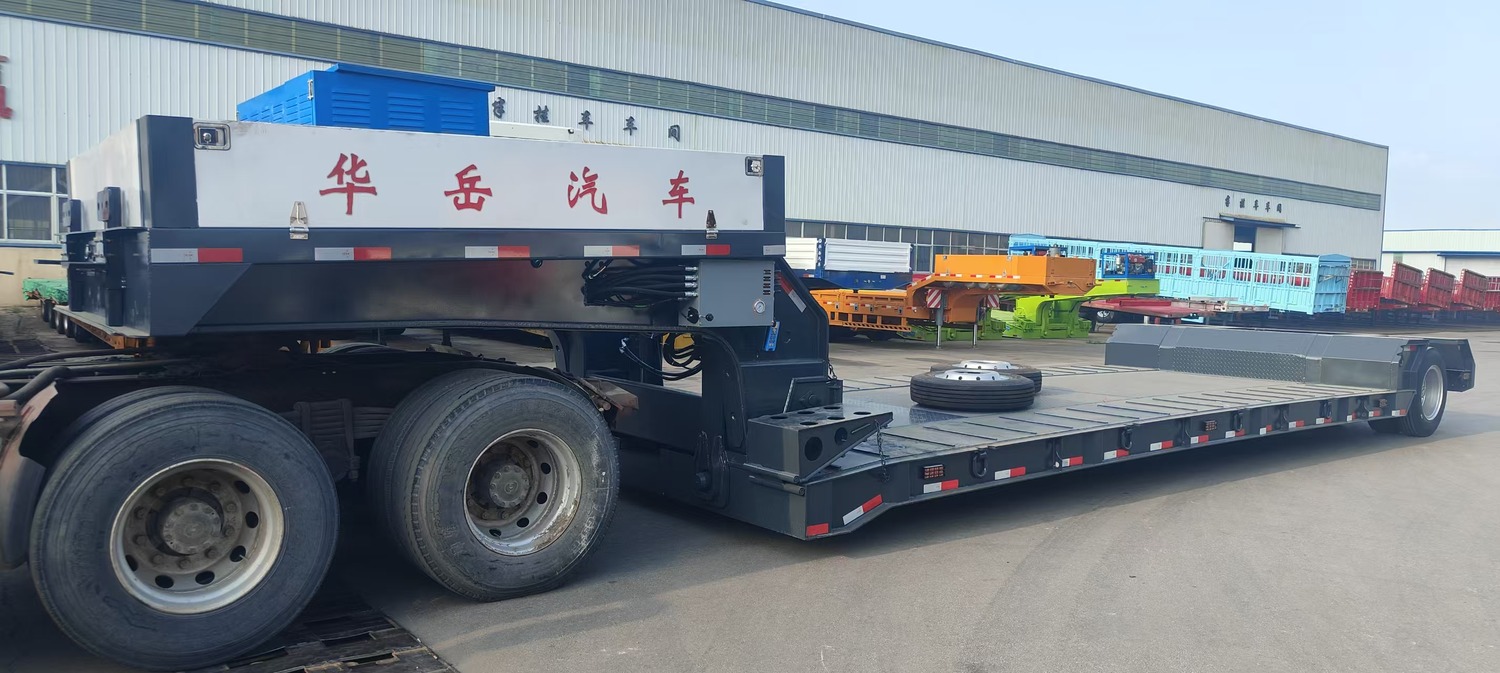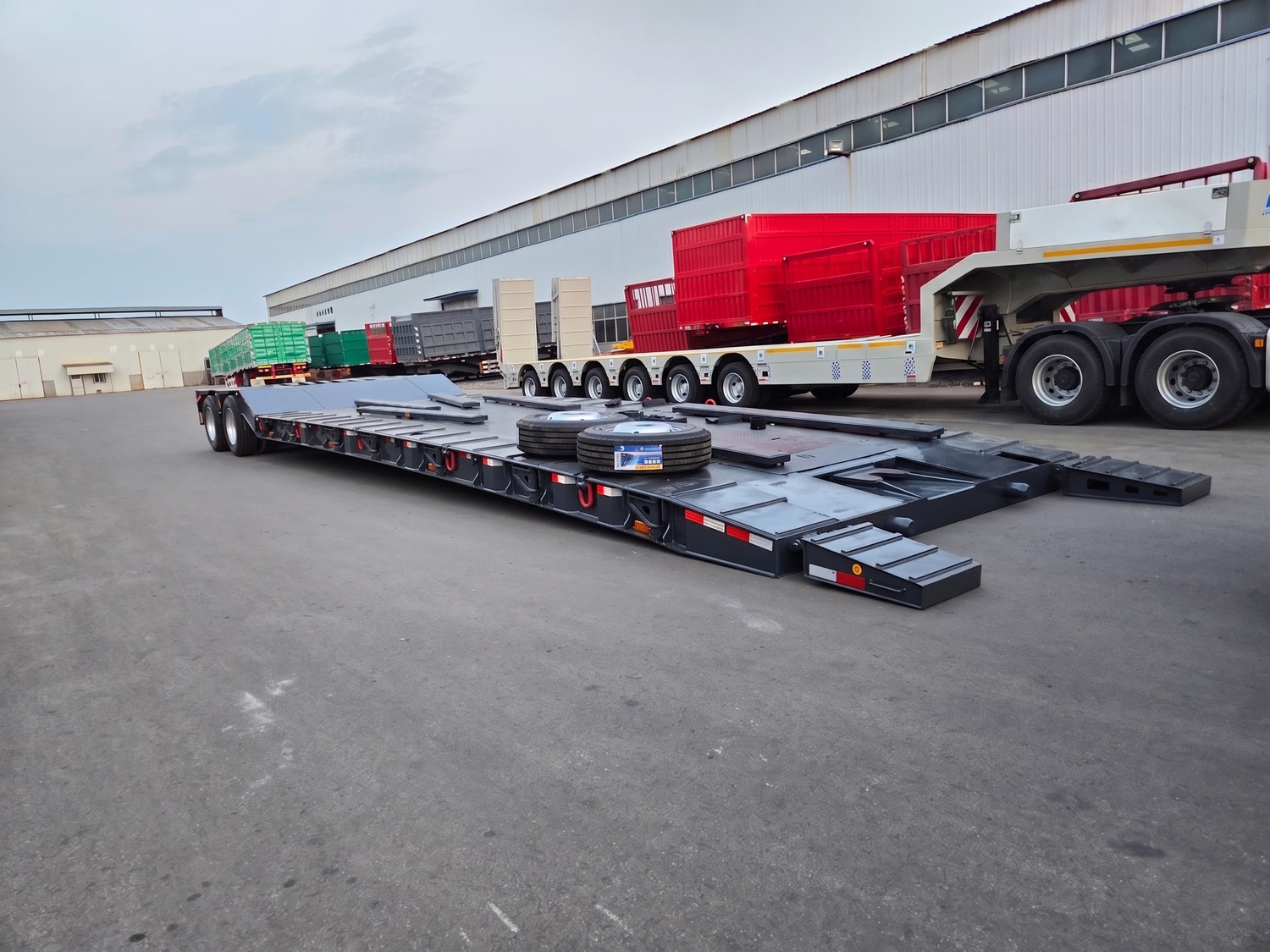
A removable-gooseneck trailer is built around the connection between the tractor, detachable front section and low loading deck. Separating the neck opens a loading path at the front of the platform. For suitable construction machinery, that access changes the climb onto the trailer and avoids a route over the rear running gear.
The HUAYUE configuration combines a low equipment platform with mechanical connection points and hydraulic interfaces at the front. These features do different jobs: the connection joins the principal sections for travel, while the hydraulic equipment operates the associated mechanism. Understanding that distinction makes the front-loading design easier to understand in everyday equipment transport.
The Detachable Front Section
When the gooseneck separates from the deck, the front of the loading platform becomes accessible. This differs from a fixed front structure, where equipment must approach the deck by another path. The removable section is therefore central to the trailer's loading geometry.
A machine approaching a low entrance has less vertical rise to negotiate than one climbing to a higher platform. That can suit equipment with limited ground clearance or a long distance between its front and rear contact points. The transition onto the deck remains important because the underside of the machine passes over a change in slope.
The machine's wheels or tracks also need a suitable path onto the platform. Their spacing determines the support width, while attachments can affect clearance before the running gear reaches the deck. The practical benefit of front access depends on the whole machine geometry, not simply whether the neck is detachable.
Why the Low Deck Matters
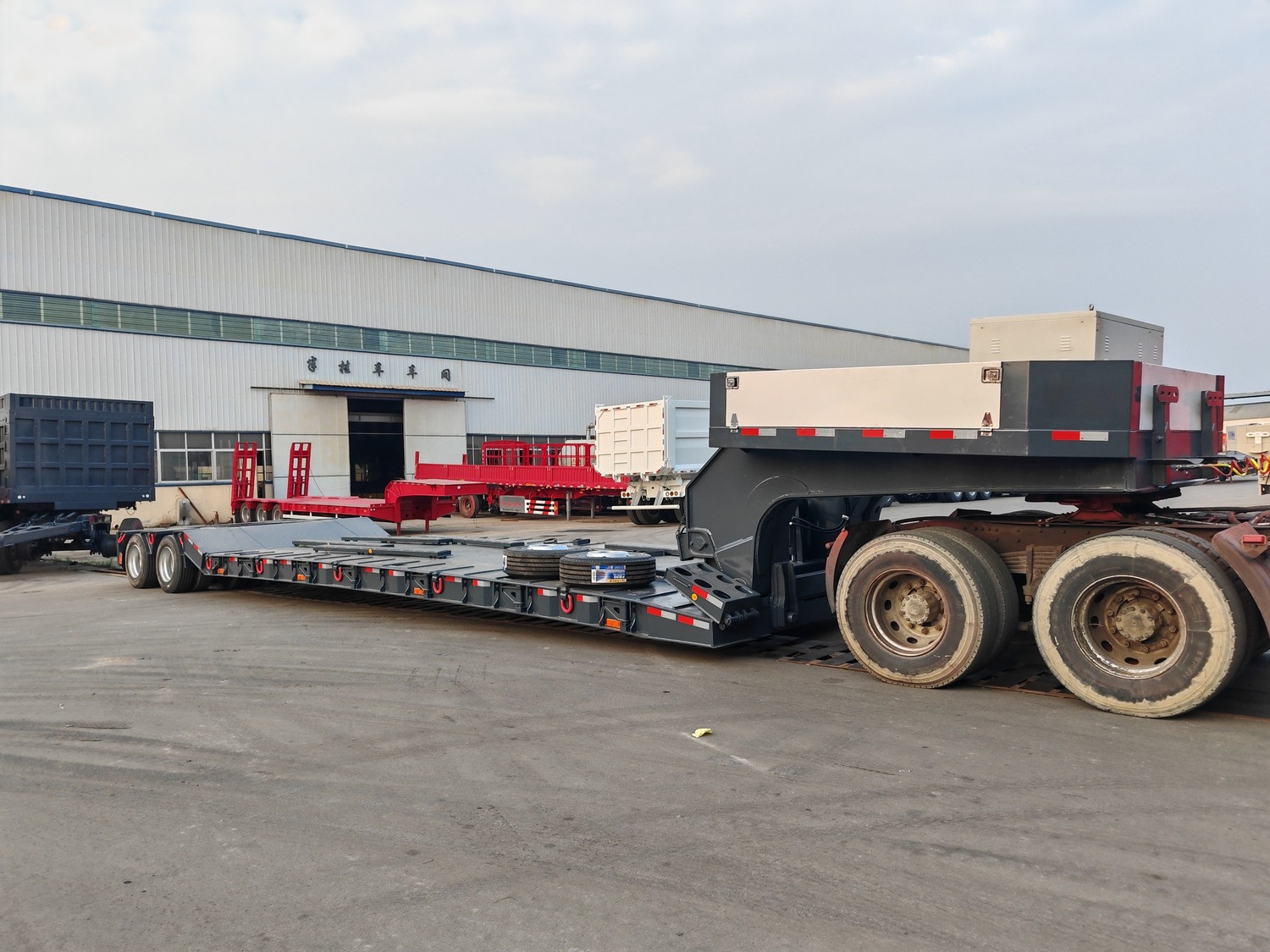
A low deck reduces the vertical position of the cargo platform. For suitable equipment, that lower platform can help manage overall transport height and create a direct path onto the deck when the front section is removed. The equipment itself still contributes the height of its cab, upper structure and transport-position attachments.
The lowered platform also places the same machine's centre of gravity closer to the road. This is useful in the overall arrangement of a tall load, although vehicle stability still depends on the machine, support width, restraint and movement. A lower deck offers a specific geometric advantage rather than a universal performance promise.
Equipment weight enters the deck through tracks, tyres or designated support points. Crossmembers support the floor locally, while the principal longitudinal members carry forces toward the front connection and rear axle group. This is why a machine's contact footprint and loading position matter alongside its total mass.
Mechanical Connections and the Structural Load Path
The front connection closes the gap between a loading arrangement and a road-going semi-trailer. When joined, the deck and gooseneck transfer forces across their mating structure. Connection plates, engagement surfaces and the surrounding frame belong to that load path, rather than acting only as alignment features.
The reinforced front plate and its openings form part of the featured interface. Local reinforcement spreads force into the adjacent structure instead of concentrating it at an unsupported edge. The exact function of each connection element follows its design, while the broader purpose is to maintain the intended relationship between the sections under load.
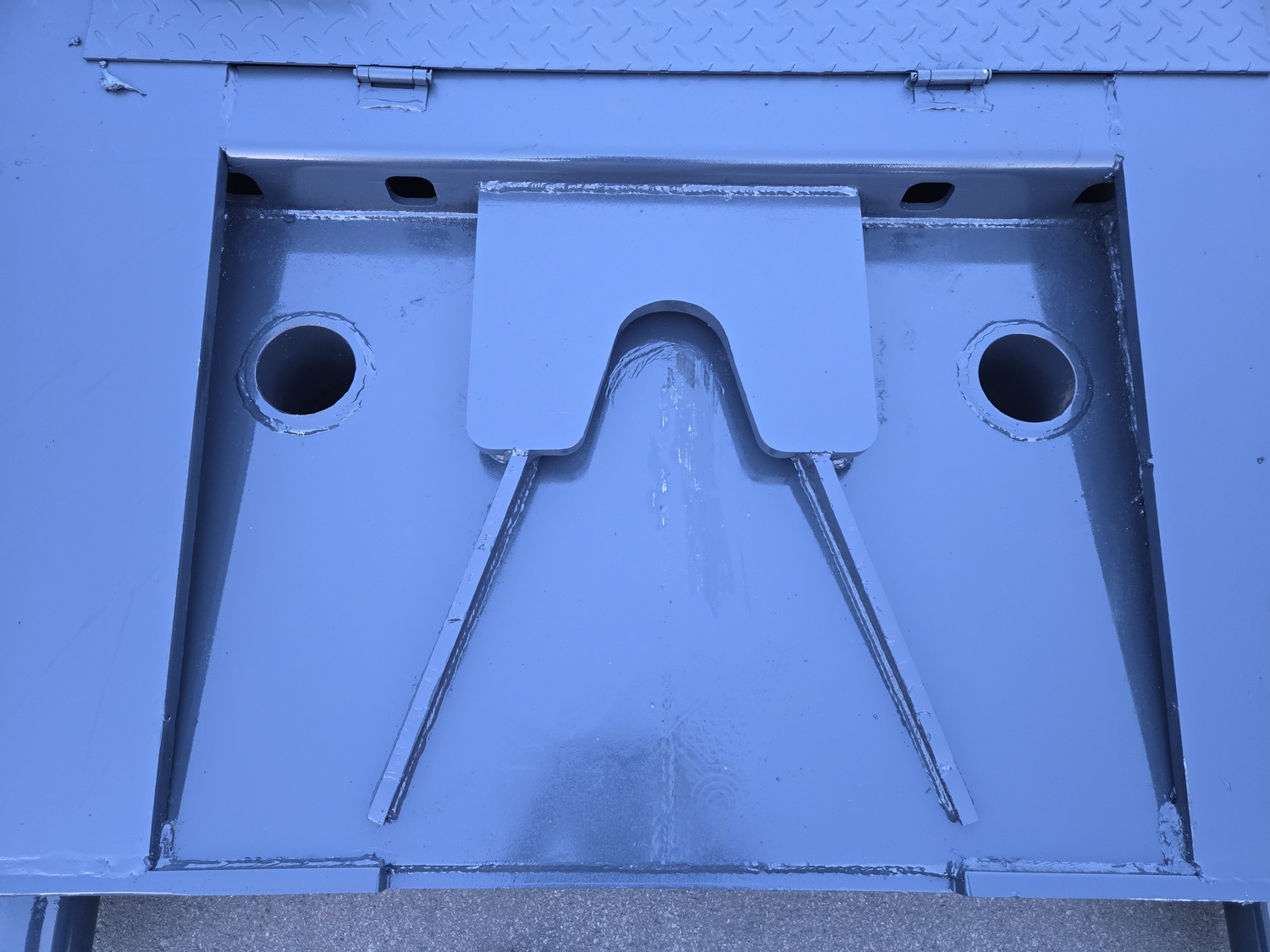
Alignment matters because mating parts need to engage in their intended positions. Dirt or an obstruction at a contact surface can prevent components from seating correctly, and forced engagement can load them unevenly. A detachable design therefore combines loading flexibility with a connection that remains a meaningful service point throughout the trailer's working life.
Hydraulic Interfaces at the Front
The hydraulic interfaces and mechanical connection points belong to the same operating system, but hydraulic pressure and mechanical engagement are different functions. Hydraulic flow creates movement in an actuator; the assembled connection establishes the structural arrangement used for travel. One function does not replace the other.
Hoses and couplings carry fluid between the power source and operating components. Their routing needs room for the mechanism to move without trapping, stretching or rubbing the lines against surrounding steel. Protecting connection areas from dirt also limits the chance of contamination entering when hydraulic circuits are opened.
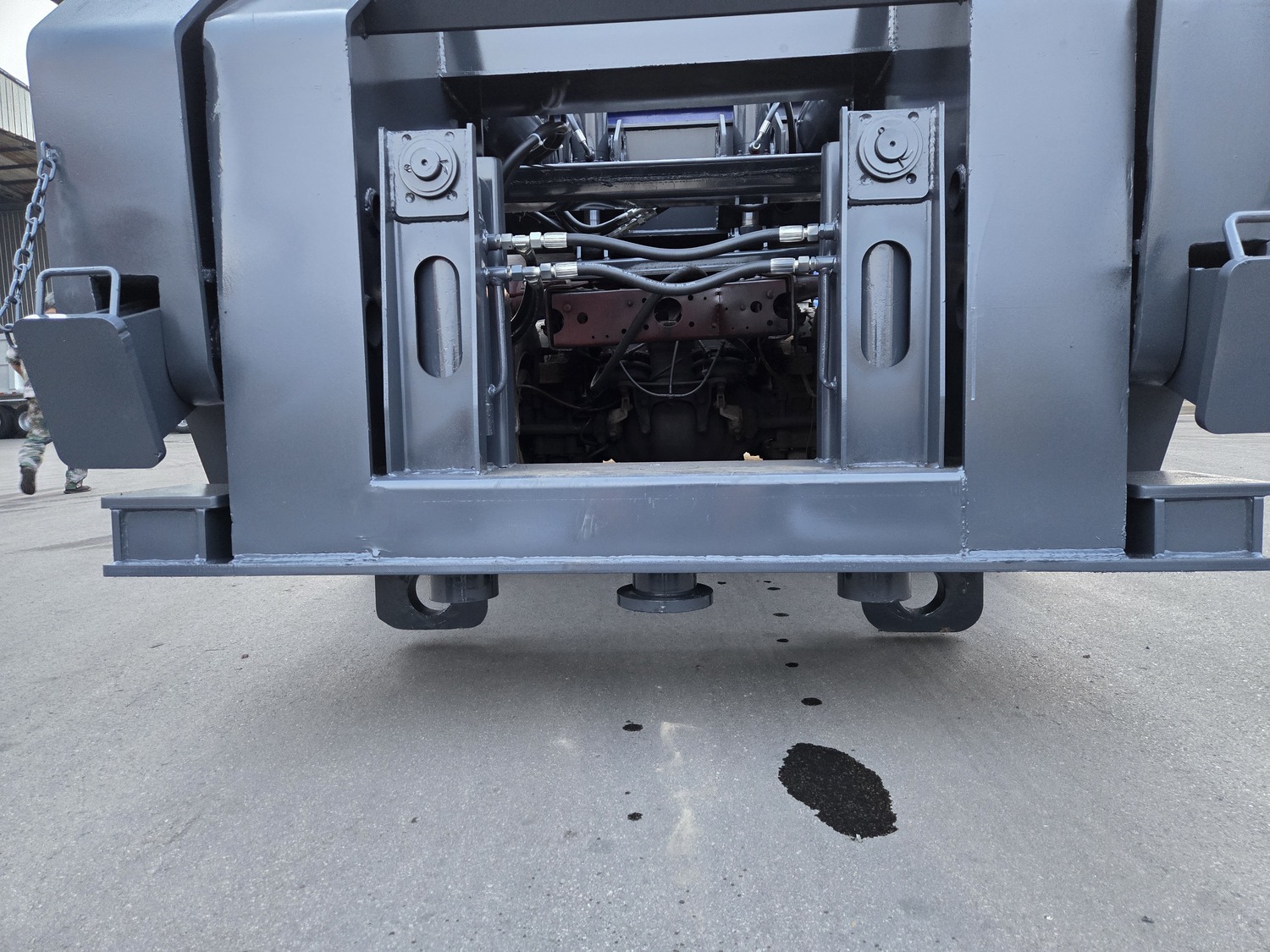
The accessible front compartment brings several operating components into one service area. Space around couplings and fittings is useful for reaching them without disturbing unrelated assemblies. This is a practical design consideration on a trailer whose front section repeatedly changes between connected and detached positions.
From Loading Access to Road Movement
Once equipment occupies the deck, its longitudinal position changes the weight shared by the tractor connection and rear running gear. A machine positioned too far toward one support changes those reactions even if it fits within the platform. Loading access and final load position are therefore related but separate parts of the transport task.
Restraint then limits movement under braking, cornering and road vibration. The deck supports the vertical load, while suitable equipment attachments and trailer anchor points carry restraint forces. Front-loading convenience is valuable because it helps equipment reach the platform; a defined support and restraint arrangement makes that platform useful during travel.
Frequently Asked Questions
What is the main function of a removable gooseneck?
It detaches from the front of the trailer deck and creates a front-loading approach for suitable equipment. This can avoid a loading path over the rear running gear.
How do hydraulic interfaces fit into an RGN design?
They carry fluid for operating the front mechanism. Mechanical engagement and the adjoining structure perform the separate job of joining the trailer sections for transport.
Does a low deck eliminate clearance constraints?
No. It reduces the height beneath the machine, but equipment height, underbody clearance and road transitions remain important parts of the loaded combination's geometry.
Discuss Your Trailer Application
Share your cargo or equipment details, transport route and destination market with HUAYUE for a configuration discussion tailored to the intended application.
Interested in this case?
Contact Us for a Technical Consultation.