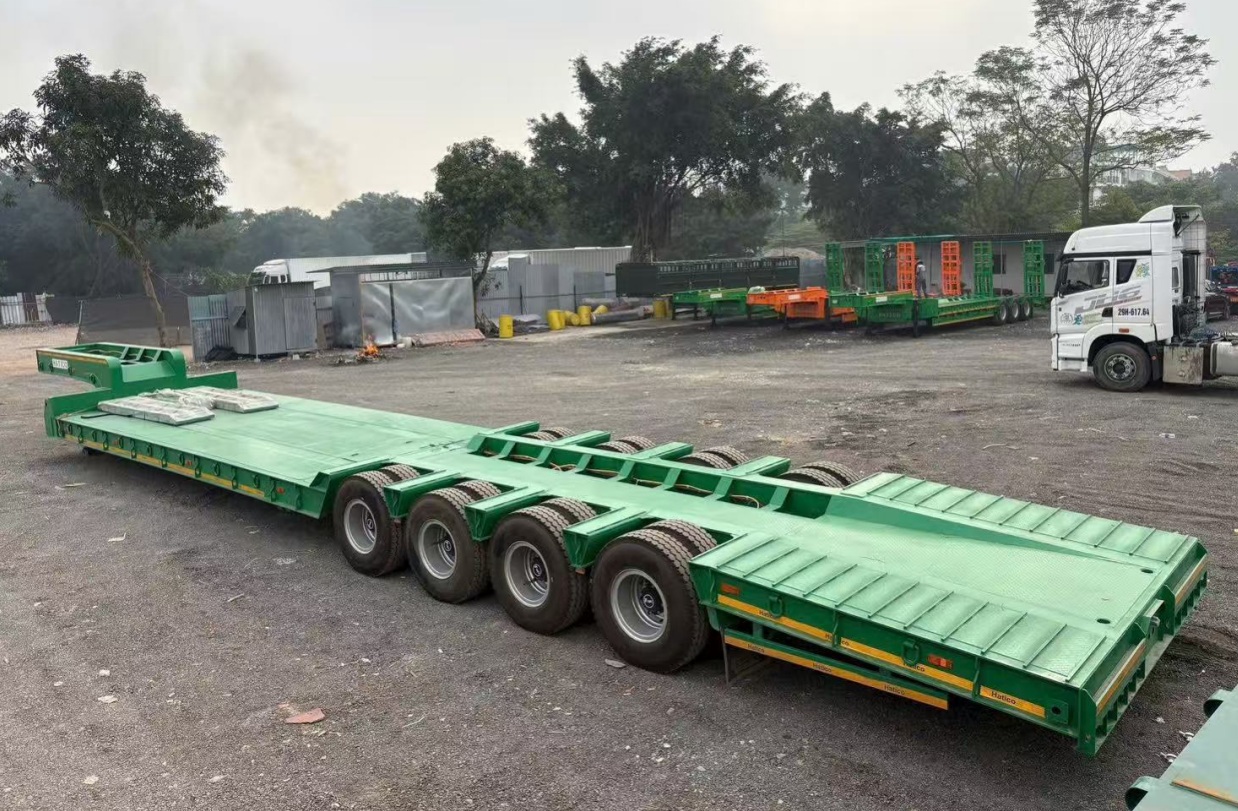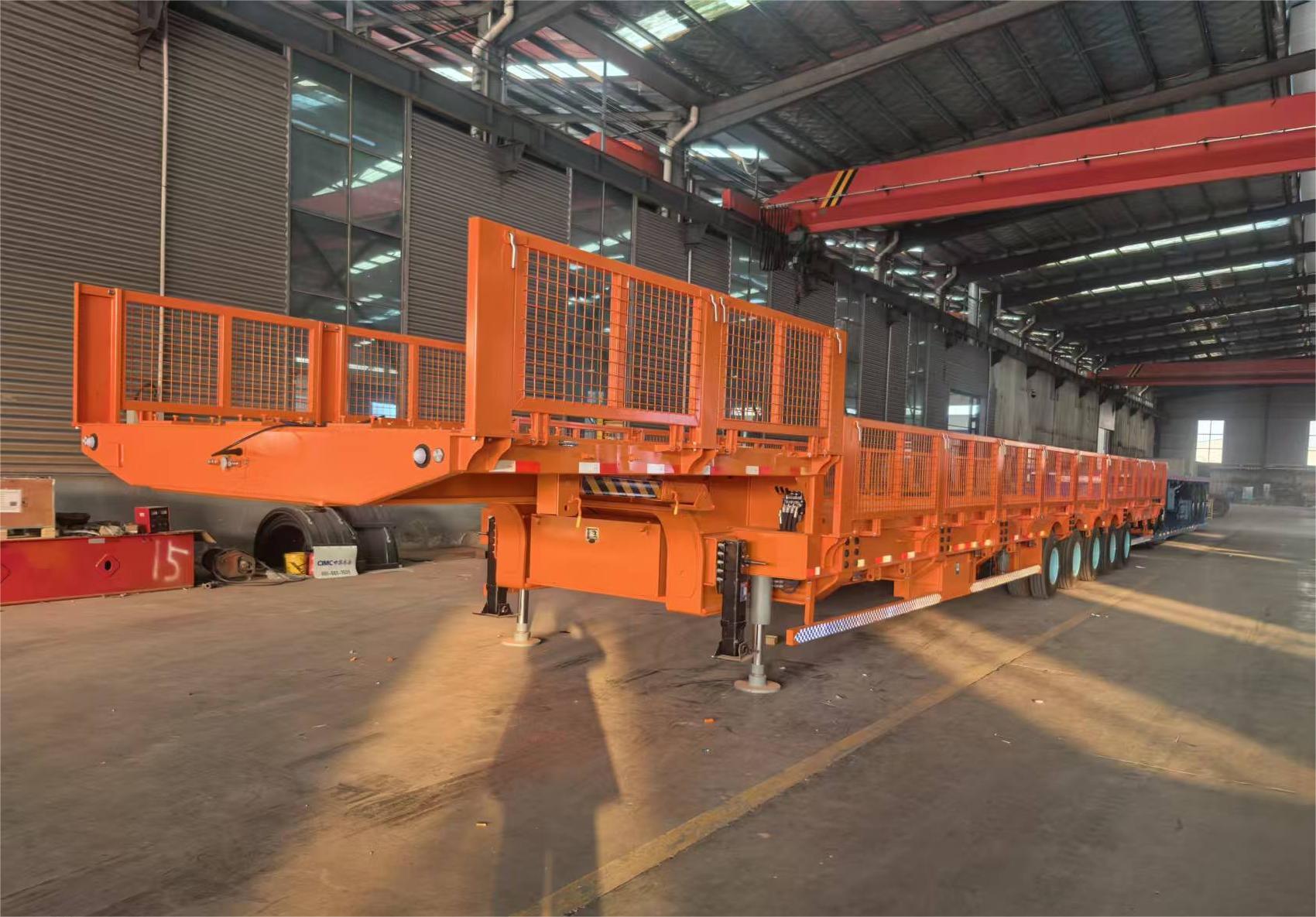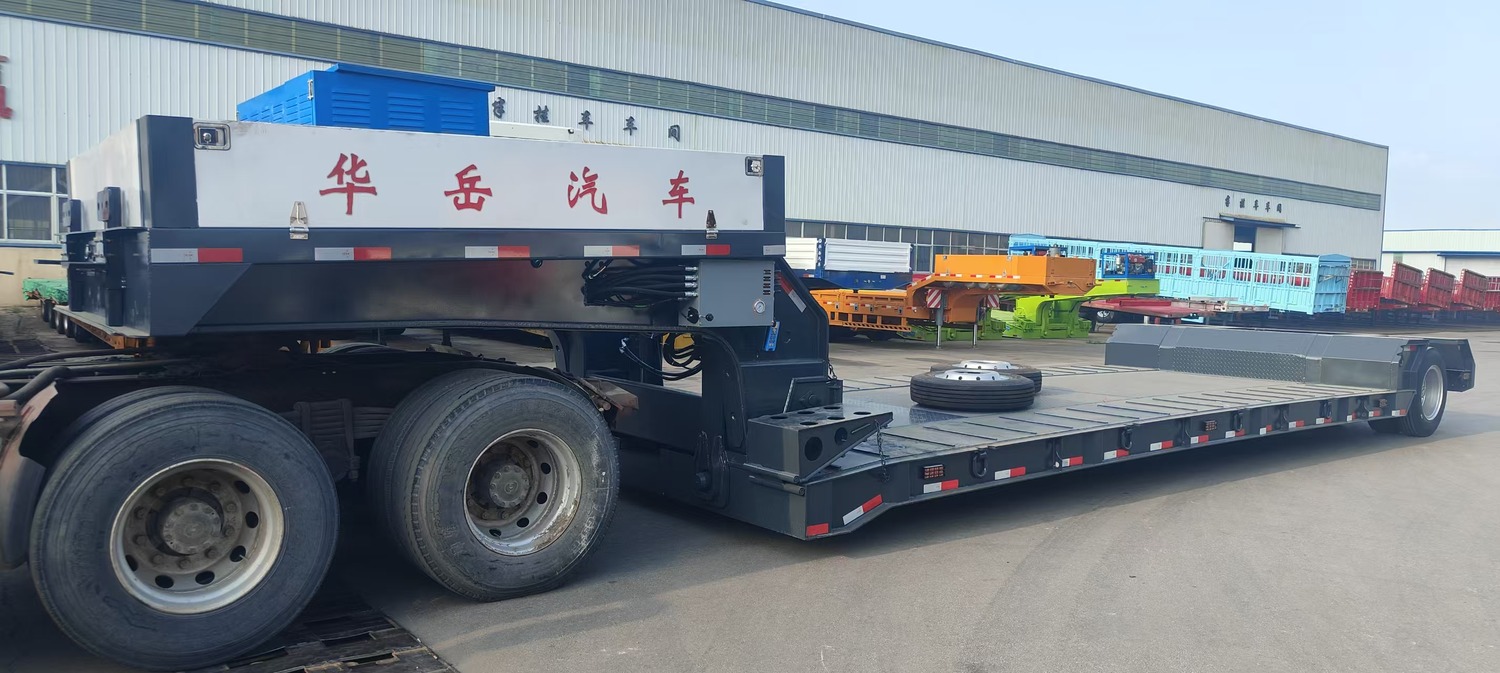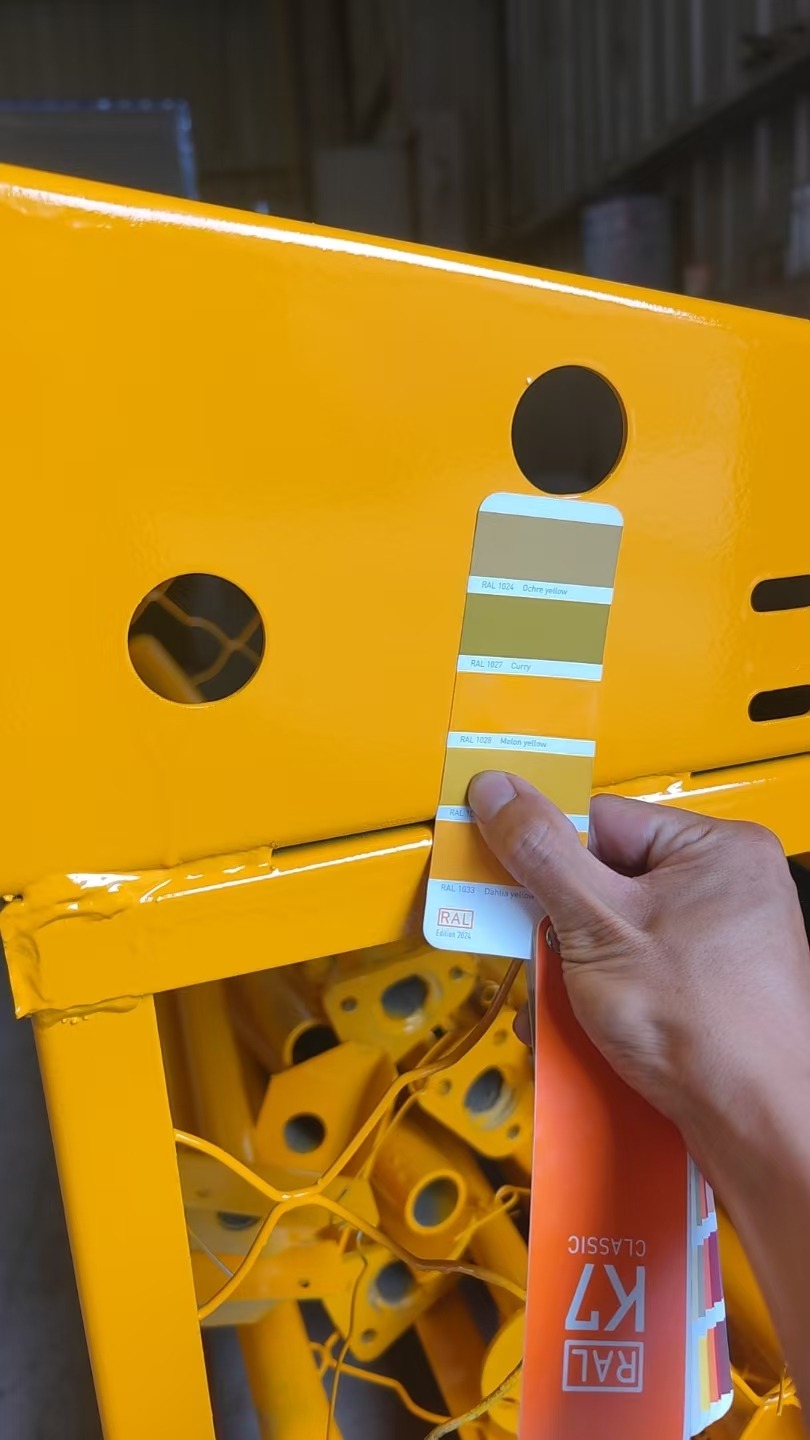
This eight-axle HUAYUE lowbed combines a welded equipment-carrying chassis with a customer-selected yellow finish. The customer discussed the colour with HUAYUE and was satisfied with the selection. Beneath that exterior, the main beams, crossmembers and deck create the structural system that carries machinery between the front connection and the running gear.
Welding and painting have different purposes on a trailer. Welded joints transfer forces between steel members; a coating system protects exposed surfaces and provides the chosen appearance. Explaining these functions separately gives a clearer understanding of the lowbed than describing its finish as a measure of structural strength.
A Chassis Built Around the Lowbed Layout
An eight-axle arrangement places multiple wheel positions beneath a long, low transport platform. The deck receives the machine, while the frame carries forces toward the tractor connection and axle supports. A load positioned near one end creates different support reactions from the same load positioned closer to the centre.
Heavy machinery rarely loads a deck as evenly as a uniformly distributed cargo. Tracks apply weight along narrow contact strips, while wheels and equipment supports can concentrate it into smaller areas. The floor and crossmembers carry these local forces into the main longitudinal structure.
The low platform also affects the shape of the frame. Transitions near the front section and axle area connect different heights within the trailer, so forces pass through changes in structural geometry. These locations need to work with the main beams rather than interrupt their load-carrying function.
What Welded Joints Do in a Lowbed Frame
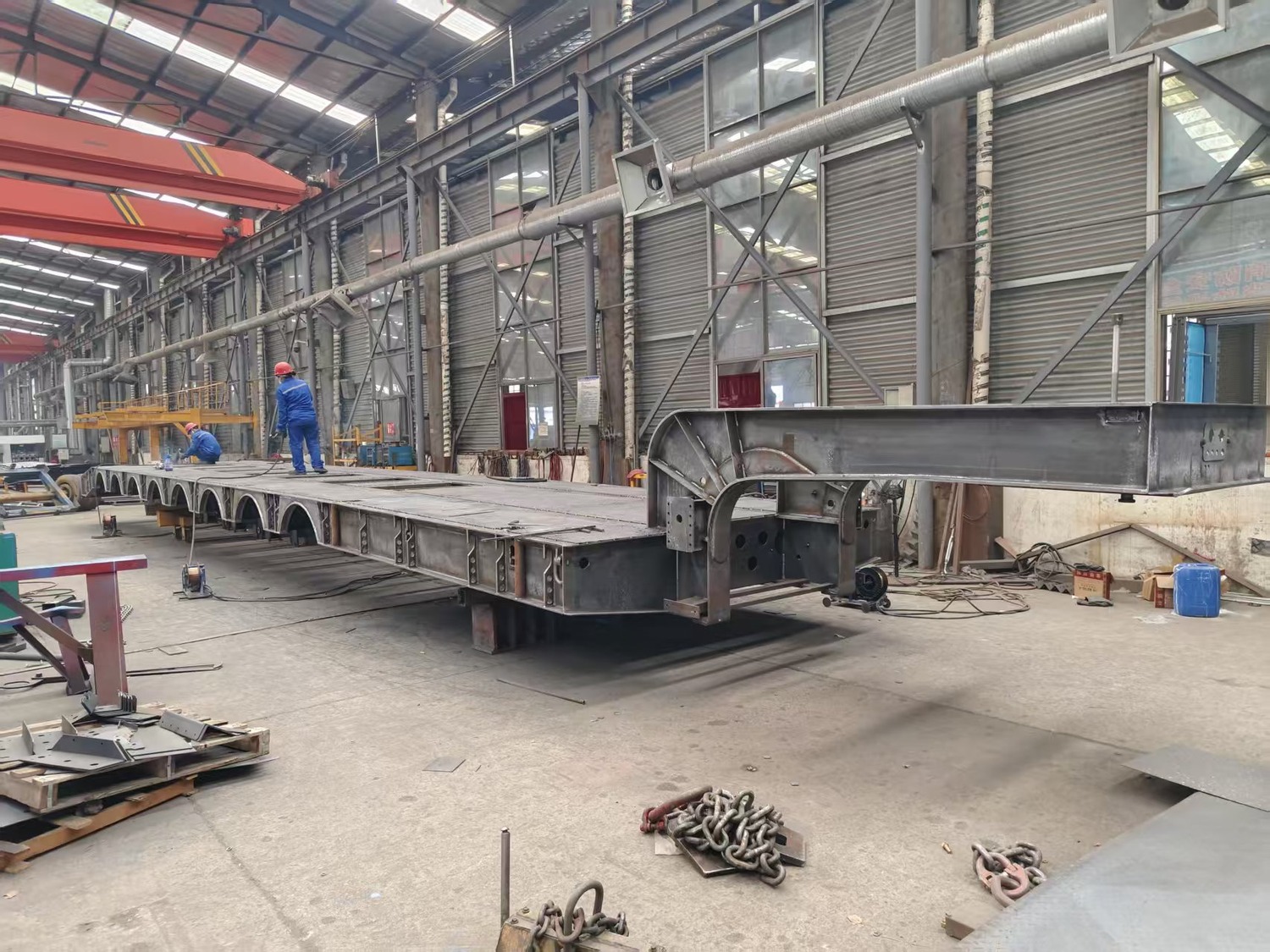
Welded joints connect the principal chassis members into the load-carrying structure. A joint at a crossmember transfers local deck forces, while a connection around a main beam can carry a different combination of bending and shear. Its significance comes from the forces at that location, not merely the length of the visible seam.
During travel, a trailer experiences repeated changes in load as wheels pass over uneven surfaces. Braking and cornering introduce additional forces beyond the static weight of the equipment. The frame and its connections therefore work through changing conditions rather than carrying a single unchanging load.
A smooth, consistent weld appearance is relevant to workmanship, but surface appearance and structural performance are different characteristics. Joint design, material compatibility and the welding procedure determine how the connection performs. An attractive bead alone does not supply a payload figure or establish fatigue life.
Welding heat can also affect alignment as a fabricated structure cools. Maintaining the intended relationship between beams, crossmembers and attachment areas is important because the finished deck and running gear depend on that geometry. Fabrication quality includes the shape of the assembled frame as well as its individual joints.
Crossmembers and Equipment Contact Areas
The crossmembers support the deck between the main longitudinal members. Their role becomes particularly clear beneath a machine's tracks or tyres, where the floor carries contact loads into the surrounding structure. The arrangement of the support beneath the deck matters as much as the area visible from above.
Equipment position changes which parts of the platform carry the greatest demand. A long tracked machine may occupy a substantial deck length, while a compact heavy unit may concentrate its weight over fewer supports. Both can fit the same platform dimensionally yet require different structural loading arrangements.
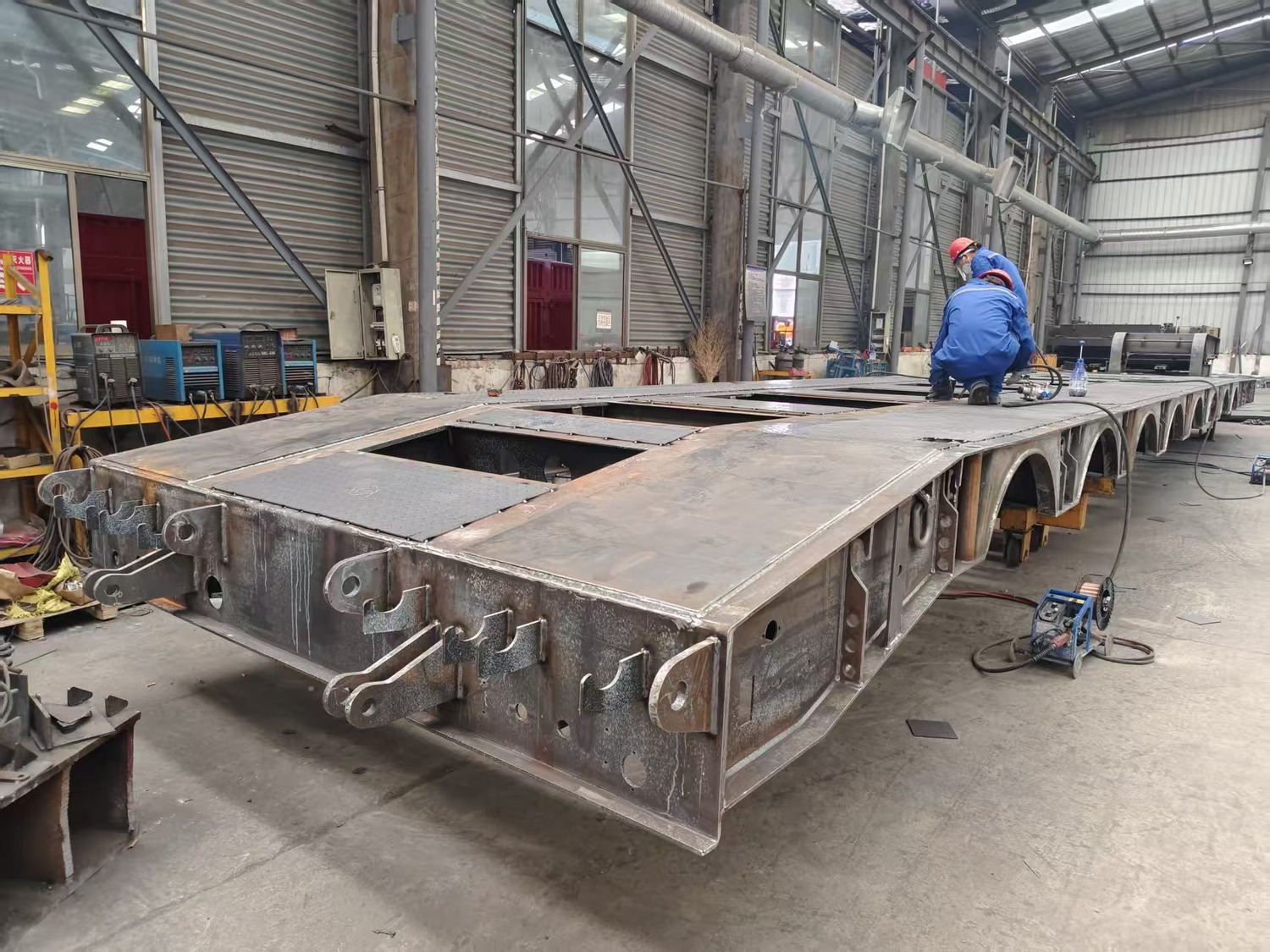
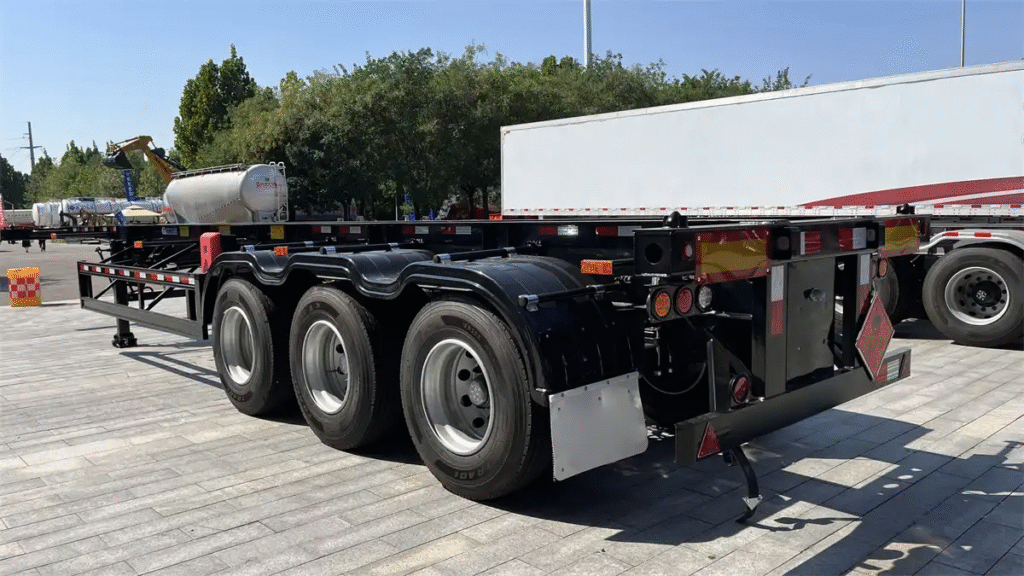
Eight axles provide multiple road contact positions for the weight transferred through the chassis. Their contribution depends on the suspension arrangement and load position, alongside the share carried through the tractor. Axle count is one feature of the design, while carrying capacity belongs to the complete configuration.
The Yellow Finish and Surface Protection
The selected yellow colour gives this lowbed its recognisable exterior. For the customer, colour is also a practical part of vehicle presentation, particularly when a trailer is intended to fit an existing fleet identity. The choice was discussed as part of this specific project rather than imposed as a universal finish.
A protective coating separates exposed steel from its environment. Its effectiveness depends on the surface condition, preparation, coating compatibility and coverage, particularly around edges and joints. Colour choice and corrosion protection therefore sit within the same finishing process but answer different requirements.
Equipment transport can expose a deck and chassis to dirt, water and contact damage. A coating may be worn where machinery or restraints touch the surface, leaving local areas more exposed than surrounding paintwork. Maintaining protection at those points helps preserve the purpose of the finish during service.
The welded frame and yellow exterior together describe this trailer without confusing appearance with engineering performance. The structure carries the equipment through its defined support paths; the finish protects and presents the exposed surfaces. This distinction makes both the manufacturing detail and the customer choice meaningful to the finished lowbed.
Frequently Asked Questions
What role do welded chassis joints play?
They transfer forces between the structural members making up the frame. Different joints carry different demands depending on their position in the deck, main beams and support areas.
Why do crossmembers matter beneath machinery?
They support the deck locally and transfer track, tyre or support-foot loads into the main structure. A concentrated machine footprint places different demands on them from evenly spread cargo.
Does a neat weld establish a trailer's carrying capacity?
No. Weld appearance is one aspect of workmanship. Capacity depends on the complete design, including materials, connections, frame, running gear and loading conditions.
Is paint colour the same as corrosion protection?
No. Colour provides the chosen appearance, while protection depends on the coating system and the surface beneath it. Both matter, but they perform different functions.
Discuss Your Trailer Application
Share your cargo or equipment details, transport route and destination market with HUAYUE for a configuration discussion tailored to the intended application.
Interested in this case?
Contact Us for a Technical Consultation.