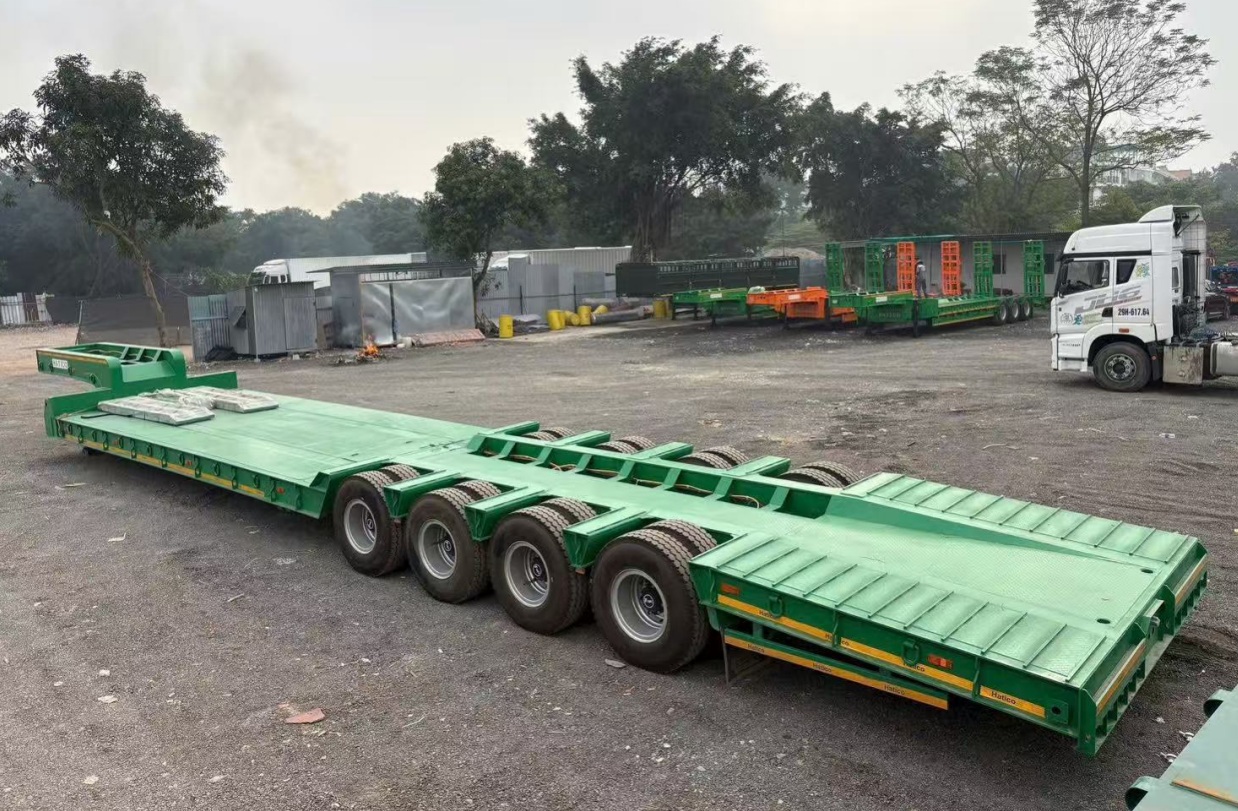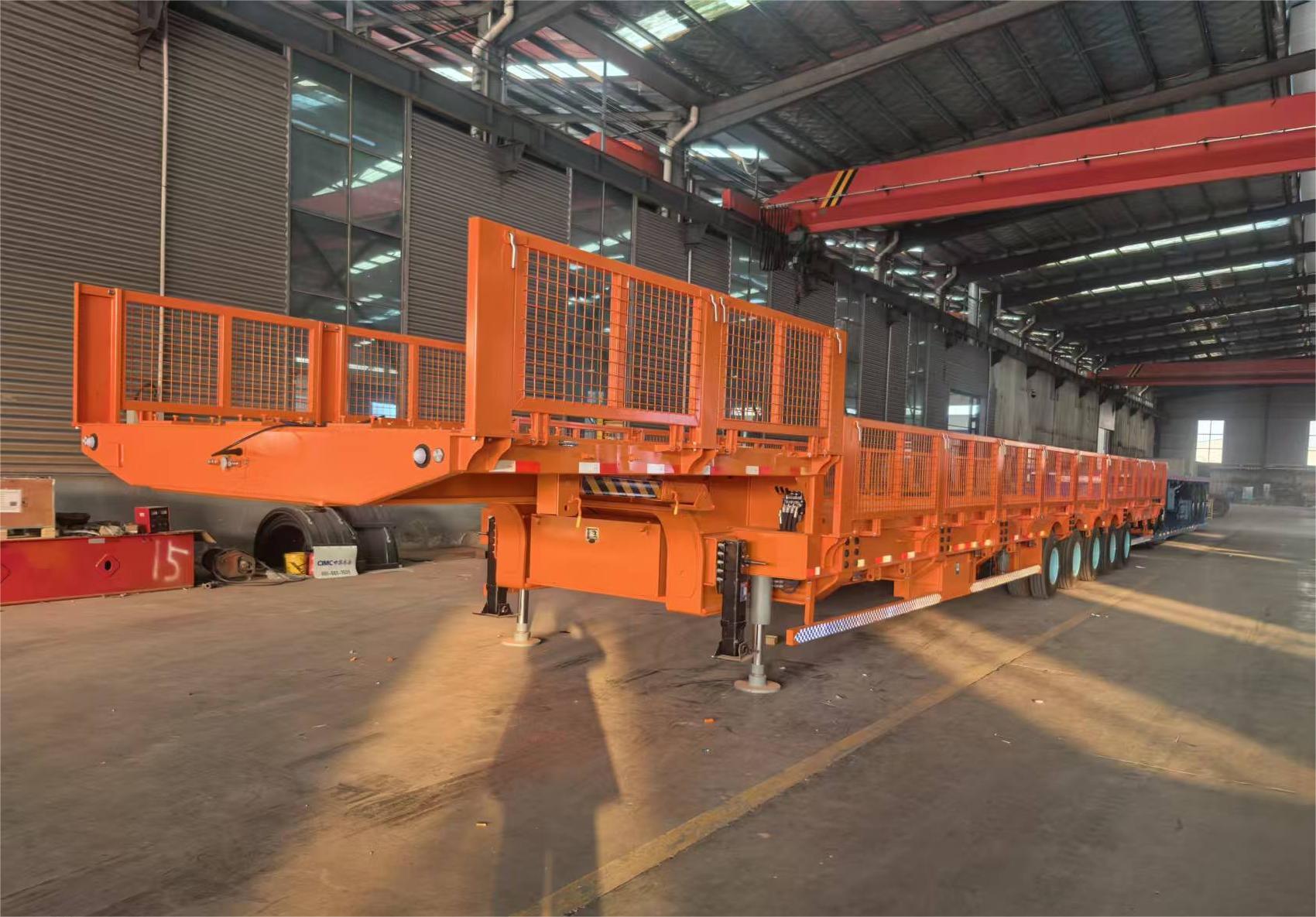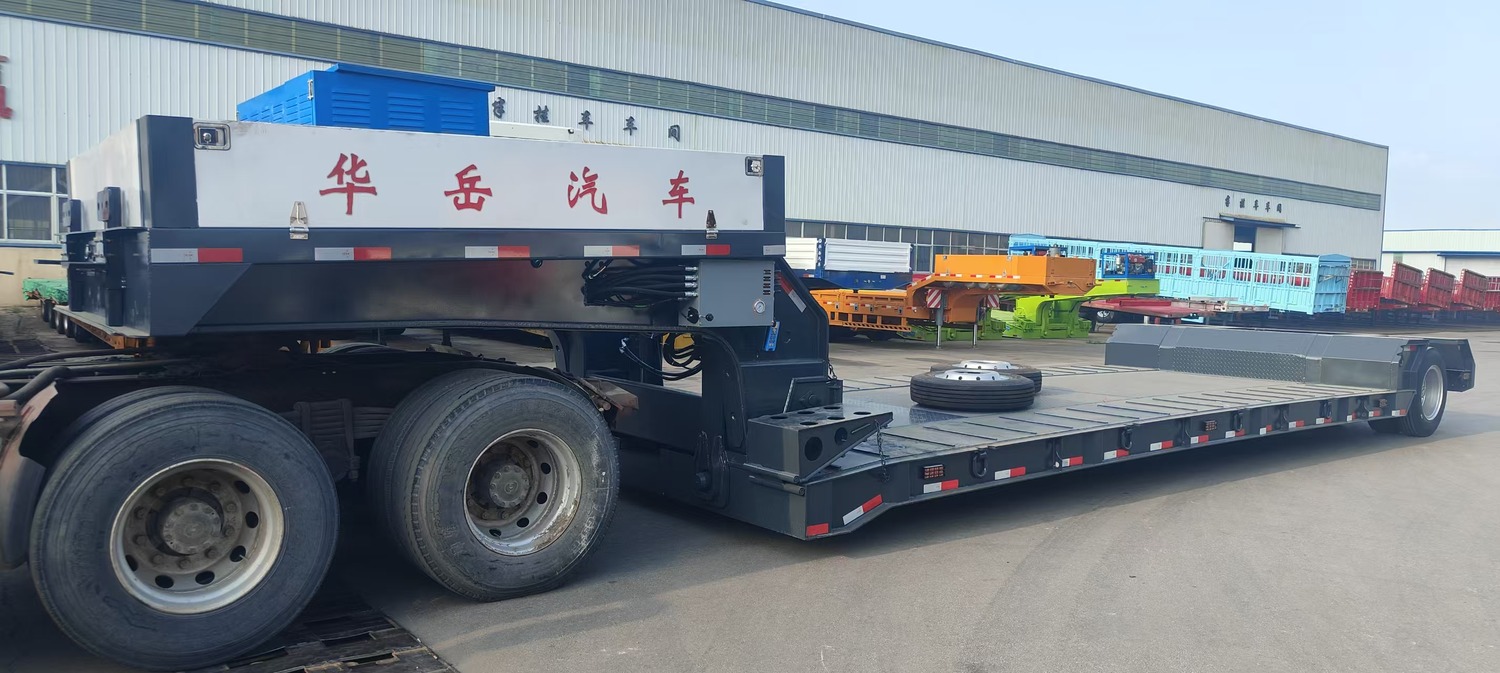
A Colombian customer's three-axle HUAYUE lowbed became a project shaped by both equipment transport and smaller working details around the platform. During the order, the customer requested a side-panel change and was not fully satisfied with an earlier ladder arrangement. HUAYUE developed an alternative involving two side panels, adapting the trailer around that feedback.
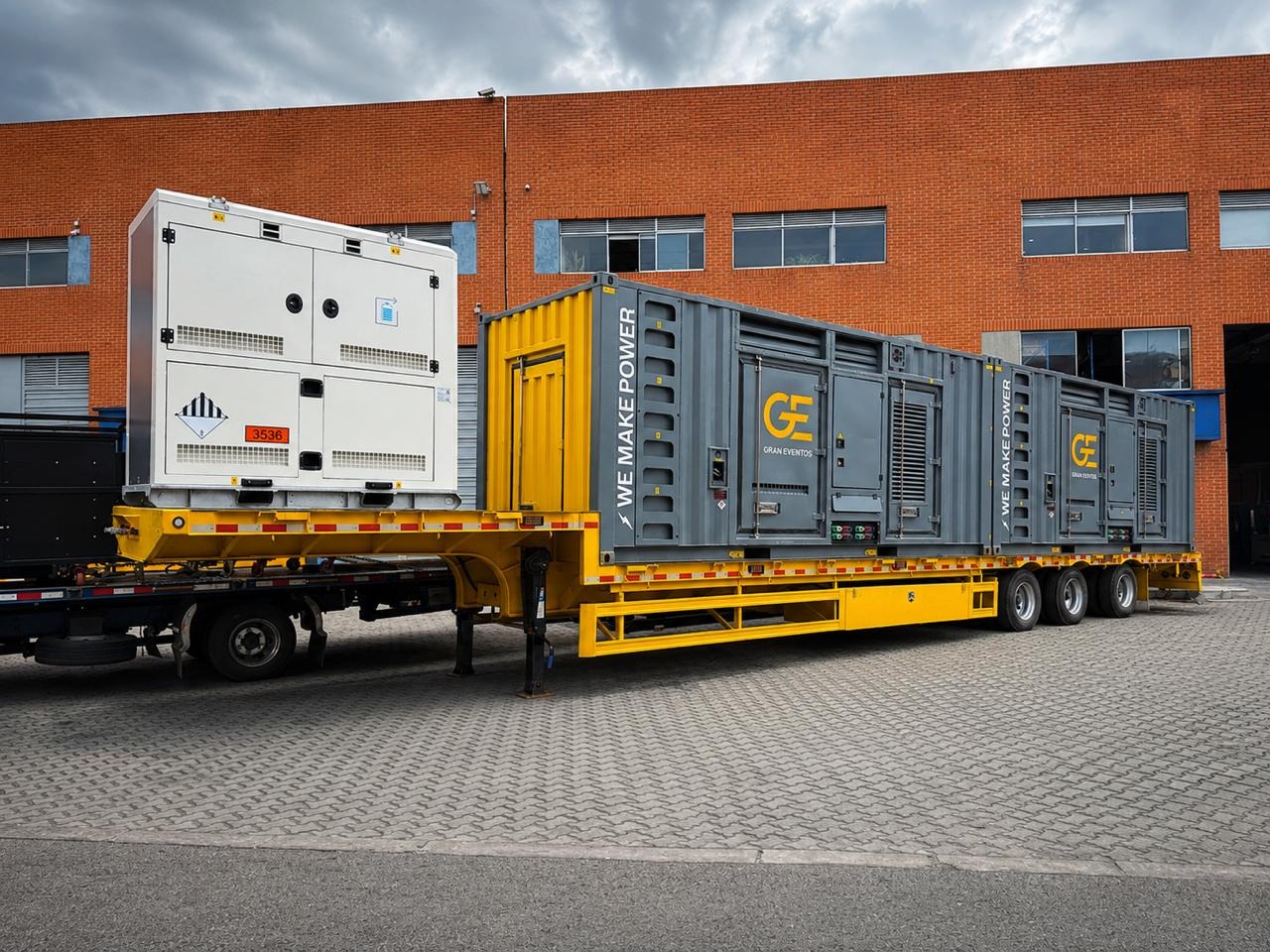
The trailer later entered use carrying large equipment enclosures. Its story includes a prolonged ocean journey and comments on the finish after exposure, as well as positive feedback about the vehicle's function and HUAYUE's service. These details make it a practical customer case about adaptation and use, rather than a claim that every part of an export project proceeds perfectly.
The Three-Axle Lowbed Platform
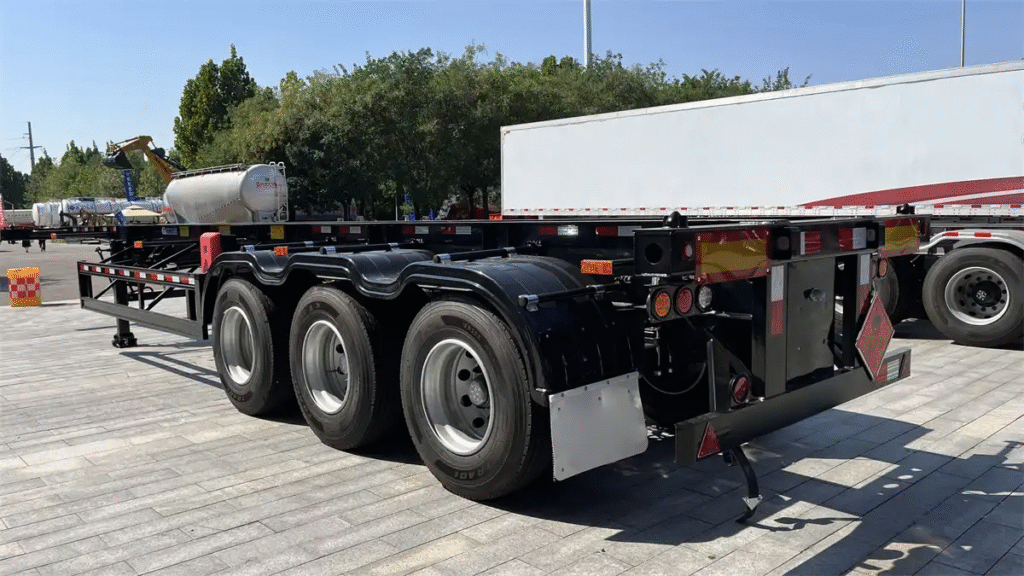
A three-axle layout supports the lowbed chassis beneath its cargo platform. The deck provides the working surface for the equipment, while the tractor connection and axle group share the supported load. The machine or enclosure's location along that platform changes the weight carried at those supports.
Large equipment enclosures often combine a broad external shape with more limited support areas underneath. Their weight enters the deck through the base frame or designated feet, not necessarily across the whole visible footprint. Supporting those areas is a different task from simply providing sufficient deck length.
A lowered deck also reduces the height contributed by the trailer beneath tall cargo. This can be useful when an enclosure's roof dominates the loaded profile. The benefit comes from the platform position beneath that particular load, while its support frame and transport arrangement determine the remaining height.
Responding to the Side-Detail Request
The customer's late request concerned a side panel, and the earlier ladder solution did not fully meet the customer's expectation. The alternative added two side panels. The change is worth retaining in the case because it records a specific response to a specific concern around the trailer's working layout.
Side structures affect the area around the deck rather than the main loading surface alone. Their location influences access to adjacent components and the space available beside the vehicle. On a working trailer, such details are encountered repeatedly during normal access and servicing, even though they are smaller than the main beams or axle group.
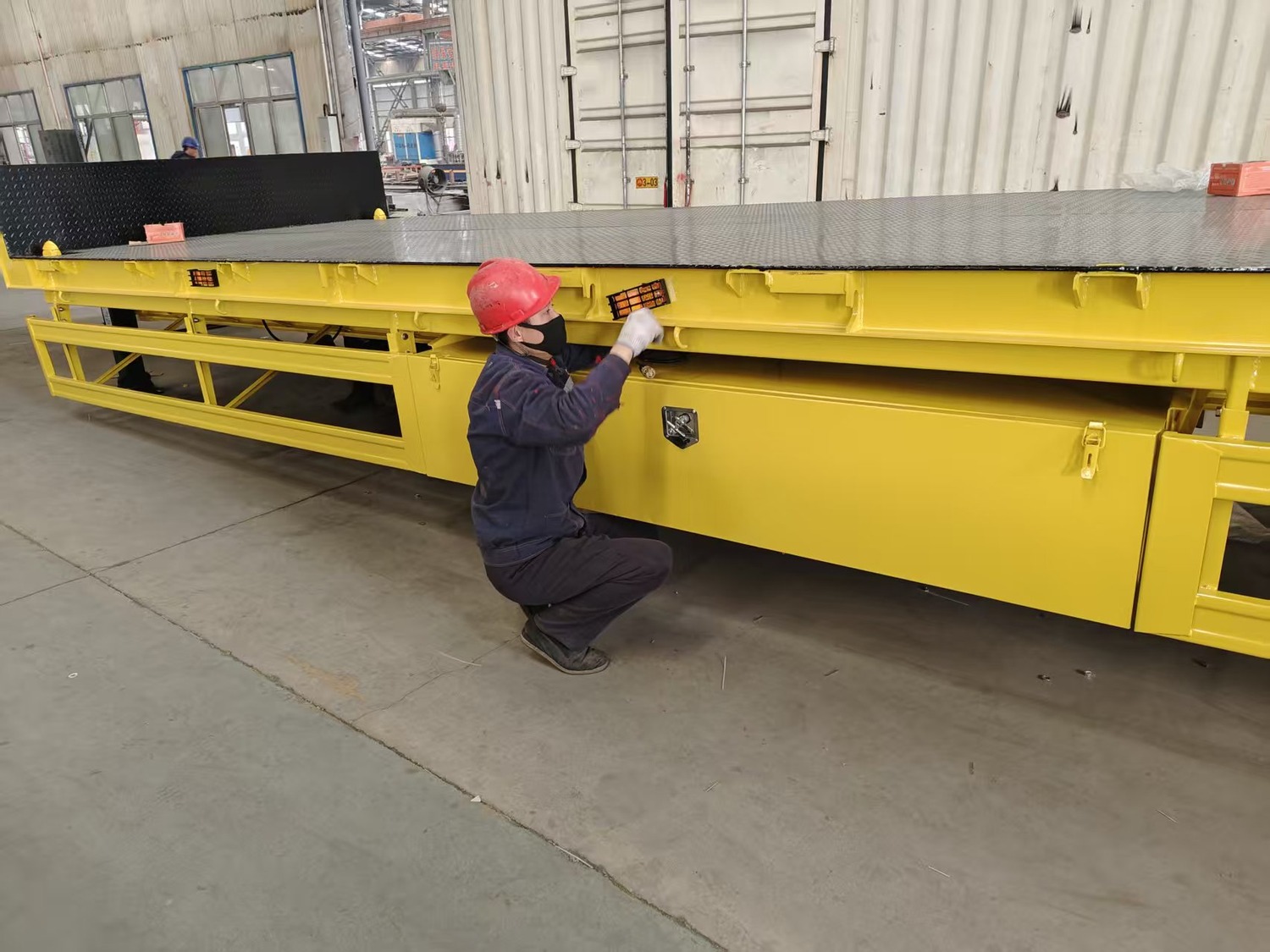
The ladder discussion and panel change are related parts of the customer exchange, but panels and access equipment have different functions. A panel shapes or closes an area; a step or ladder provides a purpose-designed access route. Treating every exterior component as interchangeable would obscure the practical reason for discussing its position and purpose.
This adaptation illustrates how a trailer order can develop beyond its headline vehicle type. The three-axle lowbed remained the central platform, while a smaller arrangement was revised around the customer's feedback. The value lies in addressing a concrete detail rather than describing customisation as an unlimited collection of options.
Equipment Support and Restraint
The large enclosures carried on the trailer connect the platform design with its intended work. The base of each unit needs suitable support beneath the points intended to carry its weight. The trailer frame then transfers those loads through its main structure toward the front connection and running gear.
Cargo restraint performs a separate job from support. The deck carries vertical weight, while the restraint arrangement limits movement during braking, cornering and road vibration. An enclosure's outer panels are not automatically suitable restraint attachments; transport forces belong at the load's intended structural attachment areas.
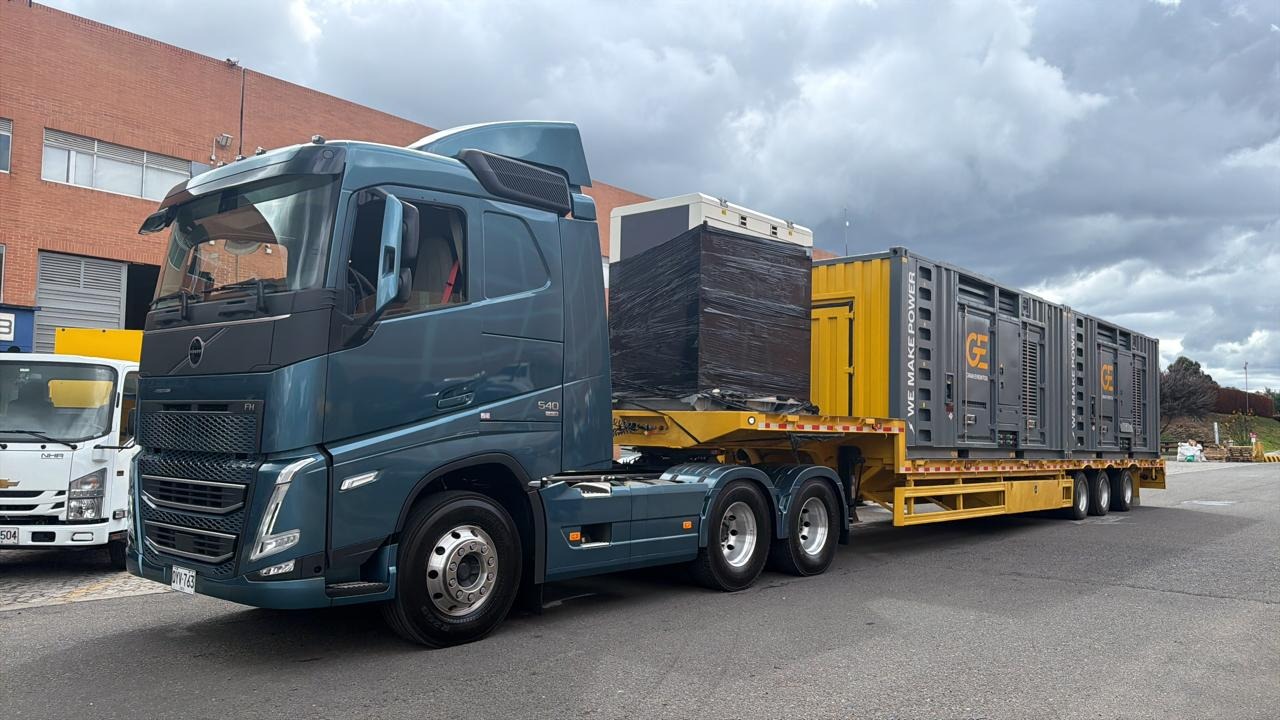
With several units on one platform, their combined centre of gravity matters as well as each unit's individual position. An apparently balanced row of similar enclosures can still distribute weight unevenly if their internal equipment differs. The external dimensions describe space, while mass and support position determine the loading reactions.
Finish After a Prolonged Sea Journey
The journey involved more than a month at sea followed by about three months waiting near the destination port. After receipt, the customer noted minor rust and a less tidy paint appearance following the extended exposure. The same account included positive feedback about the trailer's working function and body quality.
Those observations concern different aspects of the vehicle. Paintwork provides appearance and surface protection; the chassis and connections carry structural loads. A customer can therefore comment on deterioration in the finish while also describing satisfactory use, without either observation cancelling the other.
Moisture and salt exposure place demands on exposed coatings and vulnerable edges. Where a protective layer is damaged, steel can become locally exposed to the environment. This explains why the condition of a finish after transport is a meaningful service issue rather than merely a cosmetic detail.
The customer also valued communication during the delay and expressed positive views about the support received. The useful lesson is specific: a side-detail concern was addressed, the vehicle eventually entered use and both finish-related concerns and functional feedback remained part of the same customer experience. That is a more informative account than unqualified praise.
Frequently Asked Questions
Why does a low deck help with tall equipment enclosures?
It reduces the platform height beneath the load. The enclosure and its transport supports still determine the rest of the loaded height.
Do side panels secure the equipment on the deck?
Their function is separate from cargo restraint. Transport restraint connects suitable load attachments with the trailer's intended anchor points to resist movement.
Why can equipment size and deck loading differ?
A large enclosure may carry its weight through a small number of base supports. Those support locations determine where forces enter the deck, even when the external footprint is broad.
How are paint condition and structural function different?
Paint protects and presents exposed surfaces. The frame and its connections carry the load, so finish observations and operating feedback describe different aspects of the trailer.
Discuss Your Trailer Application
Share your cargo or equipment details, transport route and destination market with HUAYUE for a configuration discussion tailored to the intended application.
Interested in this case?
Contact Us for a Technical Consultation.