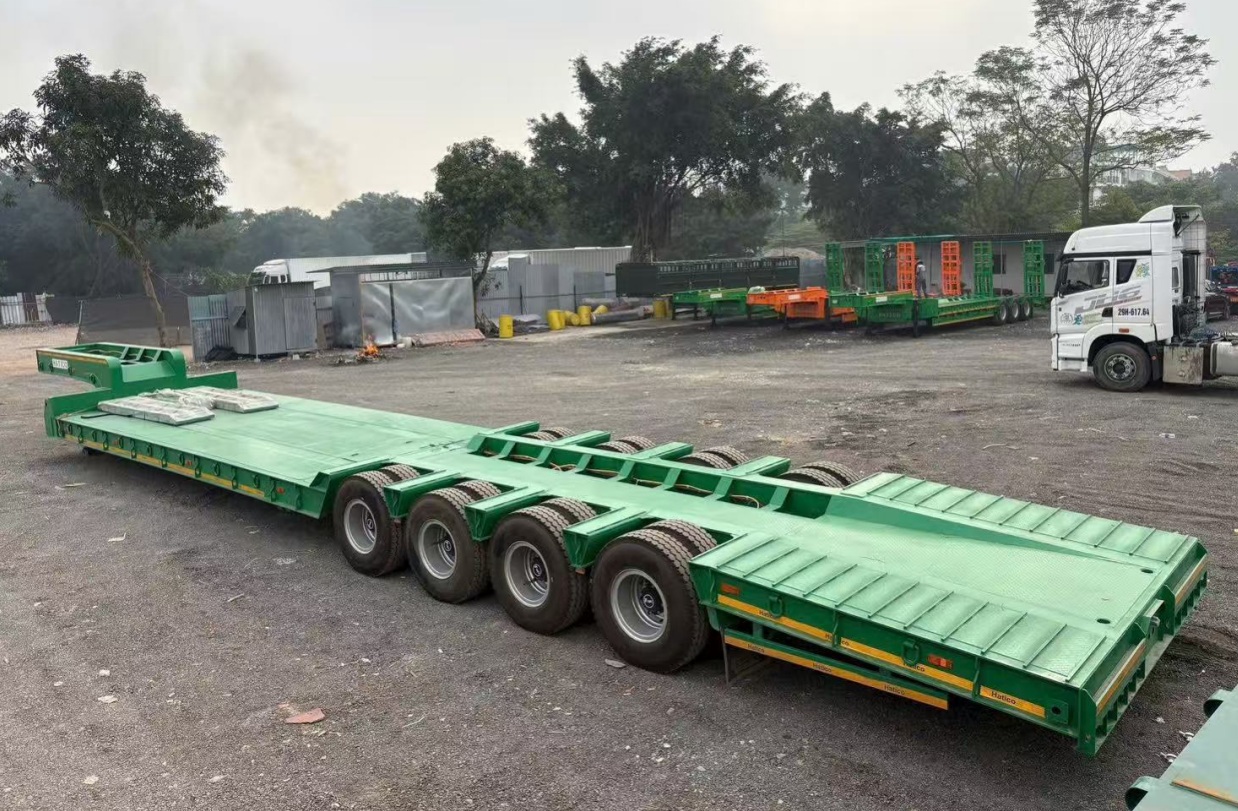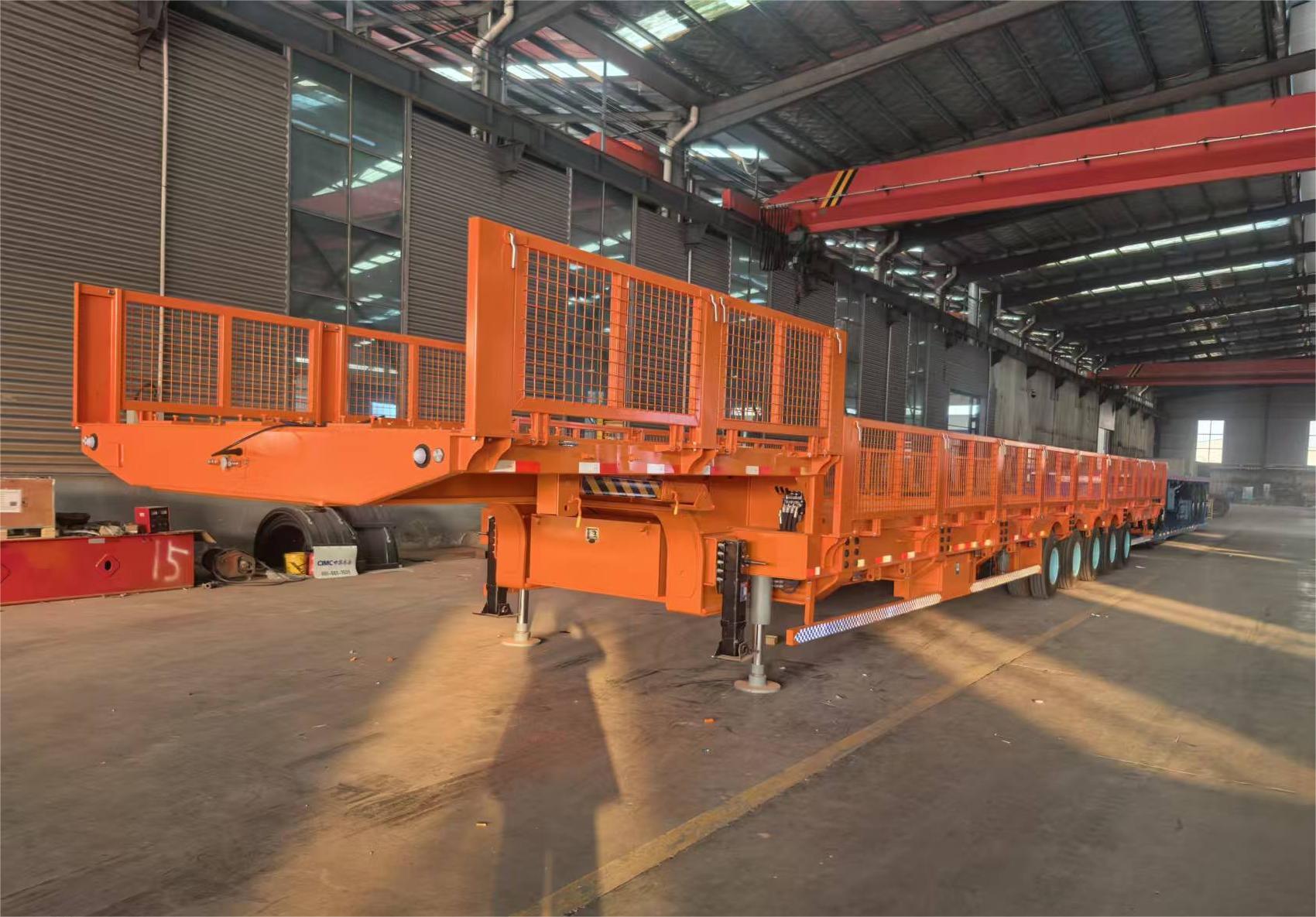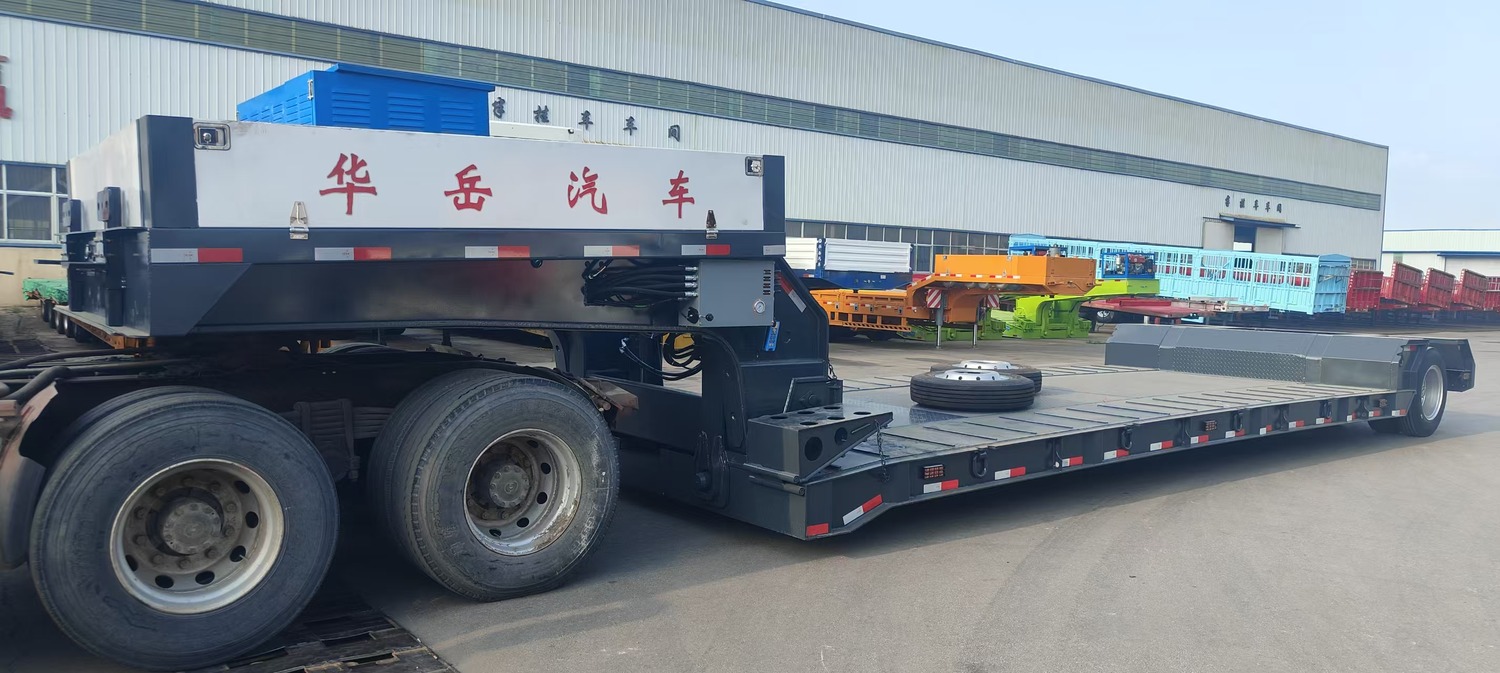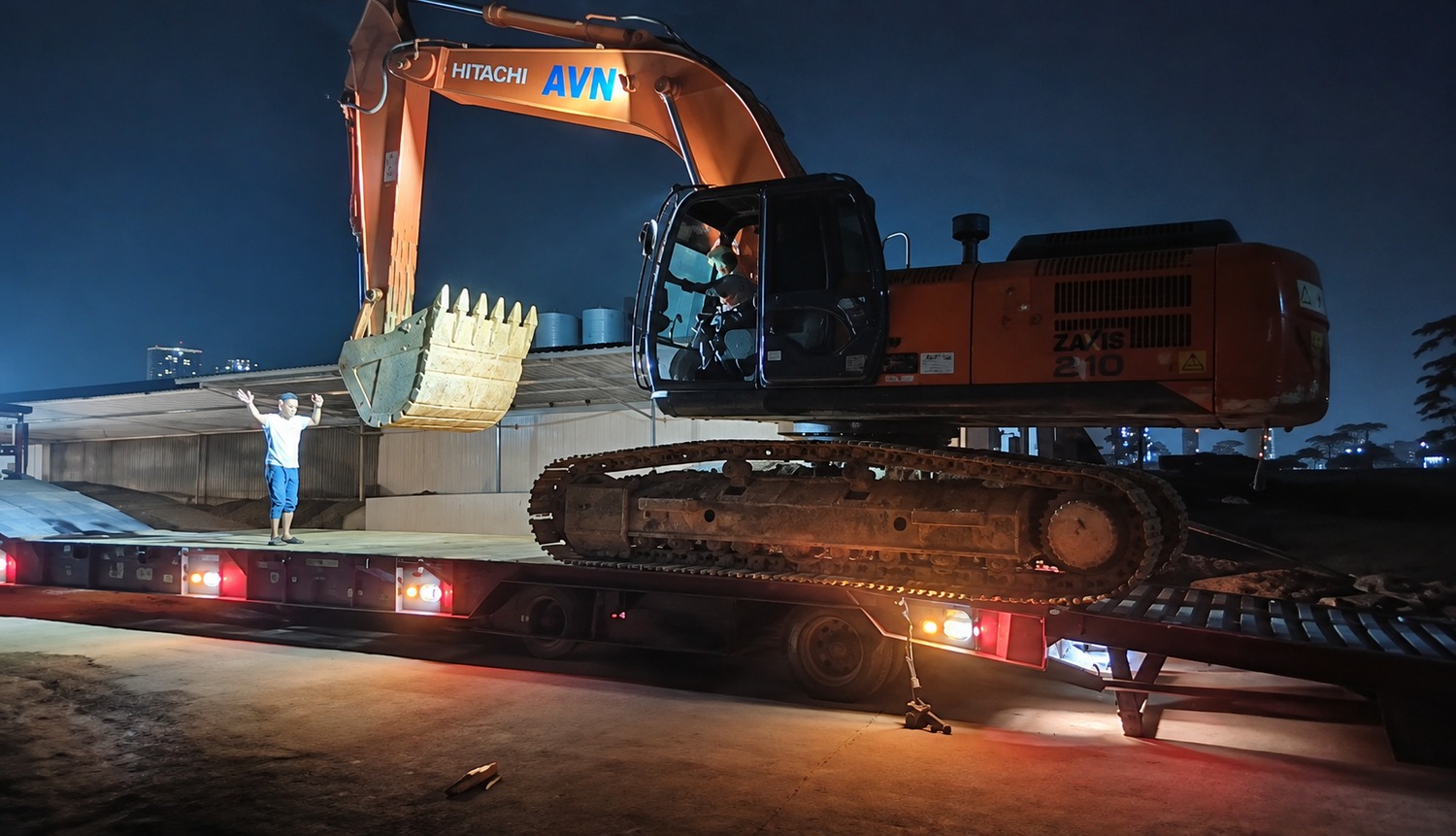
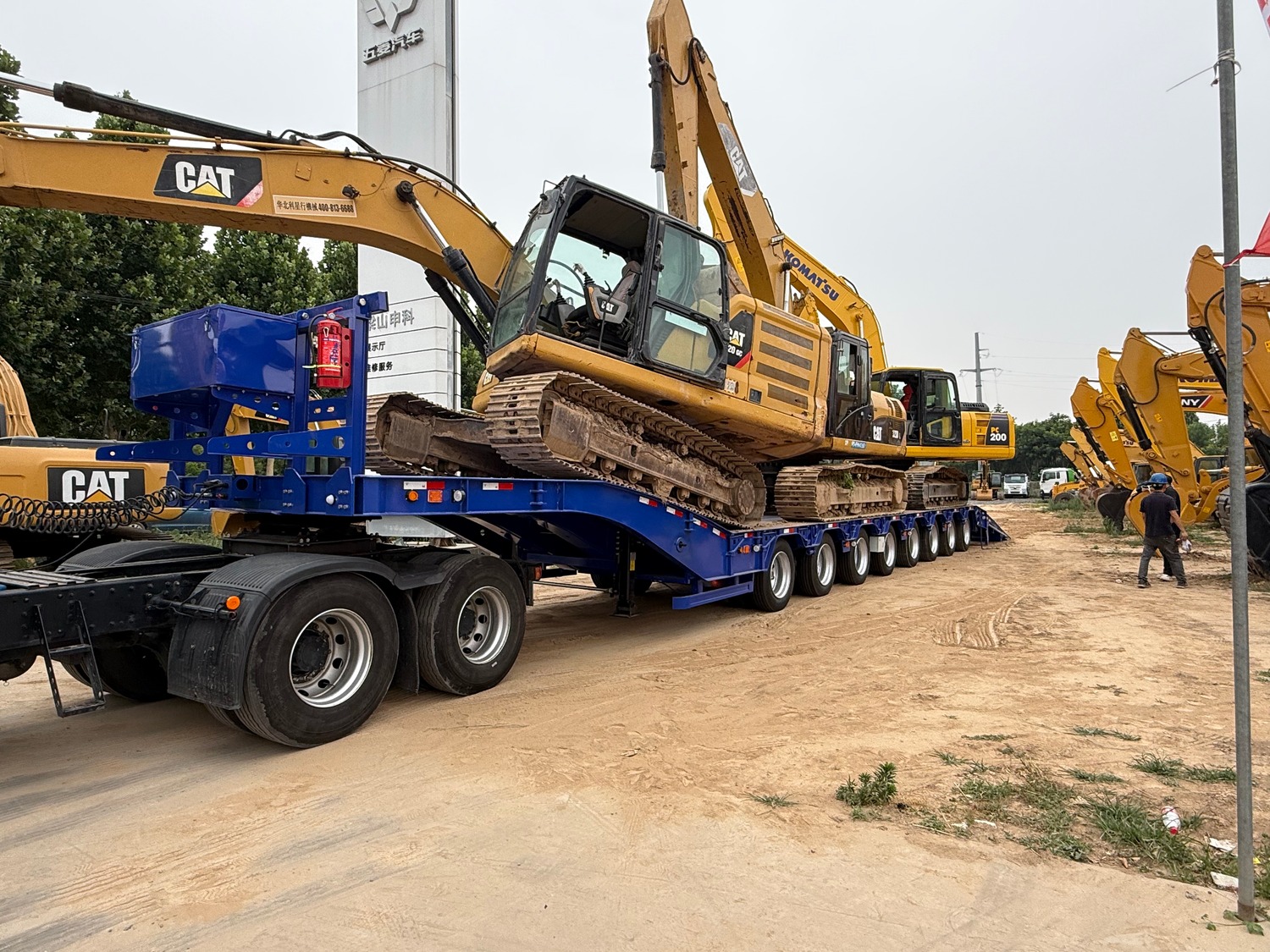
A Malaysian customer put a custom eight-axle HUAYUE lowbed into service and used it to transport a 45-ton excavator. The trailer includes a liftable front-four-axle design, combining a substantial running-gear arrangement with a low equipment platform. In feedback after the movement, the customer described stable driving and a trailer that remained straight.
The customer also mentioned making changes to the trailer during ownership. That places the experience in a real operating context: this was a working vehicle adapted and used by its owner. The useful technical story is the relationship between the excavator's weight and footprint, the platform carrying it and the axle arrangement underneath.
A Low Platform for Excavator Transport
Excavators have concentrated track contact areas, considerable height and a defined working footprint on the trailer deck. A lowbed platform positions that footprint lower than a conventional high-deck trailer, which is one reason lowbeds are associated with this class of equipment. For the Malaysian movement, the 45-ton machine gives that principle a concrete application.
The excavator's transport envelope includes more than its tracks. The cab, upper structure, counterweight and folded working equipment all affect the space occupied above and around the platform. A low deck reduces the height added beneath the machine, while the machine's transport position determines the rest of the loaded profile.
Tracks distribute contact along two narrow paths rather than across the full deck width. Their position relative to the supporting frame matters because the deck has to transfer those forces into the main beams. The excavator may occupy a large visible area while loading particular strips of the platform most heavily.
Eight Axles and the Liftable Front Four
This trailer uses eight axles, including a liftable front-four-axle design. Multiple axle positions provide more road contact points through which the supported load can be carried. The weight at each position depends on the suspension, the excavator's location and the share transferred through the tractor connection.
The lift function serves a different purpose from the loaded eight-axle arrangement. Where the operating condition permits, raising unnecessary axles can reduce tyre contact and scrub during suitable lighter or empty movements. It changes which supports are in contact with the road, so it also changes how weight is distributed.
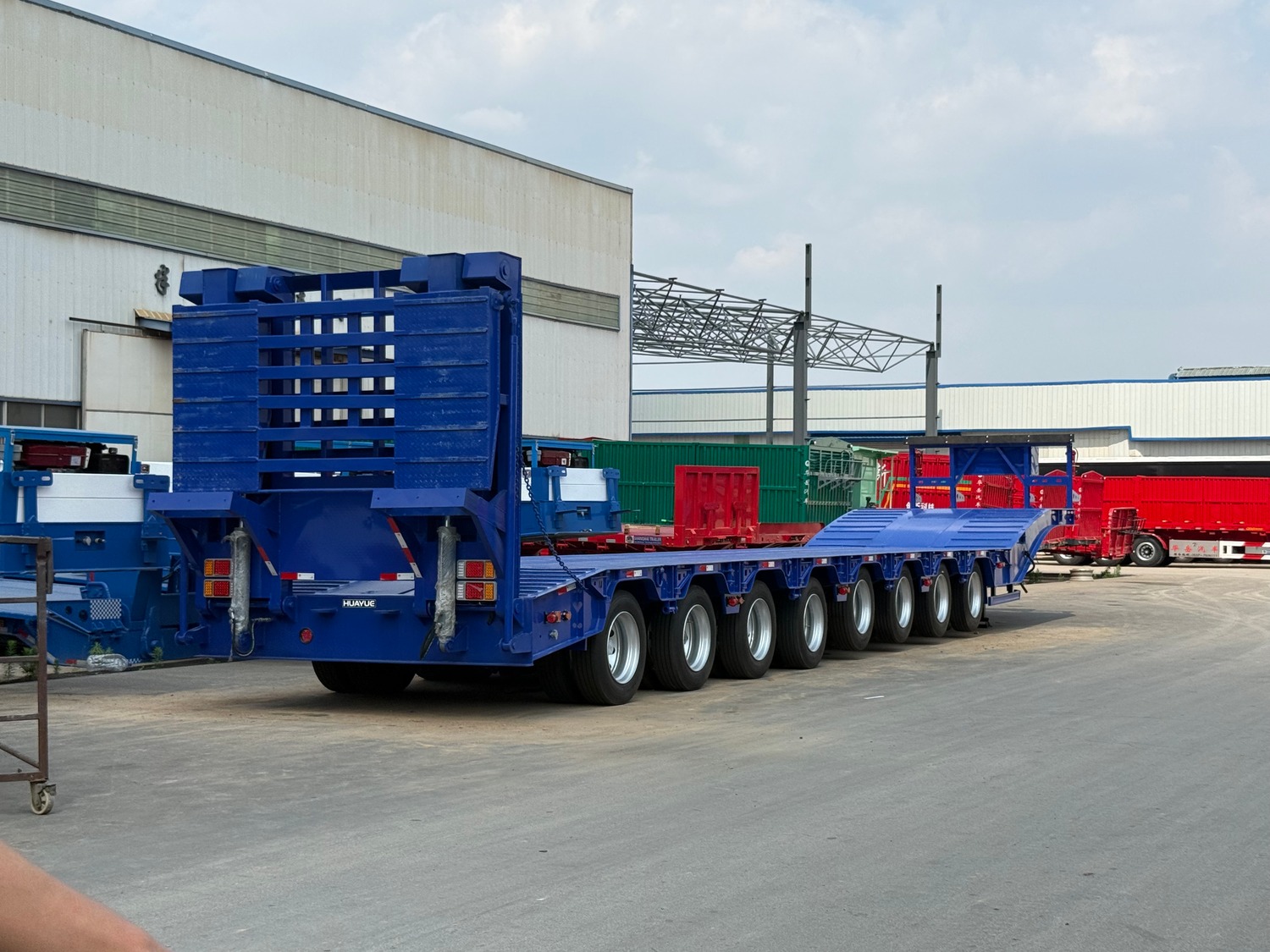
The number of raised axles cannot be separated from the load condition. The axles remaining on the road carry the redistributed weight, and their operating limits still apply. The front-four lift is a configuration feature of this trailer, not a statement that those axles were raised during the 45-ton excavator movement.
A long axle group also influences manoeuvring. Wheels at different longitudinal positions follow different paths through a bend, and the trailer can track inside the tractor's path. Space at entrances and work sites therefore relates to the swept path of the whole combination, including the excavator's extremities.
Positioning the Excavator on the Deck
Moving equipment along the deck changes the reactions at the tractor and trailer supports. A forward position transfers more load toward the connection; a rearward position increases the demand toward the axle group. The machine's centre of gravity is therefore as important as whether its tracks fit within the platform length.
The upper structure and attachments influence that centre of gravity. Two excavators with similar external dimensions may distribute their weight differently, and the same machine can change its transport geometry when its working equipment is repositioned. A useful loading arrangement relates the machine's support footprint to the trailer's structural supports.
The rear ramps provide an approach for suitable tracked equipment. Their spacing, slope and transition to the deck affect how the machine moves from the ground onto the platform. During that transition, weight passes through the ramps and their supports before settling onto the transport deck.
What the Operating Feedback Adds
The customer's feedback was positive about the 45-ton movement, including the trailer's straightness and driving behaviour. That experience adds an operating observation to the configuration description. It connects a particular machine with a particular trailer in service rather than leaving the article at a catalogue-level description.
The 45-ton figure is the excavator weight in this movement. It is distinct from a maximum trailer capacity, a maximum permitted combination weight or a universal rating for every eight-axle lowbed. Those quantities describe different things, even when they are expressed in the same unit.
During travel, the platform provides vertical support while restraint limits movement under braking, cornering and vibration. A low cargo position and a suitable support arrangement are useful, but they do not perform the job of securing the machine. The excavator's transport attachments and the trailer's restraint points complete that part of the working arrangement.
This Malaysian case is valuable because its configuration has an actual equipment movement behind it. The low deck addresses cargo height, the axle layout supports the load through multiple road contacts and the liftable front group adds flexibility for suitable operating conditions. The customer's feedback supplies the human context around those technical functions.
Frequently Asked Questions
Does the 45-ton excavator define the trailer's maximum payload?
No. It identifies the machine weight in this movement. Maximum payload is a separate property of the complete trailer configuration and its loading conditions.
Why are the front four axles liftable?
The lift feature allows them to be raised in suitable conditions, reducing unnecessary road contact. The remaining supports then carry the redistributed weight.
Why is an excavator's position important on a lowbed?
Its position changes the weight shared between the tractor connection and trailer axle group. Track contact areas and the machine's centre of gravity determine how it loads the platform.
Discuss Your Trailer Application
Share your cargo or equipment details, transport route and destination market with HUAYUE for a configuration discussion tailored to the intended application.
Interested in this case?
Contact Us for a Technical Consultation.