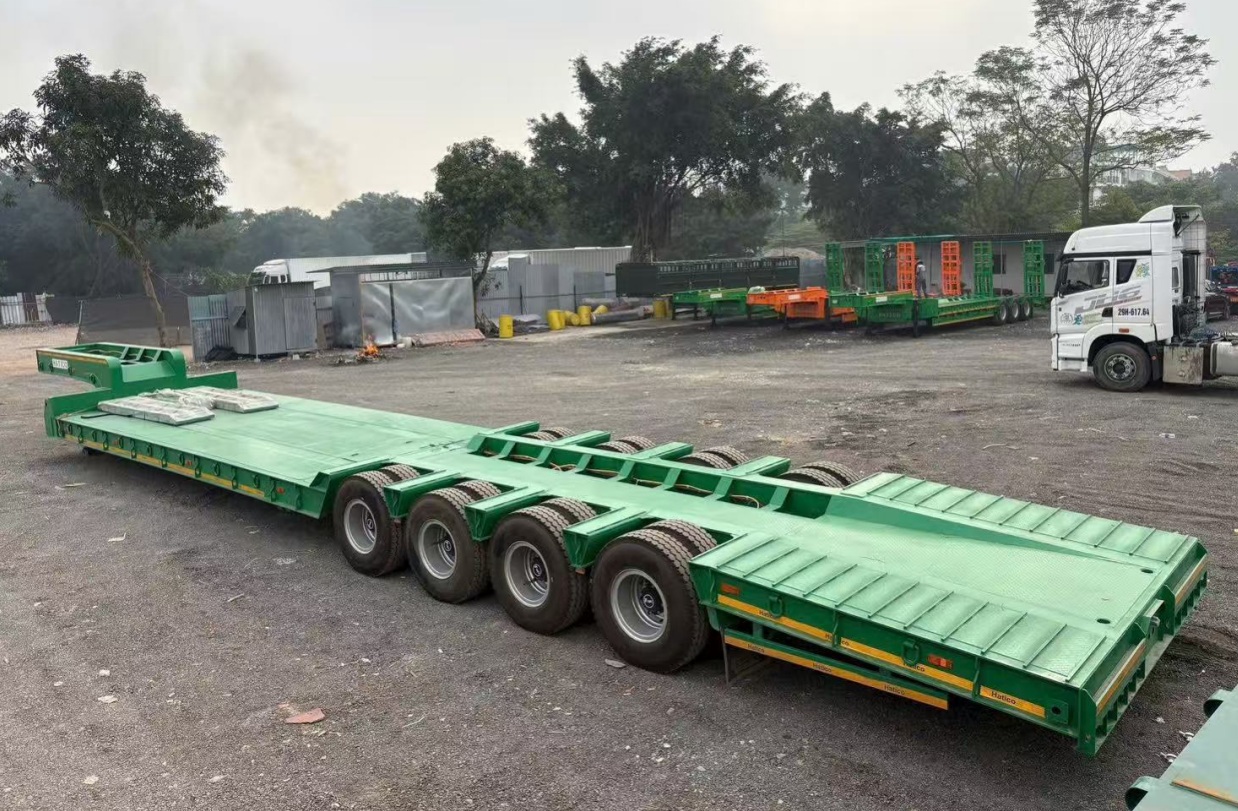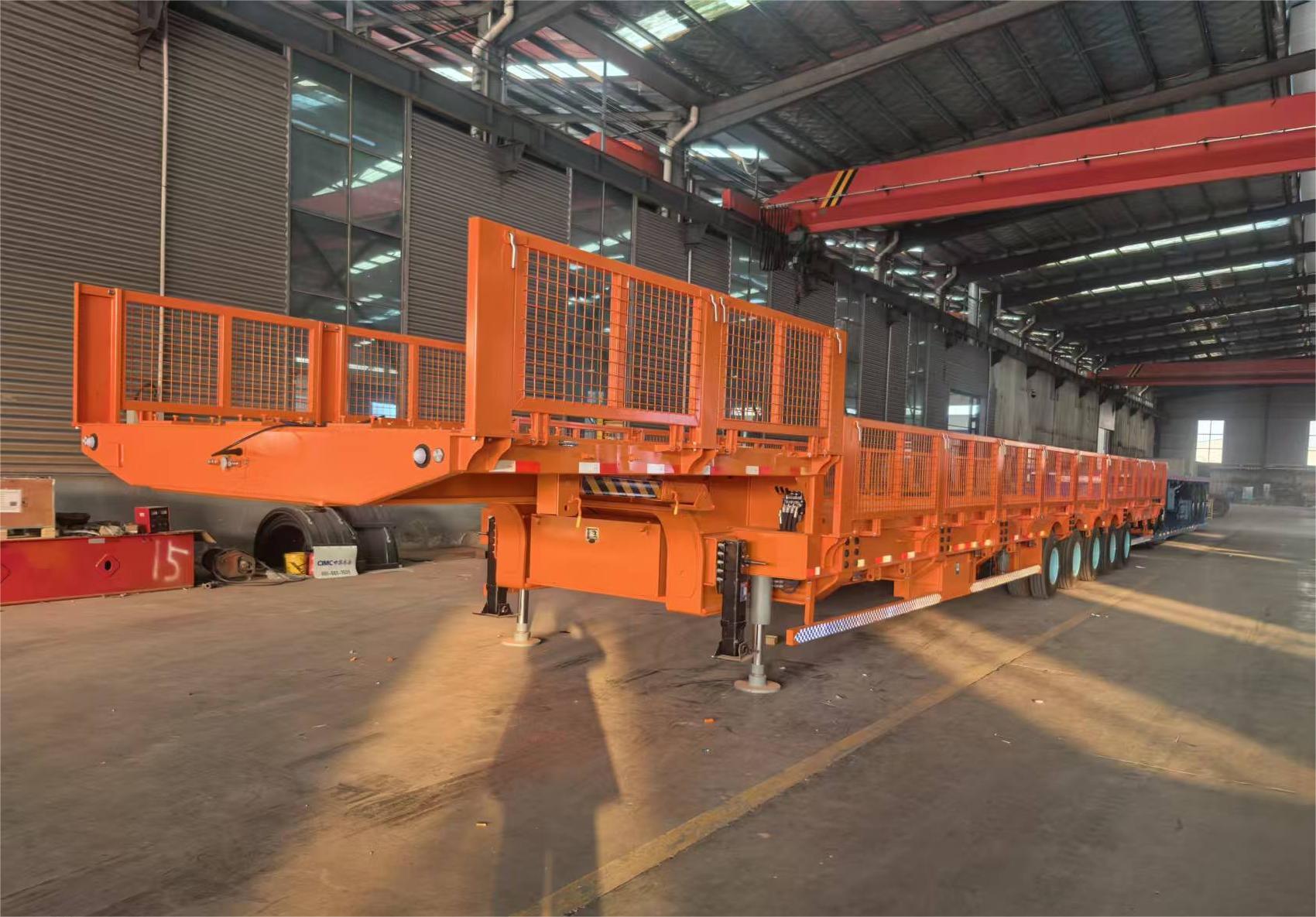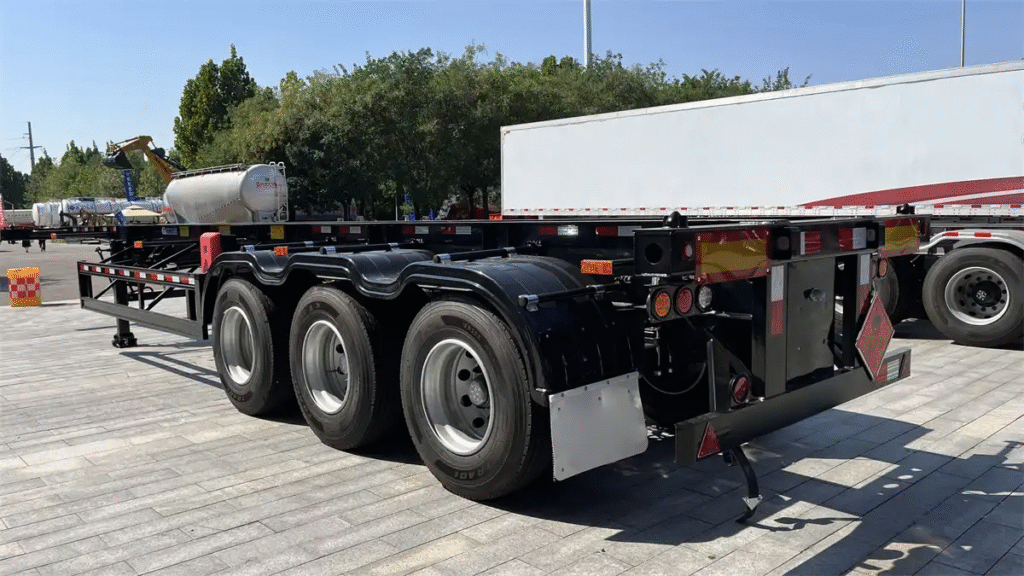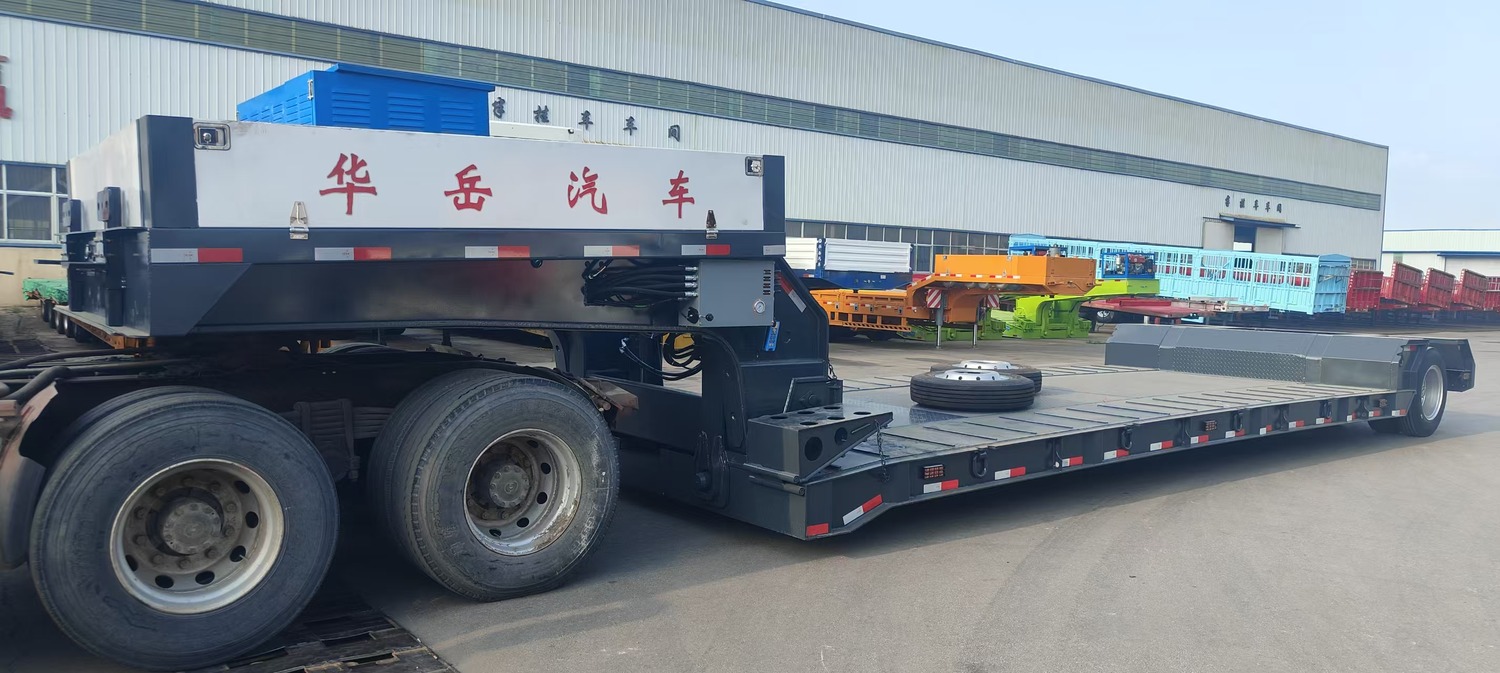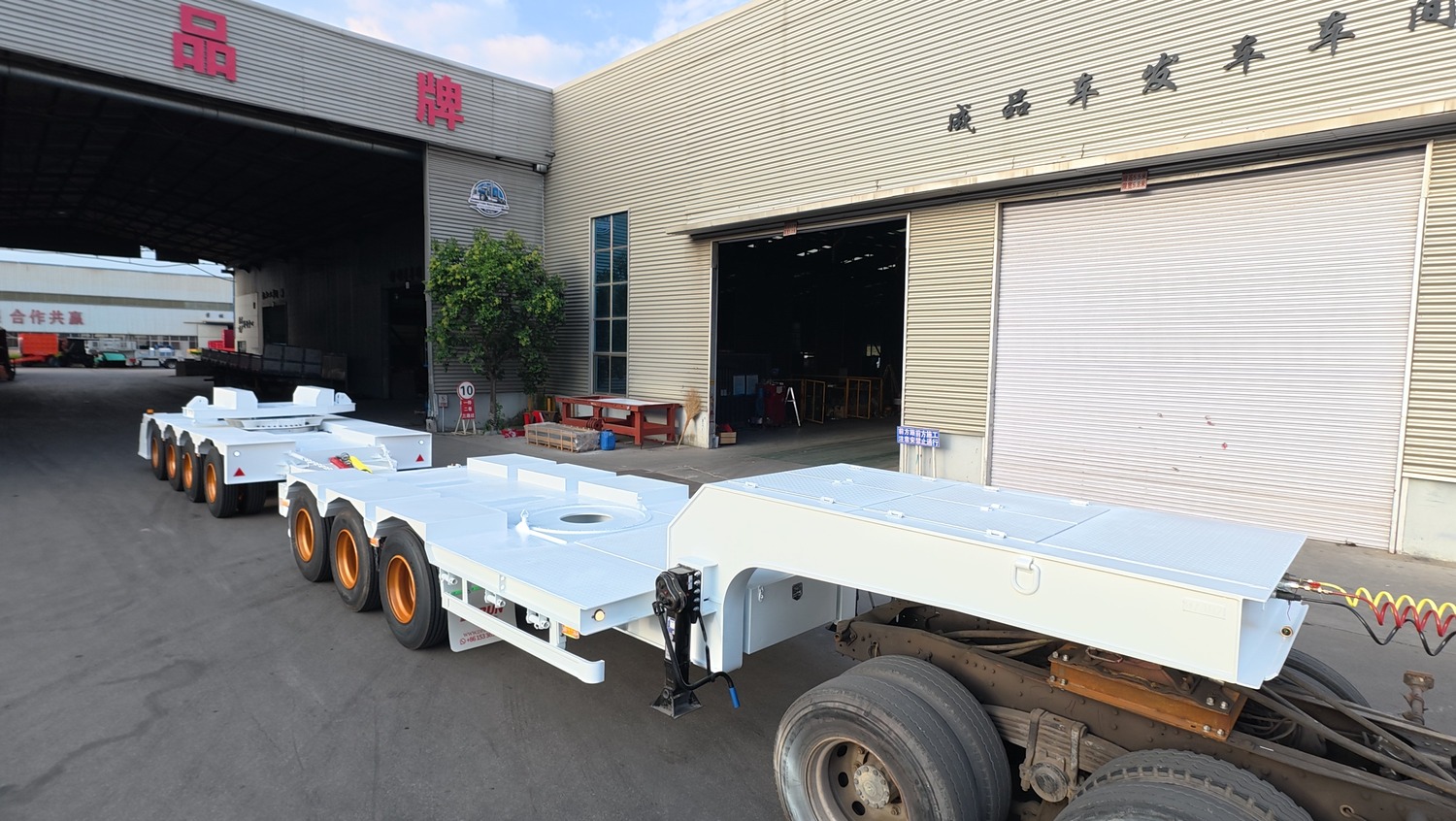
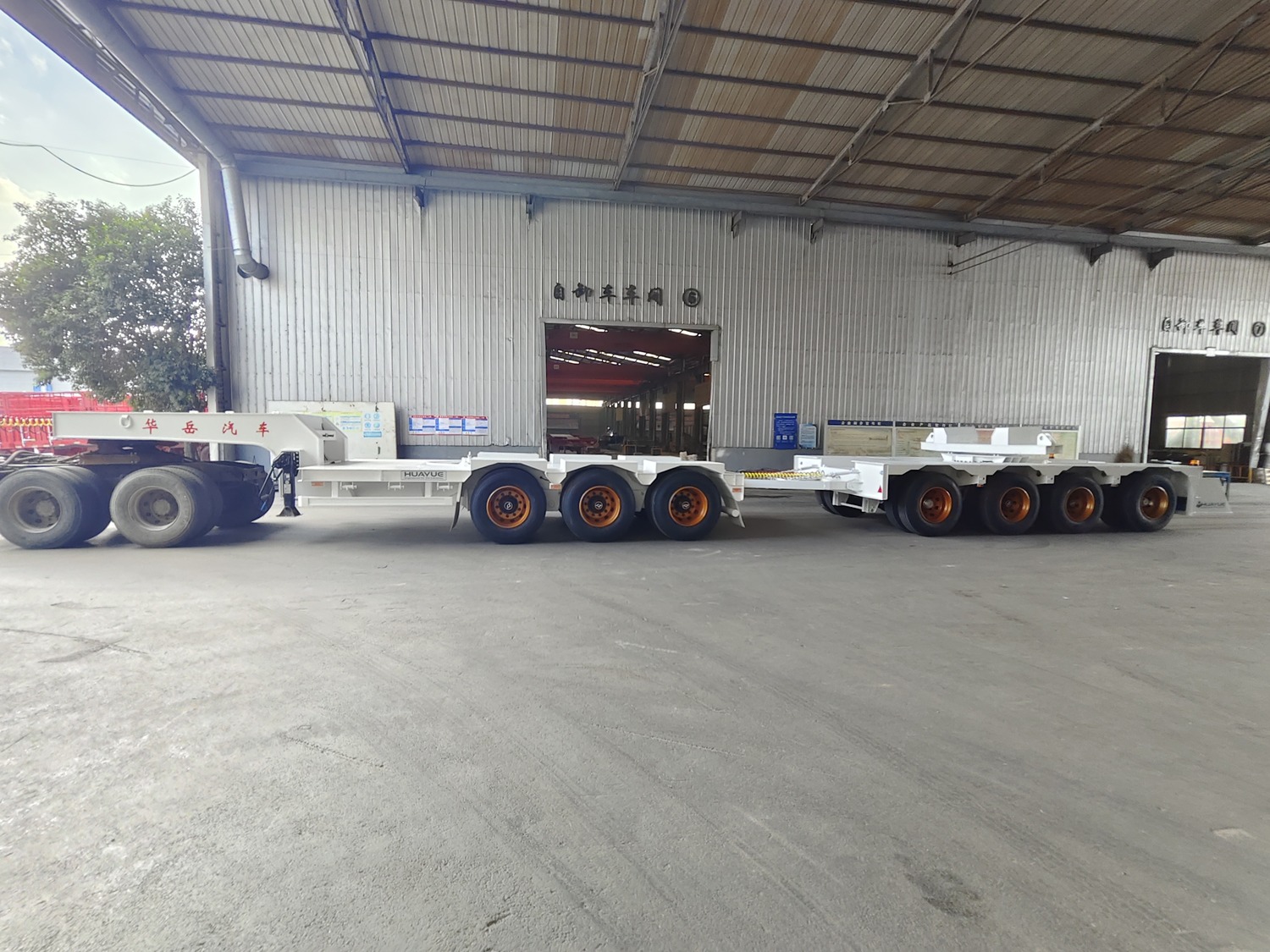
This bridge-transport arrangement uses a paired 3+4 axle trailer layout for long structural cargo. A three-axle front unit and a four-axle rear unit provide separate support areas along the load. The arrangement is intended for a cargo form whose length and support requirements differ from those of a compact machine carried on one continuous lowbed.
Bridge components can be long, rigid and sensitive to where they are supported. Their transport supports influence the forces within the component as well as the weight carried by each trailer unit. The technical value of a paired arrangement therefore starts with the cargo and its support positions, rather than the total axle count alone.
Two Support Zones for a Long Component
Bridge components and similar structural pieces can extend far beyond the platform length of a conventional trailer. A paired arrangement creates two support zones along the cargo, allowing the load to span between the front and rear trailer sections. The spacing follows the component's transport arrangement rather than requiring a continuous platform beneath every part of its length.
Support positions affect bending within a long component. Bringing the supports closer together increases the unsupported length beyond them, while moving them farther apart changes the span between them. The resulting balance depends on the component's structural form and the locations intended to carry it during transport.
The component's centre of gravity also affects the reactions at the supports. A symmetrical external shape does not always mean equal weight distribution, particularly where sections, fittings or reinforcement differ along its length. Each support carries a share of the actual load, not an assumed half based only on appearance.
What the 3+4 Axle Designation Means
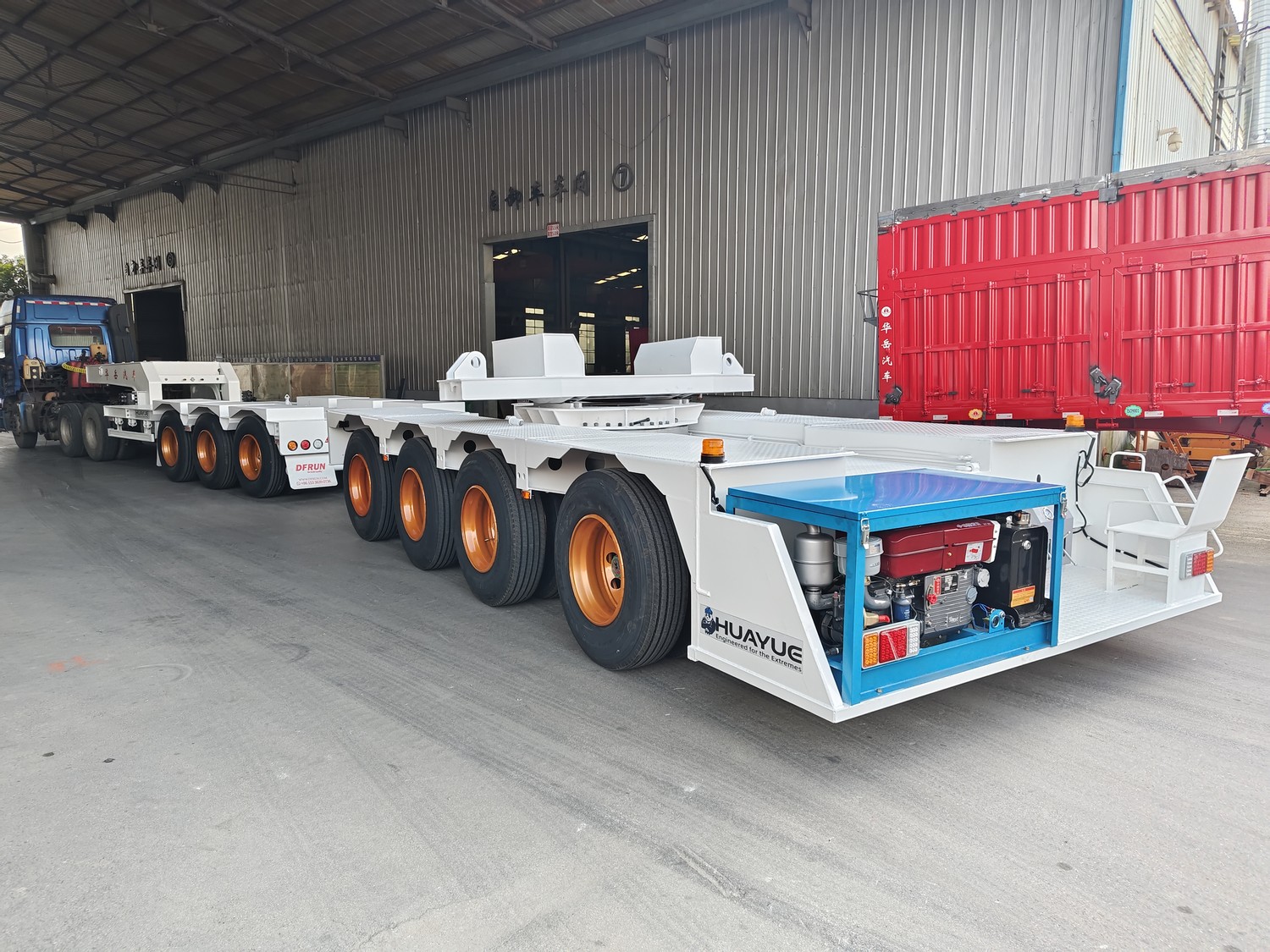
The 3+4 designation identifies a three-axle front unit paired with a four-axle rear unit. These groups place multiple road contact positions beneath the separated support areas. Their actual carrying duties depend on the load and complete design, including the reaction at each support and its relationship with the running gear.
Seven axles in total do not establish a single payload figure. The front connection, individual units, support structures and running gear all contribute to the load path. A support reaction at one end can become the limiting condition even when the total cargo weight appears moderate relative to the overall combination.
The supported component and the trailer units also respond to changes in the road surface. A slope or local unevenness can change their relative positions, so the transport arrangement needs to accommodate the movement intended by its design. This is particularly relevant for a long rigid load spanning separated supports.
Contact Between Cargo and Support
The area where the bridge component rests on each unit is a critical interface. A suitable support spreads force into the intended part of the component rather than concentrating it against an unsuitable edge. The contact shape needs to match the structural surface carrying the load.
Long cargo can have a much smaller bearing area than its overall size suggests. The support footprint, local pressure and component geometry therefore matter alongside gross weight. This is the same reason a broad-looking girder cannot be treated as though every point along its underside is an equally suitable transport support.
Restraint has a separate purpose from bearing support. The supports carry vertical reactions, while the restraint arrangement limits movement caused by acceleration, braking and lateral forces. Its attachments need to work with the component's intended transport features and the trailer's structural restraint points.
Turning with a Long Structural Load
The path occupied by a long component is wider than the tyre tracks alone. During a turn, the space between the supports can sweep across the inside of the bend, while an overhanging end can move outward. The cargo envelope therefore belongs in the description of manoeuvring space.
The tractor, front unit, rear unit and load all contribute to that path. Their relative geometry determines how the combination enters and exits a corner. A trailer pair suited to a straight section still has a turning envelope that depends on support spacing, cargo length and the arrangement of the units.
Vertical changes matter as well. Crests, dips and transitions can alter the relationship between the two support areas and the road. For a long rigid component, this movement is part of the transport geometry rather than a minor detail confined to the tyres.
Application to Bridge Components
The paired layout is useful where the cargo itself calls for separated support. Instead of fitting a long component to a short cargo deck, the transport arrangement places support where that component is intended to bear. This gives the vehicle concept a direct connection to bridge-girder and other long structural movements.
The main engineering questions are consequently different from those of a general freight trailer. Support reactions, bearing interfaces and the swept path of the component explain the working arrangement. The HUAYUE three-axle front and four-axle rear units provide the physical basis for that specialised transport task.
Frequently Asked Questions
Why use two units instead of one continuous deck?
Separated units allow a long component to span between defined support areas. This can suit cargo whose length and intended bearing positions do not match a conventional platform.
Does 3+4 axles identify the maximum load?
No. It describes the front and rear axle groups. Capacity depends on the units, connections, support reactions and complete loading arrangement.
Why do support positions matter for a bridge component?
They influence bending within the component and the weight carried at each support. The component's structural form and centre of gravity determine those reactions.
Is the turning path limited to the wheels?
No. The load between the supports and any overhanging ends sweep through additional space during a turn. The whole cargo envelope contributes to the required clearance.
Discuss Your Trailer Application
Share your cargo or equipment details, transport route and destination market with HUAYUE for a configuration discussion tailored to the intended application.
Interested in this case?
Contact Us for a Technical Consultation.