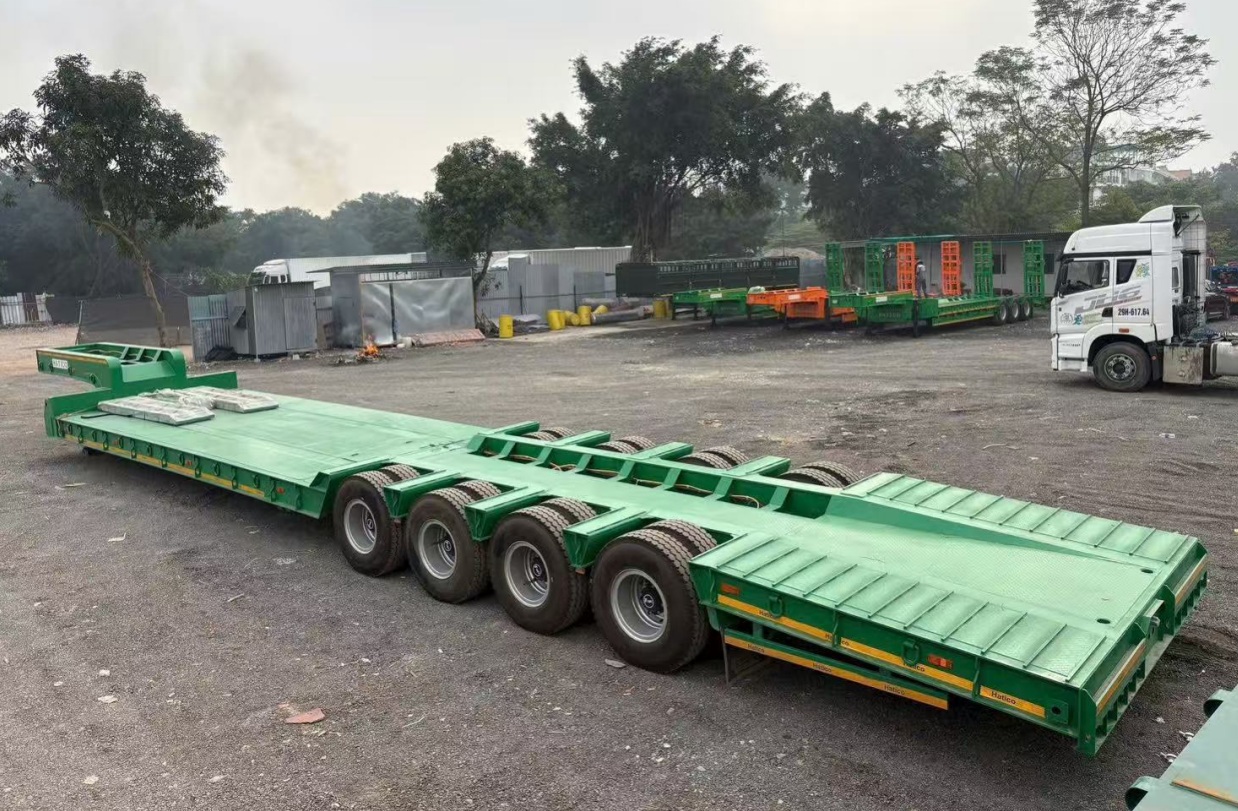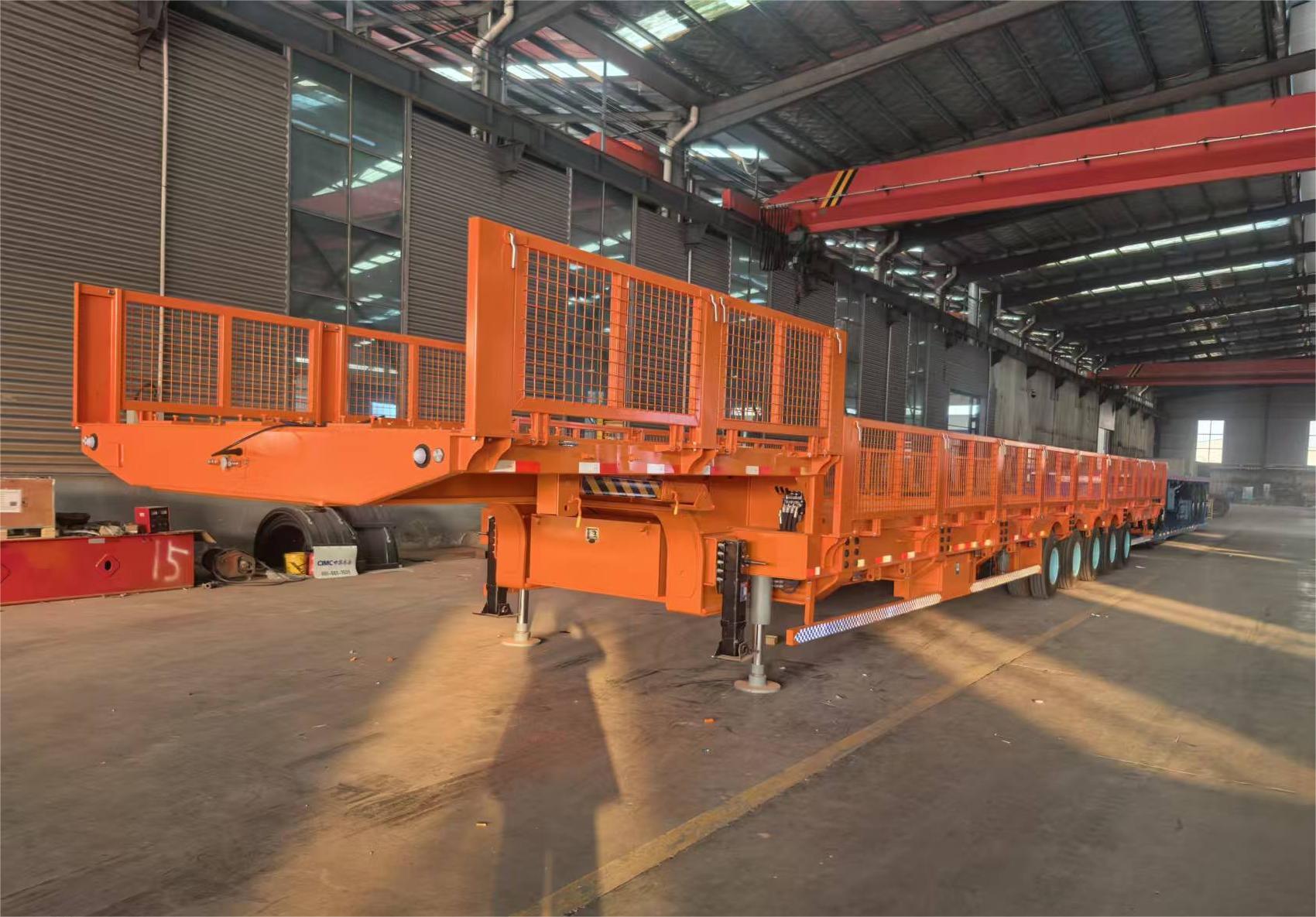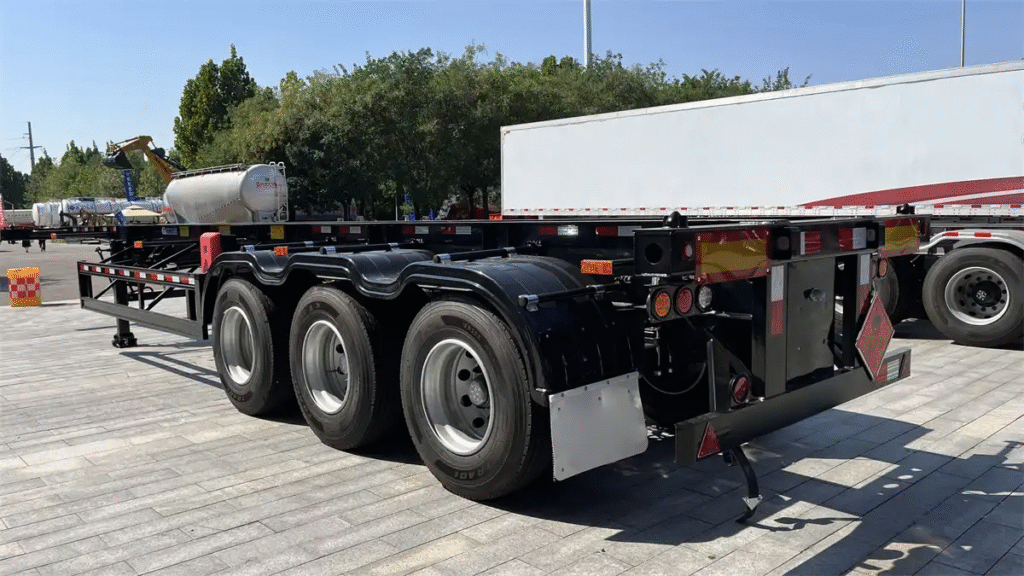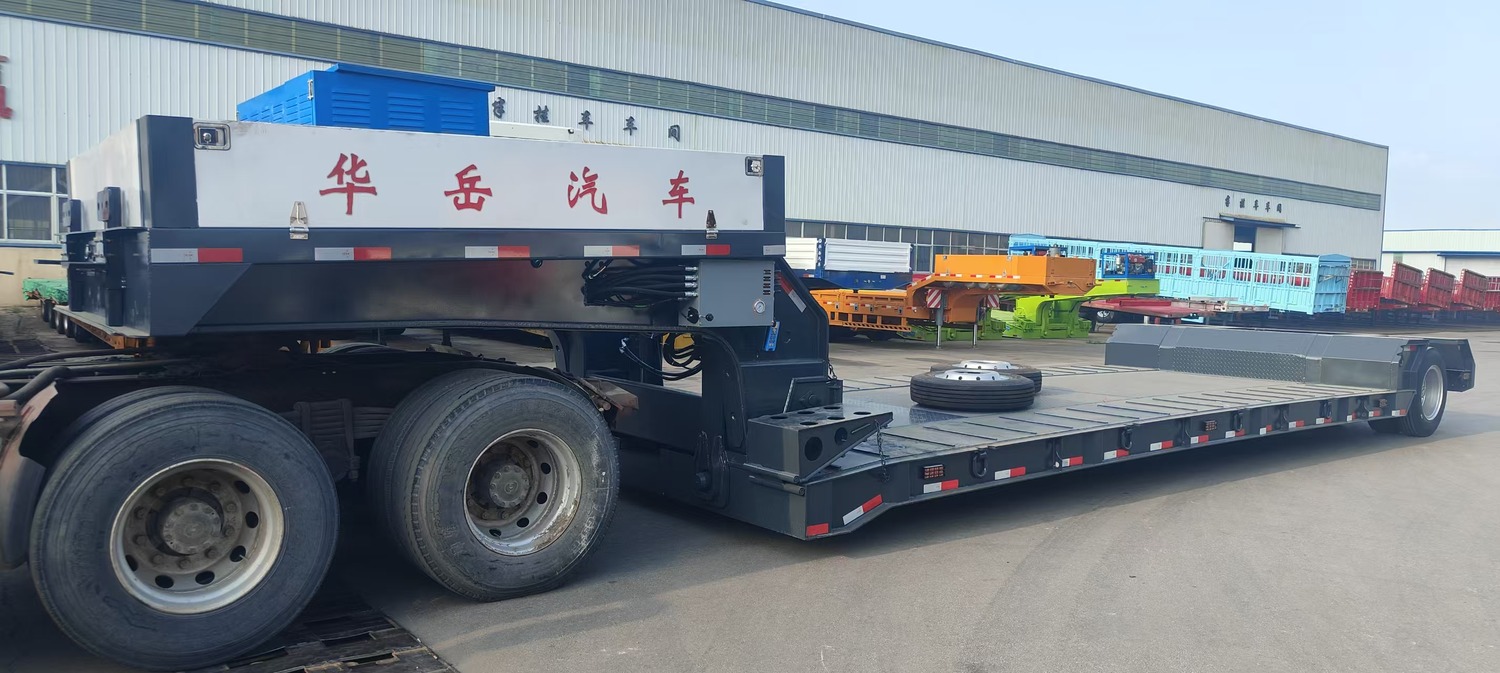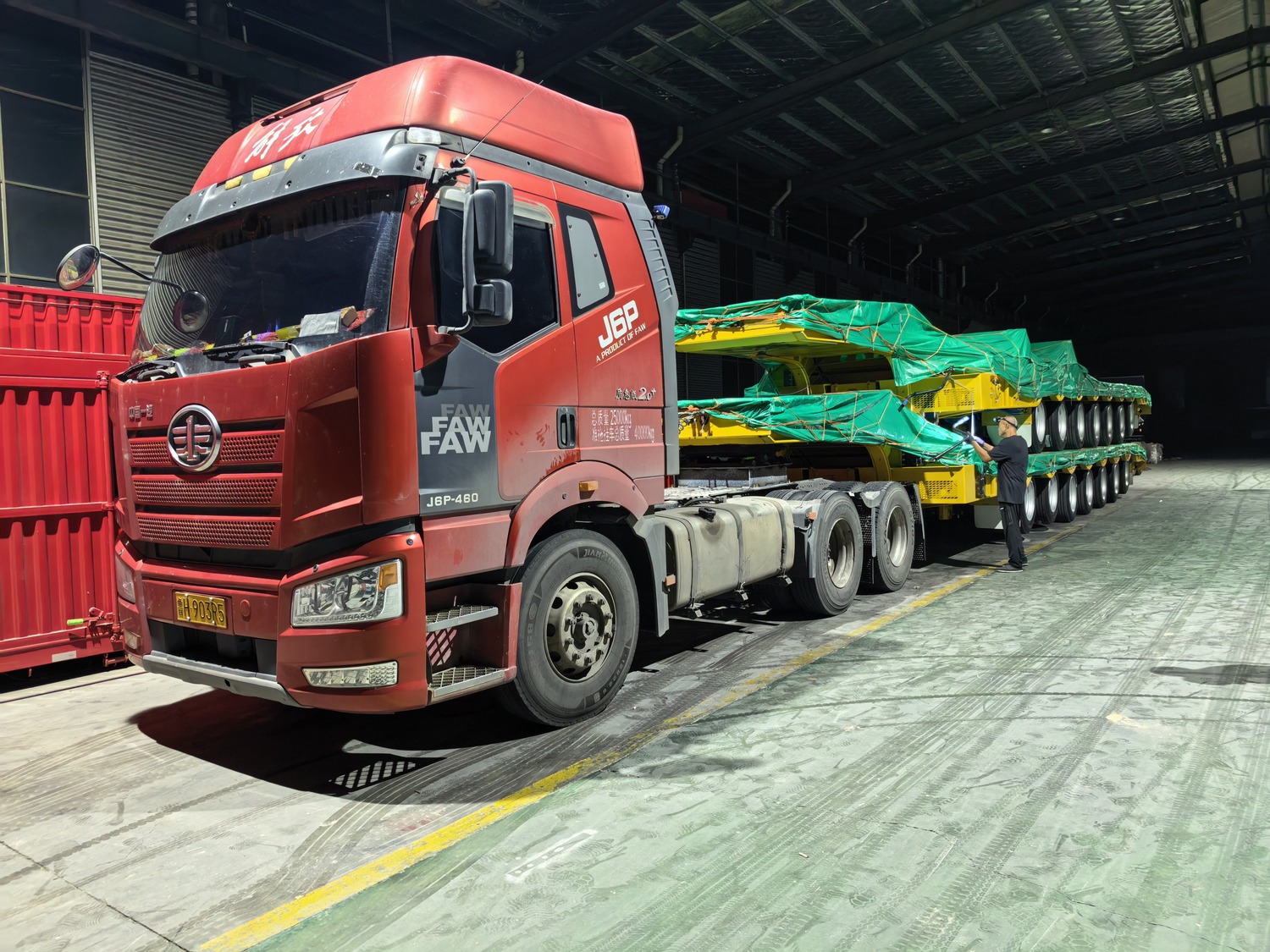
Two HUAYUE trailer units travelled to a cargo port as part of an export project, with protective coverings around the vehicles. When trailers become project cargo, the transport problem changes: a vehicle designed to carry equipment must itself be supported and moved. Its long structure, concentrated running-gear mass and projecting components make it different from a simple rectangular load.
The carrying platform connects those characteristics with the road movement. Its deck provides the space beneath the load, while its chassis transfers the resulting forces toward the tractor and rear running gear. The practical question is how the cargo meets that platform, not merely whether their overall lengths appear similar.
The Cargo Footprint and Its Support Positions
Project cargo often occupies more space than the area through which it bears on a trailer. A vehicle may have bodywork extending beyond its wheels or temporary supports. Its overall length describes the occupied envelope, while the bearing positions describe where weight enters the carrying deck.
Those are different dimensions of the same load. A broad external outline can rest on relatively small contact areas, producing concentrated forces at particular deck locations. Spreading or positioning those forces appropriately is part of the structural relationship between the cargo and its transport platform.
The load's centre of gravity also affects the reactions at the supports. Moving a heavy section toward one end changes the share of weight carried there. A visually centred outline does not necessarily mean that mass is evenly distributed along the platform.
Low Platform Height and the Loaded Envelope
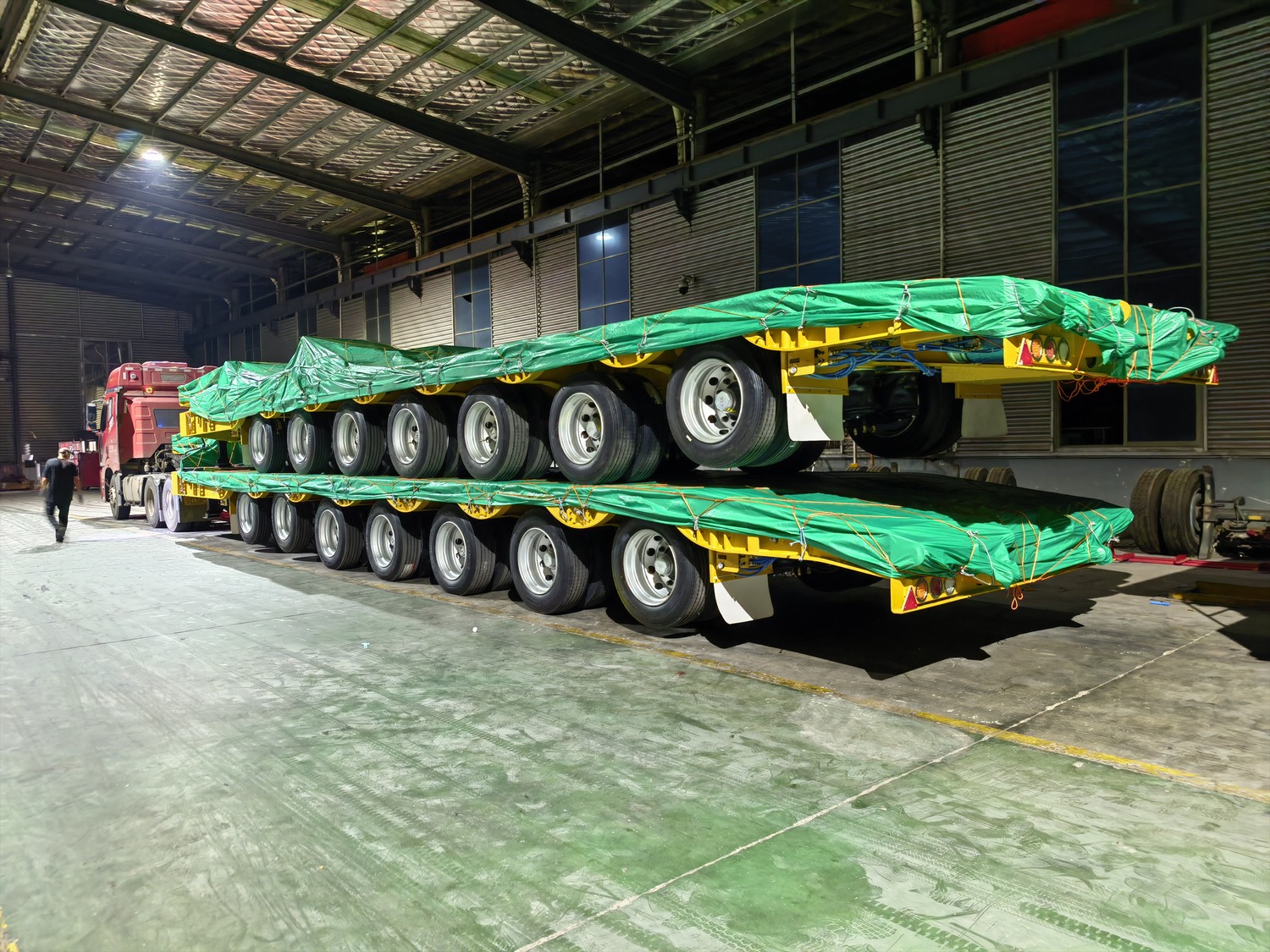
A lower carrying deck contributes less height beneath the same cargo. This is useful for vehicle-shaped loads whose running gear, body or front structure already occupies substantial vertical space. The benefit follows directly from geometry: deck height forms the bottom part of the loaded height.
Support materials add another layer between cargo and deck. Their thickness raises the load, even when they are necessary to establish suitable bearing positions or protect surfaces. The highest point of the complete arrangement therefore depends on the platform, supports and cargo together.
Where one vehicle structure sits above another, the combined height is more important than either unit's individual height. Project-cargo arrangements are not described adequately by a catalogue dimension for one unloaded trailer. The physical combination determines the envelope that moves along the route.
A Long Load Through a Turn
A semi-trailer does not follow the tractor in exactly the same wheel path. Articulation allows the combination to turn, but its rear wheels and overhanging structure occupy different parts of the available space. Long cargo can add further projections beyond the carrying platform.
This matters at bends and entrances where the available width changes. A load may fit comfortably on a straight road yet require more room as the combination turns. The cargo's outer shape remains relevant even when its bearing footprint fits entirely within the deck.
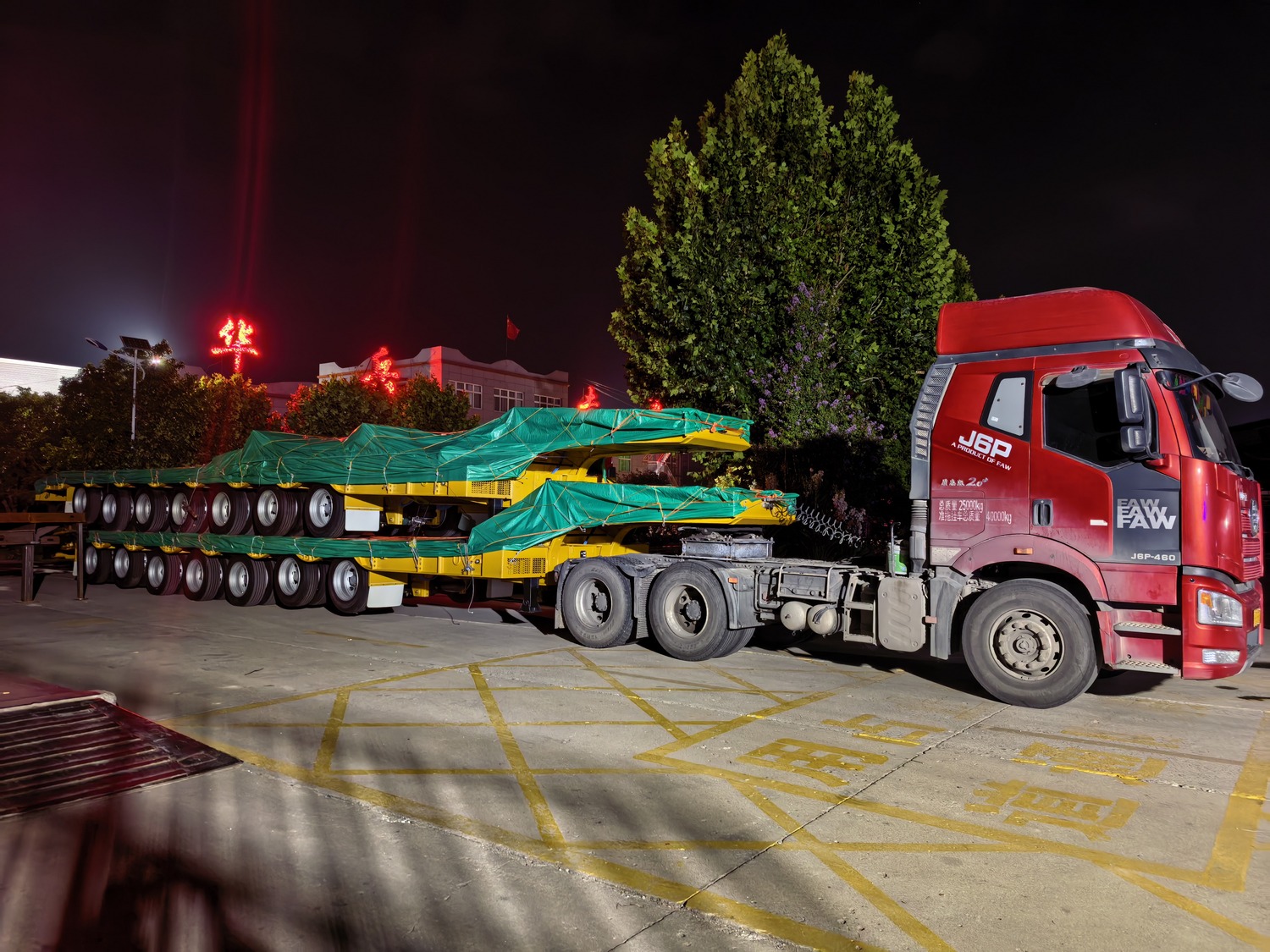
Vertical transitions create another geometric relationship. A low platform travelling over a crest or entering a slope has clearance conditions different from those on level ground. The lower deck's height advantage therefore sits alongside the need for suitable clearance beneath the transport arrangement.
Support, Restraint and Protective Covering
Support carries the vertical weight of the cargo. Restraint resists relative movement during acceleration, braking and changes of direction. These functions interact, but they are not interchangeable: placing a load on strong supports does not by itself secure it against movement.
The forces from restraints must enter appropriate structural interfaces. An accessible exterior fitting may be convenient to reach yet intended for a different duty. The load and the carrying platform each need an arrangement that transfers securing forces through suitable parts of their structures.
Protective covering serves a third purpose. It can reduce exposure and help protect surfaces, but it does not replace bearing supports or cargo restraint. The covered HUAYUE units illustrate a transport arrangement in which exterior protection surrounds a much more substantial structural load.
The Platform's Role at the Port
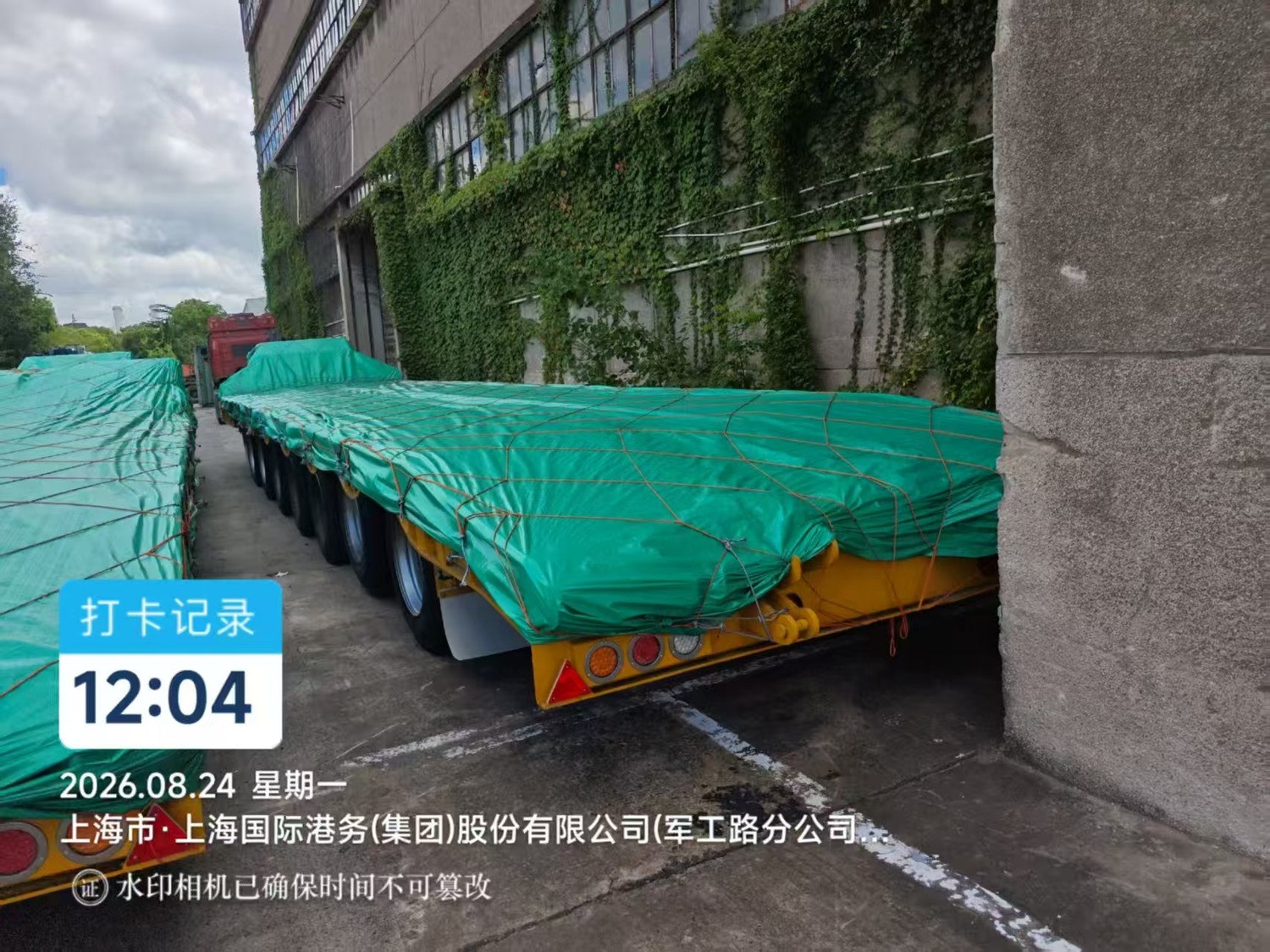
The two units reached the cargo port, bringing the road portion of their movement to that location. A port transfer changes the setting around project cargo, but the physical characteristics of the load remain: its weight distribution, bearing areas, external shape and vulnerable projections still determine how it can be supported.
If the cargo transfers to another carrying surface, its support conditions change again. A long vehicle frame may react differently to support beneath its designed interfaces than to support beneath an unrelated component. The geometry of the load remains relevant across transport stages, even when the equipment carrying it changes.
For trailer customers moving equipment or vehicle-shaped cargo, the practical lesson is concrete. Deck space, deck height and carrying capacity describe different aspects of the transport platform. Its usefulness comes from accommodating the actual load through suitable bearing positions and a workable complete envelope.
Frequently Asked Questions
Is a load's footprint the same as its overall dimensions?
No. Overall dimensions describe the space occupied. The bearing footprint describes where weight passes into the deck, which may cover a much smaller area.
Why does support thickness affect transport height?
Supports sit between cargo and deck, adding to the loaded height. The complete vertical envelope includes all three, not just the cargo itself.
Does a protective cover secure heavy cargo?
No. Covering protects exterior surfaces or limits exposure. Structural restraint is needed to resist cargo movement relative to the carrying platform.
Why can long cargo need extra space on a bend?
The tractor, trailer wheels and projecting load follow different paths during a turn. The occupied turning envelope can be wider than the straight-line arrangement.
Discuss Your Trailer Application
Share your cargo or equipment details, transport route and destination market with HUAYUE for a configuration discussion tailored to the intended application.
Interested in this case?
Contact Us for a Technical Consultation.