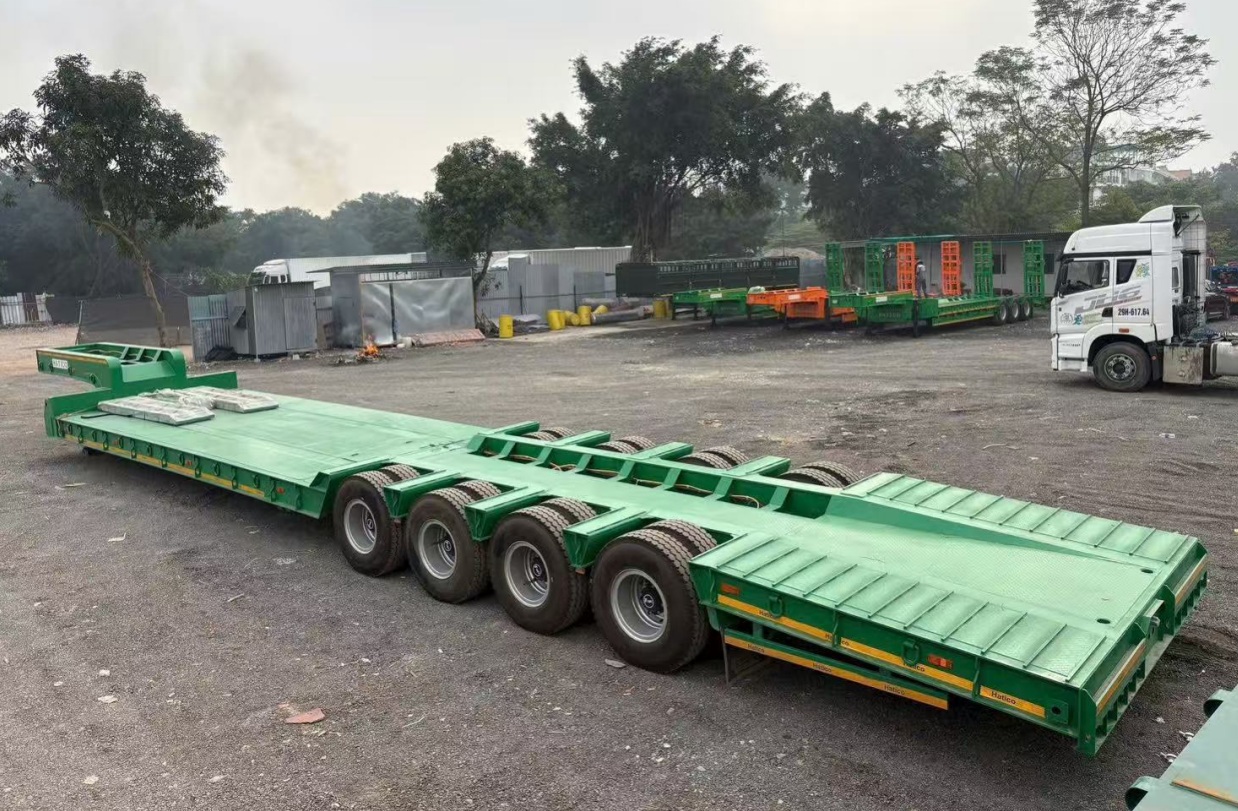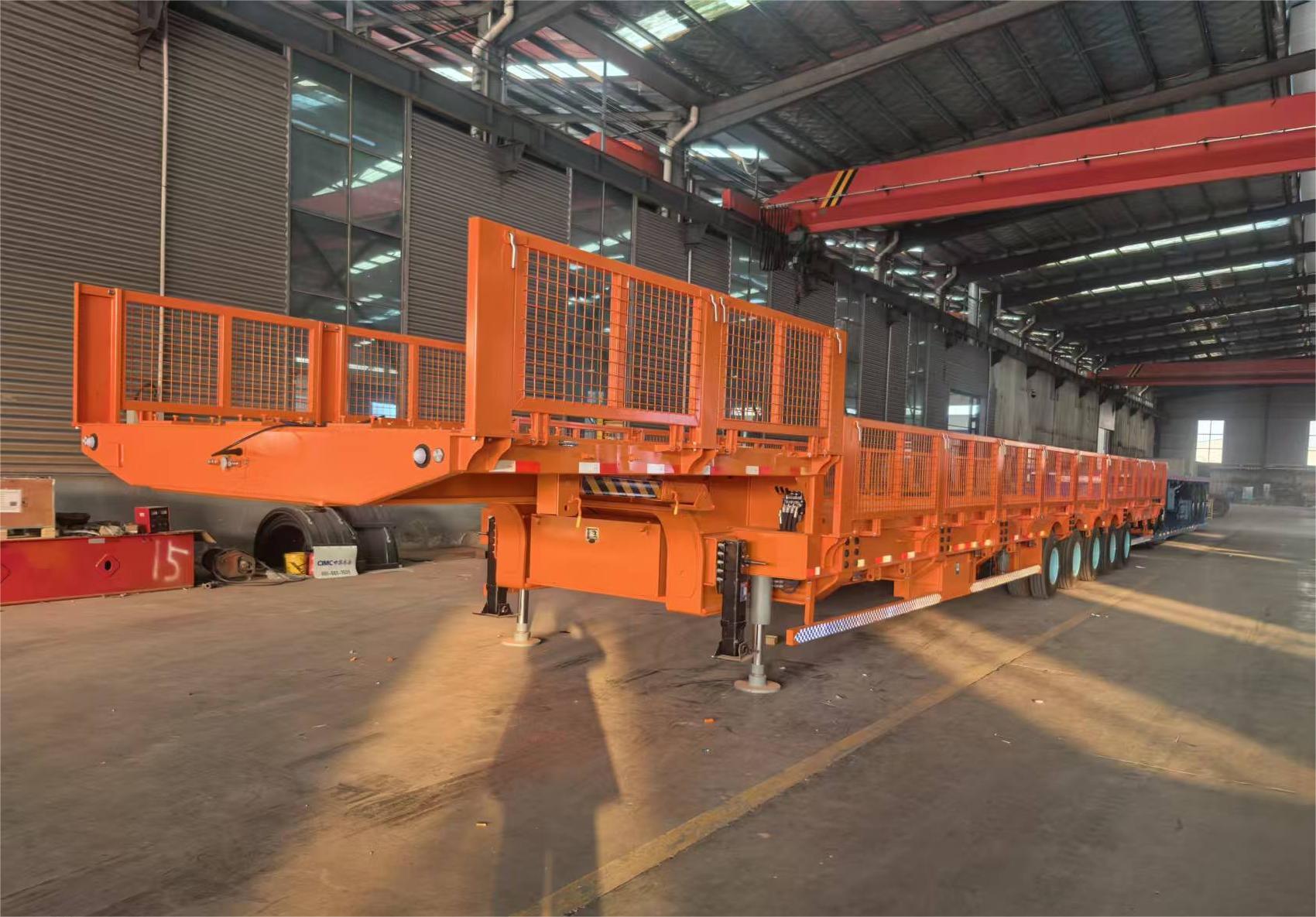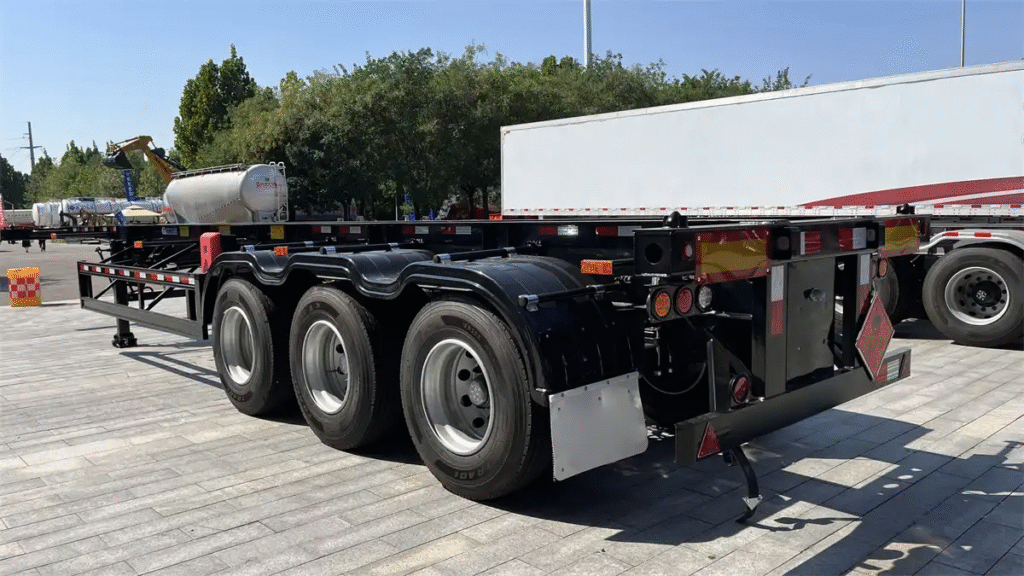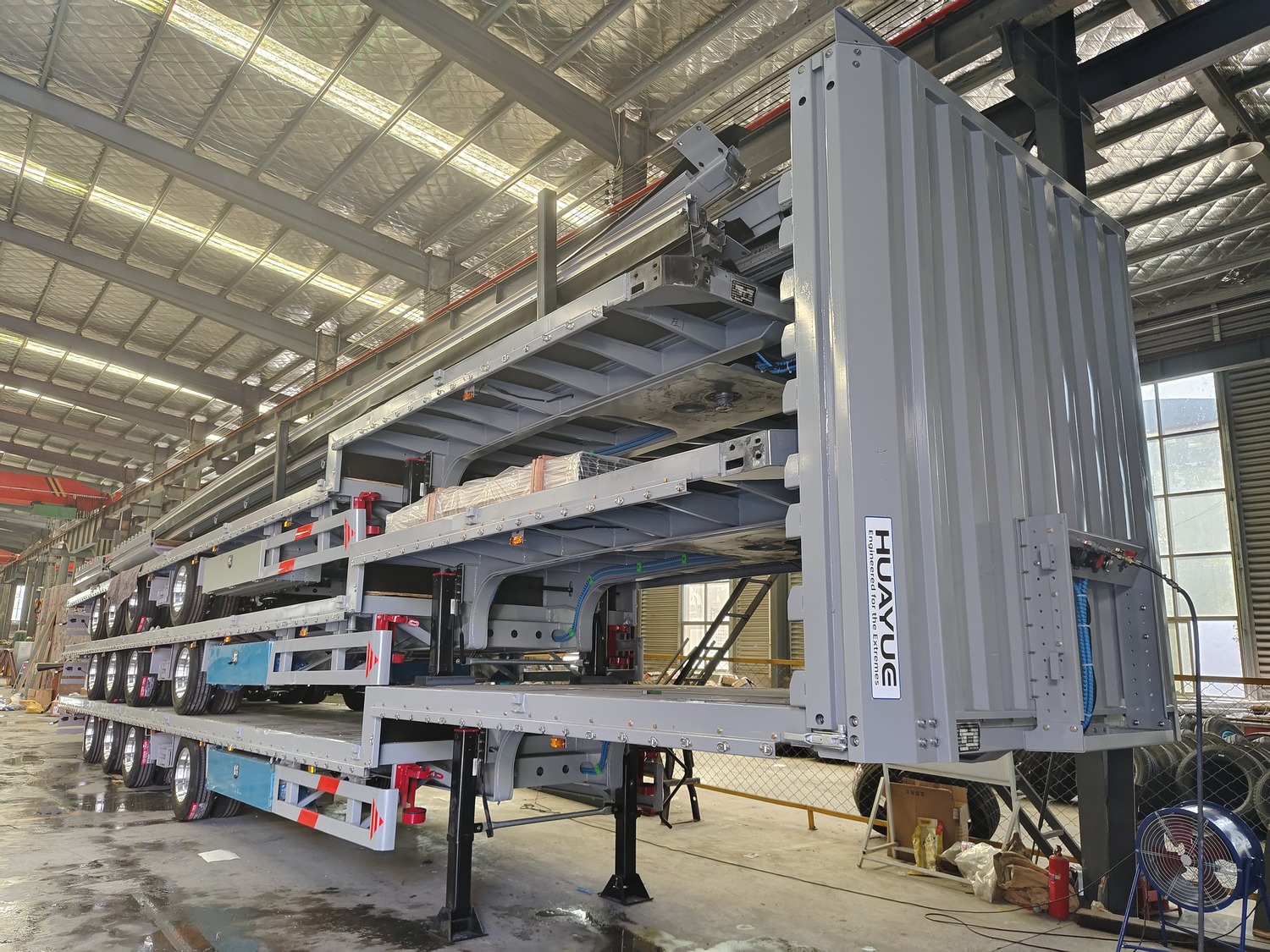
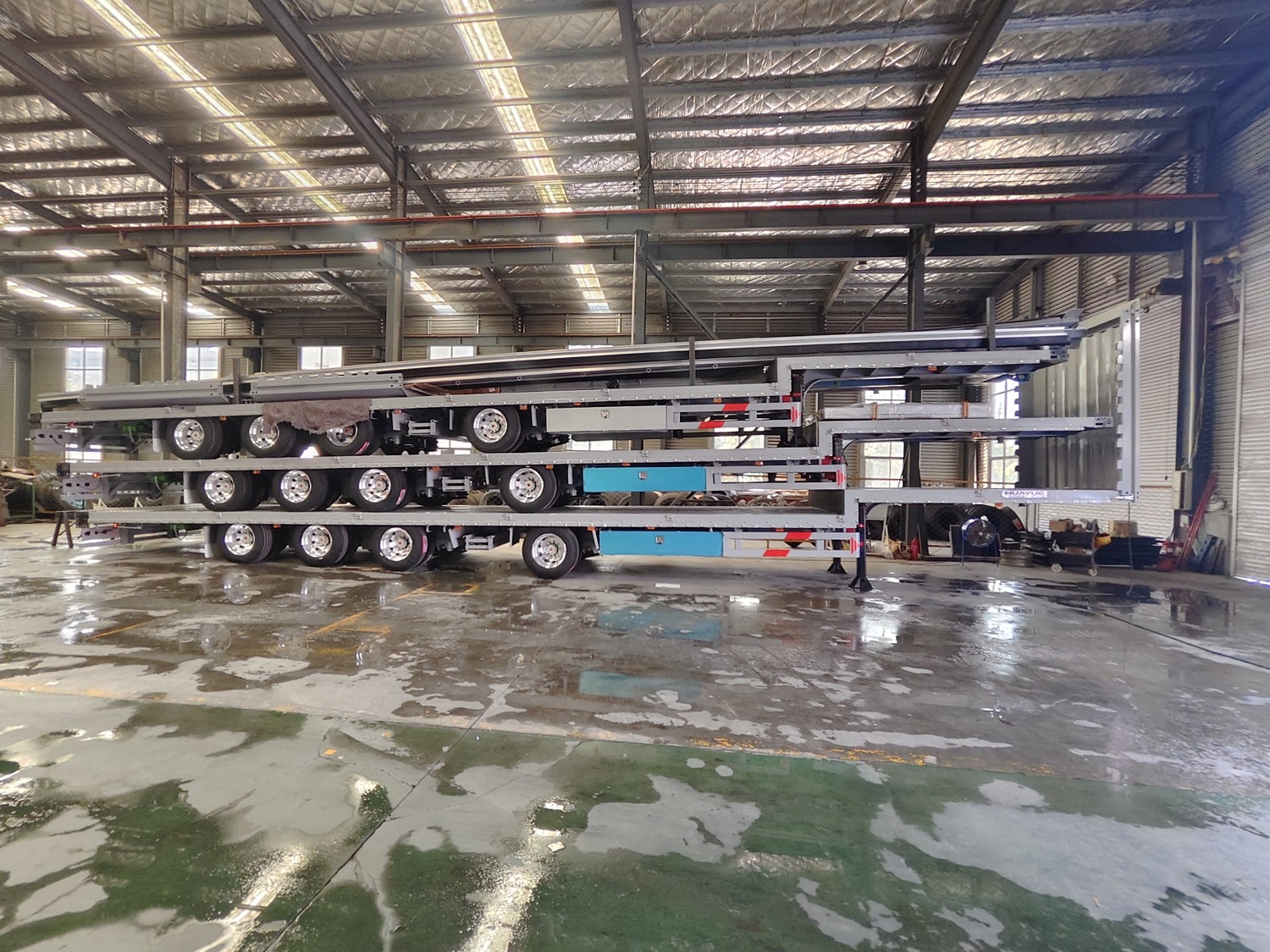
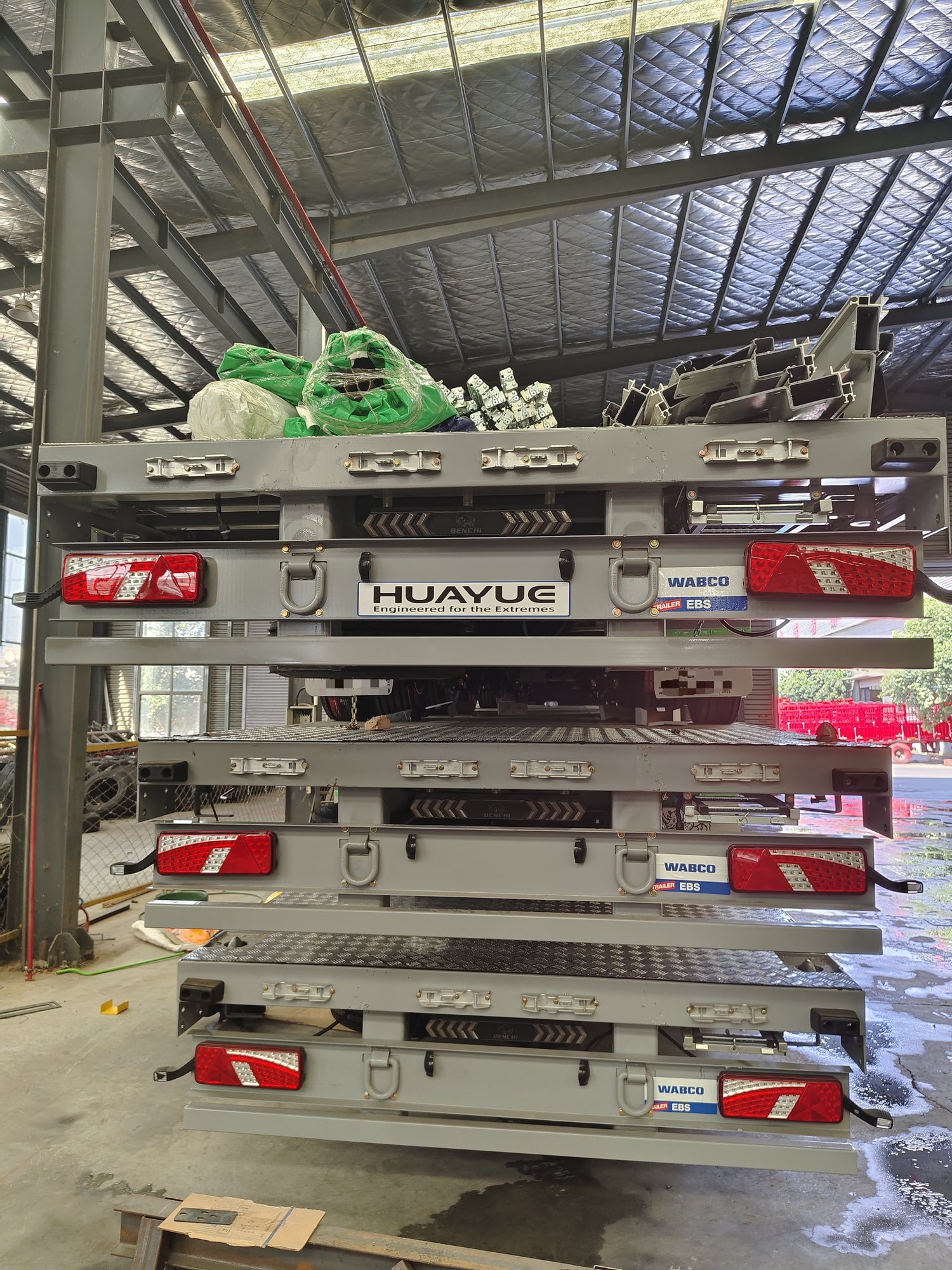
These three HUAYUE curtainsider semi-trailers each use a four-axle chassis beneath a covered freight body. Their defining feature is the combination of movable side curtains and a roof over the load area. This gives general freight an enclosed transport space while allowing access from the side when the curtains are open.
The body serves a different purpose from a lowbed platform or a tipper. A curtainsider is arranged around packaged and other suitable general cargo rather than driving heavy machinery onto a low deck or tipping loose material out of a body. Its practical value comes from how freight enters, occupies and leaves the covered space.
Covered Freight Space with Side Access
A curtainsider uses movable side curtains around the cargo area. Opening a curtain exposes the side-loading interface, while closing it provides coverage along the body during travel. The roof maintains overhead coverage as part of the same enclosure.
Side access can be useful for palletised or long packaged cargo that is easier to approach laterally. A forklift can place suitable freight from the side instead of reaching every position through the rear. The available opening and the handling equipment determine how each load enters the body.
The curtain is flexible rather than a permanent rigid side wall. That distinction gives the body its loading character. Enclosure provides weather coverage, while cargo restraint resists movement of the freight during travel.
Four Axles Beneath the Body
The three featured trailers each use a four-axle layout. Those axles form the running gear beneath the chassis and support the covered freight body above them. The front share of the trailer's weight passes through the tractor connection, while the rear share reaches the road through the axle group.
Cargo position influences this distribution. A heavy pallet group near the front loads the combination differently from the same group near the rear. The usable body volume therefore needs to be understood alongside the location of the weight inside it.
Four axles describe the configuration rather than a payload calculation. The frame, suspension, tyres, coupling and operating conditions all contribute to the complete loading arrangement. A large body can be physically full before reaching a weight limit with light cargo, or reach a weight limit with substantial space remaining when the cargo is dense.
The Floor and Cargo Contact Areas
The floor receives loads through pallets, stillages, crates or other transport supports. These contact areas can be smaller than the outside dimensions of the cargo package. Local floor loading consequently matters as well as the total weight carried by the trailer.
Crossmembers beneath the floor transfer those forces into the chassis. Their structural role is different from that of the roof and curtain framework, which establish the enclosure above. Understanding that difference keeps cargo-bearing capacity tied to the platform structure rather than the apparent size of the body.
Handling equipment creates its own contact demands on the floor. Side loading describes an access direction, while floor duty determines the loads that the platform can accommodate during that operation.
Side Loading and Freight Distribution
Opening the side can provide access to individual positions along the load area. This is useful when the order in which freight is loaded or removed does not follow a simple front-to-back sequence. The benefit is access to the cargo position, rather than an automatic reduction in every loading cycle.
Partial unloading changes the distribution of weight remaining in the body. Removing a group of heavy units from one end can shift the combined centre of gravity even though the trailer is carrying less total weight. Freight arrangement therefore remains relevant throughout a multi-stop movement.
Space beside the trailer affects the usefulness of side access. The handling equipment needs room to approach and position the load, while the freight itself may extend beyond the forklift's footprint. A movable curtain opens the body, but the surrounding loading area completes the practical access arrangement.
Coverage and Load Restraint
The roof and curtains provide a covered environment for suitable freight during transport. Their condition affects protection from weather and road exposure, especially around openings and closure areas. This coverage is a useful feature without making the body equivalent to a temperature-controlled or sealed specialist enclosure.
Restraint resists the movement of the load during braking, turning and vibration. It may involve the intended body features together with suitable blocking or lashing for the cargo. The role of any curtain or body element in restraint depends on that specific design, not simply the curtainsider name.
For packaged freight, the strength of the packaging also matters. A restraint force has to pass through a suitable part of the load or its transport support without damaging vulnerable surfaces. The trailer's anchor points, load arrangement and packaging consequently work together in a defined transport setup.
These three four-axle curtainsiders combine side entry and coverage with a floor that transfers cargo forces into the chassis. The result is a freight platform whose loading access and cargo-bearing duties are both understandable through its actual structure.
Frequently Asked Questions
How does a curtainsider differ from a fixed-wall box trailer?
A curtainsider has movable side curtains, providing lateral access to the load area. A fixed-wall body normally relies on its designated doors for loading access.
Does the curtain automatically restrain every load?
No. Restraint depends on the specific body design and cargo arrangement. Weather coverage and resistance to cargo movement are different functions.
Why does cargo position matter on a four-axle trailer?
It changes the weight shared between the tractor connection and trailer axle group. Partial unloading can change that distribution even as total weight falls.
Is body volume the same as useful payload?
No. Volume describes space, while payload concerns weight. Cargo density and the complete vehicle's loading conditions determine how much of that space is usable.
Discuss Your Trailer Application
Share your cargo or equipment details, transport route and destination market with HUAYUE for a configuration discussion tailored to the intended application.
Interested in this case?
Contact Us for a Technical Consultation.