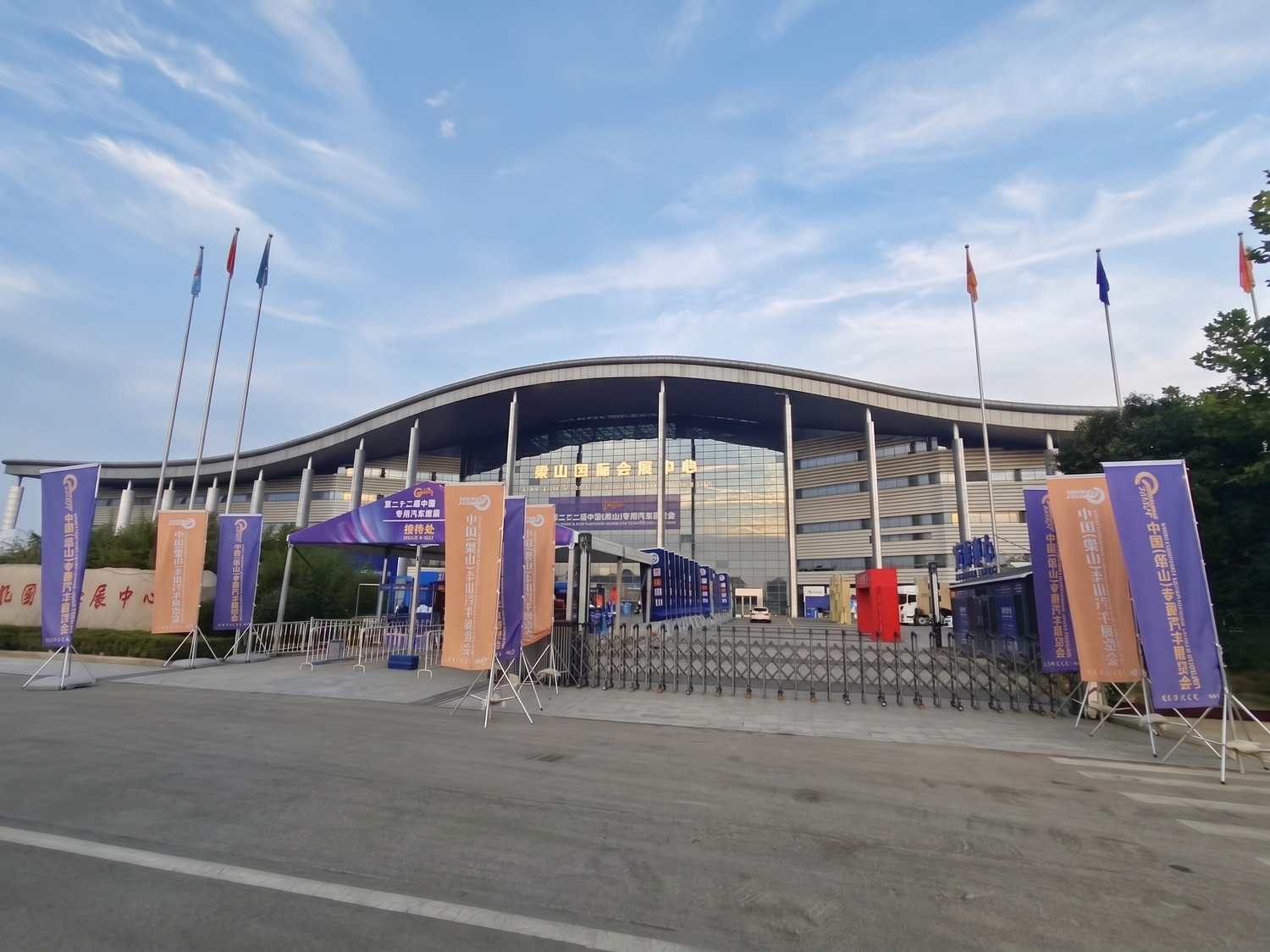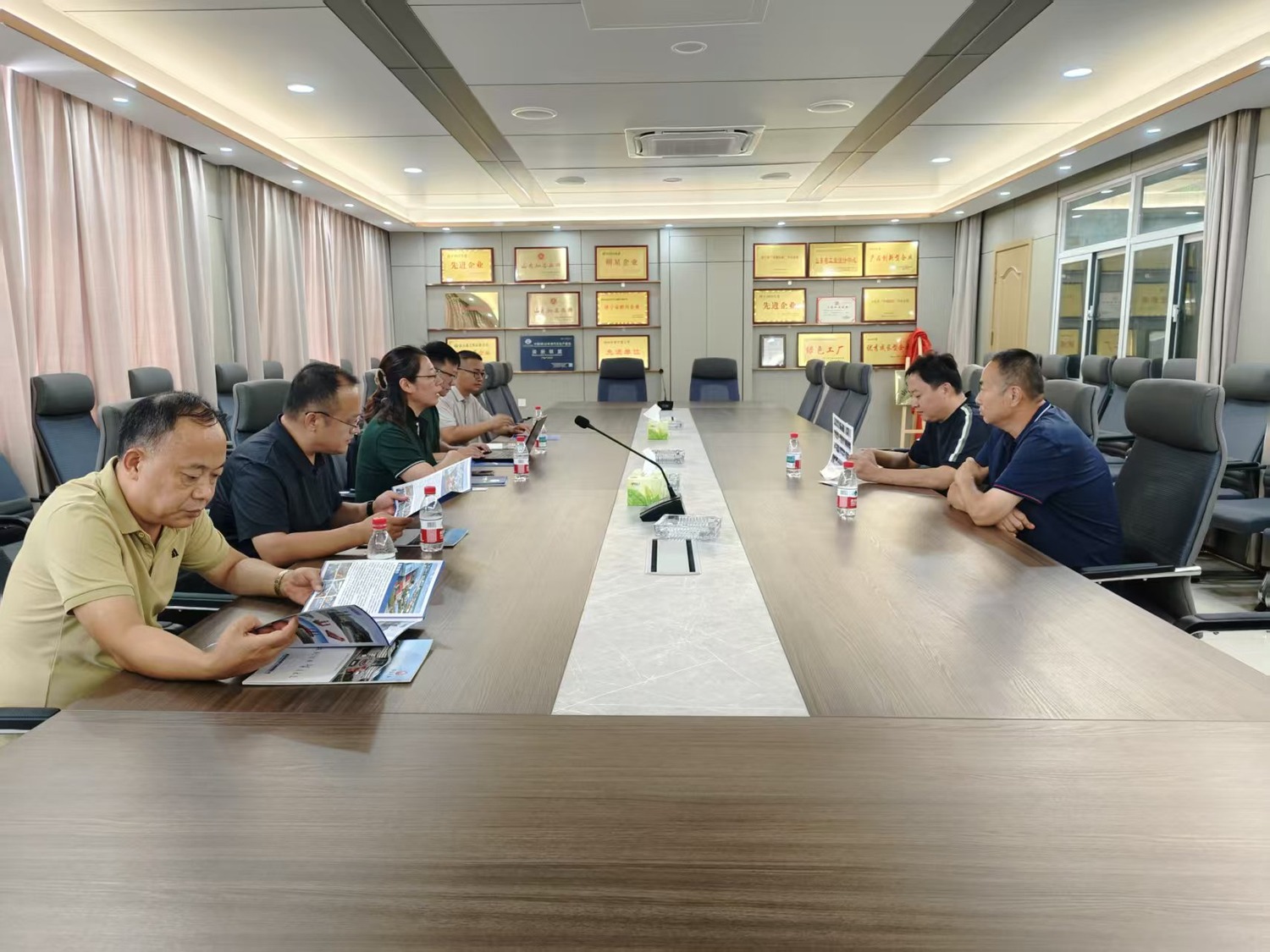
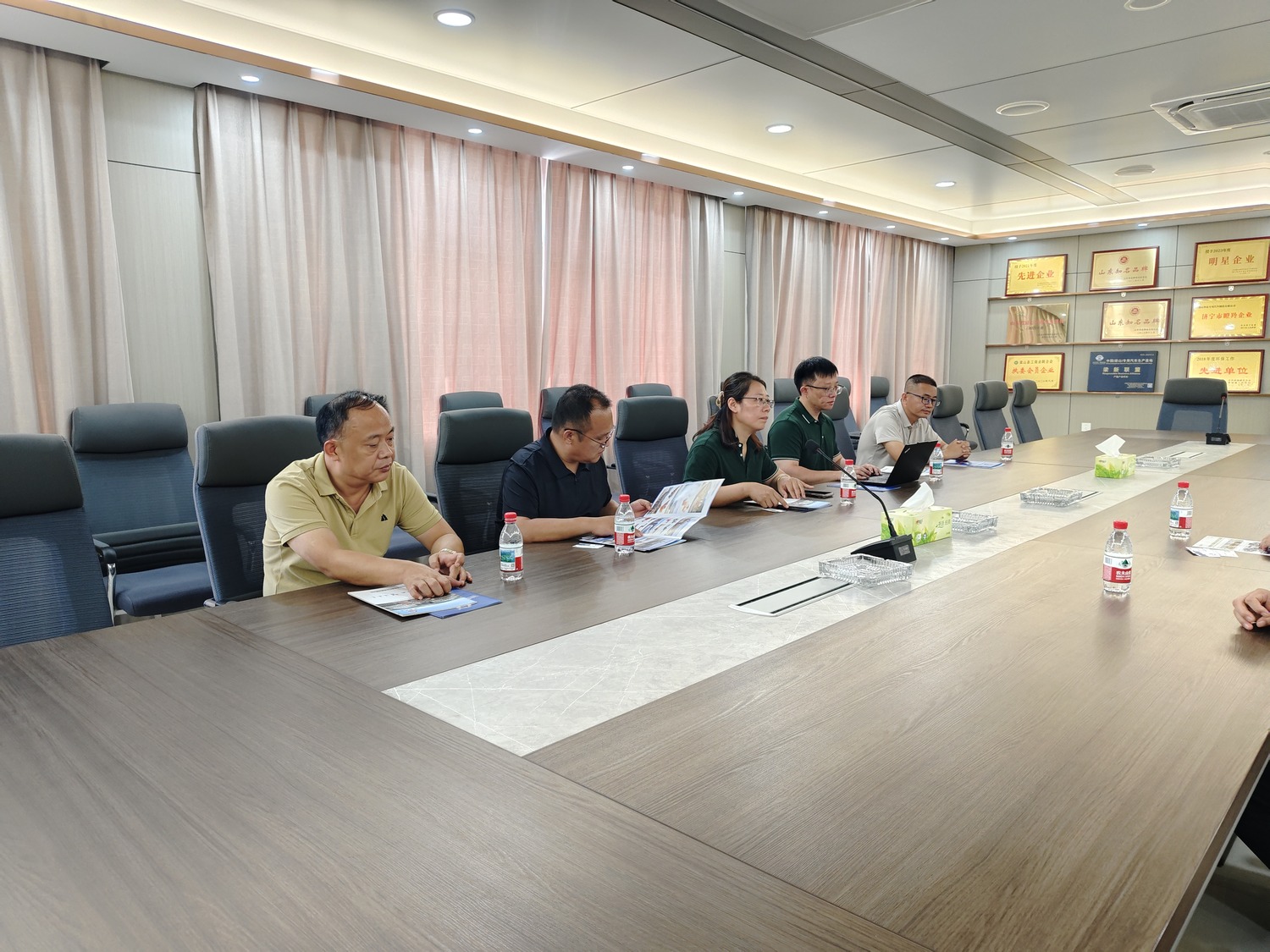
An international freight forwarding company visited HUAYUE, where its representatives met the management team and reached a cooperation arrangement after discussion. The meeting brought trailer manufacturing and international transport experience together around the movement of semi-trailers. For an overseas vehicle project, the trailer is both a product being transported and equipment intended to perform a later transport job.
That dual role gives the discussion a practical purpose. The completed vehicle's shape, support areas and connections influence how it can be moved between locations, while its deck and running gear determine its use after delivery. Understanding these physical features helps connect the export movement with the intended application.
A Vehicle with Two Transport Roles
A semi-trailer carries cargo when coupled to a suitable tractor, but it can also become cargo during an international movement. These are different loading conditions. In one, its running gear and front connection support the operating vehicle; in the other, supports and restraints act on the trailer as an item being carried.
Main beams carry forces between supports, while local fittings perform their designed duties. A component that is convenient to reach is not automatically a suitable lifting, bearing or restraint point.
This gives manufacturer knowledge a concrete role in the transport discussion. The trailer's intended support and connection areas follow its design, while the transport method determines how the vehicle is handled through the journey. Bringing those subjects together helps describe the physical movement coherently.
Dimensions and the Space Occupied
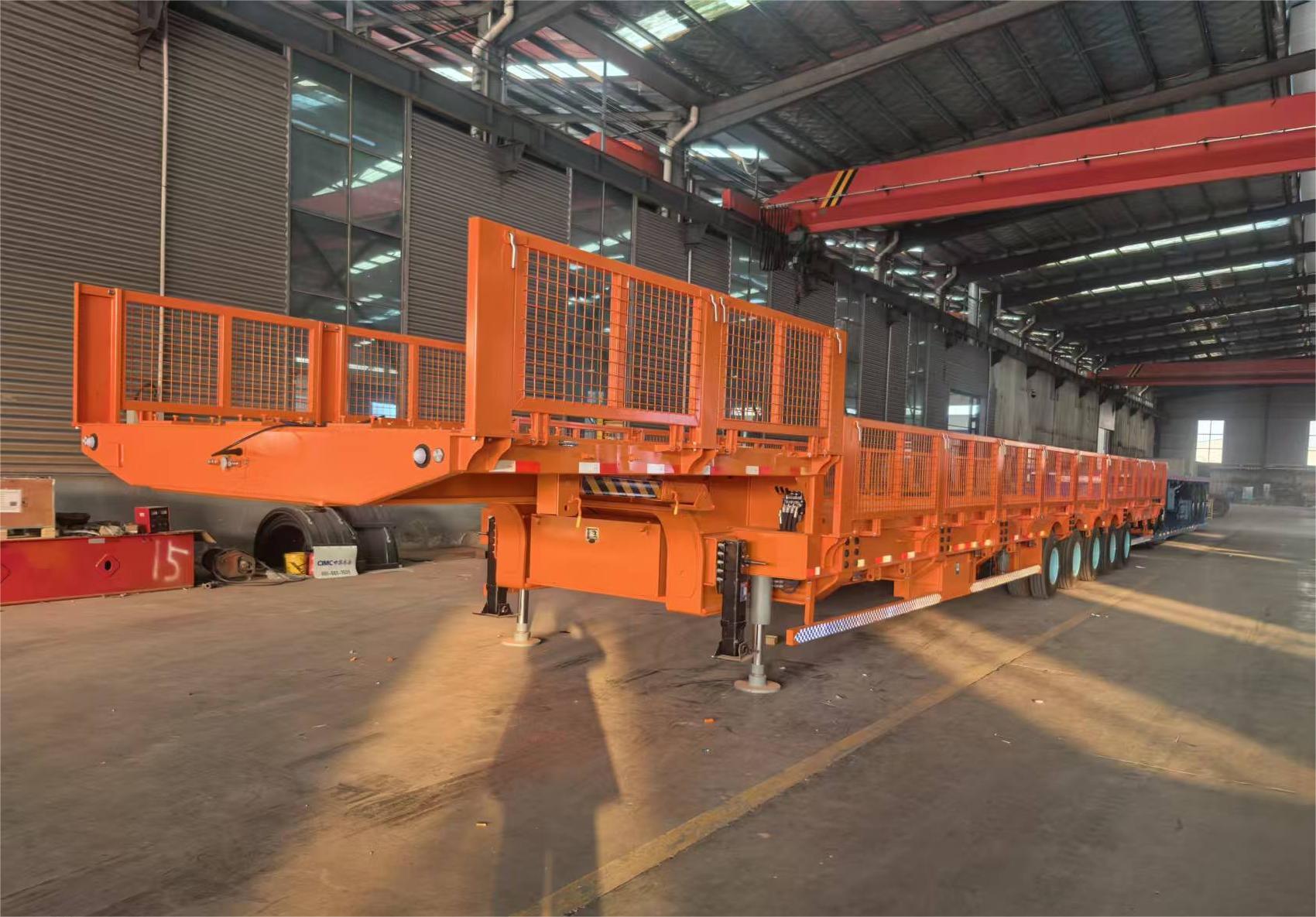
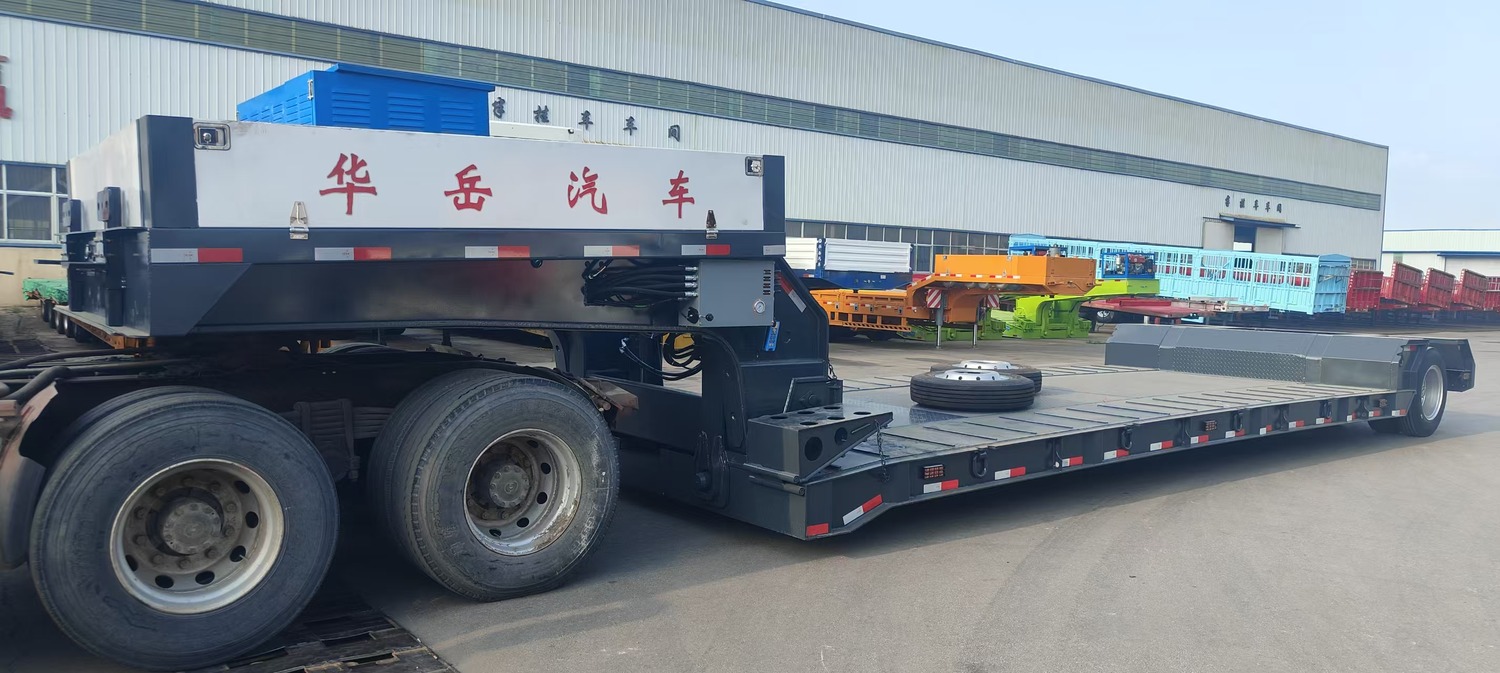
Overall length, width and height describe the envelope of a trailer being moved. The gooseneck, rear structure and projecting components can affect that envelope even when the central deck is relatively low. The external dimensions therefore need to be understood as a complete vehicle shape rather than a single platform measurement.
Weight distribution is a separate characteristic. A trailer with a long open deck may carry more of its own mass around the running gear or front structure. The location of that mass determines reactions at temporary supports, just as cargo position changes the reactions of a loaded trailer in service.
Configuration also affects the transport shape. Some designs have components intended to detach or fold, while others move as a fixed assembly. Such features belong to the particular vehicle and its designed arrangements; they are not automatically available on every trailer of the same general type.
A Lowbed's Intended Working Application
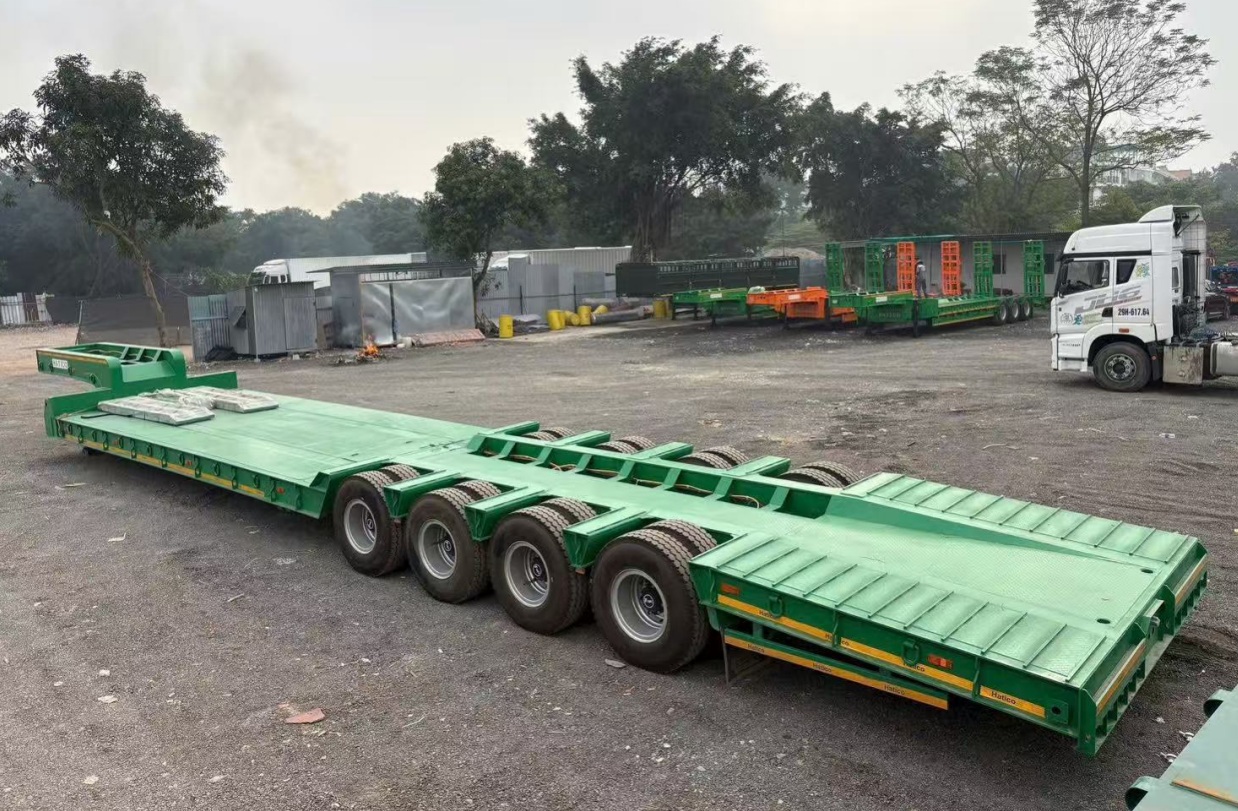
The lowbed platform connects these transport considerations with the vehicle's eventual work. A low deck supports equipment closer to the road than a higher platform carrying the same load. This is useful when machinery height is a major part of the loaded envelope.
The gooseneck connects the platform with the tractor interface, and the rear running gear carries the rear share of the load. Equipment weight passes from its tracks, tyres or support feet into the deck and then through the chassis. These are the physical relationships that make the vehicle suitable for a defined equipment-transport arrangement.
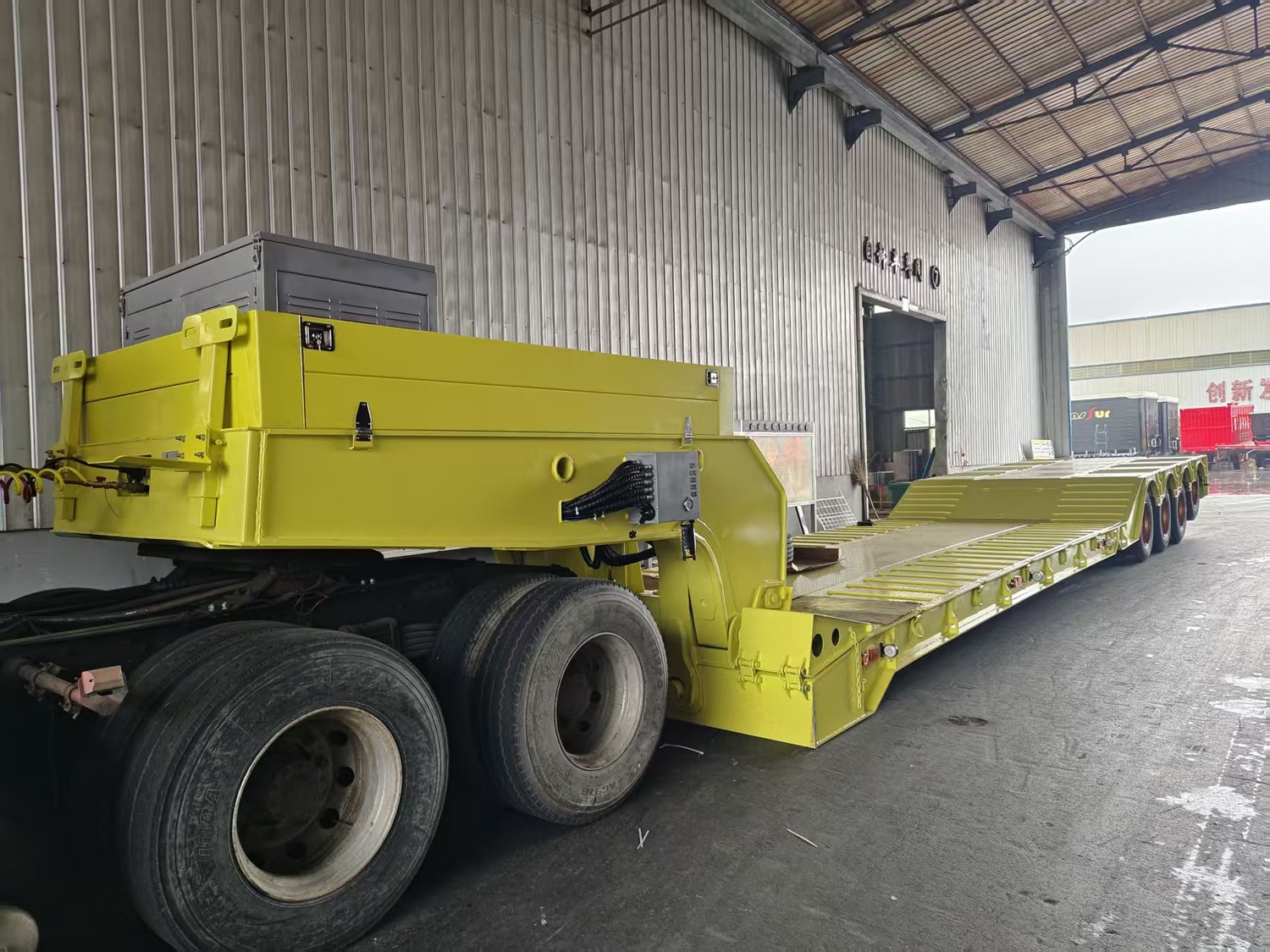
An open deck also gives handling equipment access around the load. A machine's contact footprint can be smaller than its external shape, so the platform must accommodate both bearing positions and surrounding clearance. Its usefulness follows from that combination of support and space rather than an unrestricted statement about heavy-cargo capacity.
Support Through Transfer Points
Moving a trailer between transport stages changes where it is supported and how forces enter the structure. During a lift, forces act at the intended lifting interfaces; during carriage, they pass through the bearing arrangement. Those conditions differ from the loads carried through tyres and the tractor connection during road use.
Restraint adds another force path. It resists movement relative to the carrying vehicle or platform, while the supports carry vertical weight. The trailer's structure must receive each force through an appropriate interface rather than through a vulnerable exterior component.
Surface protection also has a specific role. Covering and protective materials can reduce exposure or contact damage, but they do not replace structural support or restraint. The physical movement is easier to understand when protection, support and securing are treated as distinct functions around the same vehicle.
Cooperation Around the Product and Its Journey
The freight forwarder's visit gave HUAYUE management and the visiting team an opportunity to discuss cooperation directly. The resulting arrangement is the documented business outcome. Its relevance to trailer customers lies in connecting knowledge of the product with knowledge of the movement it will undergo.
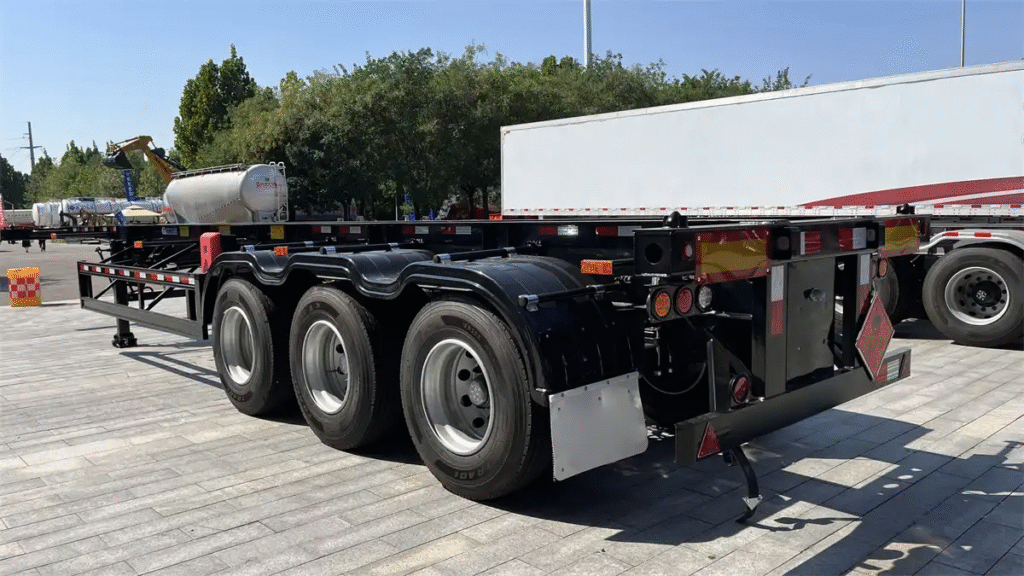
An international trailer project is more concrete when the vehicle's geometry remains central. A lowbed, a covered freight body and a specialised platform have different shapes and handling interfaces. Their transport requirements follow those differences, even when they travel toward the same market.
The intended use remains equally important after the export movement. The deck must carry the planned equipment, the connection must work within the operating combination and the running gear supports the road-going load. Cooperation is useful when it keeps that final working purpose connected to the physical journey of the product.
Frequently Asked Questions
Why is a trailer's export movement different from its road use?
During road use, its tyres and tractor connection support the operating vehicle. When carried as cargo, temporary supports and restraints introduce forces through a different arrangement.
Does deck length describe the whole transport envelope?
No. The gooseneck, rear structure and other projections contribute to the overall dimensions. The complete vehicle shape determines the space it occupies.
Can any accessible chassis component be used for lifting?
No. Lifting forces belong at the interfaces intended for that duty. Accessible fittings may serve unrelated functions and have different structural capacities.
What is the difference between protection and restraint?
Protection reduces exposure or surface damage. Restraint resists movement during transport, while supports carry the vehicle's weight.
Discuss Your Trailer Application
Share your cargo or equipment details, transport route and destination market with HUAYUE for a configuration discussion tailored to the intended application.
Interested in this case?
Contact Us for a Technical Consultation.