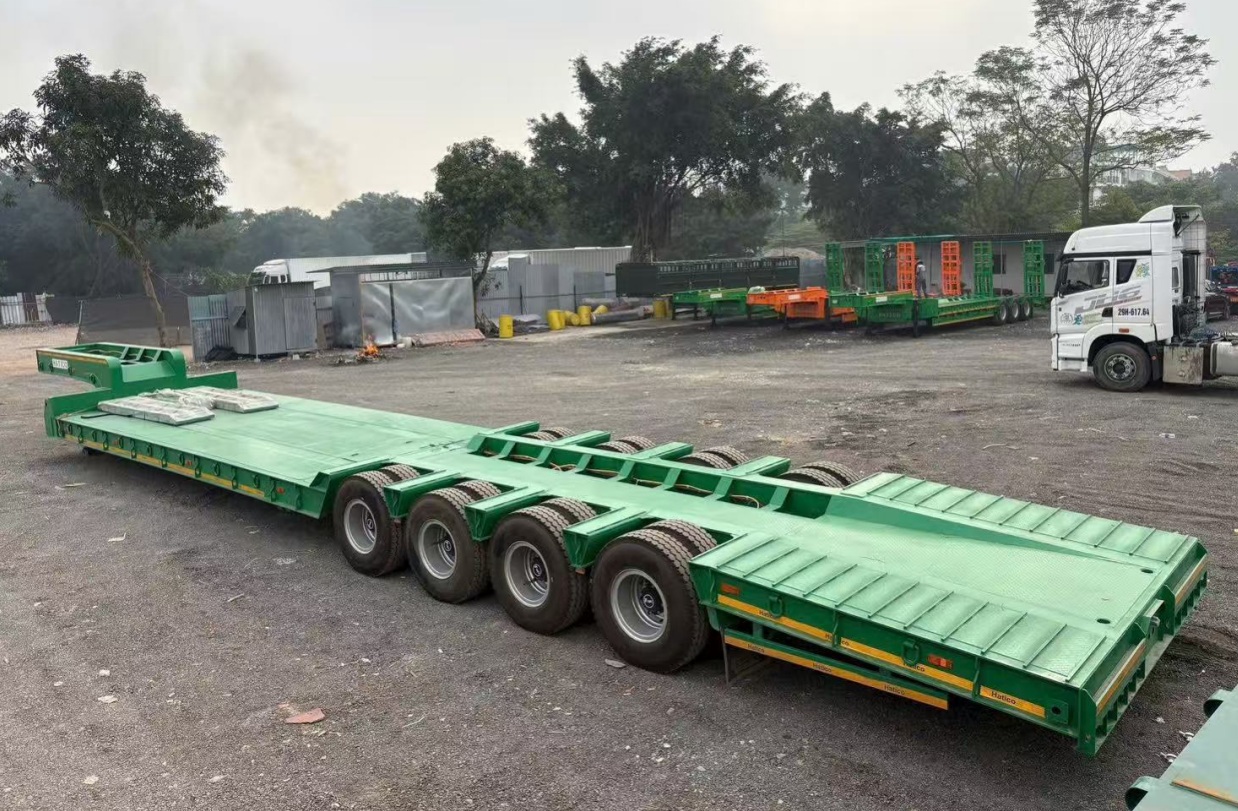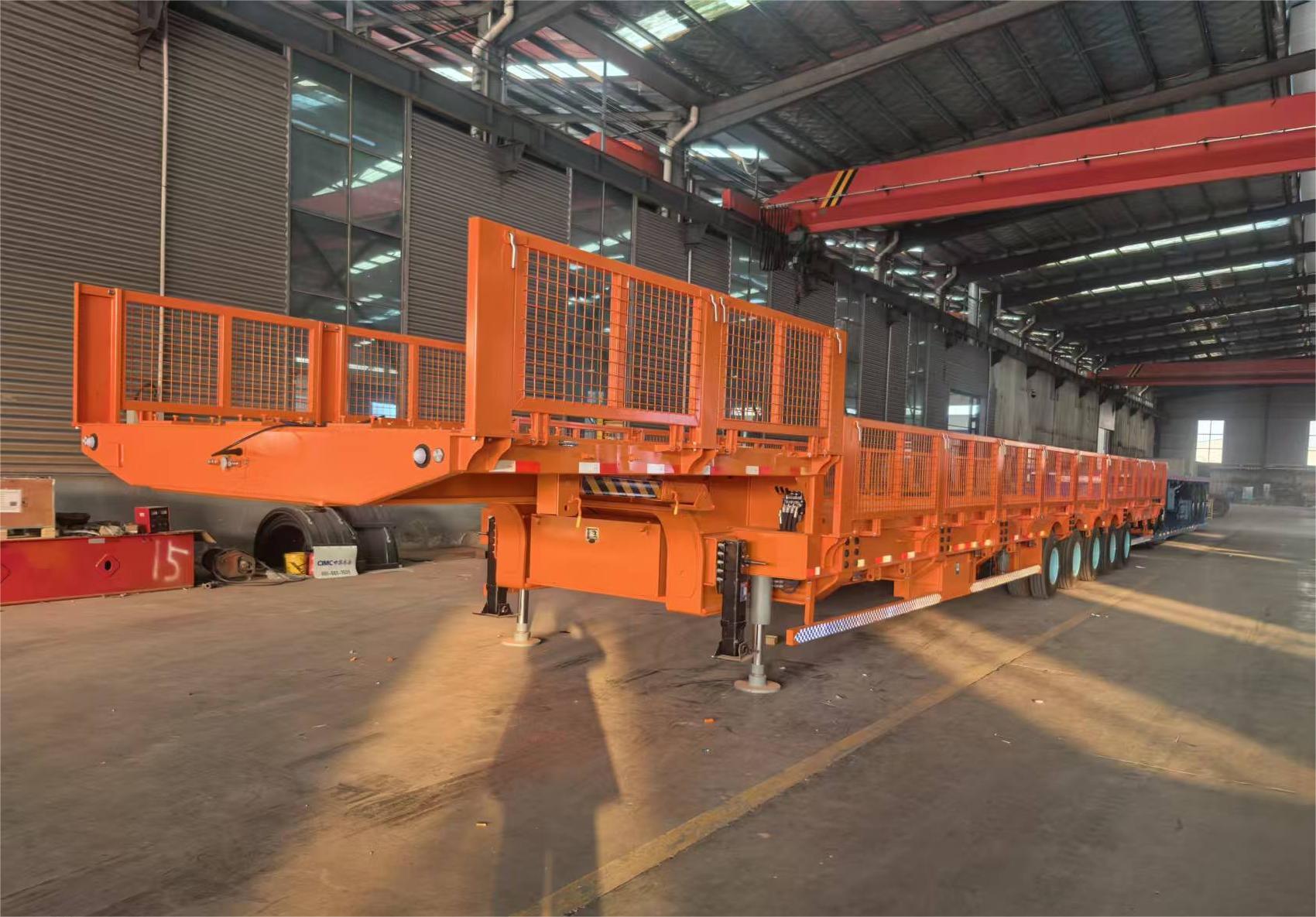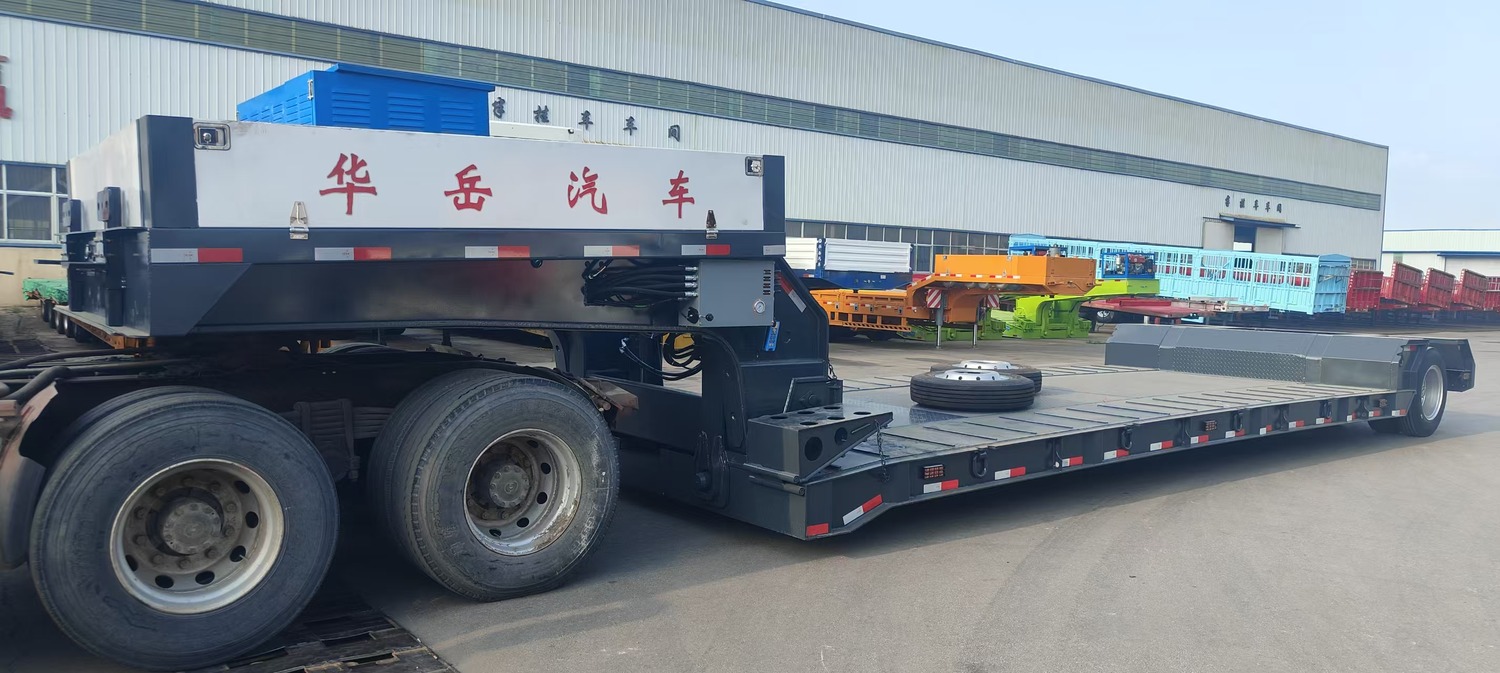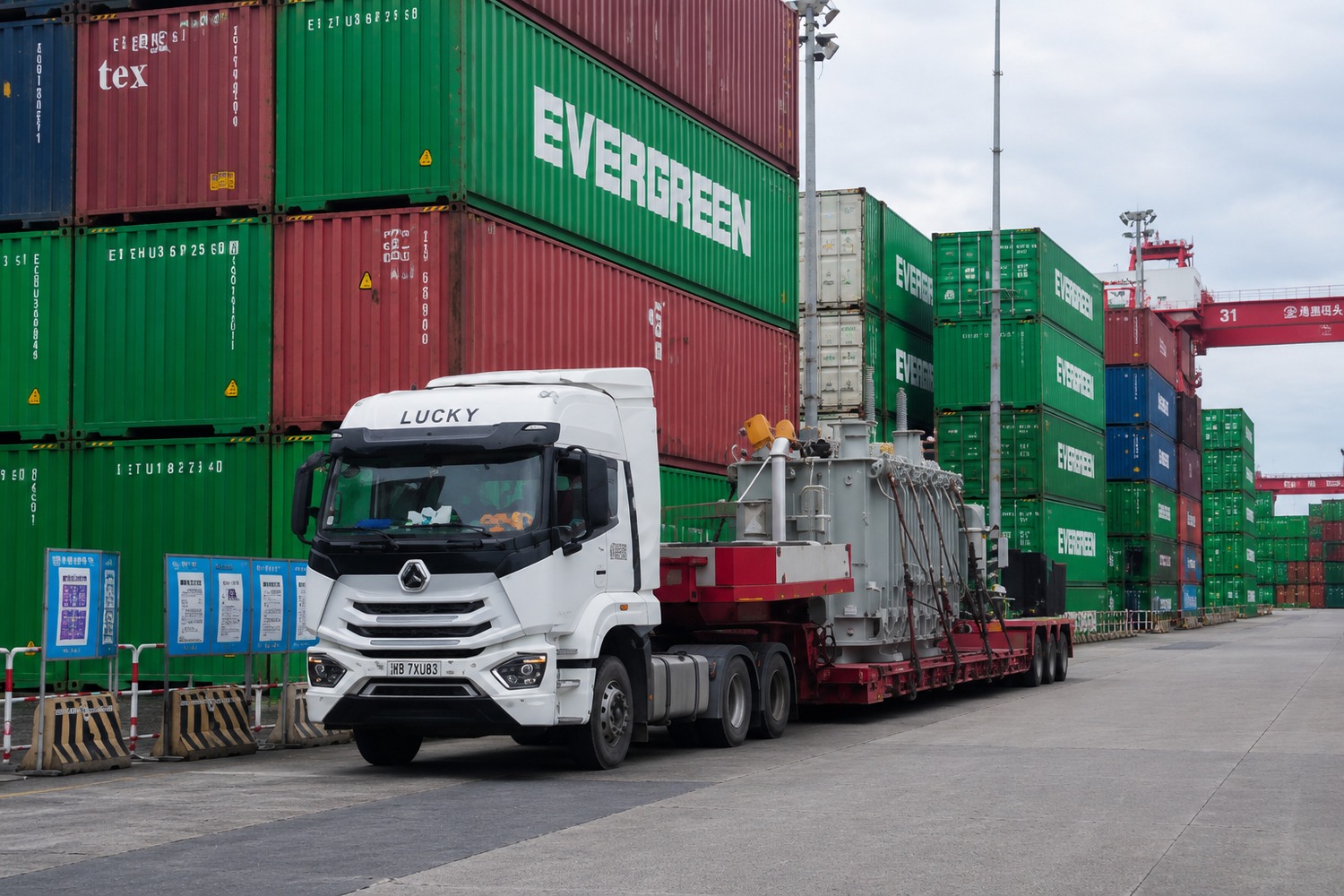
This transformer-transport case centres on a two-axle steering removable-gooseneck trailer. The HUAYUE configuration combines a low cargo deck with steering axles, and the design offers deck extension and the addition of axles for different arrangements. The customer had used the trailer for transformer transport and expressed satisfaction with it in service.
A transformer places different demands on a platform from self-propelled construction equipment. It is carried through defined supports and moved with handling equipment rather than driven onto the trailer. Deck height, bearing positions and manoeuvring geometry therefore have direct relevance to the transport task.
A Low Platform Beneath the Transformer
Transformers are dense electrical components with a defined footprint on the trailer deck. A removable-gooseneck lowbed positions that footprint on a lower platform. Reducing the height beneath the transformer helps manage the overall transport profile, particularly where the tank and attached equipment dominate the load's height.
The deck is the direct interface with the transformer support points. Its usable surface and supporting structure determine how the load is carried, while the transformer's intended transport supports determine where contact belongs. External panels and accessories perform different functions from those load-bearing areas.
The low platform also positions the same load closer to the road. That contributes to the centre-of-gravity arrangement, although the transformer's internal weight distribution and the complete vehicle geometry remain important. The advantage is a lower cargo position within a defined transport configuration.
Two Steering Axles and the Turning Path
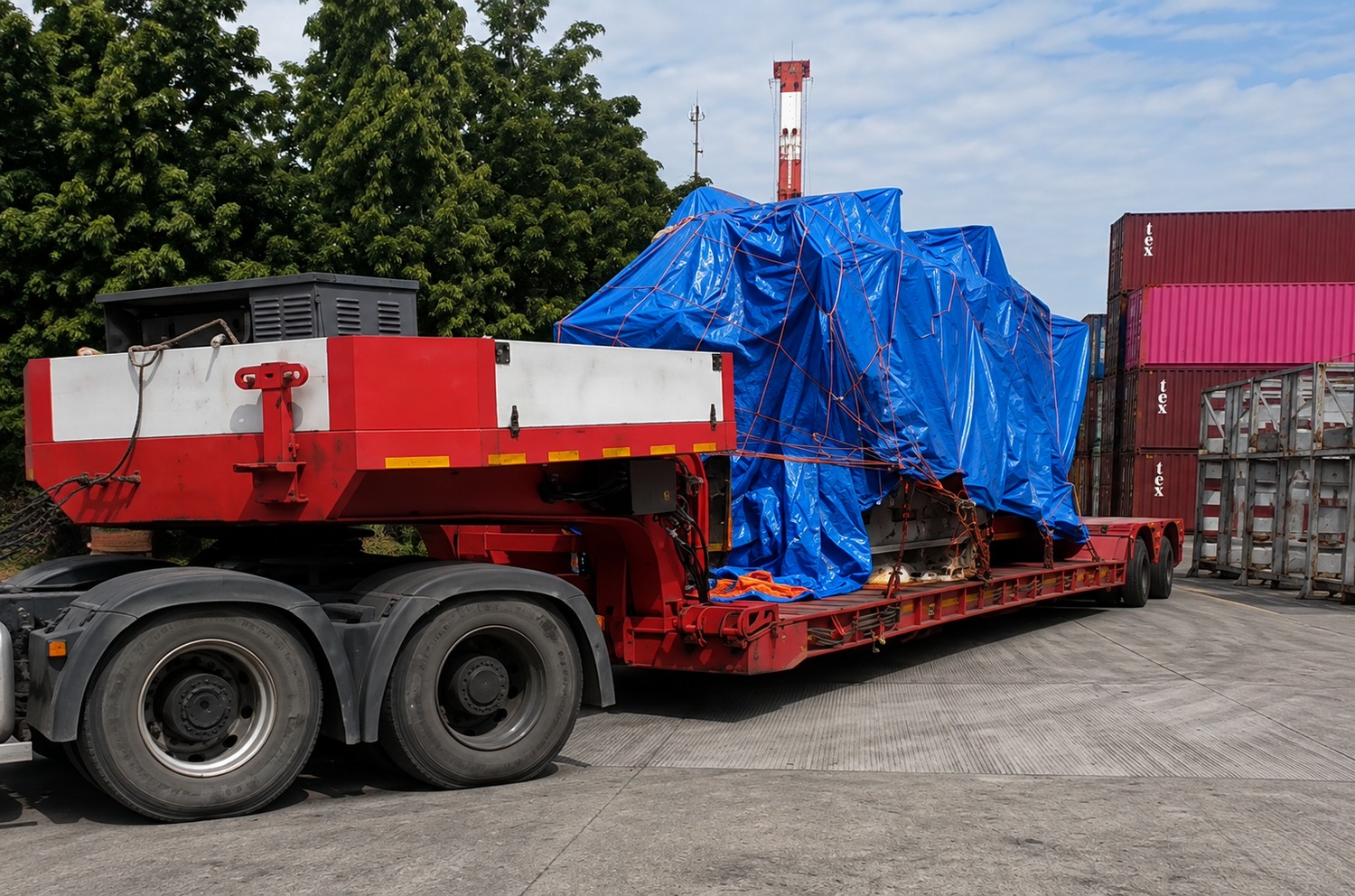
Steering axles change the direction of the trailer wheels as the combination turns. This helps the running gear follow a path suited to the trailer geometry instead of relying entirely on fixed wheels sliding across different arcs. The feature is particularly relevant where a loaded lowbed moves through bends or constrained entrances.
The effect is easiest to understand by separating wheel direction from cargo clearance. Steering changes the wheel path, but the transformer and deck still occupy space beyond those tracks. A corner can have room for the wheels while leaving less clearance for the load or a projecting part of the trailer.
The tractor and trailer also follow different paths. The tractor's turn initiates the movement, while the trailer's wheelbase and steering arrangement influence the path behind it. The practical benefit of steering belongs to that complete geometry rather than a claim that the trailer can negotiate every confined site.
Deck Extension for Different Load Arrangements
The trailer design allows the deck to extend. Extension changes the longitudinal space available for a load and its support arrangement. This is useful when the length between the relevant bearing positions requires more room than the shorter configuration provides.
An extended deck also changes the distance over which the structure carries its load. The extension's engagement and supporting members belong to that load path, so a longer platform is not simply extra empty space. The structural arrangement and load position remain central to its use.
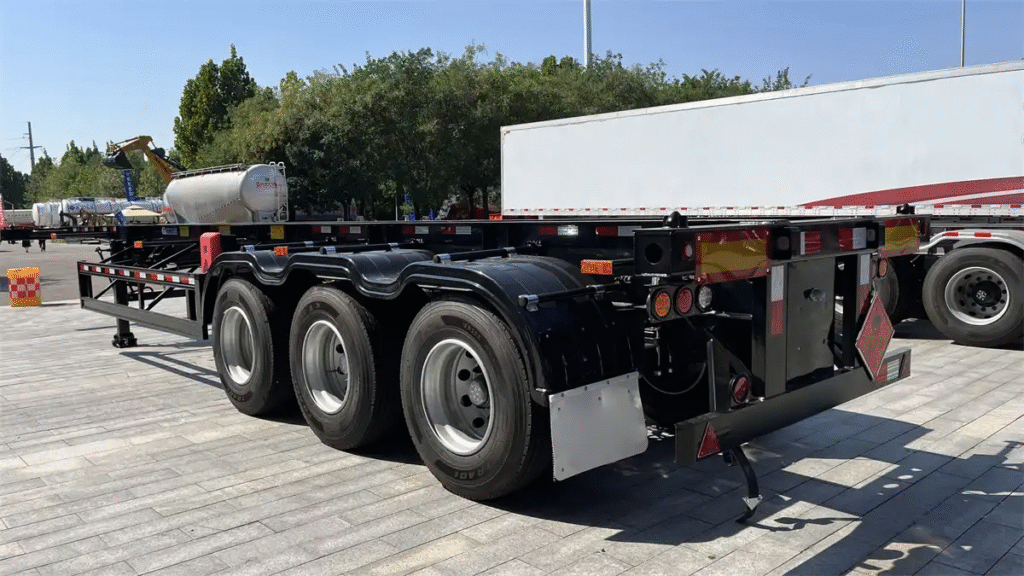
The option to add axles addresses another part of the configuration. Additional axle positions can change how load is supported and distributed, but their value depends on the complete combination, including the deck and front connection. Deck extension and axle additions therefore provide different forms of adaptability.
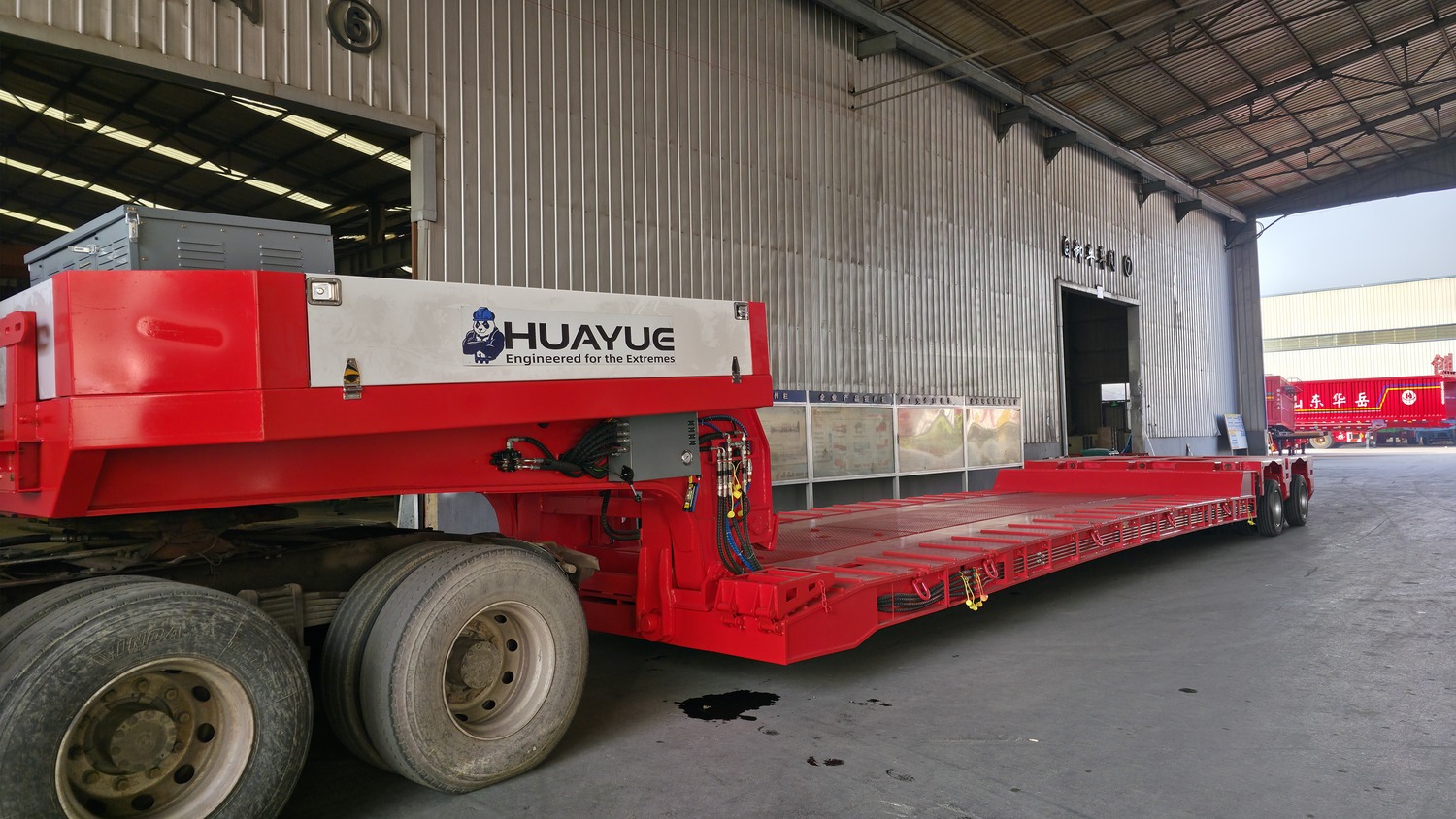
The base configuration in this case has two steering axles. The extendable deck and additional-axle capability describe available arrangements around that design, rather than a single fixed specification for every movement. Keeping the base vehicle distinct from its options makes the transformer application easier to understand.
Detachable Gooseneck and Load Access
The removable gooseneck can separate from the front of the deck, opening that end of the platform. This creates a different access arrangement from a fixed front section. For non-self-propelled loads such as transformers, the actual transfer method still depends on the handling equipment and intended support system.
A low, accessible platform can form part of a lifting, sliding or other engineered transfer arrangement. Each method places different demands on the support interfaces as the load moves onto the trailer. The detachable neck provides access; it does not itself lift the transformer or define the handling method.
Once loaded, the transformer needs support and restraint suited to its transport structure. Vertical weight passes through the bearing points into the deck, while restraint resists movement under braking, acceleration and cornering. These forces belong at the intended attachments rather than vulnerable equipment mounted around the tank.
An In-Service Transformer Application
The customer's positive feedback adds a practical operating context to the configuration. The trailer had carried transformers, giving the low deck and steering layout a real application. The useful result is an account of satisfactory use of this particular vehicle, without turning it into a universal handling or performance claim.
The design brings together three distinct functions. The deck supports the transformer at a low position, the steering axles influence the path through bends and the configurable platform provides scope for different support lengths. Each function connects directly to a transport problem associated with substantial electrical equipment.
Frequently Asked Questions
What is the benefit of steering axles on this RGN?
They change the wheel directions through a turn, helping the running gear follow the intended path. The deck and cargo envelope still determine additional clearance around the combination.
Does the detachable neck load a transformer by itself?
No. It opens access to the front of the deck. The transformer requires a suitable transfer method and handling equipment for its intended support arrangement.
What does deck extension change?
It increases the available longitudinal space and changes the structural span. Load position and the extension's working configuration remain part of the carrying arrangement.
Discuss Your Trailer Application
Share your cargo or equipment details, transport route and destination market with HUAYUE for a configuration discussion tailored to the intended application.
Interested in this case?
Contact Us for a Technical Consultation.