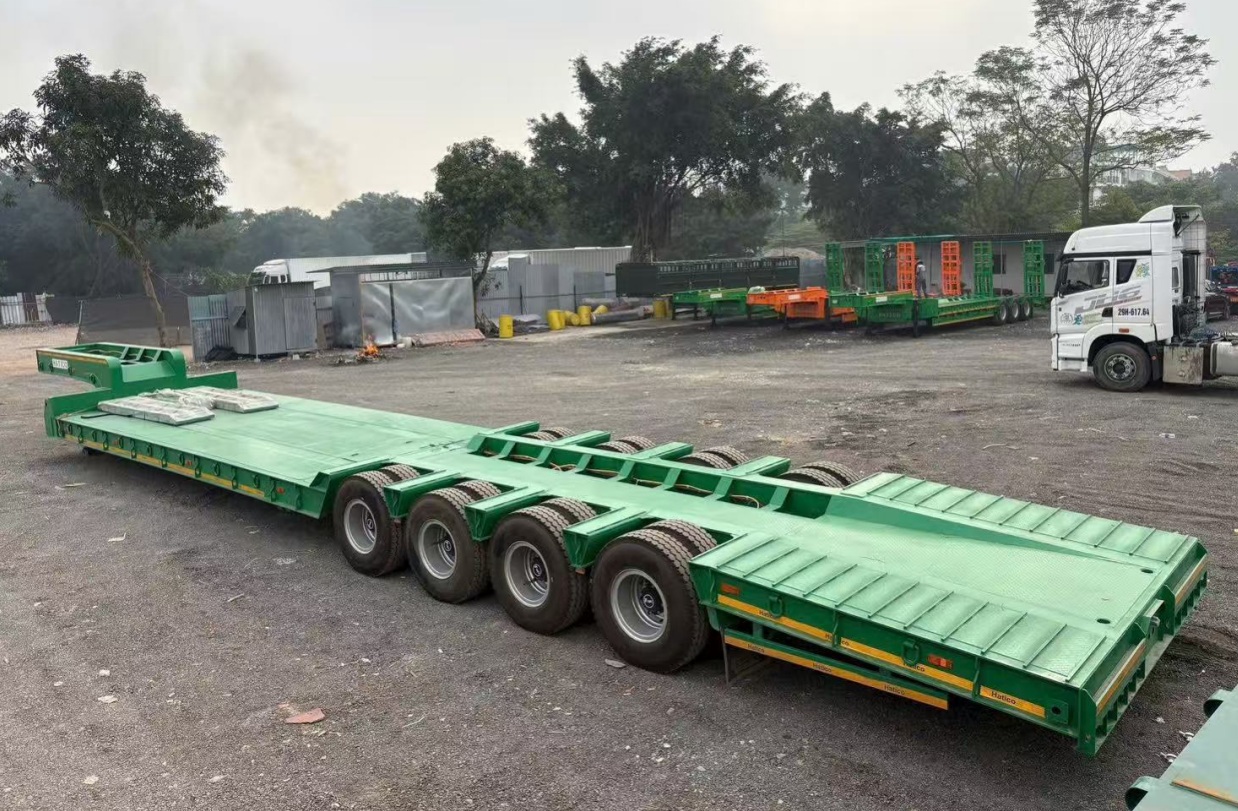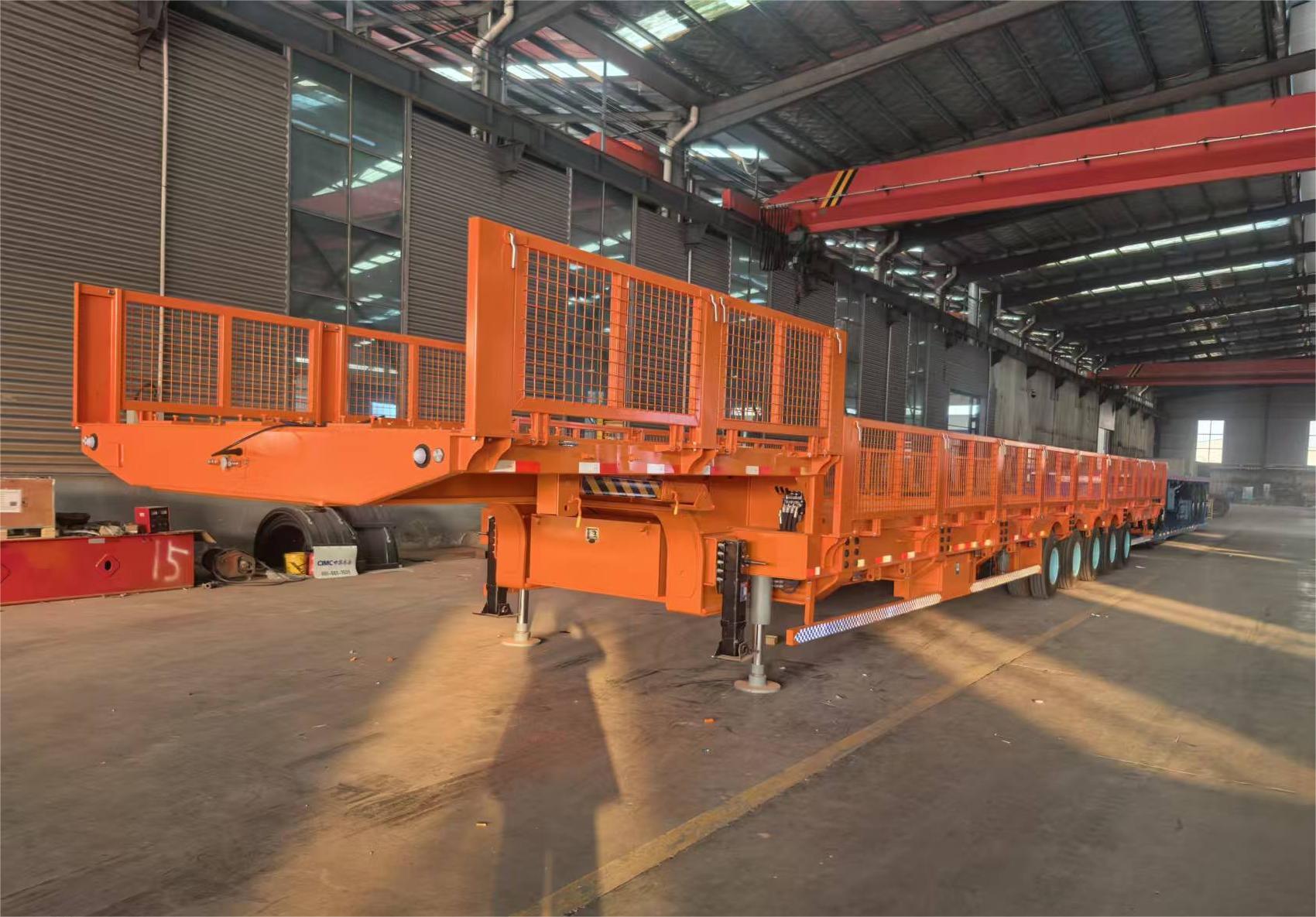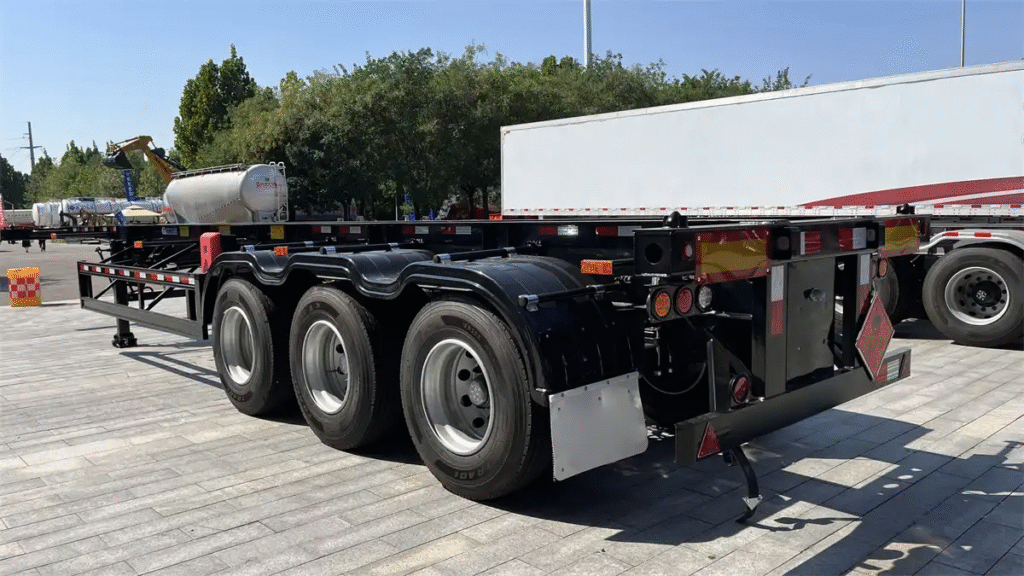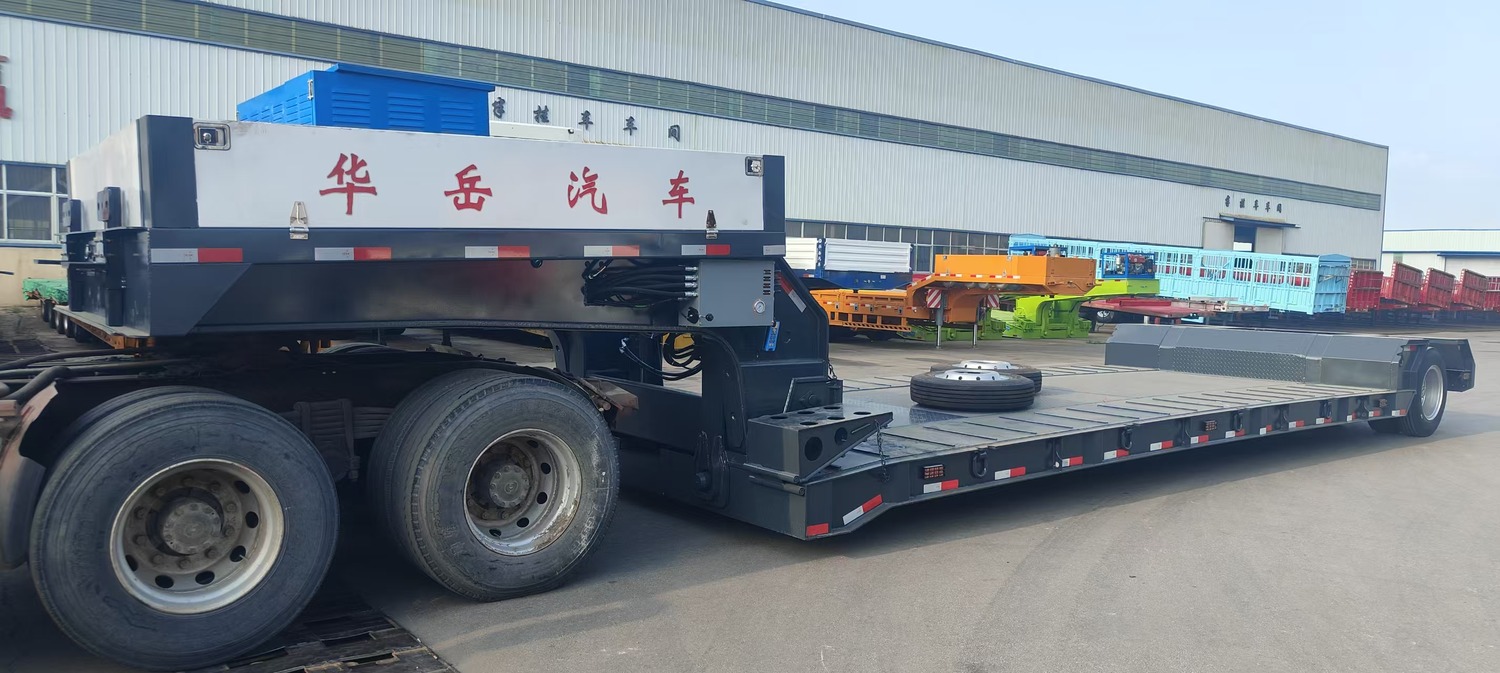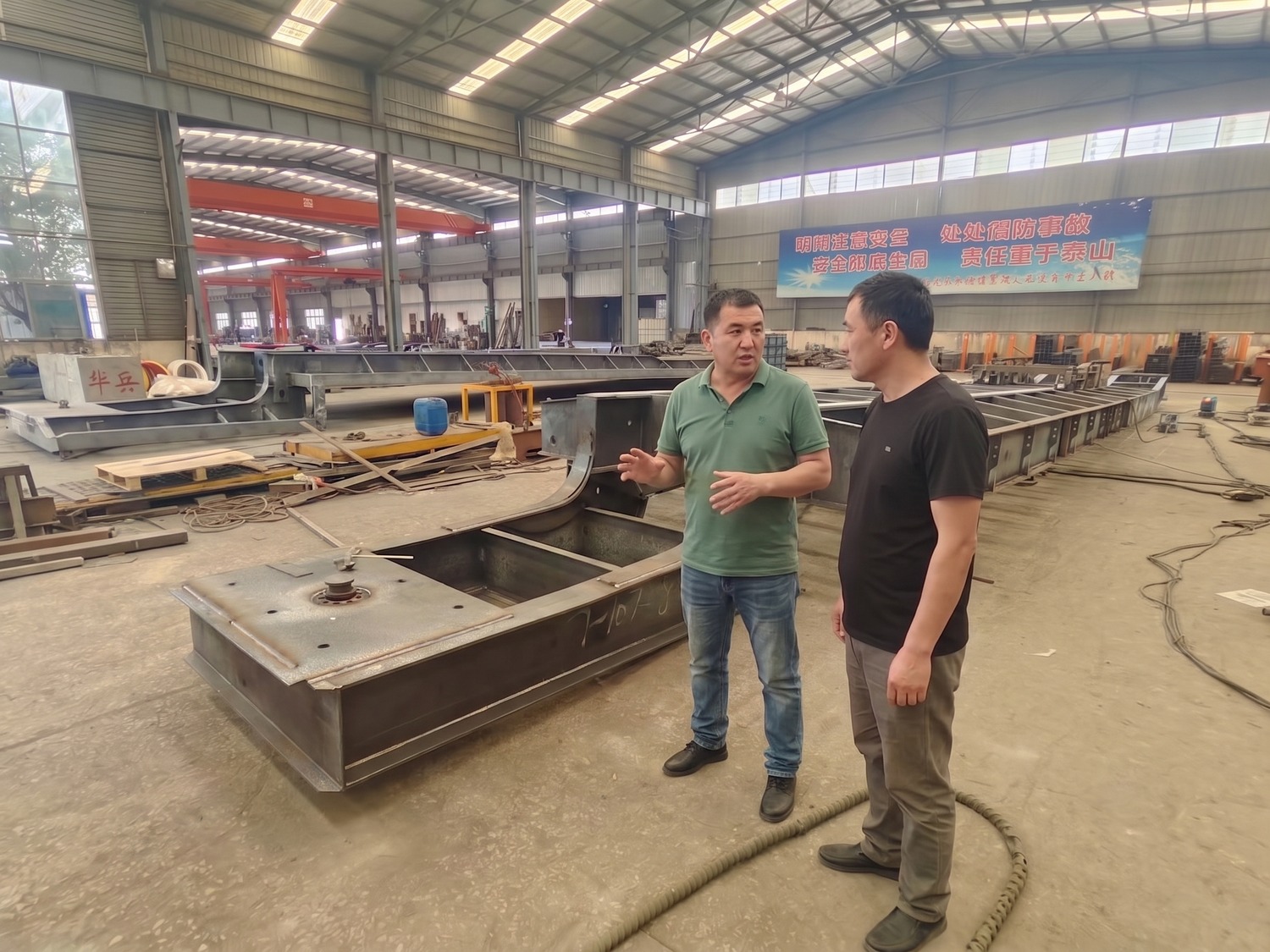
Two visitors from Kazakhstan came to HUAYUE while considering two four-axle lowbed semi-trailers. Their interest included the chassis workmanship, and they gave positive feedback on the neat appearance and finish of the main-beam welds. That observation provides a useful starting point for explaining what welded construction contributes to a lowbed.
The main beams are central structural members beneath the cargo platform. They carry forces between the equipment-supporting deck, the front connection and the rear running gear. The visitors' attention to this area connected a visible workmanship detail with a part of the trailer that performs a substantial structural job.
Main Beams Beneath the Equipment Deck
A lowbed carries machinery through its tracks, tyres or designated support points. Those contacts can occupy much less area than the machine's overall footprint, so weight enters the platform unevenly. The deck and crossmembers transfer those local forces into the longitudinal members underneath.
The main beams resist the bending associated with carrying that load between supports. The position of the equipment affects where the bending demand occurs and how the load is shared with the tractor. A long platform is therefore a structural span as well as a space in which a machine can fit.
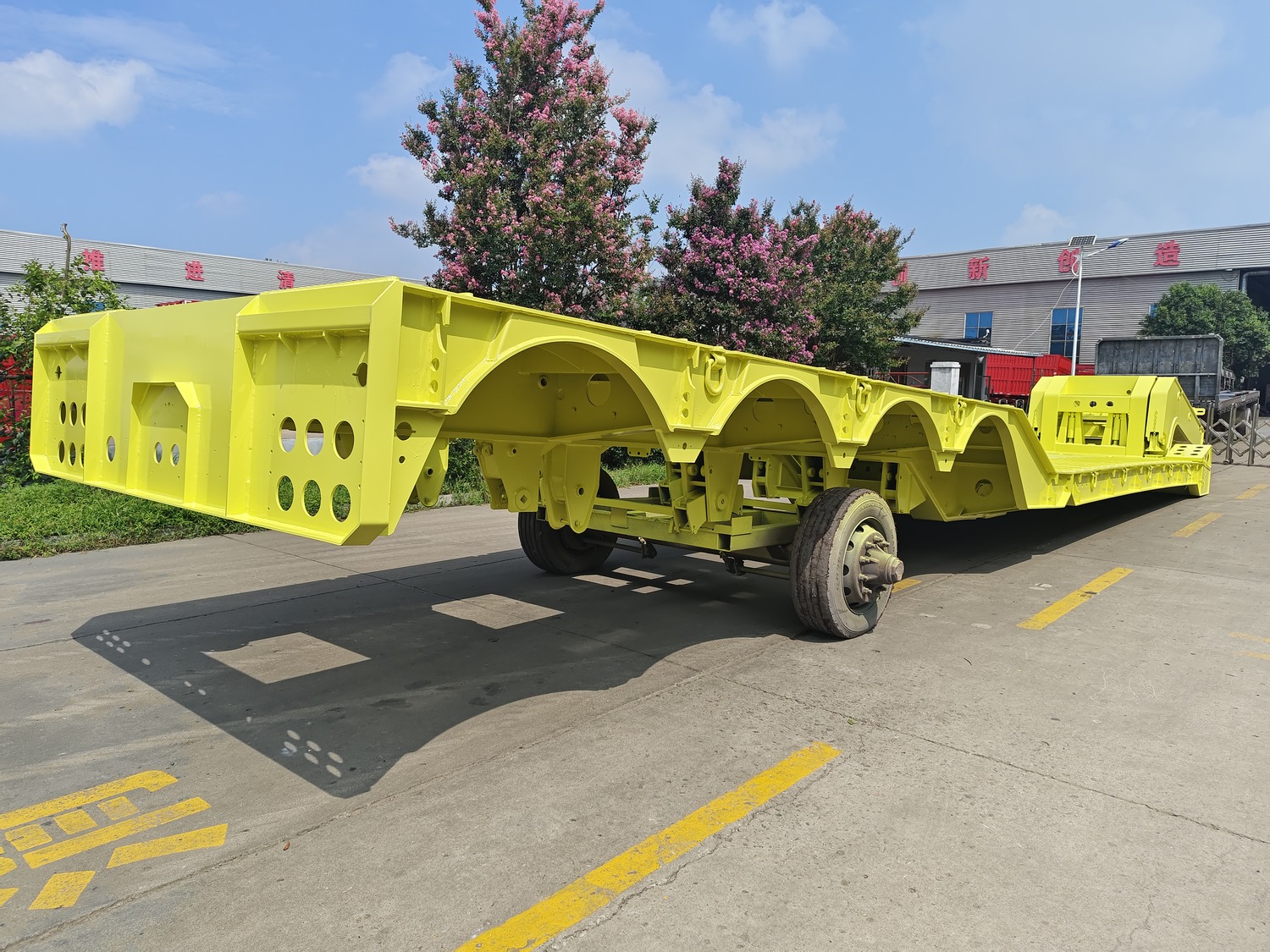
Changes in frame height connect the low deck with the front section and running-gear area. These transitions are important because the structural forces continue through them. Maintaining the intended geometry across those connections helps the deck, front interface and chassis work in their designed positions.
What the Visitors Noticed About Welding
The Kazakhstan visitors particularly liked the neat appearance of the main-beam welds. Their reaction is a specific impression of the workmanship they encountered during the visit. It belongs in the customer story without being expanded into a comparative strength claim against other manufacturers.
Welded joints connect steel members so forces can pass between them. At a crossmember, the connection helps transfer local deck loads into the main structure; elsewhere, a joint may be part of a more substantial transition. Different locations consequently have different structural duties.
A consistent weld surface and tidy finishing can make the workmanship easier to appreciate. Structural performance, however, also depends on the joint design, material and welding procedure. Appearance and load-carrying behaviour are related aspects of fabrication, but they are not interchangeable measures.
That distinction gives the customer's comment a clear place in the article. The visitors responded positively to visible workmanship while discussing lowbed trailers. The engineering explanation concerns the role of the welded chassis, rather than treating their reaction as a test result or a rated capacity.
Alignment and Repeated Loads
Welding introduces heat into the structure, and contraction during cooling can affect its shape. Frame alignment is therefore part of fabrication quality, alongside the individual joints. The finished relationship between the beams, deck supports and attachment areas matters to how the trailer is assembled and used.
During road movement, the frame experiences changing forces as tyres pass over uneven surfaces. Braking and turning add demands beyond the static weight of the machine. Joints and members therefore work through repeated loading conditions, which explains why chassis design extends beyond a single static view of the vehicle.
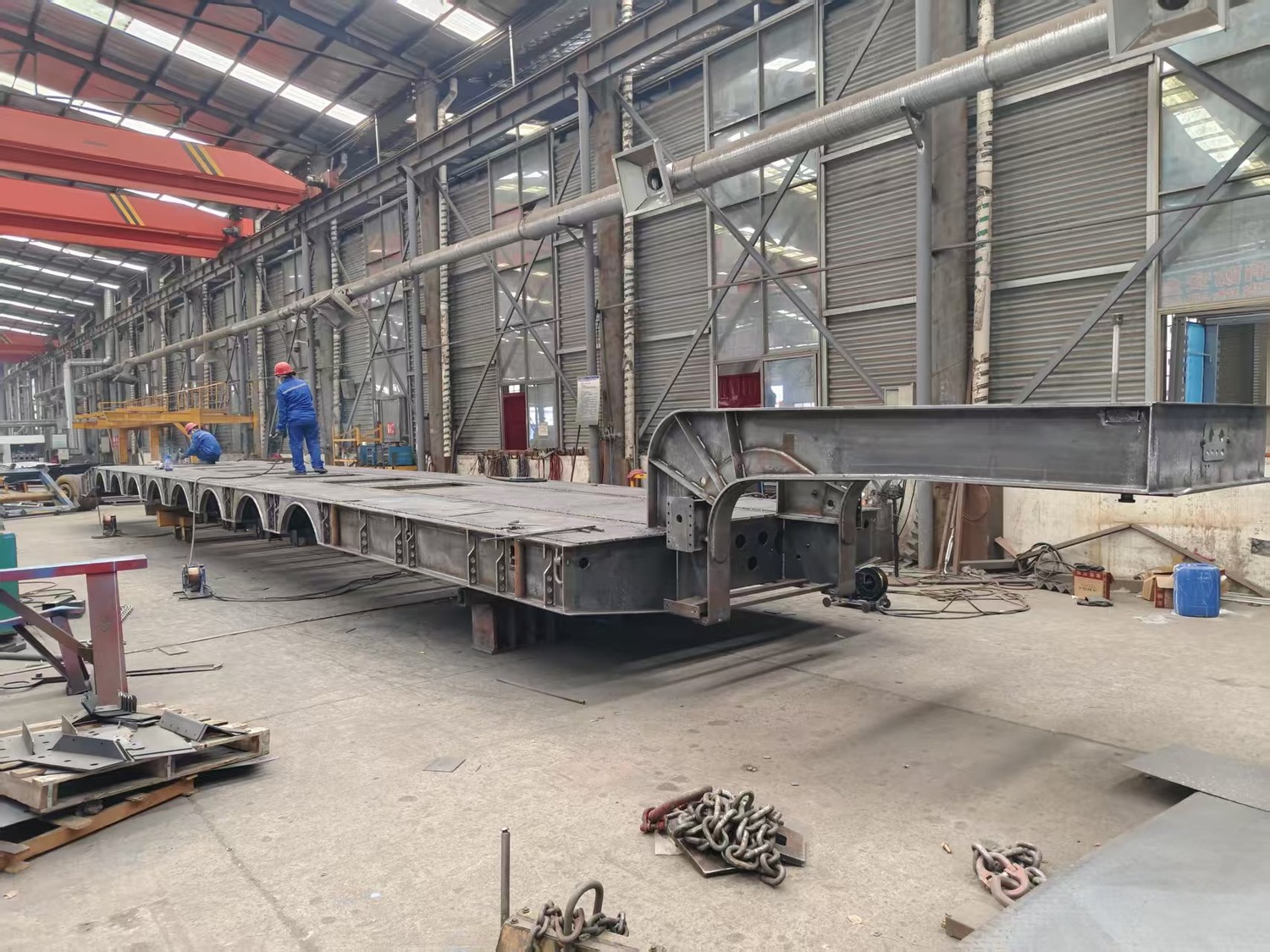
The surrounding member is as important as the weld itself. A connection transfers force into adjoining steel, so the local geometry and support determine how that force continues through the frame. An isolated seam cannot describe the entire load path of a lowbed chassis.
The Four-Axle Configuration Under Discussion
The vehicles under consideration were four-axle lowbeds. The four axles provide multiple road contact positions beneath the trailer structure, while the tractor connection carries the front share of the supported load. The division depends on the loading position and suspension arrangement.
Placing machinery farther forward changes the load at the tractor connection; moving it rearward changes the reaction at the running gear. A four-axle designation therefore tells the reader about the chassis arrangement, while a payload value would require the complete vehicle and loading conditions. The two descriptions answer different technical questions.
The low platform is useful for machinery with substantial transport height. It reduces the height added beneath the equipment, while the machine's cab, upper structure and attachments determine the rest of the profile. This is the operating context in which the chassis and its welded construction perform their work.
A Customer Visit Focused on Workmanship
The visit brought customer interest and physical manufacturing detail into the same discussion. The Kazakhstan visitors were considering four-axle lowbeds and paid attention to the main-beam welds, rather than judging the vehicles by an exterior colour or model name alone. Their positive reaction is the documented human element of this case.
The practical takeaway is a clearer understanding of the structure they were discussing. Main beams carry the platform loads between supports, crossmembers handle local deck forces and welded connections transfer those forces through the frame. These functions explain why chassis workmanship is relevant to a lowbed intended for equipment transport.
Frequently Asked Questions
What do the main beams do on a lowbed trailer?
They carry forces along the chassis between the deck, front connection and running gear. Their role includes resisting bending from the supported equipment.
Why are track and tyre contact areas important?
They determine where machinery weight enters the deck. Concentrated contact areas place local demands on the floor, crossmembers and the structure beneath them.
Does a tidy weld indicate a specific payload?
No. It is an aspect of workmanship. Payload depends on the complete design and loading arrangement, including materials, joints, running gear and front connection.
Why does frame alignment matter after welding?
Cooling can change the shape of a fabricated structure. The intended alignment keeps the deck supports, connections and attachment areas in their designed relationship.
Discuss Your Trailer Application
Share your cargo or equipment details, transport route and destination market with HUAYUE for a configuration discussion tailored to the intended application.
Interested in this case?
Contact Us for a Technical Consultation.