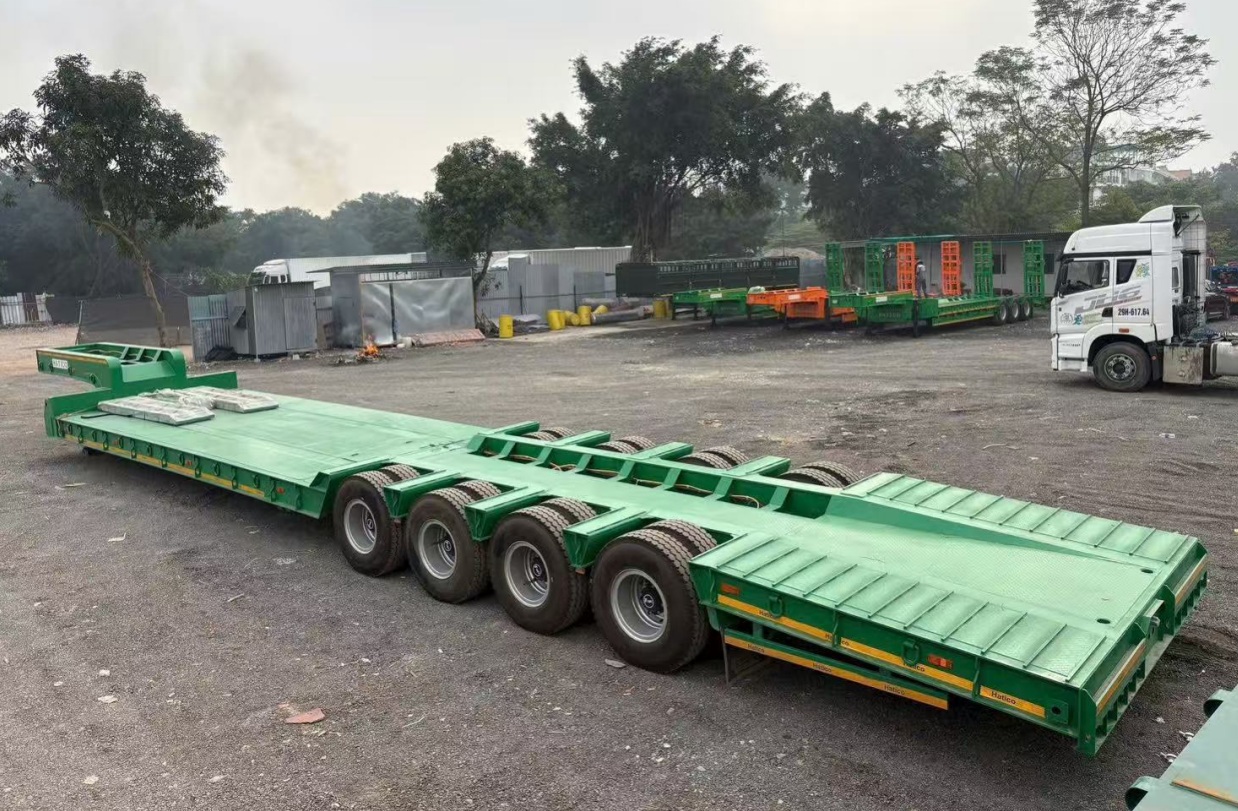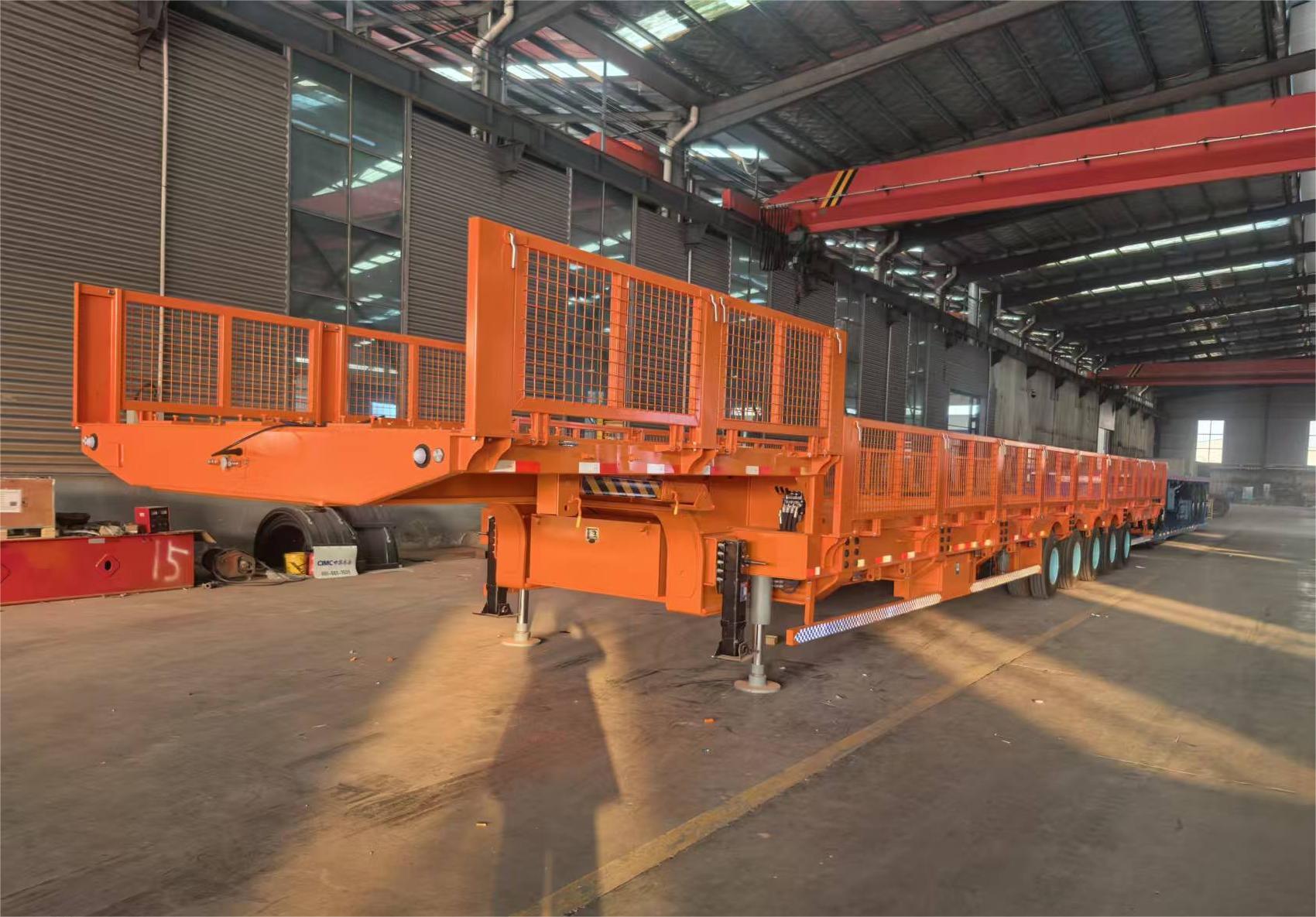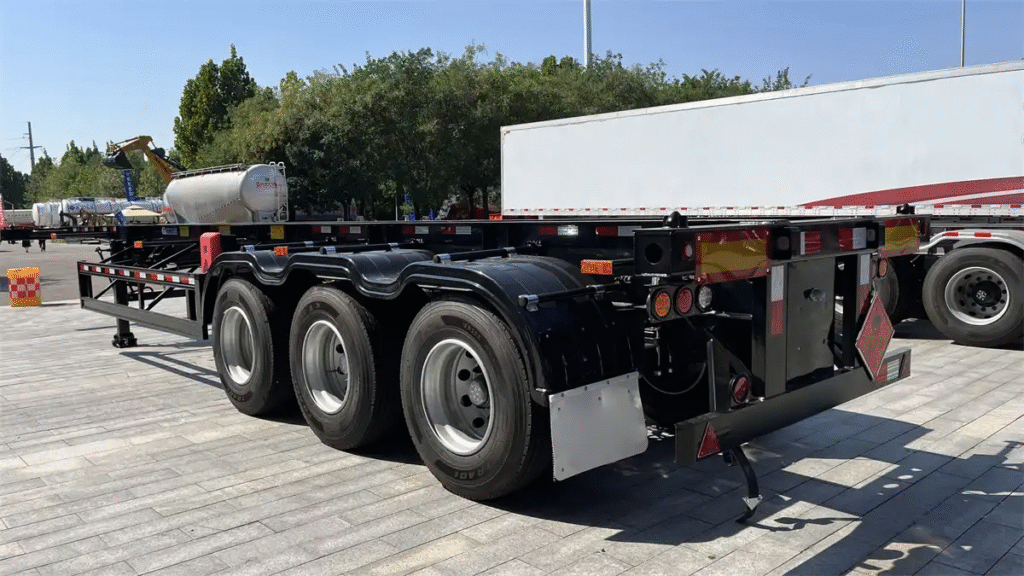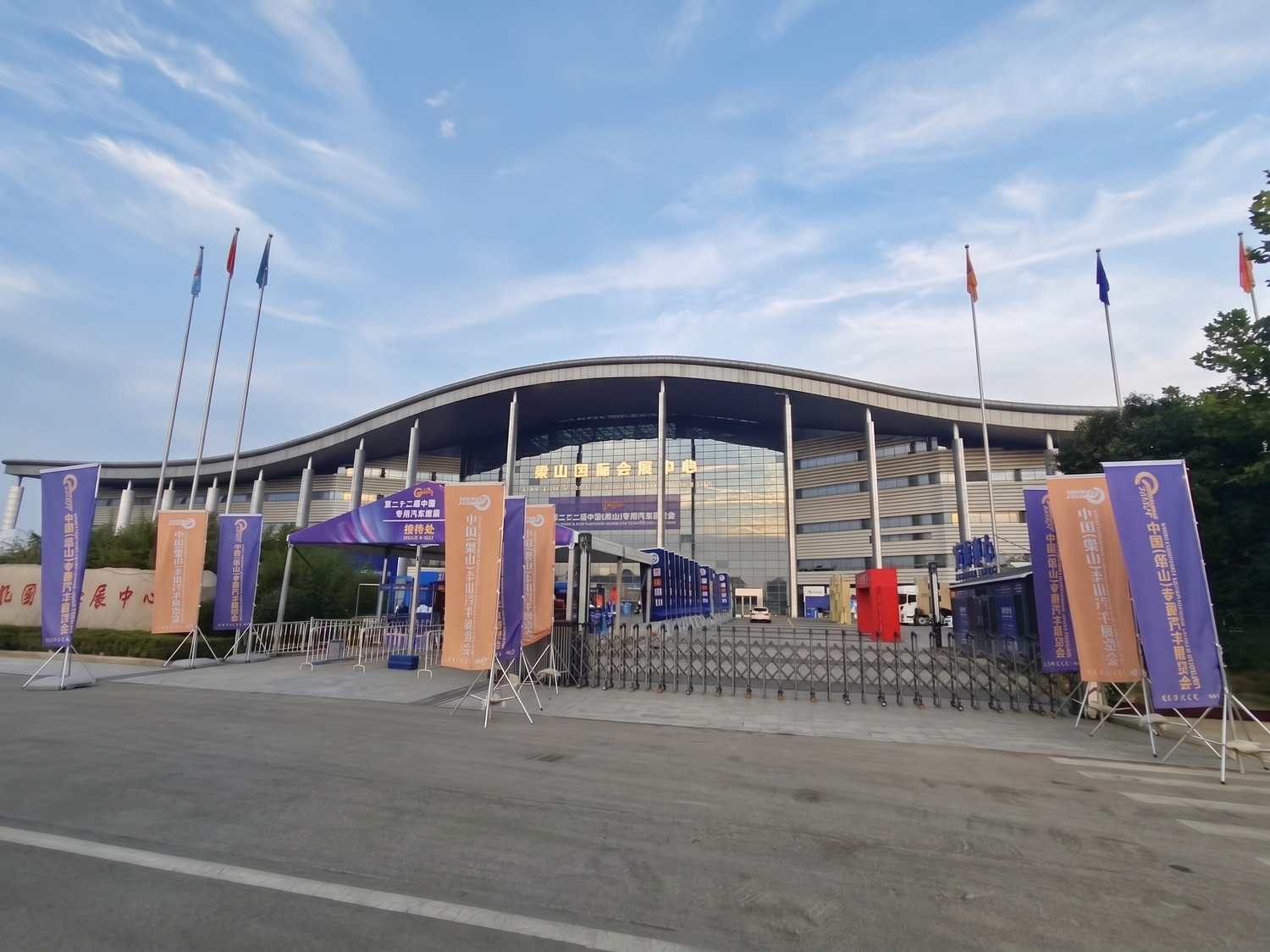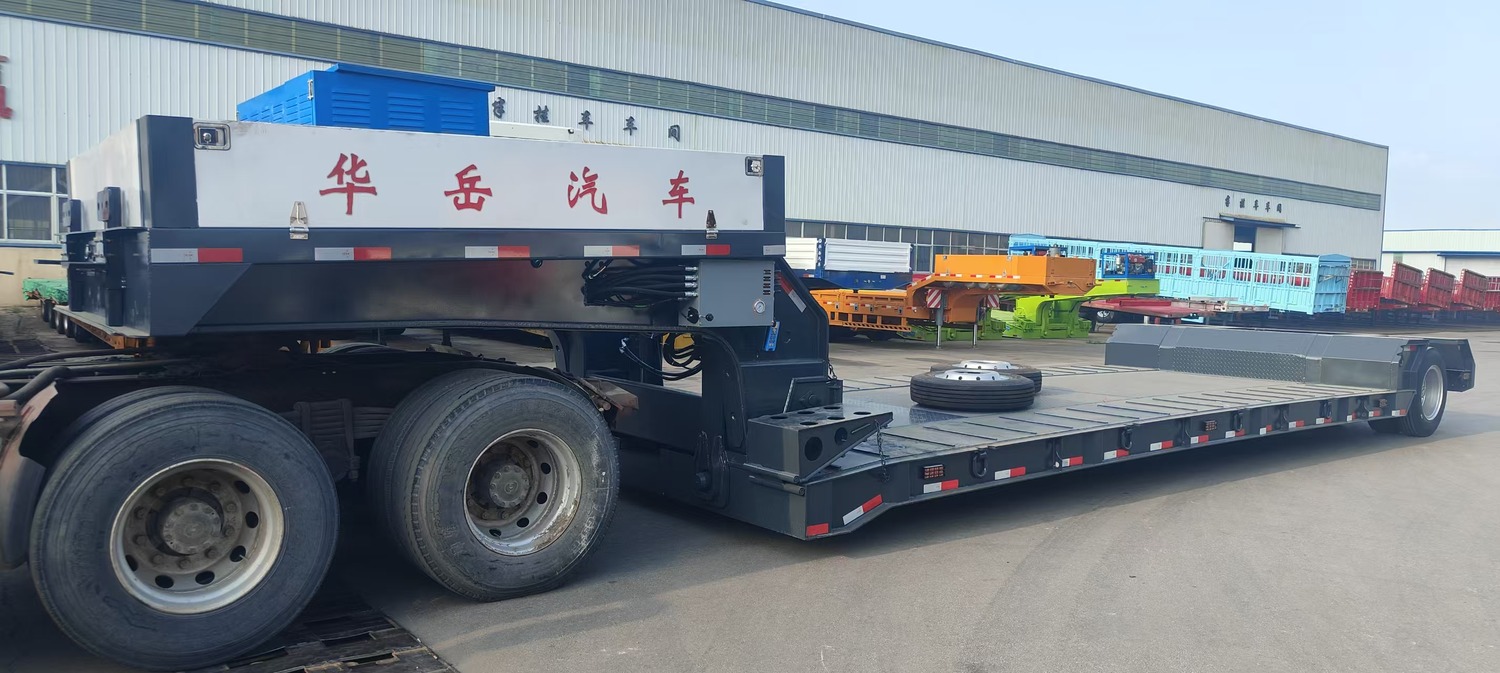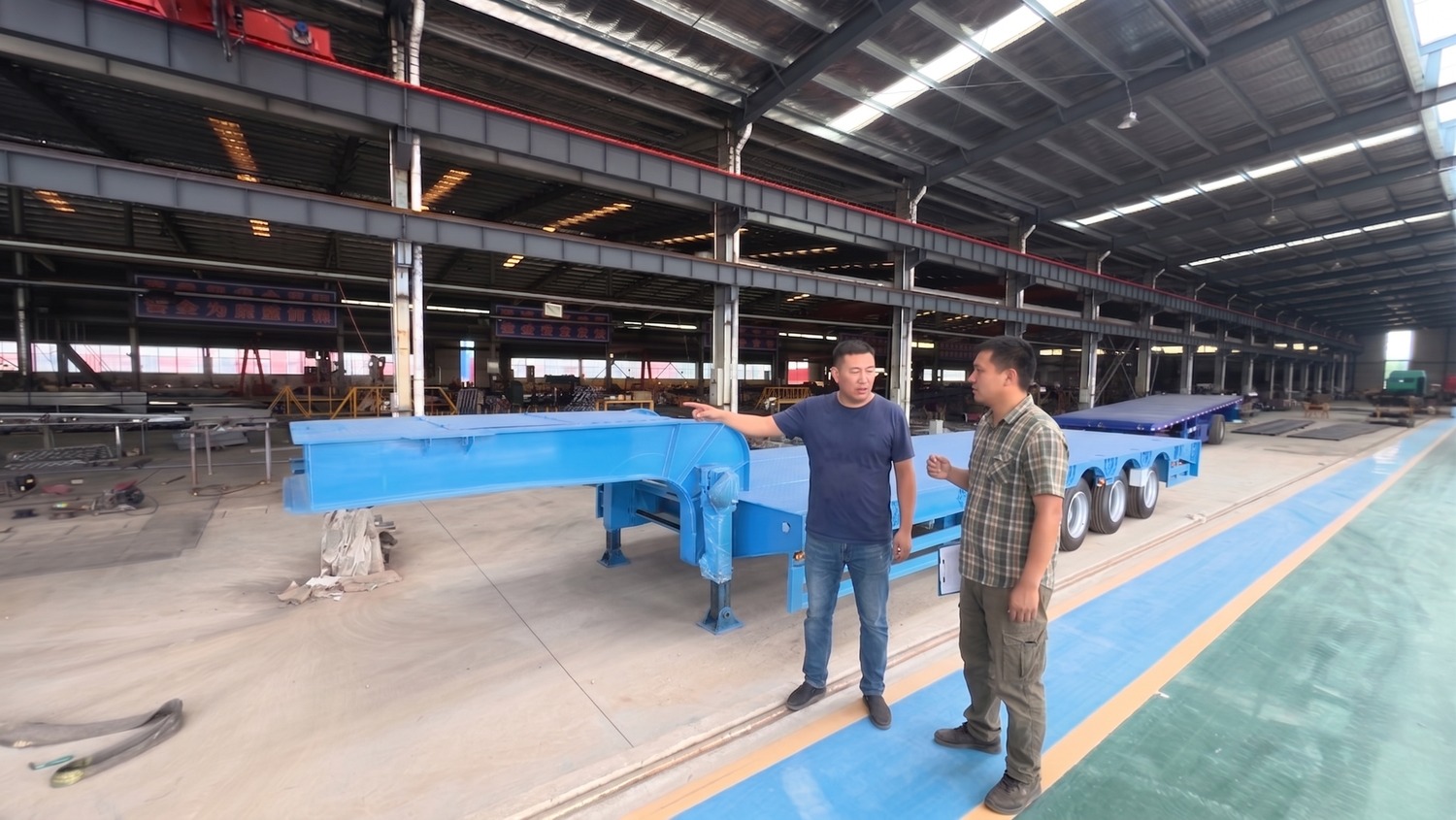
Two customers from Kazakhstan visited HUAYUE to discuss semi-trailers and were drawn to a four-axle lowbed. They wanted personalised modifications based on that vehicle, making the existing platform the starting point for a configuration discussion. The case centres on the lowbed's equipment deck and how its layout relates to the machinery it can carry.
Beginning with a physical trailer gives a customisation discussion a concrete reference. The low platform, front section and four-axle running gear establish the basic geometry before individual details are developed. The customer's interest in that vehicle is the documented decision here; the final modification package remained part of the technical discussion.
The Deck as a Working Platform
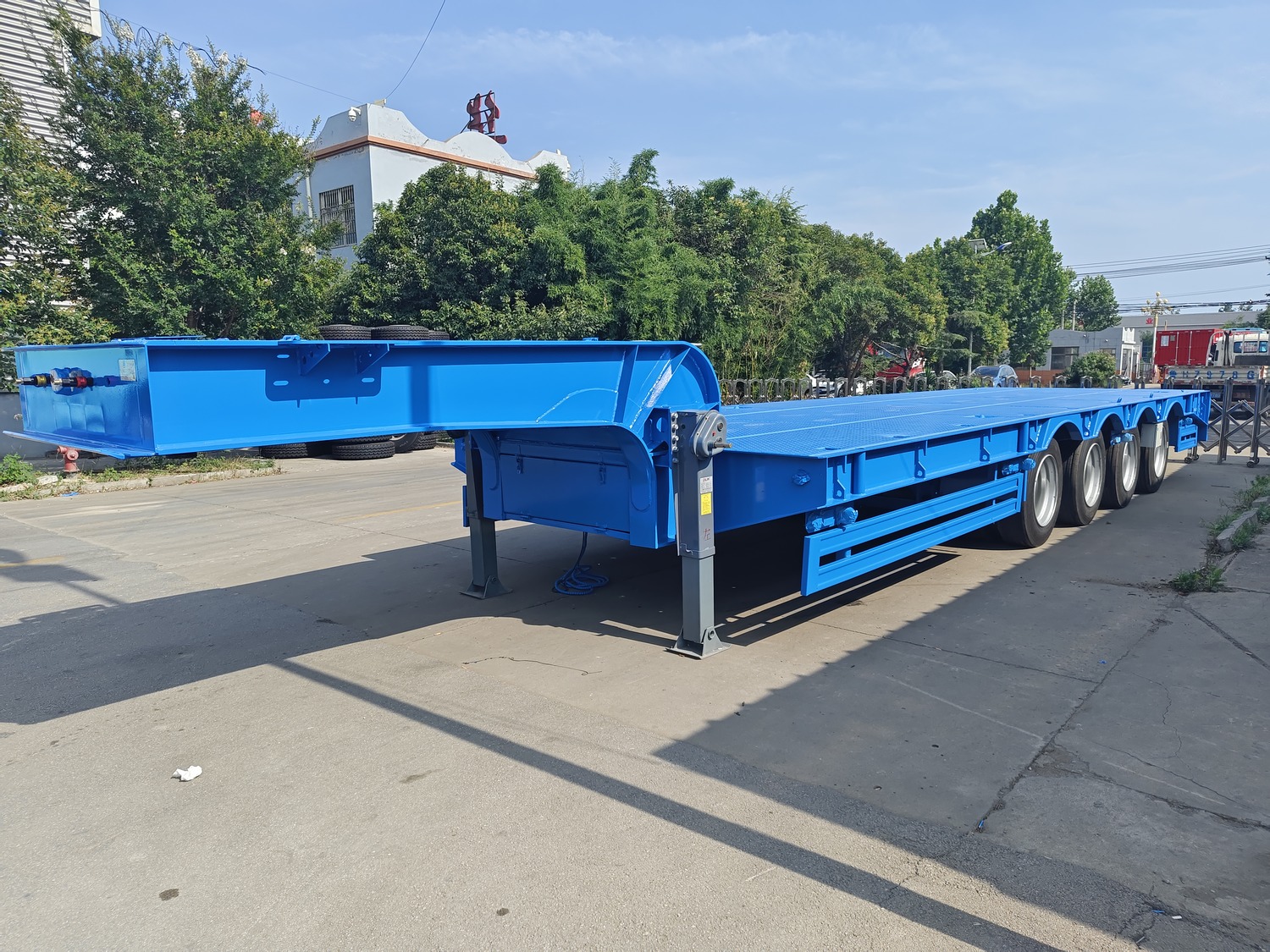
The deck is the surface that receives the transported equipment. Its position lower in the trailer structure gives the lowbed its characteristic profile and makes the platform especially relevant to machinery with substantial transport height. Lowering the support beneath the machine reduces the height added by the trailer itself.
Deck layout is more than an overall length. The usable surface, the space around the load and the relationship to the front and rear trailer sections shape how the platform works as a transport tool. A machine can fit dimensionally while still needing a different support position or loading approach.
The equipment's running surfaces determine where weight enters the deck. Tracks spread it along two strips, while wheels or support feet place it at smaller contact areas. The floor and supporting members need to carry those local forces into the main chassis rather than treating the whole platform as equally loaded.
Load Position and the Four-Axle Chassis
The featured trailer uses four axles beneath its lowbed chassis. These create multiple road contact positions for the load transferred through the frame. The tractor connection supports the front share, making the loaded semi-trailer a system with reactions at both the front interface and rear running gear.
Moving the same machine along the deck changes those reactions. A forward shift transfers more weight toward the tractor, while a rearward shift increases the demand toward the trailer axle group. The machine's centre of gravity therefore helps determine its useful position, alongside the length occupied by its tracks or tyres.
Axle count and payload have different meanings. Four axles describe the running-gear arrangement; carrying capacity also depends on the frame, suspension, tyres, front connection and load distribution. The platform's physical size does not replace those structural considerations.
Space Around the Equipment
The deck also needs to accommodate the machine's external shape. A cab, counterweight or folded attachment can project beyond the main support footprint, changing the loaded envelope without adding the same weight everywhere beneath it. This is why support position and clearance are separate parts of a useful platform layout.
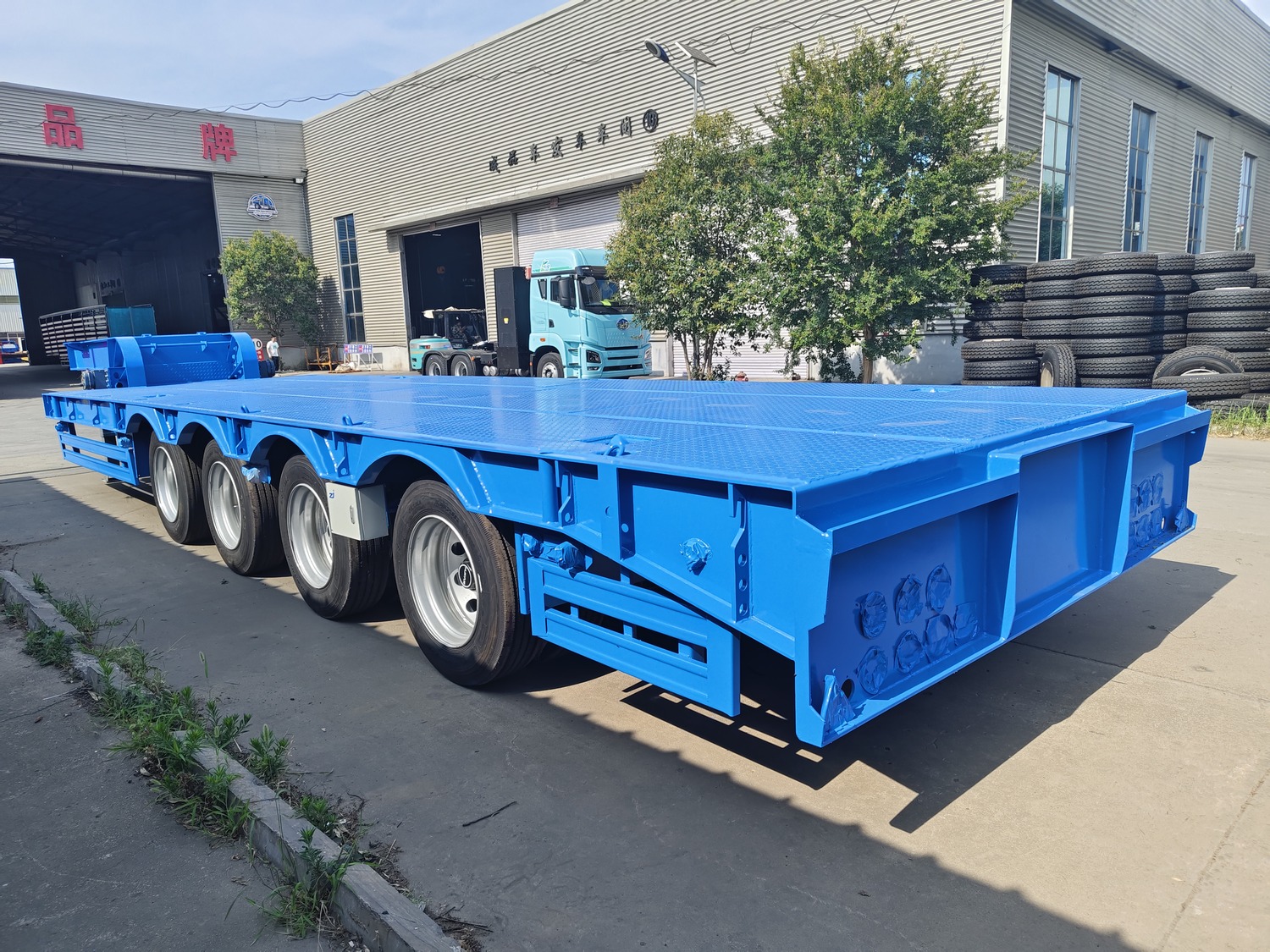
Space at the front of the deck is influenced by the transition to the gooseneck. At the rear, the running-gear area and loading approach affect how equipment reaches its final position. These boundaries give the low platform its working dimensions rather than leaving it as an unrestricted rectangular surface.
The chassis side areas provide space for structural details and access to adjacent components. Their arrangement can affect how readily a working trailer is approached for ordinary servicing and load-related tasks. Such details can matter in a personalised vehicle discussion without changing the central purpose of the lowbed.
Loading Geometry and Transport Geometry
A machine's path onto the deck is different from its position during travel. During loading, approach slope and changes in angle affect ground clearance. Once the machine rests on the platform, its support points and centre of gravity determine the structural loading arrangement.
The low deck offers a height advantage beneath the equipment, but clearance under the trailer remains relevant on crests or uneven transitions. A longer low section can approach the road surface even when the load has ample overhead room. The platform geometry therefore has consequences both above and below the deck.
During a turn, the trailer follows a path different from the tractor's. The cargo and parts of the platform can occupy space outside the tyre tracks, especially where the machine has overhanging attachments. The full vehicle-and-load envelope is the meaningful shape for manoeuvring.
Customisation Around a Defined Vehicle
The Kazakhstan customers chose this four-axle lowbed as the basis for personalised changes. That approach keeps the discussion anchored in an actual vehicle rather than a disconnected list of possible accessories. The low platform and running gear establish what the trailer is, while the requested adaptations develop its suitability for the intended work.
The value of a modification depends on the function it changes. A platform detail may affect support or clearance; an access detail may affect loading or servicing. Explaining that relationship gives customisation a practical meaning and avoids presenting every change as an automatic increase in capacity or performance.
The case therefore links a real customer preference with a useful equipment-transport layout. The four-axle chassis supports the platform, the low deck manages the machine's position and the available working space shapes how it is loaded and carried. Those are the concrete features around which the next configuration discussion develops.
Frequently Asked Questions
Why does deck layout matter beyond overall length?
The machine needs suitable support positions, clearance and access to its transport position. Overall length describes space but does not describe all of those functions.
What is the role of the four-axle arrangement?
It provides the running gear beneath the lowbed chassis. Load position and the front connection determine how weight is shared across the complete combination.
Does a low deck remove all clearance constraints?
No. It reduces the height beneath the machine, while clearance under the trailer, road transitions and the equipment's external shape remain relevant.
Discuss Your Trailer Application
Share your cargo or equipment details, transport route and destination market with HUAYUE for a configuration discussion tailored to the intended application.
Interested in this case?
Contact Us for a Technical Consultation.