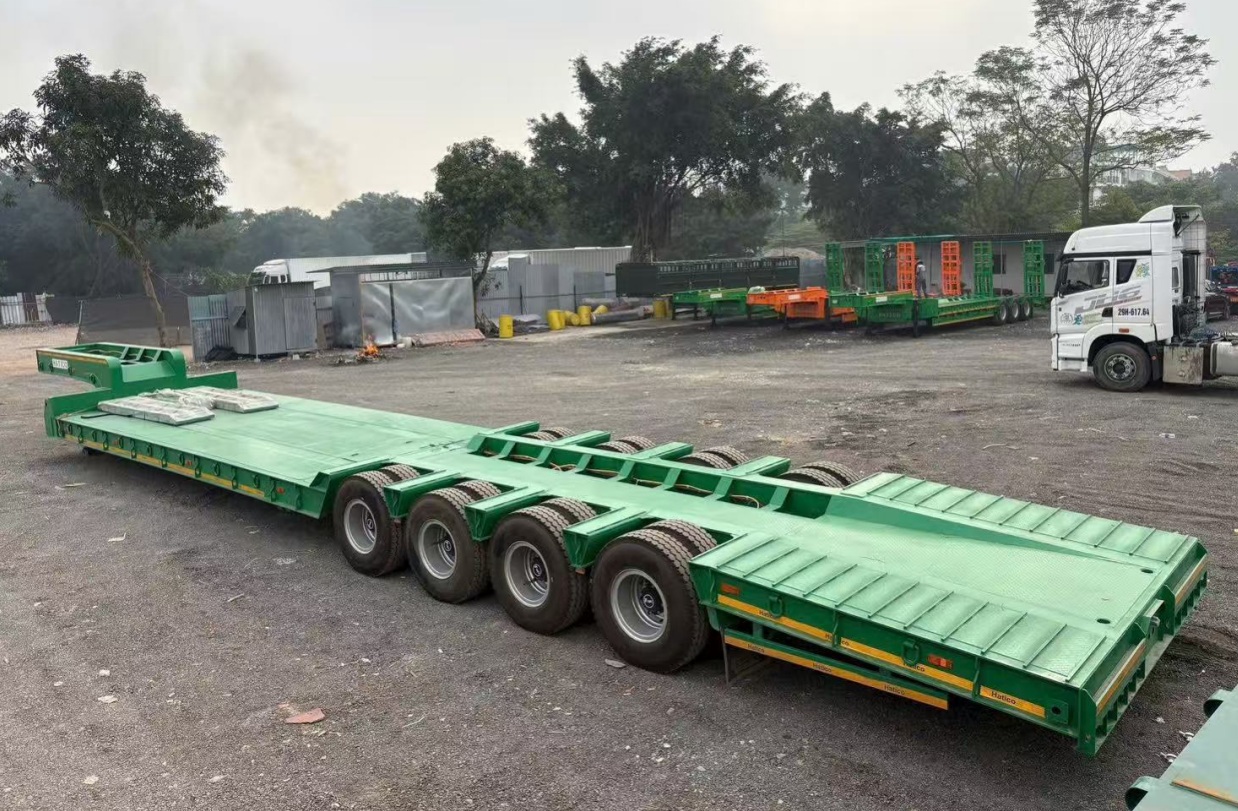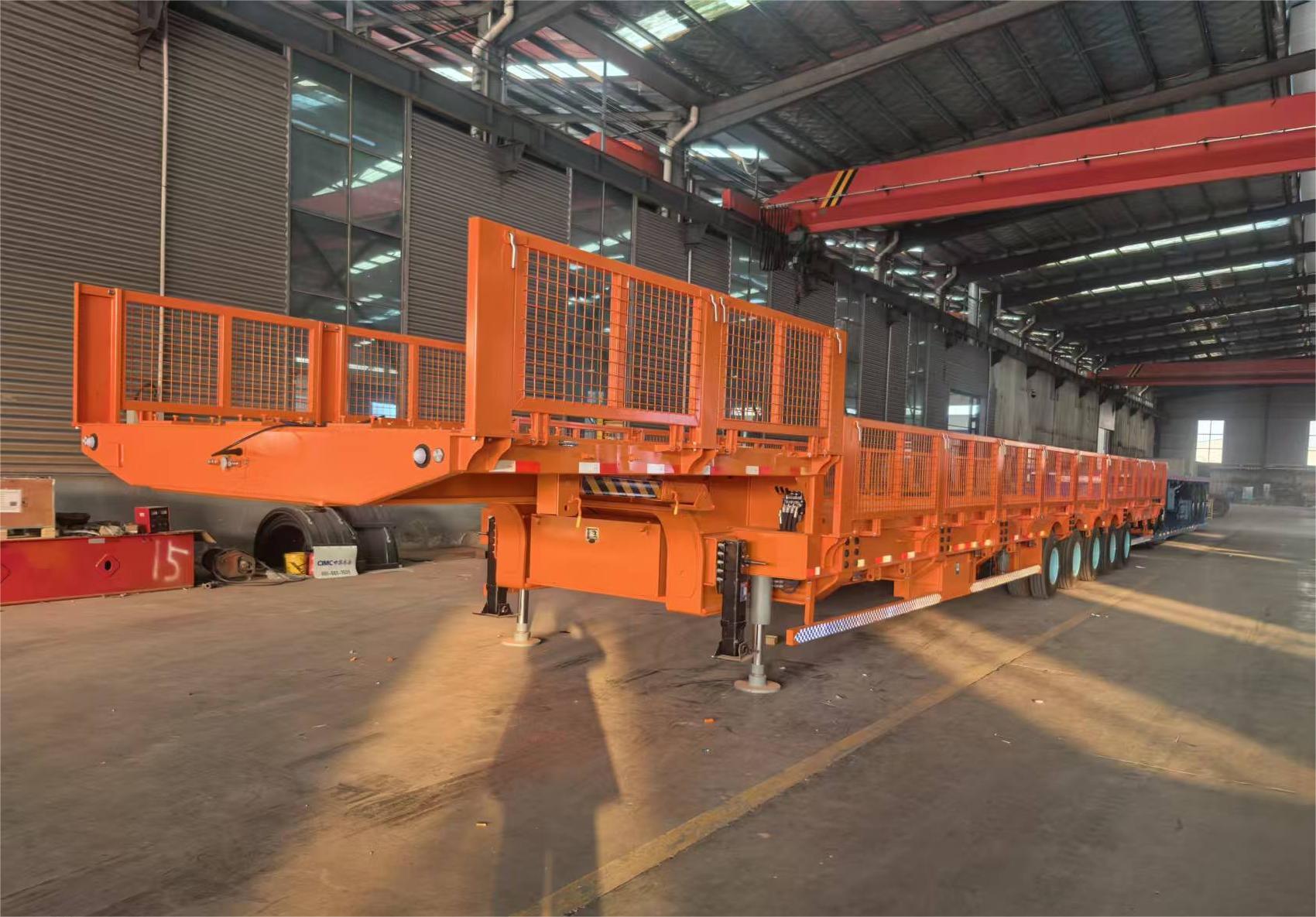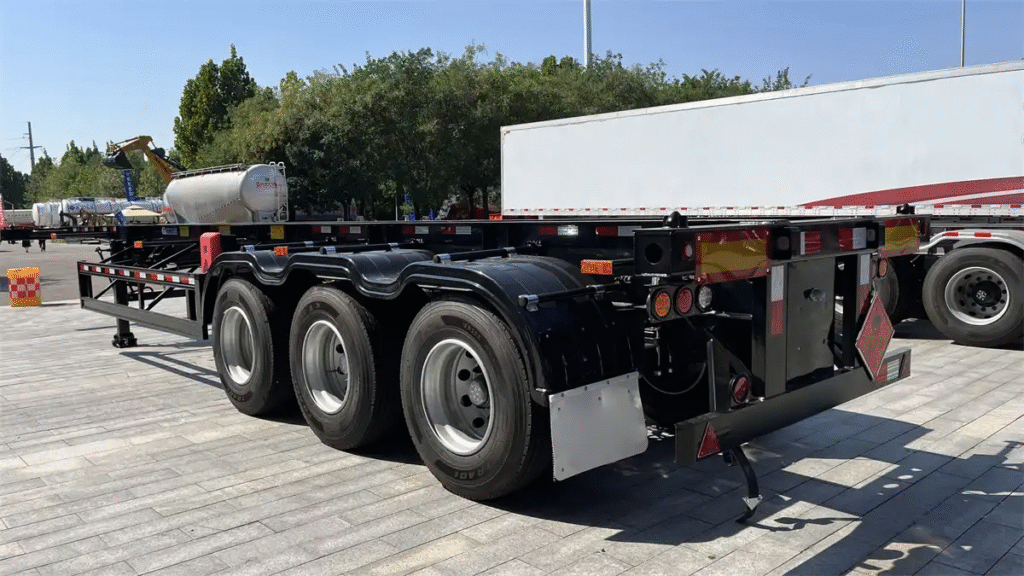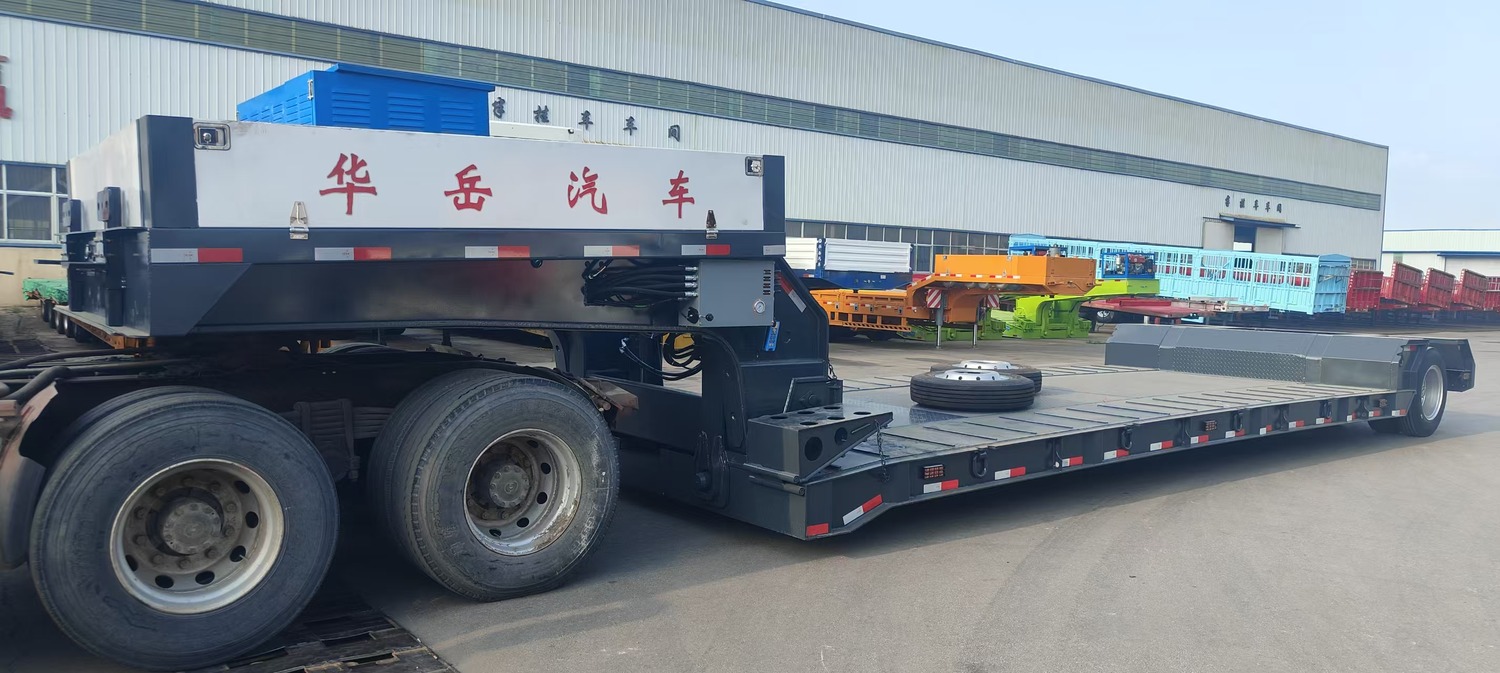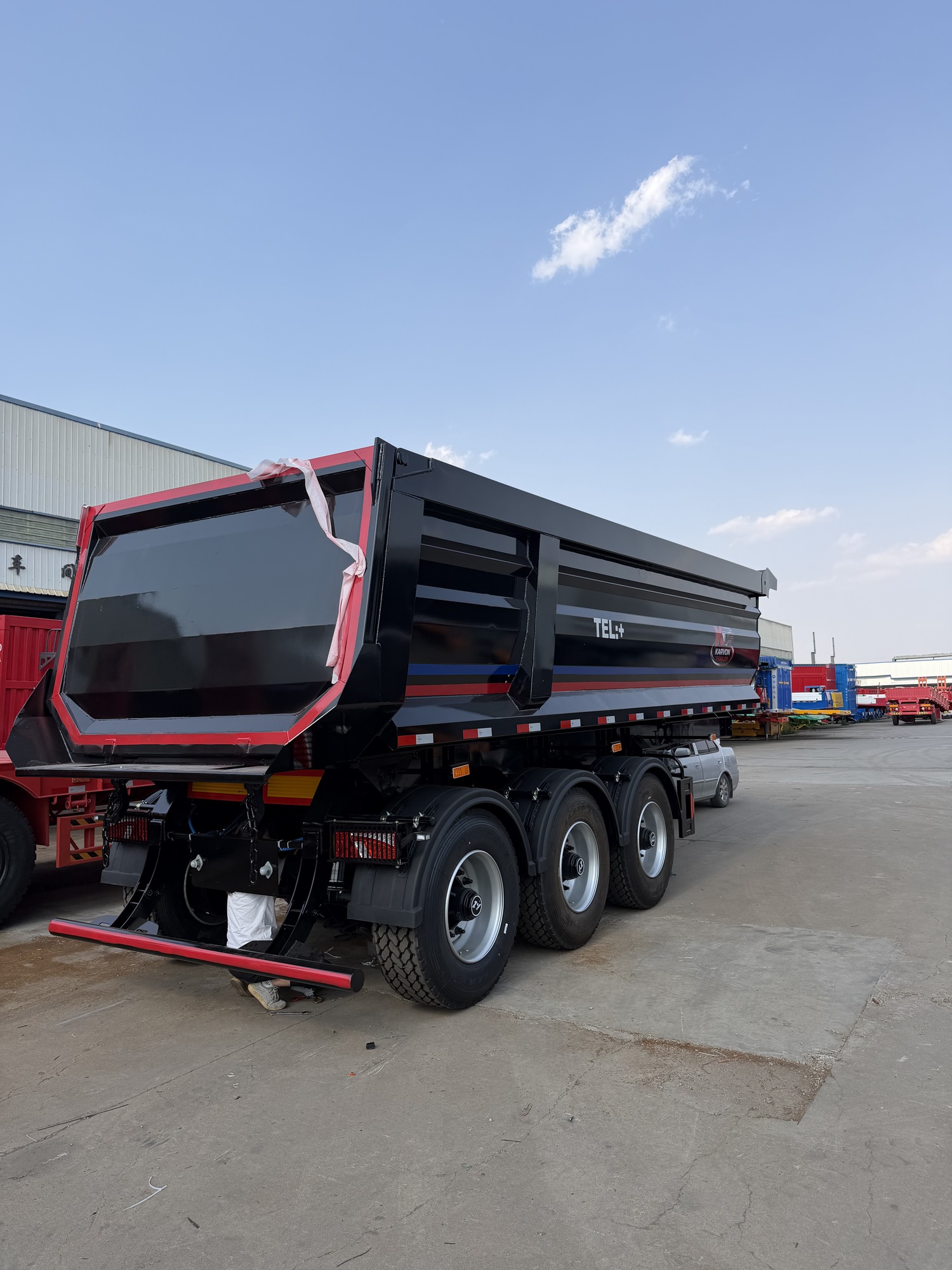
Two customers from Vietnam visited HUAYUE after finding the company through Facebook and contacting the sales team. Their work related to a cross-sea bridge infrastructure project, and their requirement was specific: a rear-dump semi-trailer with tracks integrated into the cargo body. They discussed initial parameters with HUAYUE technicians as the basis for a customised proposal.
The visit connected a project application with a vehicle concept. The customers had responded positively to HUAYUE's social-media content, then brought their own material-handling requirement into a technical discussion. The resulting subject is a proposed rear-dump configuration, with the in-body track arrangement remaining a design requirement under development.
A Rear-Dump Body for Bulk Material
A rear-dump semi-trailer releases material through a tipping action at the rear of the body. The body shape, rear opening and tipping geometry all contribute to the way bulk material leaves the trailer. This differs from an open equipment deck, whose main task is to support a fixed machine or structural load.
During travel, the body contains the material and transfers its weight into the chassis. During unloading, the body changes angle and gravity moves suitable material toward the outlet. The rear opening and the way the load releases are therefore central to the trailer's function.
The material itself affects that movement. Moisture, particle size and adhesion can change whether a load flows freely or remains against the floor and walls. Two materials occupying the same volume can also have very different weights, so body size and transported mass describe different requirements.
The In-Body Track Requirement
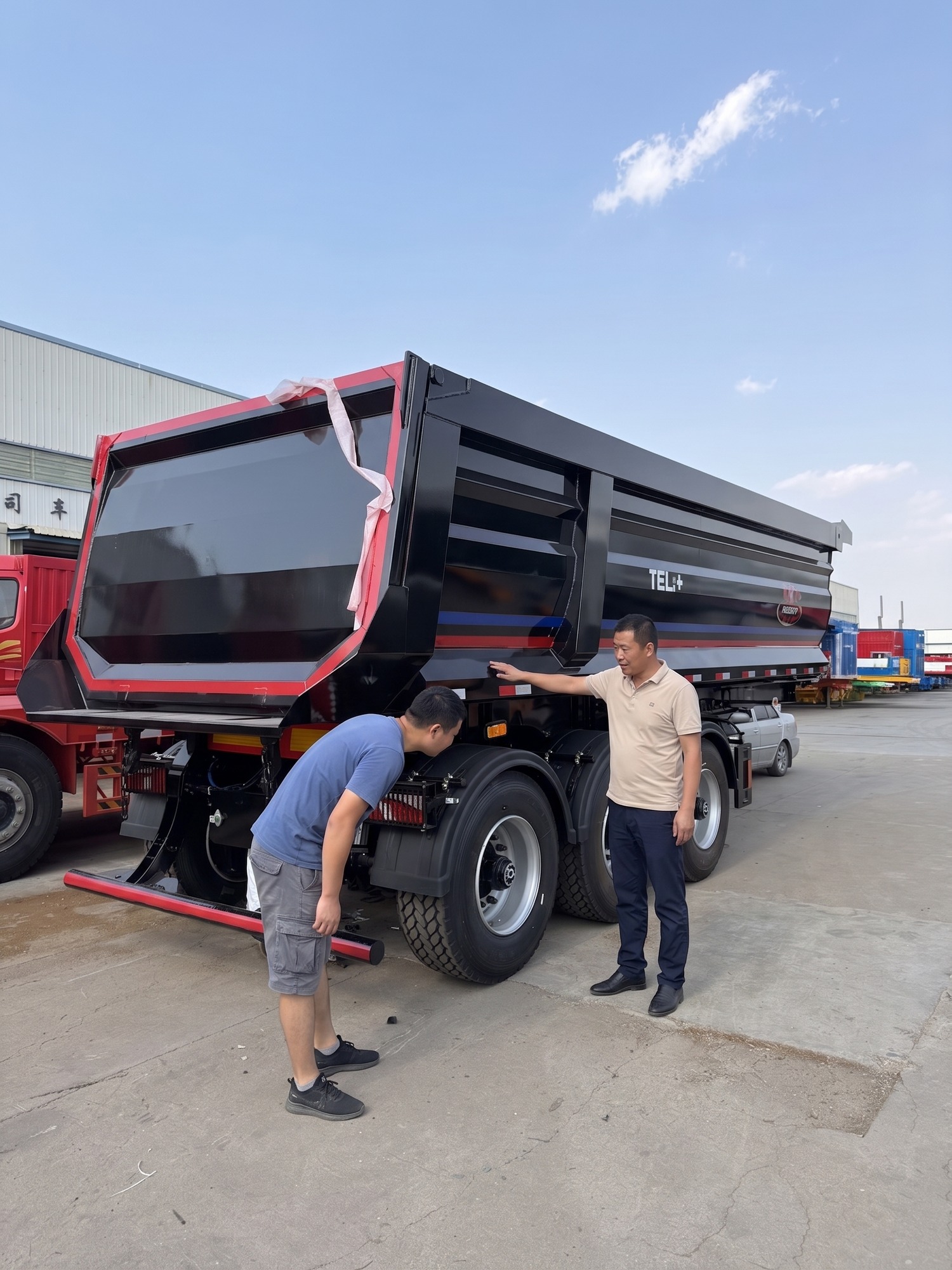
The Vietnam customers requested tracks integrated into the dump body. This is an interior feature within the proposed trailer, not a tracked undercarriage beneath the vehicle. Keeping that distinction clear separates the customer's requirement from a crawler dumper or another vehicle that travels on tracks.
The proposed interior arrangement needs to be considered alongside the body's existing functions. The floor contains and supports material, the walls guide it and the rear opening provides the discharge path. An added track arrangement occupies space within that working environment and has to fit the intended material movement.
The track requirement also creates an interface with the surrounding structure. Its support, clearances and access for servicing belong to the body's design discussion. Those relationships explain why the feature was part of a customised proposal rather than a label that could be added to any ordinary tipper.
The initial discussion covered parameters from which HUAYUE's technical team would develop the proposal. This keeps the customer's request at its actual stage: a specific engineering requirement for a rear-dump trailer. The general tipping principle can be explained separately from the final mechanism selected for the interior tracks.
The Bridge-Construction Material Cycle
Large construction projects involve repeated material movements between loading points, haul routes and receiving areas. Each stage affects the vehicle cycle: a fast trip can still end in a long wait if unloading or site access becomes the bottleneck. A discharge arrangement therefore has value through its place in the material flow.
For a rear-dump trailer, the receiving area needs space for the raised body and the discharged material. The ground supporting the combination also matters because the load changes position as the body rises and empties. This operating geometry differs from carrying cargo on a level platform throughout the movement.
The cross-sea bridge project gives the customer's requirement a construction context. It does not make every material, haul distance or operating condition identical across the site. The proposal develops around the actual body and unloading requirement, while the broader project explains why material-handling efficiency matters to the customers.
Body Geometry and Useful Working Volume
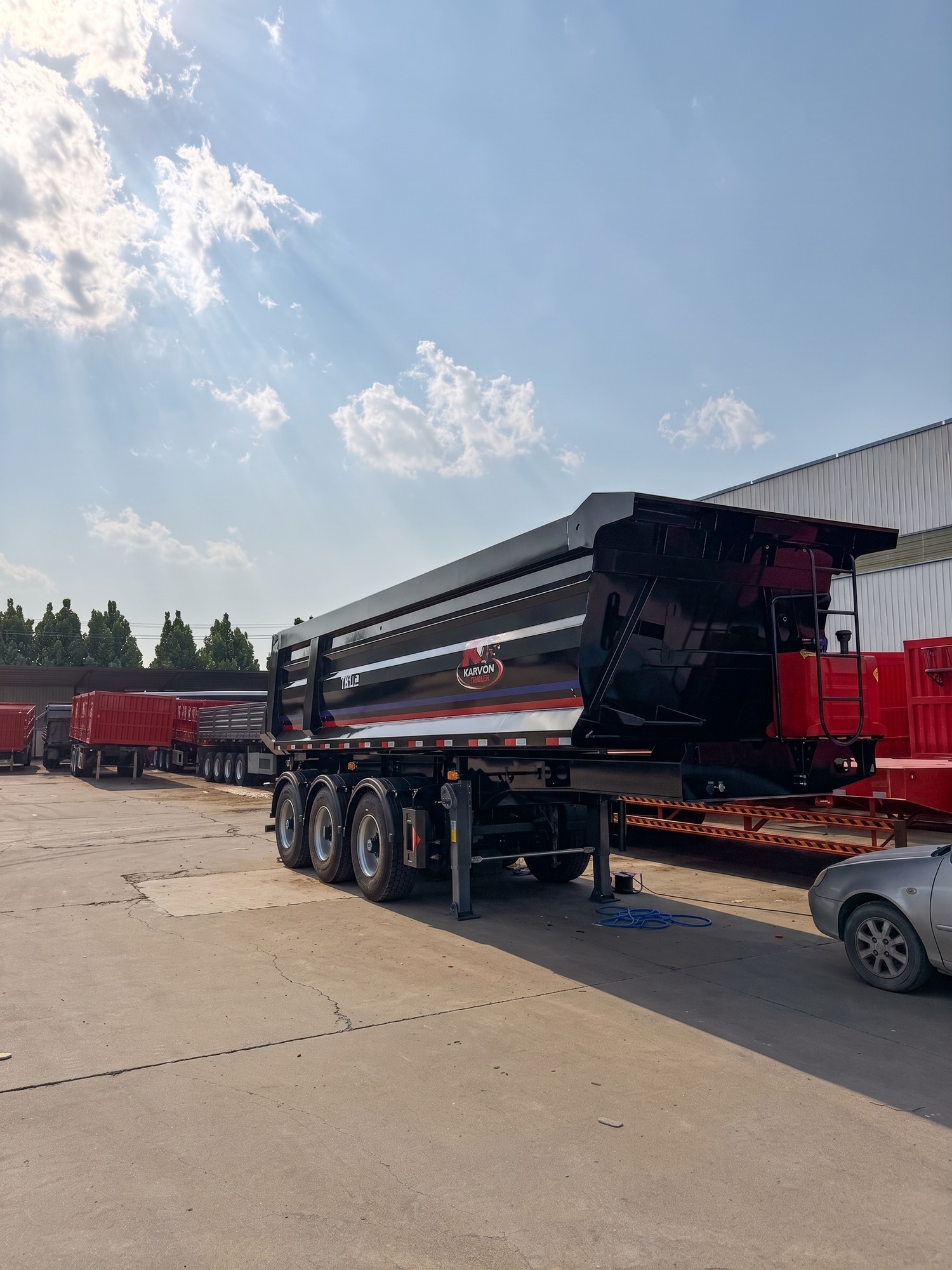
Body volume describes the available space inside the trailer. Useful load also depends on material density, the vehicle's structural capacity and the operating combination. A large body carrying a dense material can reach a weight limit before it is physically full.
Interior equipment can affect that available space and the surfaces in contact with the cargo. An in-body track arrangement may change clearances or create additional interfaces around the floor. These are practical design considerations because the body must both carry the material and allow it to leave in the intended way.
Material contact areas also experience wear. Abrasive particles act differently from soft or cohesive loads, and residue can collect where surfaces or components interrupt the interior path. Access to the affected areas makes cleaning and servicing part of the working layout rather than an unrelated afterthought.
From Customer Requirement to Vehicle Proposal
The factory visit gave the customers and technicians a shared starting point: rear dumping for their construction application, with a particular interior-track requirement. HUAYUE's next task was to develop a customised proposal around those parameters. The proposal stage allows the body, structure and operating arrangement to be considered together.
The useful lesson in this case is the specificity of the customer's request. Instead of asking for a larger trailer in general, the customers focused on how material would be handled inside the body. That connects configuration, function and transport scenario in a way that makes the vehicle discussion concrete.
Frequently Asked Questions
Is an in-body track system a tracked undercarriage?
No. The requirement concerns tracks inside the cargo body. A tracked undercarriage is the running system used by a crawler vehicle to move over the ground.
What determines how material leaves a rear-dump body?
Body angle, floor and wall geometry, the rear opening and material behaviour all affect discharge. Moisture and adhesion can change how freely the load moves.
Does a larger body always carry more useful weight?
No. Volume describes space. Material density and the complete vehicle's loading conditions determine how much of that space can be used in a particular movement.
Discuss Your Trailer Application
Share your cargo or equipment details, transport route and destination market with HUAYUE for a configuration discussion tailored to the intended application.
Interested in this case?
Contact Us for a Technical Consultation.